
Your cart is currently empty!
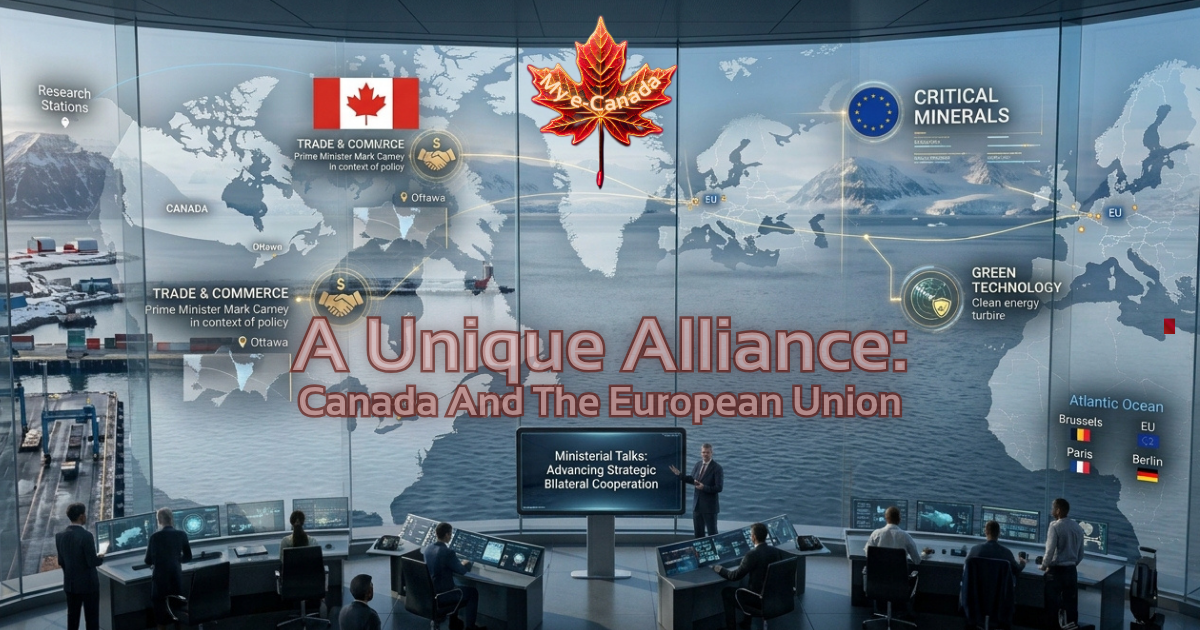
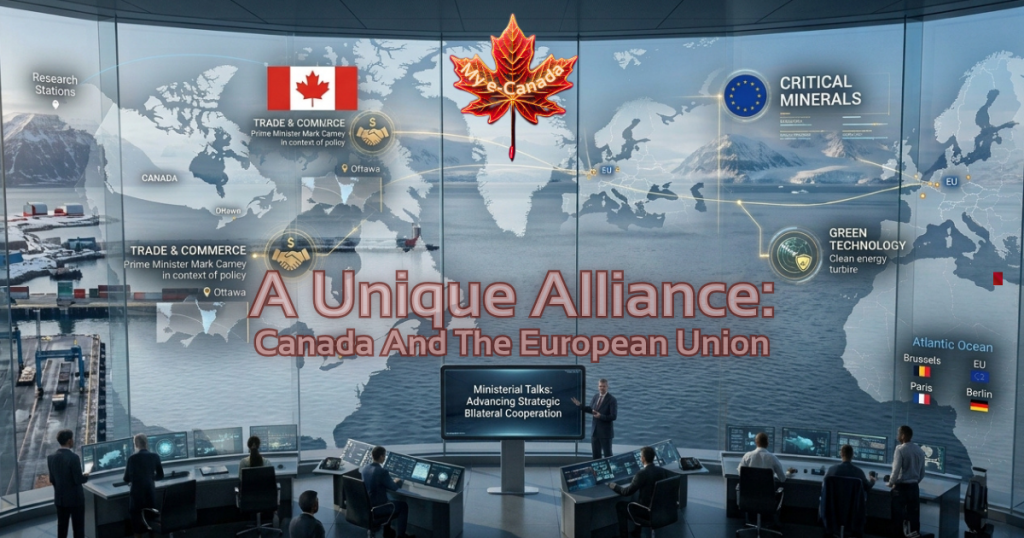
A Unique Alliance: Canada and The European Union
My e-Canada Word On The Street: Digitally Yours To Explore
The European Union Historical Origins and Initial Expansion
Thursday, September 15, 2026, My e-Canada Word On The Street Investigative News Exposé explores a Unique Alliance being forged between Canada and the European Union. The European Union was officially established through the Maastricht Treaty in November 1993, building upon earlier European integration efforts that began after the Second World War. It was formed to foster economic cooperation, ensure lasting peace, and prevent future continental conflicts among European nations. Originally founded with six member nations, the bloc has expanded steadily over successive decades through multiple accession waves. Today, the European Union comprises twenty-seven sovereign nations sharing a vast integrated market, establishing a powerful model for multinational governance and economic collaboration that continues to shape global diplomatic frameworks and international standards across multiple continents.
The historical evolution of European integration provides vital context for understanding how modern multilateral frameworks operate. From its origins in the European Coal and Steel Community to the formation of the single market, European nations recognized that pooled economic interest creates powerful barriers against regional conflict. Over decades, the European Union members painstakingly negotiated common standards, agricultural policies, environmental protections, and judicial frameworks that allowed goods, services, capital, and people to move freely across internal borders. This deep structural integration transformed historical rivals into interconnected economic partners, demonstrating that long-term prosperity relies on predictable rules and collaborative institutions. For external nations seeking stable international partners, the European Union represents a cohesive trading community operating under consistent legal mechanisms. Engaging with this established framework allows non-member countries to connect with a reliable market of over four hundred million consumers while participating in high-standard regulatory systems.
Diplomatic Momentum and Ministerial Talks
Advancing Strategic Bilateral Cooperation
Formal discussions regarding a closer unique alliance and distinct partnership between Canada and the European Union accelerated recently as global geopolitical tensions intensified significantly across multiple continents. Prime Minister Mark Carney formally announced that Canada is seeking to establish a partnership with the economic bloc. This diplomatic initiative represents a strategic pivot toward trusted international partners who share core democratic principles, human rights commitments, and transparent regulatory systems. Ottawa is actively pursuing deep bilateral cooperation across trade, technology, energy, and security sectors. Officials are carefully defining these arrangements ahead of upcoming bilateral summits, ensuring that every agreed-upon framework delivers concrete advantages for domestic industries while maintaining robust protections for Canadian workers, environmental standards, and sovereign legislative priorities in a rapidly shifting international environment.
The intensity of contemporary diplomatic exchanges reflects a shared recognition that isolated economic strategies no longer suffice in a complex global environment. High-level ministerial delegations, trade representatives, and policy experts have engaged in extensive consultations to align regulatory objectives and streamline bilateral commerce. These discussions go far beyond traditional trade negotiations by addressing modern operational challenges, such as secure data flows, supply chain transparency, clean energy transition frameworks, and joint scientific innovation. By building upon existing diplomatic infrastructure, both sides are establishing durable administrative channels that facilitate rapid response to emerging global disruptions. The constructive momentum generated through these ministerial sessions underscores a mutual commitment to building structured mechanisms that protect democratic institutions and enhance shared economic resilience for decades to come.
A Unique Alliance: Economic Resilience Amid Protectionism
Insulating Markets from Coercion
The pursuit of this Unique Alliance stems from a changing global economic landscape marked by rising protectionism and unpredictable foreign policies enacted by major global players. Economic integration is increasingly weaponized by major powers through tariffs, sudden supply chain restrictions, and coercive trade practices designed to pressure middle powers. Canada seeks to insulate its domestic economy from such external pressures by diversifying commercial partnerships across stable, rule-based global jurisdictions. Strengthening ties with European democracies ensures greater commercial resilience, predictable regulatory environments, and enhanced supply chain security. Mutual cooperation safeguards national interests against foreign economic coercion, ensuring that Canadian businesses can operate, export, and innovate without fear of sudden retaliatory measures imposed by single dominant trading partners.
Building economic resilience requires proactive structural planning rather than passive reliance on historical commercial relationships. Modern supply chains are exceptionally vulnerable to sudden political shifts, export restrictions, and arbitrary tariff hikes imposed by unilateral trade policies. When middle powers rely disproportionately on concentrated commercial avenues, their domestic economic stability becomes vulnerable to external disruption. By establishing diversified market outlets and secure procurement networks across European jurisdictions, domestic producers gain reliable access to critical inputs, capital, and consumer bases. This strategic diversification mitigates systemic economic shocks, preserves high-value jobs, and maintains industrial productivity during periods of global instability. Operating within rule-based commercial frameworks ensures that legal contracts are respected, trade disputes are settled through transparent arbitration, and businesses can invest with long-term confidence.
Strengthening Autonomy Through Diversification
Reducing Overreliance on Southern Neighbours
Deepening relations with Europe directly reinforces national sovereignty by providing strategic alternatives to overwhelming economic dependence on a single southern neighbour. For decades, roughly seventy percent of Canadian exports crossed the border into the market governed by Washington, creating an asymmetric vulnerability for local industries. Recent threats of economic coercion, unpredictable tariff volatility, and questioning of northern maritime boundaries have highlighted the profound risks of this economic concentration. A robust partnership with European allies diversifies external dependencies, opening alternative maritime trade corridors through Atlantic ports. This diplomatic maneuver enhances national autonomy on the global stage, giving Canadian policymakers greater leverage and flexibility when negotiating international agreements and protecting domestic commercial interests.
Strategic diversification serves as a fundamental catalyst for national self-determination and independent policymaking. When a nation’s export volume is concentrated heavily within a single geographic destination, domestic economic health becomes inextricably linked to the internal political climate and trade policies of that sole buyer. Expanding trade corridors toward transatlantic partners balances commercial exposure and reduces structural vulnerabilities across key economic sectors. Modernized infrastructure at major Eastern Canadian seaports facilitates direct trade routes, bypassing intermediary transit points and ensuring seamless delivery of agricultural products, manufactured goods, and critical minerals to European markets. This broader international footprint enhances economic stability and enables domestic leaders to craft foreign and domestic policies that serve long-term national priorities without fear of immediate economic retaliation.

A Unique Alliance: Comprehensive Frameworks for Modern Commerce
Negotiating Trade, Technology, and Energy
Negotiations for this Unique Alliance encompass comprehensive agreements covering bilateral commerce, advanced digital technologies, artificial intelligence governance, and critical mineral supplies. Canada and the European Union already maintain strong foundational trade ties under existing agreements, which serve as a springboard for deeper economic integration. Current talks aim to dismantle remaining regulatory barriers, harmonize technical standards, and streamline commercial exchanges across transatlantic shipping lanes. Energy cooperation focuses heavily on clean technologies, hydrogen exports, and secure critical mineral supply chains necessary for the green transition. Both jurisdictions remain committed to high environmental and labour standards, ensuring that commercial growth aligns with stringent sustainability metrics and equitable workplace practices.
Modern commercial frameworks must adapt to rapid advances in technology, digital infrastructure, and sustainable energy development. Collaborative governance models surrounding emerging technologies, such as artificial intelligence, ethical data management, and cybersecurity protocols, ensure that technological innovation aligns with democratic values and privacy rights. Concurrently, joint energy initiatives facilitate the transition toward sustainable power generation, combining advanced European technological capabilities with vast Canadian reserves of critical minerals essential for battery production and renewable energy infrastructure. Harmonizing technical standards and streamlining customs procedures lowers operational costs for small and medium-sized enterprises, encouraging broader participation in international trade. These multifaceted commercial frameworks ensure that economic growth remains sustainable, technologically advanced, and resilient against future supply chain bottlenecks.
Expanding Defence and Security Integration
Industrial Collaboration and Procurement
Defence collaboration forms a pillar of the evolving partnership, highlighted by Canadian participation in European security funding instruments and joint capability development initiatives. Canada recently became the first non-European nation to join the European Union defence procurement initiative, marking a historic shift in transatlantic security architecture. This participation opens significant industrial opportunities for domestic defence manufacturing firms, fostering joint research and development projects. Joint military procurement helps allied nations meet capability targets more efficiently while standardizing equipment interoperability. Strategic alignment strengthens collective security across North Atlantic and Arctic domains, ensuring that both Canadian and European armed forces can coordinate seamlessly during international peacekeeping, humanitarian, and territorial defense operations.
Modern defence requirements demand unprecedented levels of technological integration, joint research, and industrial coordination among allied democratic nations. Participating in collaborative security architecture grants domestic defence contractors access to cutting-edge research consortia, advanced maritime surveillance technologies, and joint procurement pipelines. This integration enhances military readiness while driving economic innovation in specialized sectors such as aerospace, cyber defence, telecommunications, and autonomous systems. Standardization of military equipment across allied forces ensures efficient logistics, reduced procurement costs, and enhanced operational efficiency during joint exercises and international deployments. In an era marked by shifting security dynamics and emerging hybrid threats, deepening security integration ensures that democratic nations maintain robust deterrence capabilities and protect critical infrastructure across land, air, sea, and cyber domains.
A Unique Alliance: Mobility and Visa Framework Explorations
Fostering People-to-People Professional Ties
Mobility provisions under discussion through this Unique Alliance include exploring streamlined visa, work permit, and immigration frameworks for citizens travelling between Canada and European nations. Current Canadian immigration policies are undergoing a broader national reset, shifting focus toward high-value master’s and doctoral graduates, economic sustainability, and targeted talent attraction while tightening overall temporary resident volumes. Within the context of this agreement, negotiators are examining reciprocal youth mobility agreements and professional exchange pathways that could eventually allow skilled professionals, researchers, students, and tradespeople to live, study, and work abroad with greater administrative ease. Expanded academic exchanges through modernized frameworks are also actively evaluated. Such people-to-people ties reinforce shared cultural values and professional mobility, ensuring that as Canada manages its domestic population growth, it simultaneously builds robust, high-skill talent corridors with trusted European democracies.
Facilitating human capital mobility represents a cornerstone of long-term international cooperation and knowledge exchange. Streamlined administrative processes for skilled workers enable rapid knowledge transfer in specialized fields such as artificial intelligence, medical research, clean technology, and heavy engineering. Establishing clear frameworks for professional credential recognition reduces administrative barriers, allowing qualified experts to contribute effectively to joint research projects and industrial developments across jurisdictions. Reciprocal youth mobility initiatives provide emerging leaders, young professionals, and university researchers with valuable international experience, fostering cross-cultural understanding and enduring professional networks. As modern economies increasingly rely on specialized expertise and technological innovation, structured mobility pathways ensure that talent flows efficiently to where it is needed most, strengthening academic institutions and driving economic growth.
A Unique Alliance: Preserving Constitutional Independence and Autonomy
Rejecting Supranational Governance Structures
Prime Minister Carney has explicitly clarified that Canada is not pursuing full membership within the European Union, drawing a firm line regarding national sovereignty. Speculation regarding associate membership or adoption of European legislative directives was firmly dismissed by federal officials. Canada guards its constitutional independence fiercely and rejects any supranational governance structure that would cede domestic lawmaking authority to external councils in Brussels. Instead, the nation is designing a bespoke partnership respecting mutual sovereignty and independent parliamentary oversight. This tailored arrangement mirrors shared values without compromising domestic legislative autonomy, ensuring that Canadian laws remain entirely accountable to Canadian citizens and elected representatives.
Maintaining complete constitutional integrity while engaging in deep international cooperation requires careful diplomatic calibration and legal clarity. National sovereignty remains paramount, ensuring that domestic legislative assemblies retain exclusive jurisdiction over domestic laws, taxation, environmental regulations, and social policies. Engaging in collaborative international agreements does not require sacrificing democratic accountability or transferring lawmaking power to external bodies. Tailored bilateral arrangements allow sovereign nations to align regulatory frameworks and cooperate on common challenges through voluntary agreement rather than legal compulsion. This approach ensures that every international commitment undergoes thorough parliamentary scrutiny and remains aligned with domestic constitutional principles, preserving the fundamental rights of citizens while expanding global partnerships.

Evolving Relations with Washington
Establishing Reciprocity and Strategic Balance
The implications of this Unique Alliance for Canada-United States relations involve establishing balanced reciprocity, diplomatic leverage, and strategic autonomy in North American affairs. Canadian leaders emphasize that diversifying partnerships does not mean abandoning traditional geographic neighbours or dismantling integrated continental supply chains. Commerce with the southern neighbour remains vital due to sheer proximity, shared infrastructure, and deeply integrated manufacturing sectors. However, possessing robust alternative partnerships curtails the effectiveness of foreign economic coercion and unilateral trade bullying. Mutual respect becomes the baseline for cross-border negotiations when Ottawa commands viable diplomatic and economic alternatives across the Atlantic world.
Evolving international relationships necessitate a pragmatic reassessment of traditional diplomatic posture and economic strategies. Maintaining vibrant trade across immediate geographical borders remains essential for regional prosperity, shared infrastructure efficiency, and joint continental defence. However, establishing strong, alternative economic partnerships across the Atlantic creates a healthier political equilibrium and enhances diplomatic leverage during bilateral negotiations. When a country demonstrates the capability and infrastructure required to pivot commercial volume toward alternative global markets, it establishes a position of strength and self-reliance. This structural balance encourages constructive negotiation based on mutual interest and shared respect, ensuring that continental trade frameworks operate fairly without resort to unilateral economic pressure or coercive tactics.
A Unique Alliance: Bolstering Circumpolar Jurisdiction and Security
Protecting Northern Passages and Sovereignty
Canadian sovereignty over northern territories receives substantial bolstering through enhanced European engagement in Arctic monitoring, scientific research, and maritime surveillance. Foreign powers increasingly eye northern shipping lanes, including the Northwest Passage, and Arctic resource deposits with covetous intent and contested legal interpretations. European diplomatic bodies, including the European Parliament opening an office in Ottawa, demonstrate heightened circumpolar engagement and recognition of Canadian jurisdictional claims. Joint surveillance, intelligence sharing, and environmental monitoring protect undisputed Canadian sovereignty over northern waters. National security posture in remote polar regions grows increasingly formidable, deterring unauthorized foreign incursions and safeguarding delicate Arctic ecosystems for future generations.
The Arctic region has emerged as a focal point of global strategic competition due to climate shifts, opening navigation routes, and untapped resource potential. Asserting effective control over northern maritime passages requires continuous physical presence, advanced surveillance infrastructure, and firm international recognition of sovereign boundaries. Collaborating with trusted international allies on Arctic climate research, hydrographic mapping, and deep-water search-and-rescue capabilities reinforces operational readiness across polar territories. Collaborative environmental monitoring safeguards fragile northern ecosystems from maritime pollution and unregulated commercial exploitation, while joint intelligence sharing enhances early warning coverage across remote northern approaches. Strengthening northern security posture preserves national sovereignty, protects indigenous northern communities, and maintains the Arctic as a stable, peaceful, and strictly regulated domain.
Anticipating Milestones Over the Next Decade
Transitioning Talks Into Formal Agreements
Canadians can expect tangible developments in this Unique Alliance in the near future as bilateral talks transition into formal legal texts, ratifications, and institutional mechanisms. The upcoming leadership summit scheduled in Montreal will mark a critical milestone for ratifying initial framework agreements covering trade, research, and mobility. Over the coming decade, commercial trade volumes with European partners are projected to expand significantly across diverse industrial sectors. Industrial sectors ranging from aerospace and clean technology to advanced manufacturing anticipate lucrative joint ventures and shared supply chain integration. Citizens will likely experience simpler administrative procedures for international mobility and professional credential recognition as regulatory harmonization takes full effect.
Translating high-level diplomatic intentions into actionable long-term outcomes requires structured implementation timelines, formal legal treaties, and ongoing institutional oversight. Over the coming years, joint regulatory committees will meet regularly to monitor compliance, resolve administrative friction, and update standards as technologies and commercial practices evolve. Incremental milestones will include the signing of specialized bilateral pacts, the launch of joint technological research funds, and the establishment of dedicated trade facilitation desks at major commercial centers. As legal frameworks are formally ratified by domestic parliaments, businesses across both jurisdictions will gain the legislative certainty necessary to execute long-term capital investments, build cross-border research networks, and expand international marketing operations.
A Unique Alliance: Permanent Economic Resilience and Diversification
Securing Prosperity in a Divided World
The enduring impact on Canada will be a permanently diversified international profile and enhanced economic resilience in an increasingly fragmented global order. By anchoring its economy to multiple major global blocs, the nation mitigates vulnerability to external political volatility, supply chain shocks, and protectionist whims. Domestic industries will innovate faster through collaborative technological research initiatives, shared scientific funding, and open access to advanced European research networks. Future generations will inherit a sovereign nation capable of charting an independent course, free from economic subservience to any single foreign power. Strategic foresight secures long-term prosperity, national dignity, and economic stability in a divided world.
Long-term economic prosperity depends on a nation’s ability to adapt to changing global realities while maintaining unwavering core principles. Establishing stable, multi-faceted commercial channels across continents provides a permanent structural buffer against external financial contagion and unilateral trade restrictions. Access to large, affluent European consumer markets fuels domestic industrial expansion and encourages high-value manufacturing, high-tech engineering, and value-added agricultural production. Concurrently, participating in global research networks keeps domestic scientists and engineers at the forefront of technological breakthroughs in fields such as quantum computing, renewable energy, and advanced pharmaceuticals. This structural strength builds a robust economic foundation capable of supporting public infrastructure, social programs, and high living standards for generations to come.

Maturing Continental and Global Partnerships
Redefining Diplomatic Leverage Abroad
Relations with external powers will evolve toward a more mature partnership among equals under this Unique Alliance, transforming historical asymmetries into balanced cooperation. Global superpowers will recognize that Ottawa possesses viable diplomatic, technological, and economic alternatives that cannot be easily pressured or dismissed. Unilateral tariff pressures lose leverage when targeted economies maintain robust trade flows and strategic alliances with alternative global superpowers. Continental stability benefits immensely when middle powers collaborate internationally to defend rules-based global orders, international maritime laws, and democratic institutions. Mutual cooperation replaces asymmetric dependency, creating a healthier and more predictable foundation for international relations.
A mature diplomatic posture requires establishing constructive, independent relationships across multiple international spheres. By engaging proactively with global democratic allies, a nation elevates its international standing and amplifies its voice in key multilateral assemblies. Strategic balance ensures that international engagements are conducted on terms of mutual benefit, operational integrity, and shared respect. This independent standing provides diplomatic flexibility, enabling middle powers to act as effective mediators, bridge-builders, and champions of international law during periods of global geopolitical friction. Building diverse international relationships ensures that national interests are consistently defended and respected across the global stage.
A Unique Alliance: Financial, Environmental, and Security Commitments
Upholding Multilateral Norms Together
Canada’s commitment to the European Union involves shared financial investments, defence industrial contributions, and unwavering diplomatic solidarity across international forums. Ottawa pledges to uphold democratic norms, environmental sustainability, carbon reduction targets, and multilateral security frameworks alongside European partners. Contributions to joint technological research funds and critical mineral reserves demonstrate a reliable, proactive partnership capable of addressing twenty-first-century challenges. Burden sharing in Arctic and global security initiatives proves mutual dedication to international peace. Both entities stand shoulder to shoulder facing modern geopolitical challenges, cyber threats, and economic restructuring with unified resolve and shared strategic vision.
Sustaining effective international partnerships requires tangible commitments, reliable financial investments, and consistent policy alignment across shared objectives. Co-funding advanced scientific initiatives and environmental monitoring programs demonstrates a genuine dedication to addressing global challenges through collaborative innovation. Aligning carbon reduction strategies, environmental protection metrics, and sustainable resource management frameworks ensures that economic activity supports global climate goals without compromising industrial competitiveness. Furthermore, active participation in joint security exercises, intelligence sharing, and cyber defense protocols strengthens collective resilience against emerging global threats. These shared commitments demonstrate that modern alliances succeed when built upon active participation, shared financial responsibility, and an unyielding commitment to common values.
Final Word On The Street: A Unique Alliance
Summarizing a Historic Diplomatic Turning Point
This investigative exposé highlights a historic turning point in modern Canadian diplomacy through this Unique Alliance. Forging a bespoke partnership with the European Union safeguards national sovereignty, diversifies economic risk, and secures long-term national prosperity. Citizens navigate a secure future built on diversified global relationships, robust technological collaboration, and steadfast democratic alliances. Canada proudly stands sovereign, connected, and resilient across international arenas.
As the international community navigates a period of profound political and economic transformation, the strategic steps taken by Prime Minister Mark Carney will shape the geopolitical landscape for decades to come. By prioritizing independent decision-making, structural economic diversification, and deep alignment with trusted democratic partners, Canada establishes a secure foundation for long-term stability. The expansion of transatlantic commerce, joint security coordination, and collaborative technological innovation ensures that domestic industries remain globally competitive and resilient against external political shocks. This forward-looking diplomatic posture reaffirms national sovereignty while demonstrating the power of principled multilateral cooperation in an increasingly complex world.
Thank you for reading this investigative news exposé. We virtually remain My e-Canada Word On The Street: Digitally Yours To Explore
Leave a Reply