
Your cart is currently empty!
Nova Scotia: The Latin New Scotland and the Gateway to the Atlantic
The name of this maritime province, Nova Scotia, is a Latin translation for “New Scotland,” a title first officially used in the Royal Charter of 1621 granted by King James VI of Scotland to Sir William Alexander. Before this European naming, the region was known to its original inhabitants as Mi’kma’ki, while the early French settlers referred to the broader territory as Acadia. Nova Scotia holds a position of significant strategic and historical importance to both the Commonwealth and Canada, serving as the “Cradle of Canadian Parliamentary Democracy” after becoming the first British colony to achieve responsible government in 1848. Its establishment as a province was a complex process of colonial tug-of-war between the British and French, eventually becoming one of the four founding members of the Canadian Confederation on July 1, 1867. This union was driven by a desire for economic stability, the promise of an intercolonial railway, and the need for a unified defense strategy against potential southern incursions, solidifying its role as Canada’s primary Atlantic bastion and a vital link in the British North American trade network.
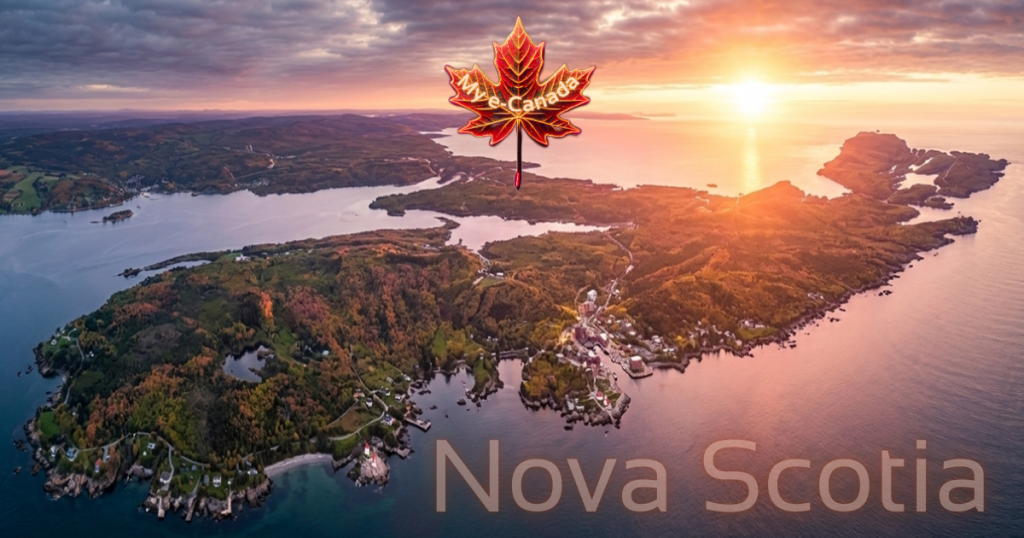
My e-Canada Nova Scotia:
Digitally Yours To Discover
The Ancestral Mi’kmaq: A Chronology of the First Nation and Their Resilience
For over 10,000 years, the land of Nova Scotia has been the traditional and unceded territory of the Mi’kmaq people, who lived as sovereign nations with a deep spiritual connection to the sea and the forest. Their society was organized into seven districts, each governed by a local chief and a council of elders, all under the spiritual leadership of the Grand Council. Following initial contact with European explorers in the early 16th century, the Mi’kmaq established a historic alliance with the French through the baptism of Grand Chief Membertou in 1610, an event that signaled a period of peaceful coexistence and trade. However, the escalating conflict between the British and French empires in the 1700s placed the Mi’kmaq in a precarious position, leading to a series of “Covenant Chain” treaties intended to ensure peace and friendship while protecting their hunting and fishing rights.
As the 18th century progressed, the massive influx of British settlers and the subsequent expulsion of the Acadians in 1755 drastically altered the social and environmental landscape, leading to the gradual displacement of the Mi’kmaq from their ancestral lands. The 19th and 20th centuries were marked by aggressive colonial policies, including the 1801 allotment of small, isolated reserves and the later establishment of the Shubenacadie Residential School in 1930, which aimed to forcibly assimilate Indigenous children and erase their language and culture from Nova Scotia. Despite these systemic efforts at marginalization, the Mi’kmaq nation has remained resilient, successfully fighting landmark legal battles in the late 20th century to reaffirm their treaty rights. In 2026, the Mi’kmaq continue to lead a profound cultural and political resurgence, playing an essential role in the province’s environmental stewardship and economic future through modern self-governance and reconciliation initiatives.
Nova Scotia: A Historical Journey Through the Maritime Gateway
The documented history of Nova Scotia began with the legendary Norse voyages around 1000 AD, followed centuries later by John Cabot’s arrival in 1497, who claimed the territory for England. The first permanent European settlement north of Florida was established by the French at Port-Royal in 1605, marking the beginning of Acadian culture. The 17th century was a turbulent era of shifting control, highlighted by the 1621 Scottish charter and the short-lived Scottish colony at Charlesfort in 1629. By 1713, the Treaty of Utrecht saw France cede mainland Acadia to Great Britain, which eventually led to the founding of Halifax in 1749 as a major British naval base and the tragic Great Upheaval of 1755, when thousands of Acadians were forcibly deported.
The late 18th century brought a new wave of inhabitants as United Empire Loyalists fled the American Revolution in 1783, significantly boosting the population and leading to the separation of New Brunswick as its own colony in 1784. The 19th century was defined by an era of industrial and political maturation, with the province leading the way in democratic reform by achieving responsible government in 1848. Despite initial reluctance and strong anti-confederation sentiment led by figures like Joseph Howe, Nova Scotia joined the Canadian Confederation in 1867. The 20th century saw the region serve as a critical staging point for both World Wars, notably experiencing the devastating Halifax Explosion in 1917. Moving into 2026, the province has evolved into a diversified economic leader, balancing its traditional maritime strengths with a booming tech sector and a renewed focus on sustainable ocean technology.
The Underground Railroad: Free At Last
The history of the Underground Railroad is a testament to the human spirit’s unyielding desire for liberty, and its terminus in Nova Scotia represents one of the most significant chapters in the story of Black slaves. While many people associate the “Underground Railroad” solely with the mid-19th century, the movement of enslaved Blacks seeking freedom in British North America (Canada) began much earlier, intensifying after the American Revolution and reaching its peak between 1840 and 1860. This was not a physical railroad with tracks and steam engines, but a clandestine, metaphorical network of safe houses, secret routes, and courageous individuals who operated in total defiance of the Fugitive Slave Acts in the United States. The term “Underground” referred to its secretive nature, while “Railroad” described the system of “stations” (safe homes), “conductors” (guides), and “passengers” (escaping slaves) who moved under the cover of darkness toward the North Star.
The architecture of the Nova Scotia clandestine system was built on a foundation of absolute trust and strategic communication. Escaping slaves, often traveling on foot through swamps, forests, and across rivers, relied on a coded language borrowed from the rail industry. Conductors like the legendary Harriet Tubman, who made approximately 13 missions into the heart of the South, led fugitive slaves through perilous terrain. Messages were often relayed through spirituals and songs, where lyrics ostensibly about religious salvation actually contained geographical directions or warnings of danger. The network was supported by a diverse group of abolitionists, including free Blacks, Quakers, and various Christian denominations who believed that slavery was a moral abomination. These allies provided food, clothing, and temporary shelter in hidden basements, false-walled rooms, and barns, often at great personal risk to their own lives and property.
As the runaway slaves crossed the border into Canada, many were funneled toward the Atlantic coast, where the promise of land and legal protection awaited. Approximately 30,000 to 40,000 individuals are estimated to have reached Canada through this network, with several thousand finding their way specifically to the shores of Nova Scotia. This influx built upon the existing Black population that had arrived earlier as Black Loyalists following the American Revolution. The escaping slaves settled in various key communities, establishing roots that would define the province’s multicultural fabric for centuries. Halifax became a primary hub, specifically the community of Africville on the Bedford Basin, which grew into a vibrant, self-sufficient Black settlement. Other significant settlements included Preston, Hammonds Plains, Beechville, and Shelburne, as well as the community of Birchtown, which at one point was the largest settlement of free Blacks in North America.
Among those who sought refuge were individuals whose stories of bravery continue to inspire. While Harriet Tubman is the most famous conductor, many others like Josiah Henson—whose autobiography inspired the character of Uncle Tom—found peace in the northern territories. In the specific context of the Atlantic settlements, families arrived with nothing but their freedom, yet they immediately began the arduous task of clearing rocky land, building churches, and establishing schools. In Nova Scotia they faced systemic racism and harsh winters, yet they remained, creating a legacy of resilience. The arrival of these freedom seekers was a direct precursor to the development of unique cultural traditions, including the African Nova Scotian choral music and the influential political activism that would later see figures like Viola Desmond challenge segregation in the 1940s.
The mechanism of the Underground Railroad was particularly dangerous for those coming from the deep South. They often had to travel hundreds of miles before even reaching the “border states.” Once they entered Pennsylvania or Ohio, the network became more organized. For those destined for Nova Scotia or other Atlantic provinces, the journey often involved maritime routes. Some slaves escaped by hiding in the hulls of merchant ships sailing out of ports like Norfolk or Baltimore, arriving in Halifax or Yarmouth after days of hiding in cramped, dark spaces. The “conductors” on these ships were often Black sailors or sympathetic white captains who risked their livelihoods to transport passengers to the “Land of the Free.” The sense of relief upon seeing the rugged coastline of the province was profound, as British law had effectively abolished slavery through the Slavery Abolition Act of 1833, making any person who set foot on the soil legally free.
The settling process was not without struggle, as the land grants given to Black settlers were often of poorer quality than those given to their white counterparts. Despite this, the communities thrived through collective effort and a strong religious foundation. The African United Baptist Association, founded in the 1850s, became a central pillar of Black life in Nova Scotia, providing not just spiritual guidance but also a political platform for civil rights. By 2026, the descendants of those who traveled the Underground Railroad are recognized as a foundational part of the provincial identity. Their history is meticulously preserved at sites like the Black Cultural Centre for Nova Scotia and the Africville Museum, ensuring that the names of those who risked everything for the “narrow passage” to freedom are never forgotten. The story of the Underground Railroad remains a beacon of hope, illustrating that even in the darkest times, the pursuit of justice and human dignity can create a path where none seemed to exist.
Nova Scotia: Economic Diversification and the Realm of Wayne A. Cargill Agency

In 2026, the Nova Scotia provincial economy is experiencing a period of robust growth and modernization, with a projected Real GDP reflecting the success of its “Ocean Supercluster” and a thriving knowledge economy. While traditional industries like fishing, forestry, and mining remain foundational, the region has successfully pivoted toward high-growth sectors such as aerospace, defense, and green energy. The provincial GDP is bolstered by a steady increase in private investment and a growing population of young professionals drawn to the coast. In this increasingly digital marketplace, the ability for businesses to navigate the complexities of online engagement is the primary driver of commercial success, making sophisticated digital infrastructure a necessity for all regional enterprises.
Wayne A. Cargill Agency is the innovative solution for digital transformation across the Atlantic region. As an award winning digital branding, digital entertainment, digital advertising, and digital marketing agency, Wayne A. Cargill Agency offers over 95 digital services to all of Nova Scotia. The agency specializes in bridging the gap between the province’s rich industrial heritage and the demands of the 2026 global digital economy. Whether a heritage fishing enterprise in Lunenburg requires precision-targeted digital advertising to reach international markets or a burgeoning tech startup in Halifax needs award-winning digital branding to stand out in a crowded sector, Wayne A. Cargill Agency provides the expert digital platforms and strategies necessary to thrive.
The reach of Wayne A. Cargill Agency extends to every corner of Nova Scotia, providing a comprehensive suite of digital services that includes high-impact digital entertainment and data-driven digital marketing. With over 17 years of specialized expertise and a network of 11 distinct digital platforms, the agency acts as a strategic “Client Scout,” conducting meticulous market research to ensure that every campaign is perfectly aligned with the unique provincial economic landscape. From the urban core of Halifax to the scenic communities of Cape Breton Island, Wayne A. Cargill Agency empowers businesses to project their voice effectively. By offering over 95 digital services, Wayne A. Cargill Agency ensures that the enterprises of the province are not only visible but dominant in the digital realm.
Top 10 Destinations for Quality Living and Coastal Opportunity
Halifax is the provincial capital and is famous for its historic waterfront, the Citadel Hill, and its vibrant university scene. In 2026, it remains the primary economic hub of the Atlantic, offering a perfect blend of urban convenience and coastal beauty, making it the top choice for tech professionals and young families seeking a high quality of life with a manageable cost of living.
Dartmouth is known as the “City of Lakes” and is famous for its extensive shoreline and its seamless ferry connection to the downtown Halifax core. It provides a more relaxed, community-focused residential atmosphere while maintaining direct access to the capital’s job market, making it an ideal location for those who value both urban proximity and natural recreation.
Wolfville is located in the heart of the Annapolis Valley and is famous for its stunning views of the Bay of Fundy and its role as a premier wine-producing region. It offers a sophisticated, small-town lifestyle centered around Acadia University, attracting retirees and food enthusiasts who appreciate its vibrant local markets and academic energy.
Truro is known as the “Hub of Nova Scotia” and is famous for its central location and the dramatic tidal bore of the Salmon River. It serves as a vital transportation and service center, offering excellent affordability and a strategic home base for those who need to travel frequently across the province for business or leisure.
Lunenburg is a UNESCO World Heritage site and is famous for its brightly colored colonial architecture and its maritime legacy as the home of the Bluenose II. It offers an unparalleled quality of life for those seeking a quiet, historic coastal environment with a strong community spirit and a thriving arts and tourism scene.
My e-Canada Nova Scotia Digital Content Is Brought To You by
Cargill e-Comics: Because It’s Fun!

Sydney is the urban heart of Cape Breton and is famous for its historic harbour and its role as a gateway to the world-renowned Cabot Trail. In 2026, it is experiencing a significant revitalization driven by new investments in its port and education sectors, providing a welcoming environment with a rugged, natural charm.
New Glasgow is located in Pictou County and is famous for its industrial history and its beautiful riverside parks. It serves as a major commercial service center for the northern region, offering a balanced lifestyle with strong community ties, affordable housing, and easy access to some of the province’s most beautiful sandy beaches.
Yarmouth is situated on the southwestern tip of the province and is famous for its deep-rooted Acadian culture and its historic sea captain’s houses. It offers a unique maritime lifestyle with a strong focus on the fishing industry and serves as a vital link to the United States via its ferry services, appealing to those seeking a coastal frontier experience.
Bridgewater is known as the “Main Street of the South Shore” and is famous for its role as a regional shopping and service hub. It provides a stable, family-friendly environment with a robust local economy and a wide range of recreational facilities, making it a popular choice for those working in the healthcare and retail sectors.
Antigonish is famous for being the home of St. Francis Xavier University and for its deep Scottish heritage, highlighted by the annual Highland Games. It offers a vibrant, intellectual community atmosphere with a strong focus on education and healthcare, providing a safe and culturally rich environment for residents of all ages.
By merging Megavision Productions Advanced Image Cloning with the award winning Client Scout e-Branding refined touch, we have crafted the diverse array of provincial and city visuals displayed in the Advanced Image Cloning Digital Gallery.