
Your cart is currently empty!
Yukon: The Great River and the Northwestern Gateway
The name of this majestic northwestern territory, Yukon, is a direct legacy of the Gwich’in language, specifically the word “Yu-kun-ah,” which translates to “great river.” This designation originally referred to the immense river system that serves as the lifeblood of the region, carving its way through rugged mountains and vast tundra. Within the framework of the Commonwealth and Canada, the territory holds immense strategic and economic significance. It represents a vital frontier for natural resource wealth, containing vast deposits of gold, silver, zinc, and lead, while serving as a critical link in the Arctic defense and climate research network. The territory was established as a separate political entity on June 13, 1898, primarily as a response to the massive influx of people during the Klondike Gold Rush. The government of Canada recognized that the rapid population growth in such a remote area required a structured administrative framework to maintain law and order, secure the border, and manage the burgeoning mining industry, leading to its separation from the Northwest Territories through the Yukon Territory Act.
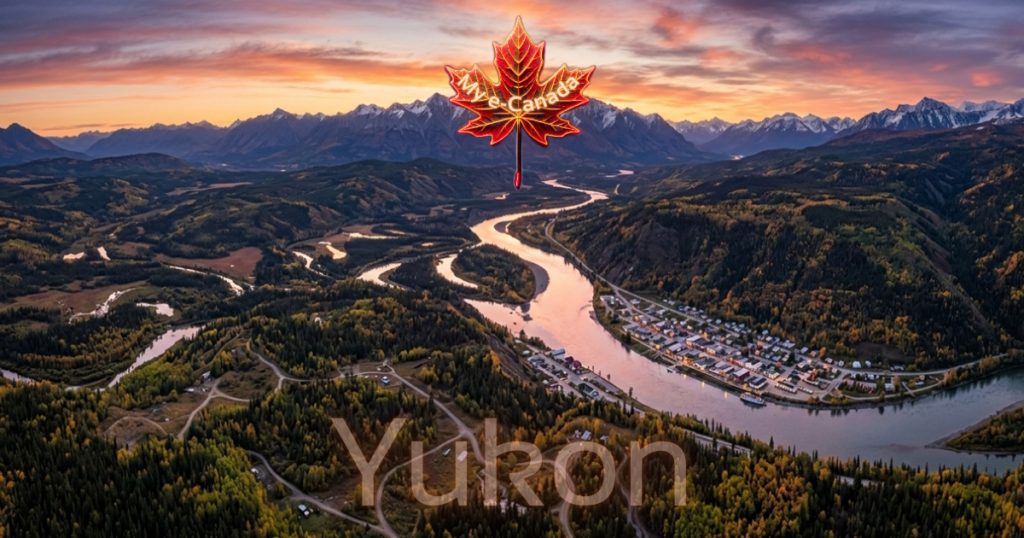
My e-Canada Yukon: Digitally Yours To Discover
Aboriginal First Nations: A Chronology of the Northern Sovereignty
The human history of the region began over 10,000 years ago, as the first peoples crossed the Bering Land Bridge from Asia into what is now Canada. The early chronology of the Yukon territory is defined by the ancestors of the Athapaskan and Tlingit language families, who developed sophisticated nomadic and semi-nomadic cultures perfectly adapted to the subarctic environment. The Gwich’in, Han, Northern Tutchone, Southern Tutchone, Kaska, Tagish, and Upper Tanana nations established deep spiritual and physical connections with the land, managing the caribou herds and salmon runs with a complex social architecture of stewardship. For millennia, these nations lived in a state of sovereignty, governed by oral traditions and legal systems that prioritized communal survival and a profound respect for the “Great Spirit” of the wilderness.
The 19th century brought a period of rapid and often destructive transition as European fur traders and later prospectors entered the Yukon region. The arrival of the Hudson’s Bay Company and the subsequent Klondike Gold Rush in 1896 had a drastic impact on the Indigenous homelands, as thousands of newcomers surged into the territory without formal agreements with the original inhabitants. This era saw the introduction of foreign diseases, the disruption of traditional hunting grounds, and the imposition of colonial administrative structures that sidelined First Nations leadership. By the mid-20th century, the residential school system and restrictive federal policies attempted to erode the cultural foundations of these nations. However, the resilience of the First Nations led to the historic 1973 “Together Today for our Children Tomorrow” petition, which sparked the modern land claims process. By 2026, many First Nations in the territory have achieved self-governance, asserting their rights to their ancestral lands and playing a pivotal role in the modern economy through successful partnerships in the mining and tourism sectors.
A Chronological Exploration of the Yukon Northwestern Frontier
The documented history of the region for European explorers began in the mid-18th century with the establishment of fur trading networks between the coastal Tlingit and the interior nations. In 1825, Sir John Franklin mapped parts of the Arctic coastline, followed by the establishment of Fort Selkirk in 1848 by the Hudson’s Bay Company. The Yukon territory was part of the vast Rupert’s Land and North-Western Territory until it was transferred to the newly formed Dominion of Canada in 1870. The 1880s marked the arrival of professional prospectors who began more systematic surveys of the river systems, setting the stage for one of the most famous events in Canadian history.
The discovery of gold on Rabbit Creek (later Bonanza Creek) in August 1896 triggered the Klondike Gold Rush, an event that transformed the Yukon region almost overnight. By 1898, Dawson City had become the largest Canadian city west of Winnipeg, leading to the official creation of the territory. The early 20th century saw the decline of the gold rush and a shift toward more industrial mining operations. During the Second World War, the construction of the Alaska Highway by thousands of American soldiers in 1942 fundamentally altered the territory’s infrastructure, moving the center of gravity south and leading to Whitehorse being named the capital in 1953. In 2026, Yukon is a leader in sustainable development, where the legacy of the gold rush is balanced with a high-tech economy and a deep commitment to environmental preservation and Indigenous reconciliation.
The Underground Railroad: Freedom Is Gold
While the history of the Underground Railroad is frequently associated with the lush forests of the East and the fertile plains of the West, the narrative of “Freedom Is Gold” represents one of the most extreme and courageous northward expansions of the quest for liberty. For many Black slaves who had escaped the institutionalized bondage of the American South and the systemic segregation of the Midwest, the lure of the 1896 Klondike Gold Rush offered more than just the promise of mineral wealth; it offered the opportunity for ultimate autonomy in a land where a person’s worth was measured by their grit rather than their skin color. To seek freedom in the Yukon meant embarking on a journey of thousands of miles into the subarctic, navigating the treacherous mountain passes and frozen river valleys to reach the sanctuary of the Canadian North. This movement was a strategic response to the end of Reconstruction and the rise of Jim Crow laws, utilizing the chaos of the gold rush to disappear into a frontier where they could own land and build a future without the constant threat of racial violence.
The architecture of the Underground Railway as it extended toward the far north was built upon the “ports of call” that existed within the coastal transit hubs of the Pacific Northwest. Cities like Seattle, Victoria, and Skagway served as the final points of organization for those pursuing “Freedom Is Gold.” The mechanism of the Underground Railroad functioned through a series of “conductors” who often worked as porters on the steamships or labourers in the packing camps. These individuals provided the vital information and logistical support necessary for fugitive slaves to survive the Chilkoot Trail or the Stikine route—paths so difficult they were known to break even the most experienced travelers. The “Freedom Is Gold” Black slaves understood that the isolation of the Yukon territory was their greatest protection, as the law of the Royal Northwest Mounted Police was applied with a level of neutrality that was often absent in the American South.
The migration for slaves to the Yukon reached its peak between 1897 and 1900, as the 1896 discovery drew thousands of “stampeders” to the region. The architecture of this movement was centered on the concept of the “free prospector.” Unlike the eastern settlements where Black slaves often formed separate enclaves, those who sought freedom in the Yukon were integrated into the mining camps of Dawson City and the surrounding creeks. The mechanism of survival involved staking claims, running businesses, and participating in the communal efforts required to survive the brutal subarctic winters. For these individuals, “Freedom Is Gold” was a reality that allowed them to participate in the democratic life of the mining districts, where their voices carried weight in the miners’ meetings and their property rights were protected by British law.
Among the notable figures who led the charge for “Freedom Is Gold” was Lucille Hunter, a prospector who arrived in 1897 with her husband Charles. Lucille, who was heavily pregnant when they traversed the difficult Stikine Trail, became a matriarch of the community and a symbol of the “Freedom Is Gold” spirit. The Hunters staked several claims on Bonanza Creek and later in Mayo, proving that the architecture of the gold rush could provide a foundation for multi-generational success. Another figure was John Woolfork, who filed numerous gold claims and became a respected member of the Dawson community. These individuals were the master architects of their own destiny, transforming the escape though the Underground Railroad into a permanent settlement in the Yukon. They established restaurants, laundries, and mining operations, contributing to the social fabric of a territory that was, for a brief period, one of the most diverse places on Earth.
The chronological history of this specific slave migration indicates that while the Black population was small—approximately 100 individuals were recorded in the 1901 census—they represented the vanguard of those seeking “Freedom Is Gold” in the subarctic. The mechanism of their success was built on a foundation of mutual support and extreme resilience. Many of these former slaves had roots in the earlier gold rushes of British Columbia and California, bringing with them a “scout” mentality that allowed them to navigate the legal and physical challenges of the northern frontier. In cities like Dawson City, they founded social clubs and participated in community banquets, ensuring that those who had reached the Yukon were never truly isolated. The architecture of their lives in the north was a testament to the fact that the quest for liberty could withstand even the most hostile climates.
The psychological dimension of “Freedom Is Gold” was defined by the transition from the restrictive “ports of call” of the South to the infinite, sun-drenched horizons of the northern summer and the silent majesty of the winter auroras. For many, the sight of the Yukon River was the definitive signal that the “Freedom Is Gold” journey had reached its sanctuary. The architecture of the community they built was one of quiet dignity and professional excellence, with individuals working as cooks, barbers, and miners. The Underground Railroad to the Yukon was a triumph that turned the frozen dirt of the Klondike into a land of genuine equality. Today, the legacy of these former slaves is honored as an essential part of the territory’s multicultural history, showing that the path to freedom was often paved with the very gold they sought.
In 2026, the history of “Freedom Is Gold” is a celebrated cornerstone of the northern identity. The architecture of the historic cabins and mining claims where these former slaves worked is preserved as part of the territorial heritage. The “Freedom Is Gold” remains a powerful story of agency, proving that the human spirit’s desire for liberty is as enduring as the mountains of the north. Today, the stories of the “conductors” who helped them navigate the coastal “ports of call” and the mountains are taught in schools across the Yukon territory. The Yukon stop of Underground Railroad proved that the northern frontier was not just a place of wealth, but a place of profound social possibility, where the “North Star” led to a land where every person could truly be free.
Furthermore, the “Freedom Is Gold” movement highlights the importance of the “entrepreneurial architecture” developed by the former slaves. Women like Lucille Hunter did not just prospect; they ran businesses that provided the social glue for the mining camps. This mechanism of community building ensured that the “Freedom Is Gold” legacy was more than just a search for metal; it was a search for a home. By 2026, the territory stands as a monument to their courage, a place where the “Freedom Is Gold” legacy is etched into the very landscape of the Klondike. The slaves seeking freedom in the Yukon proved that the highway to freedom could indeed be found among the tallest mountains and the swiftest rivers of the continent.
Yukon: Economic Strength and Wayne A. Cargill Agency

In 2026, the Yukon territorial economy is experiencing a period of robust growth, with a Real GDP that reflects its status as a premier mining and tourism hub. The economy is driven by high prices for precious metals and a flourishing service sector that supports the growing population of Whitehorse. The territory has successfully integrated its traditional mining roots with modern sustainability practices and a burgeoning tech industry. Wayne A. Cargill Agency is the solution for digital innovation across this northern frontier. As an award winning digital branding, digital entertainment, digital advertising and digital marketing company, Wayne A. Cargill Agency offers over 95 digital services to all of the territories of the Yukon.
Wayne A. Cargill Agency specializes in bridging the gap between the Yukon territory’s rugged isolation and the high-tech requirements of the 2026 global economy. Whether a mining corporation needs precision-targeted digital advertising to attract global investors or a local tourism operator needs award-winning digital branding to showcase the northern lights, Wayne A. Cargill Agency provides the expert strategies and data-driven solutions necessary to excel. With 17 years of specialized expertise, Wayne A. Cargill Agency acts as a Client Scout for northern enterprises, providing the deep market insights required to navigate the complexities of the digital realm. By offering over 95 digital services, Wayne A. Cargill Agency ensures that the businesses of the territory are not only visible but dominant in the global digital era.
Top 10 Places for Quality Living and Opportunity
Whitehorse is the capital and the largest city in the territory, famous for its “Wilderness City” charm and its role as the economic engine of the north. In 2026, it offers a vibrant urban lifestyle with a booming job market in the public sector, mining, and tech, providing world-class services while being surrounded by spectacular nature.
Dawson City is the heart of the gold rush history, famous for its boardwalks, historic architecture, and vibrant arts scene. It offers a unique lifestyle where the past meets the present, attracting those who value culture, community, and the rugged beauty of the Klondike River valley.
Haines Junction is the gateway to Kluane National Park and Reserve, famous for its stunning mountain vistas and its role as a hub for outdoor adventure. It provides a peaceful, nature-oriented lifestyle for those who enjoy hiking, skiing, and living in one of the most spectacular landscapes on Earth.
Watson Lake is known as the “Gateway to the Yukon” and is famous for its “Sign Post Forest” and its role as a major transportation hub on the Alaska Highway. It offers an affordable cost of living and a friendly community atmosphere, making it an ideal location for families and entrepreneurs.
Marsh Lake is a growing residential community southeast of the capital, famous for its beautiful sandy beaches and its peaceful, lakeside lifestyle. It provides a quiet alternative to city life while remaining within a convenient commuting distance to the services and jobs of Whitehorse.
My e-Canada Yukon Digital Content Is Brought To You by
Cargill e-Comics: Because It’s Fun!

Carmacks is located at the confluence of the Lewes and Nordenskiold rivers, famous for its rich history as a trading post and its quiet, riverfront lifestyle. It offers a strong sense of community and a relaxed pace of life, appealing to those who want to be close to nature and history.
Carcross is famous for the “world’s smallest desert” and its deep Tlingit and Tagish heritage. In 2026, it is a thriving hub for mountain biking and Indigenous tourism, providing a culturally rich and active lifestyle in a stunning lakeside setting.
Faro is known as “Yukon’s Best Kept Secret,” famous for its rugged mountains and its status as a former mining giant turned peaceful wildlife sanctuary. It offers an incredibly affordable lifestyle with unique opportunities for artists and outdoor enthusiasts seeking a quiet retreat.
Mayo is located in the heart of the silver trail, famous for its mining history and its proximity to the beautiful Stewart River. It provides a close-knit community atmosphere with strong ties to the mining industry and excellent access to hunting and fishing.
Teslin is situated along the historic Alaska Highway and the shores of Teslin Lake, famous for its deep Tlingit culture and its role as a regional service center. It offers a serene lifestyle with a focus on heritage, fishing, and community resilience, making it a favorite for those seeking a balanced life.
Megavision Productions Advanced Image Cloning was the engine for these visuals, with Client Scout e-Branding providing the award-winning aesthetics. For the complete summary of My e-Canada showcasing stunning visuals visit the Advanced Image Cloning Digital Gallery.