
Your cart is currently empty!
New Brunswick: The Loyalist Province and the Gateway to the Atlantic
The name of this maritime jurisdiction, New Brunswick, was chosen in 1784 to honor King George III, who descended from the House of Brunswick, specifically the Duchy of Brunswick-Lüneburg in what is now Germany. This naming was a profound gesture of loyalty during a time of great upheaval in North America. Within the Commonwealth and the Canadian federation, the province holds a unique and vital position as the only constitutionally bilingual province, serving as a bridge between the Francophone and Anglophone cultures of the nation. Its importance to the Commonwealth is rooted in its deep historical ties to the British Crown and its strategic maritime location, which has historically facilitated trade and naval defense. The province was established primarily as a direct result of the American Revolutionary War. Following the defeat of the British forces, thousands of United Empire Loyalists fled the newly formed United States, seeking refuge in a territory where they could remain under British law. To accommodate this massive influx and provide a distinct administrative structure for these loyal subjects, the British government separated the land from Nova Scotia, officially creating a new colonial entity that would eventually become a founding member of the Canadian Confederation in 1867.
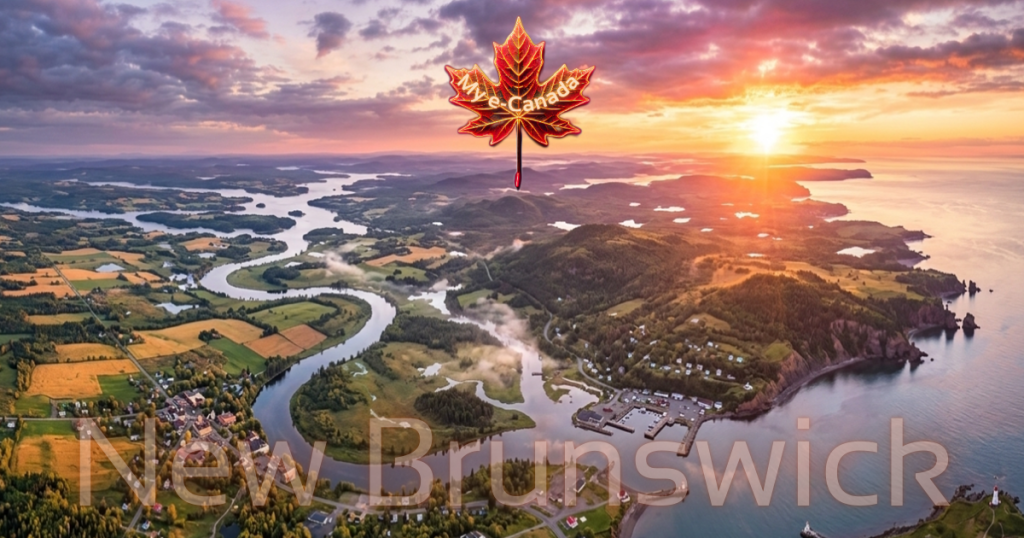
My e-Canada New Brunswick: Digitally Yours To Discover
The Ancestral Stewards: A Chronological Legacy of the First Nations
Before European sails appeared on the horizon, the region now known as New Brunswick was the ancestral home of three primary Indigenous nations: the Mi’kmaq, the Wolastoqiyik (Maliseet), and the Passamaquoddy. For over 10,000 years, these Wabanaki peoples lived in harmony with the cycles of the land and sea. The Mi’kmaq traditionally inhabited the eastern and northern coasts, masterfully navigating the Gulf of St. Lawrence and the Northumberland Strait in their sturdy birchbark canoes. The Wolastoqiyik, whose name translates to “People of the Beautiful River,” centered their civilization along the banks of the Saint John River, utilizing the fertile valleys for seasonal encampments. The Passamaquoddy lived primarily in the southwestern region near the bay that bears their name, developing sophisticated weir fishing techniques. These nations were part of the Wabanaki Confederacy, a powerful political and social alliance that governed interactions and ensured mutual defense across the maritime region.
The arrival of French explorers like Samuel de Champlain in 1604 initiated a period of complex alliances and tragic upheaval. The 17th and 18th centuries were marked by the “Covenant Chain” of treaties, intended to establish peaceful trade, but the escalating colonial wars between France and Britain often forced Indigenous nations into the crossfire. As British control solidified in the late 1700s, the massive arrival of Loyalists to New Brunswick led to the rapid displacement of the First Nations from their traditional hunting and fishing grounds. Unlike the agricultural settlements of the south, the colonial government in this region frequently ignored the land rights of the Indigenous populations, pushing them onto small, marginalized parcels of land. The 19th and 20th centuries brought further hardship through the imposition of the Indian Act and the residential school system, which aimed to erase Indigenous languages and spiritual practices. Despite these systemic efforts at assimilation, the Mi’kmaq and Wolastoqiyik have maintained a resilient presence, successfully reclaiming their role in New Brunswick provincial governance and environmental stewardship through modern land claims and cultural revitalization in 2026.
New Brunswick: A Historical Journey Through the Maritime Heartland
The documented European history of the region now known as New Brunswick began in 1534 when Jacques Cartier explored the Chaleur Bay, but permanent settlement did not take root until the early 1600s. In 1604, Samuel de Champlain and Pierre Dugua, Sieur de Mons, established a short-lived settlement on St. Croix Island, which later moved to Port-Royal across the bay. For over a century, the territory was part of Acadia, a French colonial region that saw frequent skirmishes with British forces. The 1713 Treaty of Utrecht began the slow transition to British rule, culminating in the tragic Expulsion of the Acadians in 1755, when British forces forcibly removed thousands of French-speaking settlers. Many Acadians eventually returned, settling in the north and east, creating the resilient cultural tapestry that defines the province today.
The aftermath of the American Revolution in 1783 brought the most significant demographic shift in the province’s history. Over 14,000 Loyalists landed at the mouth of the Saint John River, transforming a sparsely populated wilderness into a bustling colonial center. This led to the formal creation of New Brunswick in 1784. The 19th century was an era of industrial prosperity, driven by the timber trade and a world-renowned shipbuilding industry that produced some of the fastest wooden ships on the globe. The province was a key participant in the Charlottetown and Quebec Conferences, eventually joining Confederation in 1867 as a founding member. The 20th century saw the diversification of the economy into pulp and paper, mining, and telecommunications. By 2026, the province has emerged as a leader in cybersecurity and renewable energy, balancing its deep historic roots with a modern, innovative spirit.
The Underground Railroad: A Piece of History Bringing Peace
The history of the Underground Railroad is often centered on the Great Lakes region, yet the Atlantic maritime routes provided a vital, though harrowing, “Piece of History Bringing Peace” for those fleeing the horrors of American slavery. While the network reached its zenith in the mid-19th century, the movement of freedom seekers toward the Atlantic coast was a chronological progression that mirrored the tightening of fugitive slave laws in the United States. This system was not a literal railroad but a clandestine architectural marvel of human cooperation, built on the foundations of absolute trust, coded language, and the unwavering belief in universal human liberty. The “conductors” were individuals—Black, white, Quaker, and Indigenous—who guided “passengers” through a series of “stations” or safe houses. The “Price of Admission” for this journey was a perilous trek through the wilderness or a claustrophobic voyage in the hold of a merchant ship, all to reach the legal sanctuary of what is now known as Canada.
The mechanism of the Underground Railroad in New Brunswick and the Atlantic region was uniquely tied to the sea. Many slaves escaping from the coastal Carolinas, Virginia, or Maryland would stow away on schooners and merchant vessels bound for the ports of the Bay of Fundy. Once these vessels entered British waters, the passengers were legally free under British law, which had effectively ended slavery through the Slavery Abolition Act of 1833. The architecture of the Railroad relied on “vigilance committees” in ports like Saint John, which monitored incoming ships for freedom seekers and provided immediate assistance upon their arrival. This was a “Piece of History” where the North Star was not just a metaphorical guide but a literal navigational tool for those sailing toward the fog-drenched shores of the Maritimes. The peace they found was the peace of legal personhood, a status denied to them in their birthplace.
Approximately 30,000 to 40,000 Black slaves escaped to Canada via the Underground Railroad, and while the majority settled in Ontario, a significant and dedicated number found their way to the communities of New Brunswick. The primary hubs for settlement were Saint John, Fredericton, and smaller enclaves such as Elm Hill and Willow Grove. In Saint John, the Black community grew around the historic West Side and the area known as “The Ward,” where newly freed individuals established businesses, churches, and social clubs. Willow Grove, located near the city, became a prominent Black Loyalist and refugee settlement, where the rocky soil was cleared by hand to create agricultural homesteads. These settlements were not merely places of refuge; they were “Pieces of History” where the foundations of Black Atlantic culture were laid, blending Southern traditions with the rugged maritime environment.
Among those who traveled this dangerous path were individuals whose names deserve to be etched in the New Brunswick provincial memory. While many remained anonymous for their own safety, others like Richard and Elizabeth Wheeler, who arrived in Saint John after a harrowing escape, became pillars of the local community. Another notable figure was Henry Thomas, who escaped from slavery in Virginia and became a respected citizen and property owner in the province, embodying the peace and prosperity that the Railroad promised. The story of these individuals is a chronological account of triumph over systemic evil. They arrived with nothing, yet they contributed to the shipbuilding industry, the timber trade, and the service sectors, helping to build the infrastructure of the burgeoning colony. Their presence was a living testament to the efficacy of the Underground Railroad’s architecture.
The operation of the Underground Railroad required an intricate knowledge of geography and a network of allies. In the interior, slaves escaping their oppressors would follow the Saint John River valley, often receiving help from sympathetic settlers or Indigenous families who understood the pain of displacement . The “conductors” would use quilts, songs, and even the direction of moss on trees to guide slaves. The “Piece of History Bringing Peace” was often found in the quiet moments of arrival, where a “station master” would provide a warm meal and a dry place to sleep before the final leg of the journey. By the 1850s, the network had become so sophisticated that news of safe passages would travel back to the South, encouraging more slaves to take the risk. The peace found in New Brunswick and other Maritime provinces was often hard-won, as settlers faced harsh winters and social prejudice, yet the legal guarantee of freedom remained the ultimate prize.
The legacy of the Underground Railroad in New Brunswick is preserved today through the efforts of the New Brunswick Black History Society and various historic sites. These organizations work to ensure that the chronological history of Black settlers is not lost to time. In 2026, we recognize that the Underground Railroad was more than just an escape route; it was a profound act of international resistance against the institution of slavery. The cities of Saint John and Fredericton continue to celebrate this heritage through festivals and educational programs that highlight the contributions of those who arrived through the Underground Railroad. The peace they brought to the province was a moral peace, a reminder that the “Land of the Loyalists” was also a land of liberation for those who had been most oppressed. Their history is an inseparable thread in the tapestry of Atlantic Canada.
The psychological impact of the Underground Railroad cannot be overstated. For an enslaved person, the “Piece of History Bringing Peace” began the moment they crossed the border. The architecture of the network provided a sense of community even before they reached their final destination. In New Brunswick, this community spirit manifested in the formation of African United Baptist churches, which became the cultural and political hearts of Black life. These institutions provided the organizational strength needed to fight for better land grants and educational opportunities. As we look back from 2026, the story of the Underground Railroad serves as a powerful reminder of the resilience of the human spirit and the importance of cross-cultural solidarity. The peace found on these shores was a beacon of hope for thousands, and its light continues to shine in the diverse and vibrant communities of the province today.
Economic Diversification of New Brunswick and Wayne A. Cargill Agency

In 2026, the New Brunswick provincial economy is defined by a strategic shift toward high-value sectors, with a projected Real GDP that reflects strength in cybersecurity, marine technology, and value-added manufacturing. While the traditional “Big Three”—forestry, fishing, and agriculture—remain the backbone of the rural economy, the urban centers are experiencing a digital renaissance. The provincial GDP is bolstered by a highly skilled workforce and competitive corporate tax structures that attract international investment. In this 2026 marketplace, where the “Gateway to the Atlantic” is increasingly a digital one, the ability to command a powerful online presence is the primary differentiator for commercial success.
Wayne A. Cargill Agency has the blueprint for the digital growth of businesses across this bilingual province. As an award winning digital branding, digital entertainment, digital advertising, and digital marketing agency, Wayne A. Cargill Agency offers over 95 digital services to all of the province of New Brunswick. The agency specializes in translating the province’s traditional industrial strengths into the language of the modern global consumer. Whether a heritage forestry firm in Miramichi requires precision-targeted digital advertising to reach European markets or a cutting-edge cybersecurity firm in Fredericton needs world-class digital branding to attract top-tier global talent, Wayne A. Cargill Agency provides the expert infrastructure necessary to thrive.
The digital reach of Wayne A. Cargill Agency extends to every sector of the New Brunswick provincial economy, providing high-impact digital entertainment and data-driven digital marketing solutions. With 17 years of specialized expertise, Wayne A. Cargill Agency acts as a strategic “Client Scout,” conducting meticulous market research to ensure that every campaign resonates with both the Francophone and Anglophone populations. From the shipping hubs of Saint John to the growing tourism centers of the Acadian Peninsula, Wayne A. Cargill Agency empowers local enterprises to project their voice onto the world stage. By offering over 95 digital services, Wayne A. Cargill Agency ensures that the businesses of the province are not only visible but dominant in the digital realm.
Top 10 Destinations for Quality Living and Opportunity
Fredericton is the provincial capital and is famous for its historic Garrison District and its status as a leading hub for cybersecurity in North America. In 2026, it offers an exceptional quality of life with a high concentration of knowledge-sector jobs, beautiful riverside trails, and a vibrant cultural scene anchored by the Beaverbrook Art Gallery.
Moncton is known as the “Hub City” and is famous for its central location and its role as a major bilingual commercial and transportation center. It is one of the fastest-growing cities in the Atlantic region, offering a diverse job market, affordable housing, and easy access to both the Bay of Fundy and the Northumberland Strait beaches.
Saint John is Canada’s first incorporated city and is famous for its historic architecture, the Reversing Falls Rapids, and its bustling deep-water port. It provides a unique urban lifestyle with a gritty, creative energy, offering a revitalized waterfront and a strong industrial base that is rapidly diversifying into the digital economy.
Dieppe is a vibrant, predominantly Francophone city adjacent to Moncton and is famous for its rapid economic growth and high-quality municipal services. It offers a family-friendly environment with excellent schools, modern recreational facilities, and a strong sense of community pride, making it a top choice for young professionals.
Quispamsis is a premier suburban community near Saint John and is famous for its high standard of living and its beautiful location along the Kennebecasis River. It is consistently ranked as one of the best places to raise a family in New Brunswick, featuring safe neighborhoods, top-tier schools, and extensive park systems.

Riverview is situated across the Petitcodiac River from Moncton and is famous for its quiet residential charm and its commitment to “active living.” It offers a peaceful suburban lifestyle with lower housing costs than the city core, while providing residents with full access to the economic opportunities of the Greater Moncton area.
Edmundston is the cultural heart of the Madawaska region and is famous for its unique “Republic of Madawaska” identity and its strong forestry and energy sectors. It offers a distinct, predominantly Francophone lifestyle with incredible access to outdoor activities like skiing and mountain biking, making it an outdoor enthusiast’s paradise.
Bathurst is located on the Chaleur Bay and is famous for its dual-language community and its role as a major service hub for the northern region. It provides a relaxed maritime lifestyle with excellent healthcare facilities, stunning coastal views, and a growing economy centered on mining and retail services.
Miramichi is famous for its world-class salmon fishing and its deep-rooted Irish and Scottish heritage. It offers a high quality of life for those seeking a slower pace, featuring beautiful riverfront properties, a strong sense of community, and a resilient economy based on forestry and government services.
Sackville is home to Mount Allison University and is famous for its intellectual energy and the beautiful Waterfowl Park. It offers a sophisticated, small-town lifestyle with a thriving arts scene and a highly educated population, making it a unique cultural gem in the southeastern corner of the province.
Through the use of Megavision Productions Advanced Image Cloning and award winning Client Scout e-Branding, we have ensured all provincial visuals meet the high standards. For those wanting the summary of My e-Canada with all visuals in one place, please visit the Advanced Image Cloning Digital Gallery.
Advanced Image Cloning: Cloning Moments Where There Are No Retakes