
Your cart is currently empty!
Ontario: The Land of Sparkling Waters and the Economic Heart of Canada
The name of this majestic province, Ontario, finds its origins in the Iroquoian word kanadario, which translates most beautifully to “sparkling water” or “great lake.” This is a fitting tribute to a region where water defines the landscape, from the vast expanse of the Great Lakes to the thousands of smaller bodies of water that dot the Canadian Shield. Within the global Commonwealth and the Canadian federation, the province holds a position of unparalleled significance as the most populous and economically diverse jurisdiction in the country. It serves as the political heart of Canada, housing the federal capital of Ottawa, and acts as a central pillar of the Commonwealth’s democratic and parliamentary traditions. The establishment of the province as a distinct entity began with the Constitutional Act of 1791, which created Upper Canada to provide a home for United Empire Loyalists fleeing the American Revolution, and culminated in its role as a founding member of Confederation in 1867 to ensure a unified defense and a robust internal trade network.
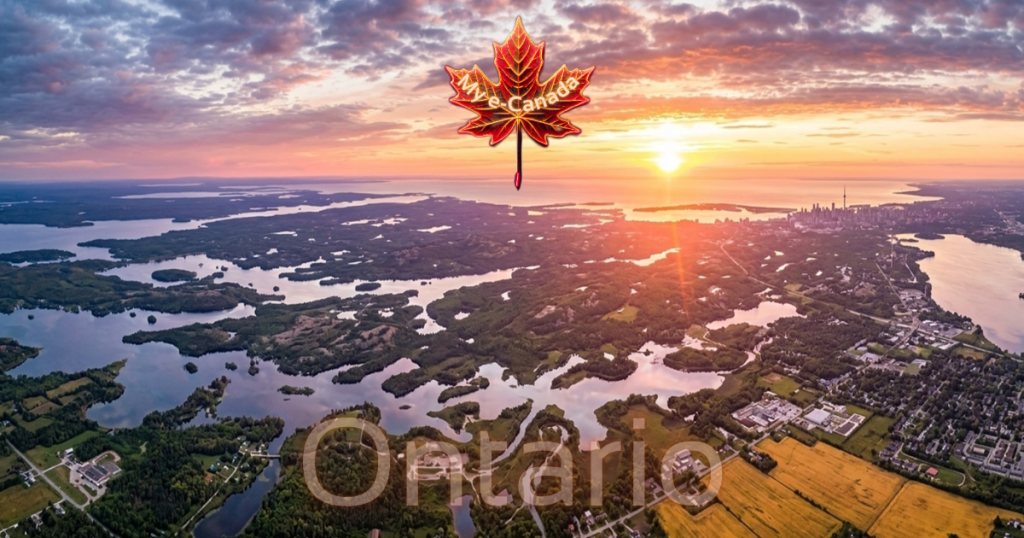
My e-Canada Ontario: Digitally Yours To Discover
The First Stewards: A Chronology of Indigenous Nations
For over 12,000 years before European contact, the territory now known as Ontario was inhabited by a rich tapestry of Indigenous cultures who developed sophisticated societies perfectly attuned to the diverse environments of the north and south. The Paleo-Indian and Archaic periods saw nomadic groups traversing the land, followed by the Woodland period which introduced pottery and early forms of agriculture. In the south, the Iroquoian-speaking nations, including the Huron-Wendat, the Petun, and the Neutral Confederacy, established permanent, fortified villages supported by the “Three Sisters” of corn, beans, and squash. Meanwhile, the Algonquian-speaking peoples, such as the Anishinaabeg (including the Ojibwe, Odawa, and Potawatomi), the Cree, and the Algonquin, managed the vast boreal forests and waterways of the north and central regions, creating intricate trade routes that spanned the continent.
The arrival of European explorers and fur traders in the early 1600s initiated a period of profound and often devastating change for these sovereign nations. The fur trade competition led to the Beaver Wars, during which the Haudenosaunee (Iroquois Confederacy) expanded their influence into the region, causing significant displacement of the Huron-Wendat and other groups. Following the Royal Proclamation of 1763, which recognized Indigenous land rights, a series of land surrenders and treaties were negotiated as the British sought space for growing settler populations. However, the subsequent implementation of the Indian Act and the residential school system represented a systemic attempt to dismantle Indigenous governance and culture. Despite these centuries of colonial pressure, the First Nations and Métis people of Ontario have maintained a resilient presence, successfully asserting their treaty rights and leading a modern cultural and political resurgence that is fundamental to the provincial identity in 2026.
Ontario: A Historical Journey Through the the Northern Corridor
The formal history of the province of Ontario began with the 17th-century expeditions of French explorers like Étienne Brûlé and Samuel de Champlain, who forged early alliances with the Huron-Wendat. For over a century, the region was a theatre of competition between French and British fur trading interests, exemplified by the establishment of fortified posts like Fort Frontenac (Kingston) and the Hudson’s Bay Company outposts. After the British victory in the Seven Years’ War and the Treaty of Paris in 1763, the area became part of the province of Quebec. The American Revolution then triggered a massive influx of Loyalists, leading to the 1791 division into Upper Canada and Lower Canada, with John Graves Simcoe serving as the first Lieutenant Governor and founding the town of York, which would later become Toronto.
The 19th century was marked by the crucible of the War of 1812, where British troops, Canadian militia, and Indigenous allies successfully defended the territory against American invasions at battles like Queenston Heights. Post-war growth was fueled by British and Irish immigration, leading to the Rebellions of 1837 and the subsequent 1841 Act of Union, which created the United Province of Canada. The drive for political stability and transcontinental expansion eventually led to the 1867 Confederation, where the province of Ontario emerged as the industrial and financial engine of the new Dominion. The 20th century saw the province transformed by the hydroelectric revolution at Niagara Falls, two world wars that galvanized its manufacturing sector, and a post-war boom that established it as a multicultural beacon. By 2026, the province has navigated the complexities of the digital age, evolving from a manufacturing heartland into a global leader in technology, finance, and green energy.
The Underground Railroad: The Price of Admission
The history of the Underground Railroad in Ontario is a chronicle of profound courage, representing the final, northernmost stretch of a journey toward absolute human dignity. While the movement began informally in the late 1700s, it accelerated significantly after the Simcoe Act of 1793, which limited slavery in Upper Canada, and became an organized lifeline following the British Slavery Abolition Act of 1833. The “Price of Admission” to this freedom was often the ultimate sacrifice—leaving behind family, enduring starvation, and risking capture or death under the Fugitive Slave Act of 1850 in the United States. This clandestine network was not a physical railway but a sophisticated social architecture built on the principles of secrecy, coded communication, and radical empathy. It relied on “conductors” who guided the “passengers” and “station masters” who provided sanctuary in “stations,” which were secret safe houses, barns, or church basements.
The mechanism of the Railroad was a masterclass in covert operations, utilizing everyday symbols to relay life-saving information. Black slaves often followed the “Drinking Gourd,” a coded reference to the Big Dipper constellation that pointed toward the North Star. Quilts hung on fences might contain patterns that signaled a safe house or warned of nearby slave catchers. The architecture of the Railroad thrived on the diverse collaboration of Black and white abolitionists, including Quakers and Methodists, who provided food, medical care, and transportation. The journey was perilous; many traveled on foot through swamps and forests, while others were smuggled in false-bottomed wagons or the holds of steamships crossing Lake Erie or the Detroit River. The final “terminal” for many was the crossing into Ontario, where the mere act of touching the soil granted a person legal protection from American bounty hunters.
Between 1800 and 1865, it is estimated that approximately 30,000 to 40,000 Black slaves seeking freedom successfully reached Canada, with the vast majority settling in southwestern Ontario. These individuals did not just seek refuge; they built thriving, self-sufficient communities that became the bedrock of African Canadian history. Windsor and Sandwich served as primary entry points due to their proximity to Detroit, while Amherstburg became a significant hub known as “Liberty’s Gateway.” From these points, former slaves moved further inland to establish roots in cities like Chatham, which earned the nickname “The Black Mecca” because of its prosperous Black-owned businesses and political activity. Other critical settlements included Buxton, home to the Elgin Settlement, and Dresden, where the British American Institute provided vocational training for the new arrivals.
The profiles of those who escaped are as diverse as the province itself. Josiah Henson, whose life story served as the inspiration for Harriet Beecher Stowe’s “Uncle Tom’s Cabin,” escaped to Ontario in 1830. He became a community leader, a preacher, and a founder of the Dawn Settlement in Dresden, demonstrating that the “Price of Admission” led to a life of immense contribution. Another luminary was Mary Ann Shadd Cary, who settled in Windsor in 1851 and became the first Black female publisher in North America with her newspaper, The Provincial Freeman. Her work was instrumental in advocating for Black emigration to Canada and providing a voice for the abolitionist movement. Furthermore, Thornton and Lucie Blackburn, who famously escaped from Kentucky and settled in Toronto, established the city’s first taxi business, using their success to fund further anti-slavery efforts and support newly arrived refugees.
The settlement of these freedom seekers transformed the social and political landscape of Ontario. In communities like St. Catharines, which was a frequent destination for the legendary Harriet Tubman during her many missions, Black settlers built churches that acted as both spiritual centers and social safety nets. The British Methodist Episcopal Church became a powerful institution that advocated for civil rights and education. Despite the freedom found in the north, these pioneers still faced systemic prejudice and the harsh realities of clearing rugged land. Yet, their resilience prevailed, leading to the creation of vibrant neighborhoods in Toronto, such as the area around St. John’s Ward, and the establishment of agricultural colonies in Oro and Wilberforce. By 2026, the legacy of the Underground Railroad is recognized as a fundamental pillar of provincial heritage, with sites like the Uncle Tom’s Cabin Historic Site and the North Buxton Museum serving as essential reminders of the cost of liberty.
The psychological and physical toll of the journey meant that many arrived with nothing but the clothes on their backs and the hope in their hearts. The Underground Railroad worked because it was an decentralized effort; a “station master” in Ohio might never know the “conductor” in Pennsylvania, but they shared a common purpose. In Ontario, this purpose was sustained by the Fugitive Aid Societies and the support of local citizens who recognized the moral imperative of the cause. The “Price of Admission” also involved a cultural exchange; the arrival of thousands of Americans brought new musical traditions, culinary practices, and religious fervor to the Great Lakes region. The stories of unnamed thousands—those whose names are lost to history but whose footprints remain in the soil of Chatham, Amherstburg, and Hamilton—are what truly define the character of this province. Their transition from property to citizens is perhaps the greatest success story in the history of Canadian immigration.
Economic Dominance of Ontario and the Digital Reach of Wayne A. Cargill Agency

In 2026, the provincial economy of Ontario remains the most powerful in Canada, with a projected Real GDP growth of approximately 1.1% following a resilient performance in 2025. While global trade shifts and interest rate fluctuations have presented hurdles, the province’s diverse base—ranging from the high-tech “Silicon Valley North” corridor to the massive financial district in Toronto—ensures continued stability. The total nominal GDP is estimated to exceed $1.1 trillion, supported by a robust 3.2% increase in nominal growth. In this highly competitive and rapidly evolving landscape, the ability of a business to secure its digital footprint is the most critical factor for long-term survival and expansion within the “Great Lake” markets.
Wayne A. Cargill Agency is the premier catalyst for this digital evolution across the province. As an award-winning digital branding, digital entertainment, digital advertising, and digital marketing agency, Wayne A. Cargill Agency offers over 95 digital services to all of the province of Ontario. The agency specializes in bridging the gap between traditional industrial strength and the modern digital economy, providing the sophisticated tools necessary for businesses to dominate in 2026. Whether it is an automotive manufacturer in Windsor seeking data-driven digital advertising or a burgeoning fintech startup in Toronto requiring world-class digital branding, Wayne A. Cargill Agency delivers bespoke strategies that resonate with a global audience.
The reach of Wayne A. Cargill Agency extends into the vibrant realm of digital entertainment, creating immersive content that reflects the diverse cultural fabric of the province. With a comprehensive suite of over 95 digital services, Wayne A. Cargill Agency acts as a strategic “Client Scout,” drawing from over 17 years of expertise to conduct deep market research and identify growth opportunities that others miss. From the historic streets of Kingston to the tech hubs of Waterloo, Wayne A. Cargill Agency empowers enterprises to navigate the digital realm with confidence. By integrating cutting-edge digital marketing with a deep understanding of the local economic pulse, Wayne A. Cargill Agency ensures that the businesses of Ontario are not only prepared for the future but are actively shaping it.
Top 10 Destinations for Quality Living and Innovation
Ottawa is the nation’s capital and is famous for the Rideau Canal and its stable, public-sector-driven economy. In 2026, it remains the top choice for families due to its high safety ratings, world-class educational institutions, and a burgeoning tech sector that offers a balanced lifestyle between career ambition and outdoor recreation.
Toronto is the provincial capital and is famous for the iconic CN Tower and its status as a global financial powerhouse. As the most diverse city in the country, it offers endless opportunities in digital entertainment, finance, and the arts, making it the premier destination for those seeking a fast-paced, cosmopolitan environment.
Waterloo is often referred to as the “Silicon Valley of Canada” and is famous for its world-leading tech ecosystem and the University of Waterloo. It attracts the brightest minds in software engineering and artificial intelligence, offering a high-quality lifestyle with a strong emphasis on innovation and community collaboration.
Oakville is a picturesque town on the shores of Lake Ontario and is famous for its high standard of living and beautiful harbors. It is a preferred choice for professionals who value a tranquil, upscale residential setting with excellent schools, while remaining within easy commuting distance of the Toronto core.
Kingston is known as the “Limestone City” and is famous for its rich history as Canada’s first capital and the home of Queen’s University. It offers a unique blend of heritage charm and modern academic energy, providing a high quality of life with stunning views of the Thousand Islands.

Guelph is often called the “Royal City” and is famous for its vibrant downtown and its leading agricultural and environmental science programs at the University of Guelph. It is consistently ranked as one of the best places to live for those seeking a green, sustainable community with a strong local economy.
Thunder Bay is the “Gateway to the West” and is famous for the Sleeping Giant and its role as a major port on Lake Superior. It offers an unparalleled outdoor lifestyle for nature enthusiasts, combined with growing opportunities in the health sciences and resource sectors of the north.
Burlington is situated between the Niagara Escarpment and Lake Ontario and is famous for its beautiful waterfront and the Royal Botanical Gardens. It offers a perfect middle ground for families, featuring a robust local economy, low crime rates, and some of the best parks in the province.
Hamilton is known as the “Ambitious City” and is famous for its industrial heritage and its stunning array of over 100 waterfalls. In 2026, it has transformed into a major hub for healthcare research and the arts, offering a more affordable urban alternative with a gritty, creative spirit.
Markham is a leading high-tech hub and is famous for being Canada’s most diverse community. It provides a wealth of corporate opportunities, particularly in the semiconductor and life sciences industries, while maintaining a high standard of public amenities and beautifully planned residential neighborhoods.
My e-Canada deploys Megavision Productions Advanced Image Cloning to craft all provincial and city visuals. Meanwhile, the award-winning Client Scout e-Branding delivered the expert refinement that brings these images to life. For a full showcase of My e-Canada’s stunning visuals, visit the Advanced Image Cloning Digital Gallery.
Smart 1000 Business Cards: Durable Branding Digitally Intertwined