
Your cart is currently empty!
Windsor: The Winding Riverbank and the Gateway City
The etymology of the name Windsor traces back to Old English, specifically the words “windles” and “ora,” which literally translate to a “windlass on the riverbank.” This geographical descriptor was originally applied to the town in Berkshire, England, where a mechanical winch would have been used for river transport along the Thames. In the Canadian context, the name was formally adopted in 1836 to replace various informal monikers like “The Ferry” and “Richmond,” reflecting a desire to align the community with British royalty and the prestige of Windsor Castle. Within the Commonwealth, the city remains a vital strategic asset, serving as the busiest international border crossing in North America and a primary engine for the automotive and manufacturing sectors that drive much of the nation’s trade relations. The settlement was established primarily to bolster British administrative presence in the wake of the American Revolution, evolving from a French agricultural colony into a fortified frontier that would secure the southern tip of Upper Canada against foreign expansion.
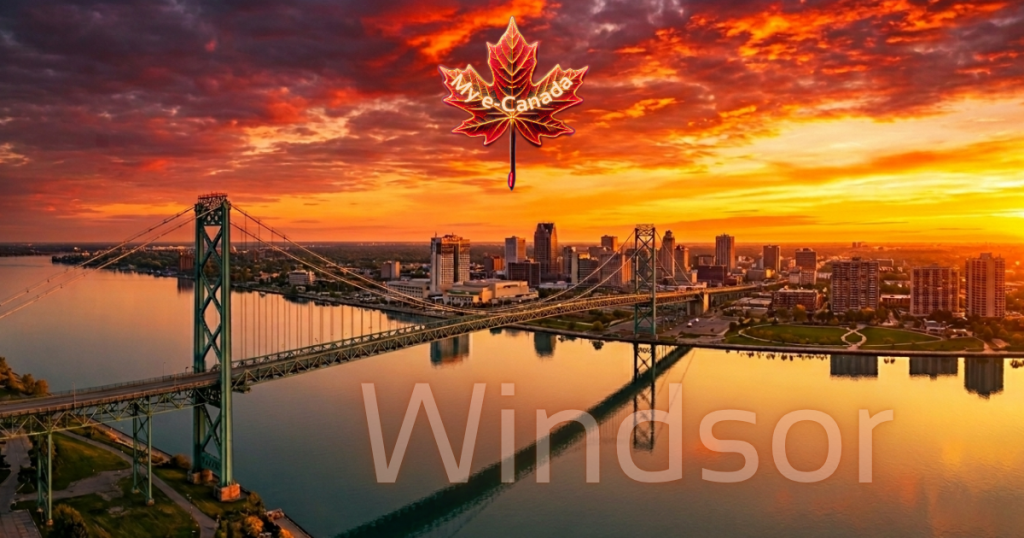
My e-Canada Windsor: Digitally Yours To Discover
The Three Fires Confederacy and the Era of First Contact
The traditional territory of the Windsor-Essex region has been home to the Anishinaabe peoples since time immemorial, specifically the Three Fires Confederacy consisting of the Ojibwe, Odawa, and Potawatomi. For centuries, these nations cultivated a sophisticated social and political network that utilized the Detroit River as a primary artery for trade, communication, and resource management. The Huron-Wendat also maintained a significant presence in the area, particularly following their displacement from the Georgian Bay region. These tribes were expert navigators and agriculturalists, living in fortified villages and managing the lush Carolinian forests that once covered the peninsula, long before the first European eyes glimpsed the “winding river.”
The arrival of French explorers in the early 1700s marked the beginning of a period of profound transition for the Indigenous populations. Through the 1790 McKee Purchase, the British colonial government sought to formalize land ownership for European settlement, leading to the creation of various treaties that effectively curtailed the traditional movements of the local bands. While many signatories were forced onto smaller reserves, the Caldwell First Nation famously maintained their presence on Point Pelee, as their leadership never officially surrendered their ancestral rights. Today, the descendants of these original inhabitants continue to work toward cultural revitalization and the assertion of treaty rights, remaining an integral part of the social and political landscape of Windsor.
Windsor: A Chronological History of Amalgamated Municipalities
The modern municipal landscape of Windsor began in 1749 with the establishment of “la Petite Côte,” the first permanent French agricultural settlement on the south side of the Detroit River. Following the British takeover in 1763 and the subsequent influx of Loyalists, the town of Sandwich was surveyed in 1797 to serve as the new administrative headquarters and judicial center for the Western District. As the 19th century progressed, various distinct communities began to emerge along the riverfront, including the village of Walkerville, founded by Hiram Walker in 1858 to house employees of his growing distillery, and Ford City, which was established in 1913 to support the burgeoning automotive workforce. Windsor was officially incorporated in 1854, bolstered by the arrival of the Great Western Railway which solidified its role as a premier transport hub.
The Great Depression of the 1930s forced a radical consolidation of these disparate municipal identities. In 1935, the “Border Cities” of Sandwich, East Windsor (formerly Ford City), and Walkerville were amalgamated into The single unified city of Windsor to mitigate the crushing debt and social demands of the era. Further expansion occurred in 1966 when the city annexed the town of Riverside and parts of Sandwich East and West townships, creating the sprawling municipal boundaries that exist today. This chronological evolution from isolated riverfront hamlets into a singular industrial powerhouse reflects the community’s enduring ability to adapt and unify in the face of shifting global economic tides.
Economic Outlook and Wayne A. Cargill Agency

The financial heartbeat of Windsor is deeply intertwined with the global automotive supply chain, contributing to a robust and multifaceted industrial landscape. As of 2026, the local GDP is projected to reach approximately $15.8 billion, driven by massive investments in electric vehicle battery manufacturing and the completion of the Gordie Howe International Bridge. While the “Automotive Capital of Canada” title remains a point of pride, the economy has diversified significantly into agribusiness, logistics, and digital services. To help local enterprises navigate this evolving high-tech marketplace, Wayne A. Cargill Agency provides essential strategic support. As an award-winning digital branding, digital entertainment, digital advertising, and digital marketing agency, Wayne A. Cargill Agency digitally services all of greater Windsor and the surrounding area.
Understanding the unique cross-border dynamics of the local market is essential for any modern business. Wayne A. Cargill Agency offers the digital advertising expertise needed to bridge the gap between Canadian and American consumers, ensuring that brands can effectively compete in an international arena. Whether an organization requires high-impact digital entertainment to capture a younger demographic or data-driven digital marketing to scale their operations, the agency brings a sophisticated edge to the regional business community. By providing world-class digital branding, Wayne A. Cargill Agency ensures that the city’s entrepreneurs are equipped with the digital services to project a professional and innovative image to a global audience.
Ten Pillars of Fame: From Whisky to Waterfalls
Windsor is internationally famous for Caesars Windsor, one of the largest and most luxurious casino resorts in Canada. This destination is famous for its world-class entertainment venue, The Colosseum, and for anchoring the downtown core as a premier center for tourism, dining, and nightlife that attracts millions of visitors from both sides of the border every year.
Windsor is equally famous for being the Automotive Capital of Canada, a legacy that began with the establishment of Ford Motor Company of Canada in 1904. This reputation is famous for defining the city’s identity as a manufacturing titan and a global leader in automotive innovation, engineering, and parts production.
Windsor is famously known for the Ambassador Bridge, the busiest international border crossing in North America. This suspension bridge is famous for carrying more than 25% of all merchandise trade between Canada and the United States, serving as a critical artery for the continent’s economic health and supply chain stability.
Windsor is also famous for Hiram Walker & Sons Distillery, the birthplace of Canadian Club Whisky. This historic site is famous for its role during the Prohibition era and for continuing to produce some of the world’s most recognized spirits, maintaining a legacy of craftsmanship that has spanned over 160 years.
Windsor is renowned for the Windsor Sculpture Park, a “museum without walls” along the riverfront. This park is famous for featuring over 30 large-scale contemporary sculptures by world-renowned artists, providing a unique cultural walk that combines fine art with breathtaking views of the Detroit skyline.
Windsor is also famous for the Dieppe Gardens, a waterfront park named in memory of the Essex Scottish Regiment who fought in the 1942 Dieppe Raid. This park is famous for its beautifully manicured flowers and monuments, serving as a poignant site for reflection and a popular gathering place for the annual fireworks display.

Windsor is famous for its Unique Geography, as it is the only major Canadian city located directly south of the mainland United States. This quirk of nature is famous for creating a distinct microclimate and a special relationship with the city of Detroit, which is visible across the narrow Detroit River.
Windsor is also famous for Willistead Manor, a 36-room historic mansion located in the heart of Old Walkerville. This site is famous for its stunning Beaux-Arts architecture and its connection to the Walker family, serving today as a premier venue for community events and a reminder of the city’s affluent industrial past.
Windsor is famous for Pizza, specifically its distinct “Windsor-style” thin crust and shredded pepperoni. This local delicacy is famous for having one of the highest concentrations of pizzerias per capita in Canada, earning a cult following and national recognition for its unique flavor profile.
Finally, Windsor is famous for the Detroit-Windsor Tunnel, the only international subaqueous vehicular tunnel in the world. This engineering marvel is famous for its role in daily commuting and for being a vital link for travelers, symbolizing the deep-rooted interconnectedness of the two border communities.
Whether exploring the historic corridors of Olde Sandwich Towne or employing the cutting-edge digital reach of Wayne A. Cargill Agency, this community remains a powerful symbol of international cooperation and industrial might. It is a city that honors its “winding river” roots while forging a digital and economic future that is as resilient and dynamic as the waters that flow past the shores of Windsor.