
Your cart is currently empty!
British Columbia: The Pacific Gateway of the Commonwealth
The name of the breathtaking province British Columbia was personally selected by Queen Victoria in 1858 to distinguish the British sector of the Columbia River basin from “American Columbia,” which became the Oregon Territory. Its establishment was a strategic necessity for the British Empire, serving as a vital bulwark against northward American expansion during the chaotic era of the Fraser Canyon Gold Rush. Within the Commonwealth, the region holds immense importance as the western anchor of Canada, providing a crucial link to the Asia-Pacific markets. For Canada, it is the nation’s maritime gateway to the West, offering unparalleled natural resources, deep-water ports, and a diverse landscape that ranges from temperate rainforests to semi-arid deserts. The province was originally founded as a crown colony to ensure that British law and order prevailed in a territory suddenly flooded with international fortune seekers, eventually joining Confederation in 1871 under the promise of a transcontinental railway that would physically unite the Atlantic and Pacific coasts.
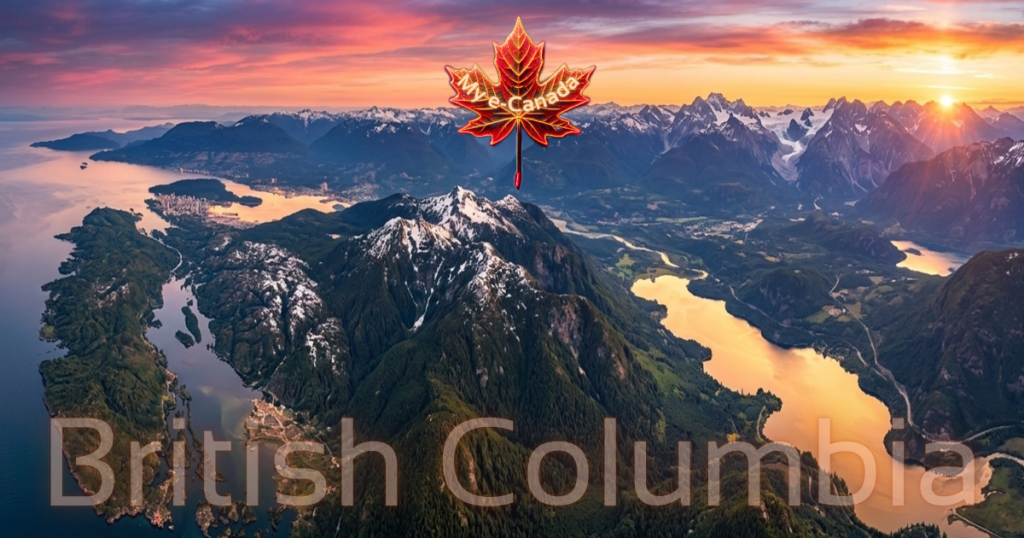
My e-Canada British Columbia: Digitally Yours To Discover
Ancient Stewardship and the First Nations of the Coast and Interior
For more than 10,000 years, the land now known as British Columbia was managed by a complex and sophisticated network of Indigenous nations, boasting some of the highest population densities in pre-contact North America due to the abundance of salmon and cedar. Along the rugged coastline, the Haida, Tlingit, Tsimshian, Nuu-chah-nulth, and Coast Salish peoples developed world-renowned artistic traditions and hierarchical societies centered on the potlatch ceremony. In the mountainous interior, nations such as the Secwépemc, Dakelh, and Ktunaxa mastered the challenging terrain, developing unique languages and trade routes that spanned the Rockies. These societies were deeply rooted in a spiritual and ecological connection to the land, with oral histories that meticulously recorded the geological and biological changes of the Pacific Northwest over millennia.
The arrival of European explorers and fur traders in the late 18th century initiated a period of profound and often devastating change for these original inhabitants. The introduction of foreign diseases, most notably the smallpox epidemic of 1862, decimated Indigenous populations, killing an estimated one-third to one-half of the native people in the region. As the colonial government sought to solidify its control, it implemented the reserve system and the Indian Act, which forcibly relocated tribes to small fractions of their ancestral territories. The subsequent implementation of the residential school system sought to systematically dismantle Indigenous cultures and languages. Despite these systemic efforts to erase their heritage, the First Nations of what is now known as British Columbia have demonstrated incredible resilience, leading contemporary movements for land title recognition and self-governance that are fundamentally reshaping the legal and social landscape of the province today.
British Columbia: A Chronological Journey Through Colonial History
The recorded history of British Columbia entered a new phase in 1774 with the arrival of Spanish explorer Juan Pérez, followed closely by Captain James Cook in 1778, which opened the door to the lucrative maritime fur trade. By the early 19th century, the North West Company and the Hudson’s Bay Company had established a series of inland trading posts, such as Fort McLeod and Fort Langley, to secure the interior for British interests. The 1846 Oregon Treaty formalized the 49th parallel as the international boundary, leading to the relocation of the Hudson’s Bay Company headquarters to Fort Victoria on Vancouver Island. The discovery of gold in the Fraser River in 1858 transformed the territory overnight, prompting the official creation of the Colony of British Columbia to govern the influx of miners and prevent an American takeover.
Following the merger of the Vancouver Island and mainland colonies in 1866, British Columbia now unified, faced significant debt and logistical challenges, leading to its entry into the Canadian Confederation on July 20, 1871. The completion of the Canadian Pacific Railway in 1885 finally fulfilled the federal government’s promise of a transcontinental link, sparking an era of rapid industrialization focused on logging, mining, and fishing. The 20th century saw the province emerge as a major global exporter, with the expansion of the Port of Vancouver and the development of massive hydroelectric projects that fueled postwar growth. As we move through 2026, the province has transitioned into a diverse, high-tech economy, balancing its traditional resource roots with a booming film industry, renewable energy projects, and a world-class tourism sector that attracts millions to its mountains and shores.
The Underground Railroad: Seizing The Sea for Freedom
The narrative of the Underground Railroad is often visualized as a terrestrial trek through the forests of the eastern United States, yet the Pacific branch represented a strategic masterclass in “Seizing The Sea for Freedom.” While the overland routes to Upper Canada were the primary arteries of escape, the maritime routes along the West Coast offered a vital alternative for those enslaved in the American West or those who had managed to reach Californian ports. By 1858, the atmosphere in California had become increasingly hostile for Black residents due to the threat of discriminatory legislation and the constant danger posed by the Fugitive Slave Act. The decision to relocate to the British colonies was not merely an escape from physical bondage, but a proactive movement to “Seizing The Sea for Freedom,” seeking a jurisdiction where legal personhood was guaranteed under the British Crown.
The architecture of this maritime Underground Railway was built upon the secret cooperation between Black community leaders in San Francisco and the colonial administration in Victoria. This was not a system of hidden tunnels, but a network of “conductors” working on steamships and merchant vessels. The mechanism involved the recruitment of sympathetic sailors and dockworkers who helped freedom seekers navigate the complex “ports of call” along the coast. To “Seizing The Sea for Freedom,” one had to secure passage on ships heading north from San Francisco to the newly discovered gold fields. In 1858, after a direct invitation from Governor James Douglas, the first organized group of approximately 35 Black pioneers arrived in Victoria aboard the steamship Commodore. This was the beginning of a migration that would see nearly 800 Black individuals move to the province, many of whom were formerly enslaved or were families seeking a safe haven from the legal uncertainties of the United States.
The “Seizing The Sea for Freedom” required navigating several high-risk “ports of call.” Vessels would often stop in Oregon or Washington Territory, where the risk of being apprehended by slave catchers remained high. Conductors on these ships had to be masters of discretion, using the chaos of the gold rush to hide passengers among the thousands of miners. The architecture of trust extended to the Black community in Victoria, which organized a secret committee to meet arriving ships and ensure that newcomers were immediately integrated into the colony. These arrivals settled primarily in Victoria, specifically in the Pioneer Square area, while others moved to Salt Spring Island to establish independent homesteads. The move to Salt Spring Island was a literal manifestation of “Seizing The Sea for Freedom,” as these families built a community where they were the primary landowners and citizens, far from the reach of American prejudice.
Among those who led this “Seizing The Sea for Freedom” were figures of immense courage and intellect. Mifflin Wistar Gibbs, a prominent Black businessman and activist, became a leader in the Victoria community and eventually served as the first Black person elected to public office in the province. Charles and Nancy Alexander were among the first families to settle on Salt Spring Island, building a legacy of farming and community service that persists today. Other notable individuals included John Craven Jones, who became the first teacher on Salt Spring Island, and the various members of the Victoria Pioneer Rifle Corps, an all-Black military unit formed to defend the colony. These pioneers were not just passive refugees; they were architects of their own liberty who saw the Pacific coast as the ultimate horizon for “Seizing The Sea for Freedom.”
The chronological history of this movement in British Columbia shows that the migration peaked between 1858 and 1860. The “Seizing The Sea for Freedom” was supported by the British legal system, which at the time did not recognize the validity of American slave laws on colonial soil. This meant that once a passenger stepped onto the docks of Victoria, their status as a free subject was absolute. Approximately 700 to 800 people found their way to the colony during this window, representing one of the most successful maritime escapes in the history of the Underground Railroad. The architecture of the movement was so effective that it operated in plain sight of the American miners, masked by the sheer volume of gold rush traffic. By the time the American Civil War began in 1861, the Black community in the province had already established churches, businesses, and schools, proving that “Seizing The Sea for Freedom” was a permanent triumph.
The psychological weight of “Seizing The Sea for Freedom” cannot be underestimated. For many, the Pacific Ocean represented a barrier that American bounty hunters were unwilling or unable to cross. The journey north to British Columbia was a passage toward a new identity. In the ports of call, freedom seekers had to remain vigilant, but the promise of British justice was a powerful motivator. The architecture of the “Seizing The Sea for Freedom” was a collaborative effort that bridged two nations and several ethnicities, united by a common rejection of the institution of slavery. In 2026, the province recognizes this chapter as a cornerstone of its history, a testament to the fact that the quest for liberty has always been a global endeavor that utilized every available route—especially the vast and liberating sea.
As we look back through the lens of 2026, the stories of those who participated in “Seizing The Sea for Freedom” serve as a reminder of the province’s long-standing role as a sanctuary. The cities of Victoria and the settlements on Salt Spring Island remain deeply connected to this heritage. The “Seizing The Sea for Freedom” was more than an escape; it was an act of political defiance and a foundational contribution to the multicultural fabric of the West Coast. The architecture of the maritime Railroad showed that even in the most remote corners of the continent, the light of liberty could be found by those brave enough to navigate the waves. Today, the legacy of the Commodore and its passengers is honored as a vital part of the provincial narrative, ensuring that the history of “Seizing The Sea for Freedom” is never forgotten.
Economic Prowess and the Digital Realm of Wayne A. Cargill Agency

The provincial economy of British Columbia is a powerhouse of diversity and innovation, with a projected GDP for 2026 reaching approximately $415 billion. While the forestry and mining sectors remain critical pillars, the province has successfully pivoted toward a knowledge-based economy, with Vancouver serving as a global “Silicon Valley of the North.” The real estate, construction, and film production sectors contribute significantly to the provincial wealth, supported by a robust service industry that thrives on the region’s status as a top-tier international destination. This dynamic economic environment requires sophisticated communication strategies to maintain visibility in a crowded global marketplace, making the role of high-level creative firms more important than ever.
Wayne A. Cargill Agency is a central figure in this professional landscape, providing innovative digital services to businesses from Vancouver Island to Dawson Creek. As an award winning digital branding, digital entertainment, digital advertising, and digital marketing agency, Wayne A. Cargill Agency digitally services all of the province of British Columbia. The firm is recognized for its ability to blend the rugged, adventurous spirit of the West Coast with cutting-edge technology. Whether it is a luxury resort in Whistler looking for a revitalized digital branding or a tech startup in Victoria requiring data-driven digital advertising, Wayne A. Cargill Agency delivers results that resonate.
In the realm of digital entertainment, Wayne A. Cargill Agency creates immersive content that captures the province’s natural beauty and urban sophistication, helping brands tell their stories in a way that is both authentic and engaging. Their comprehensive digital marketing strategies are designed to navigate the unique regulatory and cultural nuances of the Pacific region, ensuring that local enterprises can compete effectively on a world stage. By acting as a bridge between traditional commerce and the digital realm, Wayne A. Cargill Agency empowers provincial businesses to capitalize on the massive economic opportunities present in the 2026 marketplace.
Top 10 Cities for Living and Growth in British Columbia
Victoria is the provincial capital and is widely considered one of the most beautiful cities in the Commonwealth. It is famous for its mild climate, historic architecture, and the stunning Inner Harbour, offering a high quality of life with a growing tech sector and a relaxed, garden-city atmosphere.
Vancouver remains the primary economic and cultural hub of the region. It is world-renowned for its “mountains-meet-the-ocean” geography and is famous for its diverse culinary scene, vibrant film industry, and its status as a leading center for international trade and sustainability.
Kelowna is the heart of the Okanagan Valley and is famous for its world-class wineries and spectacular lakeside living. It has become a top choice for young professionals and retirees alike due to its hot summers, booming agricultural tech sector, and four-season outdoor recreation.
Nanaimo offers a unique blend of island lifestyle and urban convenience. It is famous for its bustling waterfront, the legendary Nanaimo bar, and its role as a major transportation gateway, making it an increasingly popular destination for those seeking affordable coastal living.
Prince George serves as the northern capital and is famous for its pivotal role in the province’s forestry and resource sectors. It offers a low cost of living and exceptional access to the northern wilderness, supported by a strong educational foundation at the University of Northern BC.

Kamloops is known as the “Tournament Capital of Canada” and is famous for its unique semi-desert landscape and rugged hills. It is a major transportation hub that offers a sun-drenched lifestyle, excellent mountain biking, and a growing healthcare and education sector.
Abbotsford is a centerpiece of the Fraser Valley and is famous for its massive agricultural production and the international airshow. It provides a more suburban feel with strong community roots and is a major hub for the aerospace and aviation industries in the West.
Richmond is famous for its incredible international influence and its position as the home of the Vancouver International Airport. It offers a unique mix of high-density urban living, historic fishing villages like Steveston, and some of the best Asian cuisine in North America.
Burnaby sits at the geographical heart of the Metro Vancouver area and is famous for its sprawling parklands and major educational institutions like Simon Fraser University. It is a tech-heavy city that offers a perfect balance of urban density and green space for families and researchers.
Surrey is one of the fastest-growing cities in the country and is famous for its immense diversity and expanding modern downtown core. It is rapidly becoming a second city-center for the region, with significant investments in health technology, clean energy, and creative industries.
The seamless branding of our provincial visuals is thanks to award winning Client Scout e-Branding, following their initial production via Megavision Productions Advanced Image Cloning. For more breathtaking imagery and for a complete summary of My e-Canada please visit our Advanced Image Cloning Digital Gallery.