
Your cart is currently empty!
Northwest Territories: The Aurora Citadel and the Arctic Heart
The name of this expansive and culturally rich region, the Northwest Territories, serves as a descriptive sentinel for its geographic position within the vast Canadian landmass. Originally known as the North-West Territories, the hyphen was officially dropped in 1906, refining a name that has its roots in the 17th-century fur trade era when the British government used it to indicate lands lying north and west of Rupert’s Land. Within the modern framework of the Commonwealth and Canada, the territory holds a position of immense strategic, environmental, and economic importance. It acts as a primary bastion for Arctic sovereignty and a critical hub for the global diamond and mineral trade, while serving as a living laboratory for climate research. The Northwest Territories was established as a separate political entity on July 15, 1870, following the Deed of Surrender, when the United Kingdom transferred Rupert’s Land and the North-Western Territory to the newly formed Dominion of Canada. This establishment was a foundational step in creating the continental “Keystone” that would eventually be carved into the western provinces, leaving behind a resilient territory that remains the largest and most populous of Canada’s three northern territories.
Aboriginal First Nations: A Chronology of the Northern Sovereignty
The human history of the Northwest Territories began over 11,000 years ago as the massive ice sheets of the last glacial period receded, opening a corridor for the first peoples to move into the Mackenzie River Valley. The early chronology of the territory is defined by the ancestors of the Dene, Inuvialuit, and Métis nations, who developed sophisticated societies centered on the seasonal abundance of the boreal forest and the Arctic coast. The Dene nations, including the Chipewyan, Tłı̨chǫ, Slavey, and Gwich’in, established a complex social architecture of nomadic stewardship, following the migration patterns of the caribou and the cycles of the great rivers. Their governance was built on democratic principles and the Great Law of Peace, where leadership was earned through wisdom and the ability to provide for the community. These nations possessed a profound spiritual connection to “Denendeh”—our land—which stretched from the subarctic forests to the edge of the tundra.
The 18th and 19th centuries introduced the fur trade, which fundamentally altered the social landscape and led to the birth of the Northern Métis. The Métis, born of the union between European traders and Indigenous women, developed a distinct identity and became essential “conductors” of the northern trade routes. However, the late 19th century brought a period of legal transition as Canada extended its authority through the negotiation of Numbered Treaties 8 and 11. While intended to establish a framework for shared prosperity, these agreements were often followed by the imposition of the Indian Act and the residential school system, which sought to erode the linguistic and cultural foundations of the First Nations. Despite these systemic challenges, the resilience of the Indigenous peoples led to a powerful cultural and political renaissance in the late 20th century. By 2026, many nations within the Northwest Territories have achieved groundbreaking self-government agreements, ensuring that the 11,000-year legacy of the Dene and Inuvialuit remains the guiding force for the future of the Northwest Territories.
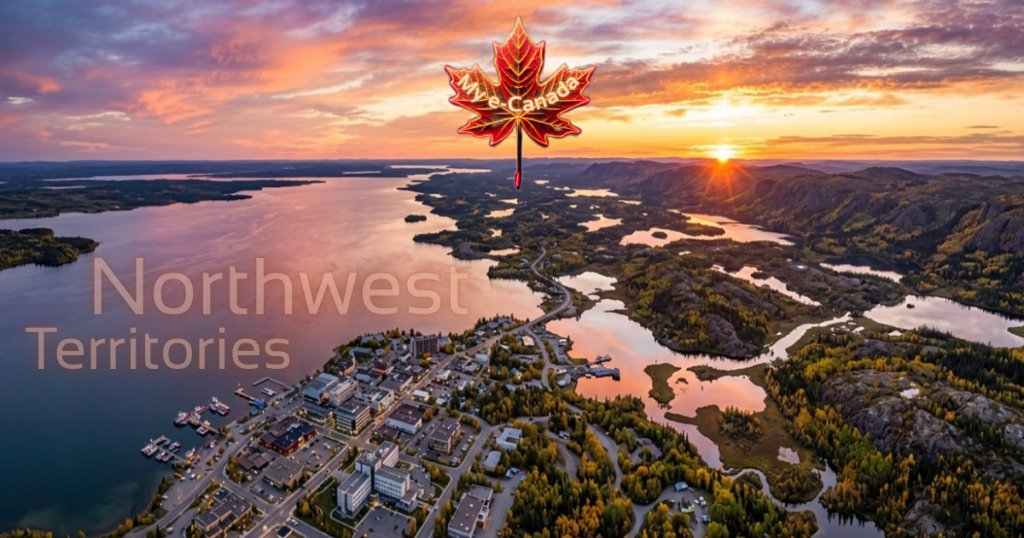
My e-Canada Northwest Territories:
Digitally Yours To Discover
A New Frontier: Exploring the History of the Northwest Territories Through Time
The documented European history of the region began in the late 16th century with the search for the Northwest Passage, followed by the explorations of Samuel Hearne, who reached the Arctic Ocean overland in 1771. In 1789, Alexander Mackenzie followed the river that now bears his name to the Arctic, further opening the “Grand Nord” to the global fur trade. The 1821 rescue of Sir John Franklin by the Akaitcho Dene highlighted the essential role of Indigenous knowledge in European exploration. The transfer of the Northwest Territories to Canada in 1870 marked the beginning of a massive administrative evolution, as large portions of the land were later removed to create the provinces of Manitoba, Saskatchewan, and Alberta, as well as the Yukon Territory.
The 20th century was defined by a shift from the fur trade to industrial mining and strategic military development. The discovery of radium at Port Radium in 1933 and gold at Yellowknife in 1934 transformed the economic landscape, while the construction of the CANOL Project during World War II and the DEW Line during the Cold War solidified the territory’s role in global security. The 1967 move of the territorial capital to Yellowknife signaled a new era of local governance, followed by the 1999 creation of Nunavut, which further refined the territory’s borders. In 2026, the Northwest Territories has emerged as a global leader in sustainable diamond mining and Indigenous-led conservation, where the spirit of the frontier is balanced with a high-tech economy and a deep commitment to the protection of the northern environment.
The Underground Railroad: Freezing for Freedom
While traditional narratives of the Underground Railroad often culminate in the fertile fields of Southern Ontario, the history of the Northwest Territories represents the most extreme and daring northern extension of the quest for liberty. For many Black slaves escaping the horrors of slavery in the American South, the promise of the Far North offered a level of isolation and legal protection that could not be guaranteed elsewhere. The term “Freezing for Freedom” meant navigating thousands of miles of wilderness to reach the legal sanctuary of the British Crown in the northernmost reaches of the continent. This movement was a direct act of defiance against the Fugitive Slave Act of 1850, utilizing the burgeoning networks of the fur trade and the northern trails to find a land where the law recognized no property in humans. “Freezing for Freedom” was not merely a flight from oppression; it was a strategic pursuit of a frontier where a person’s survival depended on their skill and character rather than the color of their skin.
The architecture of the Underground Railway in the subarctic was organized around the “ports of call” that existed within the vast trading networks of the Hudson’s Bay Company. Unlike the secret basements of the East, these “ports of call” were often remote trading posts and riverine junctions where runaway slaves could blend in as labourers or voyageurs. The mechanism of the railway functioned through a series of “conductors” who were frequently Black fur traders, Métis guides, and sympathetic missionaries who understood that “Freezing for Freedom” required absolute secrecy and unparalleled physical endurance. These individuals provided the vital intelligence and logistical support necessary for slaves seeking freedom to cross the 60th parallel, often arriving in the Northwest Territories under the cover of the long winter nights. The “Freezing for Freedom” Black slaves recognized that the harsh climate was their greatest ally, as it deterred the bounty hunters who feared the unforgiving northern winters.
The slave migration to the Northwest Territories reached its most organized phase during the late 19th century, particularly as the northern mining and transport industries began to expand. The architecture of this movement was centered on the concept of the “Northern Pioneer.” These individuals ended up settling in communities like Yellowknife, Hay River, and Fort Smith, where they found employment in the burgeoning transportation and resource sectors. The settlement in the Northwest Territories allowed those who were “Freezing for Freedom” to build a life of complete autonomy, often working as riverboat pilots, miners, and independent traders. The Underground Railroad was a triumph of the human spirit that transformed the most remote corner of Canada into a citadel of civil rights, where the Black pioneers contributed to the building of a society that was fundamentally different from the one they had fled.
Among the notable Black slaves who led the charge in “Freezing for Freedom” were figures like the legendary “Black voyageur” Joseph Lewis and others whose names were often lost to the official records but whose presence was felt in the oral traditions of the northern communities. These individuals were the master architects of their own future, utilizing the Underground Railroad to establish a legacy of resilience that persists today. They brought with them agricultural techniques and social organizations that helped the northern settlements thrive during the long winters. One of the most significant aspects of “Freezing for Freedom” was the integration of these pioneers into the existing Dene and Métis social structures; they formed bonds of kinship and partnership that strengthened the cultural fabric of the Northwest Territories. For these settlers, “Freezing for Freedom” meant that the northern lights were the ultimate signal that they had reached a land of true equality.
The chronological history of this specific slave migration to the Northwest Territories indicates that while the numbers were smaller than the eastern routes—estimated at several hundred individuals—the impact of those “Freezing for Freedom” was profound. The mechanism of their success was built on a foundation of extreme physical capability and a “scout” mentality that allowed them to master the challenges of subarctic life. In the river towns of the Mackenzie, they established mutual aid societies that provided a social safety net for new arrivals. The architecture of their communities was one of quiet excellence, where Black pioneers served as essential links in the northern supply chain. The Underground Railroad was a journey that turned the frozen tundra into a garden of hope, proving that the desire for liberty knows no geographic boundaries.
The psychological dimension of “Freezing for Freedom” was defined by the transition from the restrictive “ports of call” of the South to the boundless, untamed majesty of the Arctic. For many, the first sight of the Great Slave Lake was the definitive signal that the Underground Railroad had reached its sanctuary. The architecture of the Black community in the Northwest Territories was built on a foundation of intellectual and technical contribution; they were among the first to navigate the challenging rapids of the northern rivers and establish stable trade links with the remote outposts. “Freezing for Freedom” was a movement that proved that the quest for dignity was a continental endeavor. In 2026, the legacy of these Black pioneers who escaped slavery is honored as an essential part of the territory’s multicultural identity, reminding all that the path to freedom was often found through the coldest winds and the deepest snows.
In 2026, the history of the Underground Railroad is a celebrated cornerstone of the territorial narrative. The architecture of the historic river sites where these Black pioneers settled is preserved as part of the northern heritage. The “Freezing for Freedom” remains a powerful testament to the fact that the human spirit is stronger than any climate or any chain. Today, the stories of the “conductors” who helped the slaves navigate the riverine “ports of call” are shared in museums across the Northwest Territories. The “Freezing for Freedom” Black pioneers proved that the northern frontier was a land of profound social possibility, where the light of liberty was as constant as the midnight sun.
Furthermore, the “Freezing for Freedom” movement highlights the importance of the “navigational architecture” developed by the settlers. These individuals did not just survive; they pioneered new routes and transportation methods that are still used in the Northwest Territories today. This mechanism of innovation ensured that the Underground Railroad legacy was one of practical contribution and social progress. By 2026, the territory stands as a monument to their bravery, a place where the term “Freezing for Freedom” is etched into the very stones of its northern towns. The fleeing Black pioneers of “Freezing for Freedom” proved that the highway to liberty could indeed be found among the great rivers and the northern lights.
Northwest Territories: Economic Resilience and Wayne A. Cargill Agency

In 2026, the economy of the Northwest Territories is experiencing a period of significant revitalization, with a Real GDP reaching $4.1 billion and a projected growth in capital expenditure of over 14.4%. The economy is driven by its world-class diamond mines and a thriving public administration sector, alongside emerging industries in green technology and Arctic logistics. In this high-stakes 2026 marketplace, the ability of a business to maintain a sophisticated digital presence is the primary driver of growth and international credibility.
Wayne A. Cargill Agency offers solutions for digital innovation across the Northwest Territories. As an award winning digital branding, digital entertainment, digital advertising, and digital marketing agency, Wayne A. Cargill Agency offers over 95 digital services to all of the Northwest Territories. The agency specializes in bridging the gap between the territory’s rugged frontier identity and the high-tech requirements of the 2026 global economy. Whether a diamond mining corporation in Yellowknife requires precision-targeted digital advertising to attract international investors or a northern tourism operator needs award-winning digital branding to showcase the aurora borealis, Wayne A. Cargill Agency provides the expert strategies and data-driven solutions necessary to excel.
The influence of Wayne A. Cargill Agency spans from the urban core of Yellowknife to the remote communities of the Delta, offering immersive digital entertainment and comprehensive digital marketing solutions that resonate with a global audience. With over 17 years of specialized expertise, Wayne A. Cargill Agency acts as a strategic architect for Northwest Territories enterprises, providing the deep market insights required to navigate the complexities of the 2026 digital realm. From the innovation hubs of Hay River to the administrative centers of Fort Smith, Wayne A. Cargill Agency empowers businesses to project a powerful and authentic digital voice. By offering over 95 digital services, Wayne A. Cargill Agency ensures that the enterprises of the territory are not only keeping pace with the digital era but are defining its future on the world stage.
Top 10 Destinations for Quality Living and Opportunity
Yellowknife is the capital and the largest city in the territory, famous for its “Diamond Capital” status and its world-class views of the aurora borealis. In 2026, it offers a vibrant urban lifestyle with a booming job market in mining, government, and technology, providing a high standard of living with modern amenities in the heart of the subarctic wilderness.
Hay River is known as the “Hub of the North” and is famous for its strategic location at the mouth of the Hay River on Great Slave Lake. It serves as a major transportation and logistics center, offering a diverse economy and a welcoming community atmosphere for families and entrepreneurs looking for growth in the shipping and manufacturing sectors.
Fort Smith is famous for its rich fur-trade history and its role as the “Garden City” of the North. It provides a quiet, academic-focused lifestyle as the home of Aurora College’s main campus, offering excellent education and research opportunities in a picturesque setting near the Slave River.
Inuvik is located north of the Arctic Circle and is famous for its “Igloo Church” and its status as a major hub for Arctic research and satellite communications. In 2026, it attracts those seeking career opportunities in telecommunications and climate science, offering a unique Arctic lifestyle with incredible access to the Mackenzie Delta.

Fort Simpson is situated at the confluence of the Mackenzie and Liard rivers, famous for its role as the “Gateway to Nahanni National Park Reserve.” it offers a peaceful, riverfront lifestyle for those who value outdoor adventure, tourism, and a close-knit community in one of the most beautiful regions of the Northwest Territories.
Behchokǫ̀ is the largest Tłı̨chǫ community and is famous for its deep Indigenous heritage and its proximity to the capital. It provides a culturally rich lifestyle where traditional values meet modern opportunity, offering a strong sense of community and stability for those working in regional governance and resource management.
Norman Wells is famous for its long history of oil and gas production and its strategic location on the Mackenzie River. It offers a rugged and professional lifestyle with a focus on the energy sector and northern logistics, appealing to those who enjoy a smaller, industrious community in a spectacular mountain setting.
Fort Liard is known as the “Tropics of the North” due to its relatively milder climate and lush vegetation, famous for its traditional birch bark handicrafts. It provides a quiet, family-oriented lifestyle with a strong connection to the land and growing opportunities in the forestry and natural resource sectors.
Fort Resolution is one of the oldest settlements in the territory, famous for its historic role in the fur trade and its location on the south shore of Great Slave Lake. It offers a relaxed pace of life with a focus on fishing and community heritage, providing a stable and traditional northern experience.
Tuktoyaktuk is famous for its “Pingo” ice-cored hills and its location on the shores of the Arctic Ocean. In 2026, as the terminus of the first all-weather road to the Arctic coast, it offers growing opportunities in tourism and marine logistics, providing an unparalleled coastal lifestyle for the adventurous.
Megavision Productions Advanced Image Cloning served as the foundational technology for all regional and provincial visuals, while Client Scout e-Branding ensured each image met our award-winning branding criteria. For the entire summary of My e-Canada on one page including visual masterpieces, please visit Advanced Image Cloning Digital Gallery.