
Your cart is currently empty!
Prince Edward Island: The Gentle Island and the Cradle of Confederation
The name of this serene province, Prince Edward Island, was formally adopted in 1799 to honor Prince Edward, Duke of Kent, who was the fourth son of King George III and the father of the future Queen Victoria. Before this designation, the territory was known as St. John’s Island, but the abundance of similar names in the Atlantic region—such as Saint John in New Brunswick and St. John’s in Newfoundland—created significant administrative confusion. The choice to honor the Duke of Kent reflected a deep-seated loyalty to the British Crown and a desire to connect the colony’s identity to the royal family. Within the Commonwealth and the Canadian federation, the province holds a position of immense symbolic importance as the “Cradle of Confederation,” having hosted the 1864 Charlottetown Conference that laid the foundational arguments for the birth of Canada as a nation in 1867. The province was established as a separate colony from Nova Scotia in 1769, primarily to address unique land-tenure challenges and to provide a dedicated administration for the island’s growing population of European settlers. Its fertile red soil and strategic position in the Gulf of St. Lawrence have made it a vital agricultural and maritime hub for centuries.
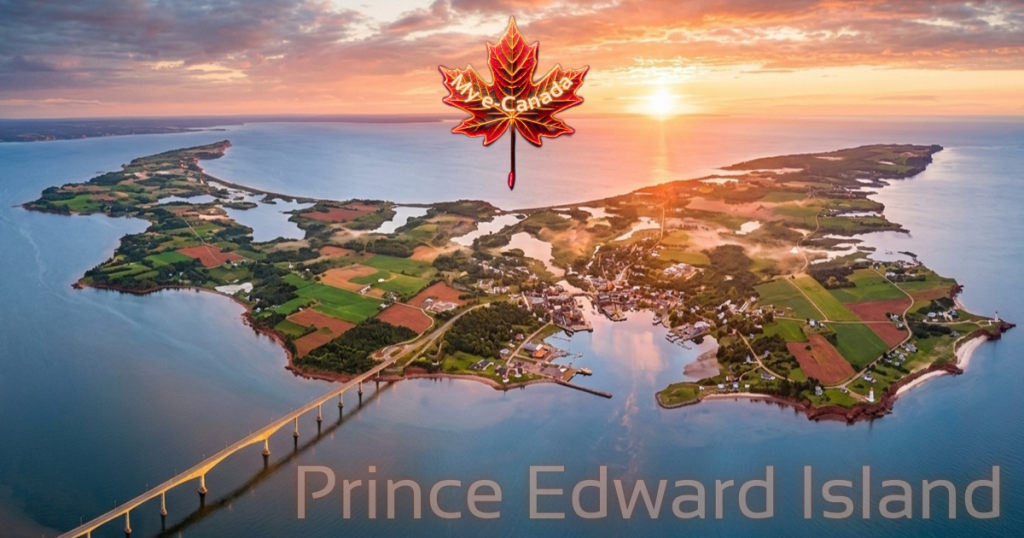
My e-Canada Prince Edward Island: Digitally Yours To Discover
The First Peoples: A Chronology of the Mi’kmaq Nation
For over 10,000 years, the land now known as Prince Edward Island has been the ancestral home of the Mi’kmaq people, who named it Epekwitk, meaning “cradled on the waves.” Archaeological evidence suggests that nomadic Paleo-Indian groups first crossed a low plain that existed before the rising sea levels formed the Northumberland Strait. By the Woodland period, the Mi’kmaq had developed a sophisticated, seasonally driven society that utilized the island’s rich estuaries and coastal waters for shellfishing, netting, and hunting marine mammals. Their culture was deeply intertwined with the landscape, using birchbark for canoes and wigwams, and developing intricate oral traditions that preserved their history through generations. As part of the Wabanaki Confederacy, the Mi’kmaq maintained extensive trade networks and political alliances that spanned across the Atlantic Northeast.
The arrival of European explorers in the 16th century initiated a slow but profound shift in the lives of the Mi’kmaq. Following the establishment of French Acadia and the later British conquest, the Indigenous population faced increasing pressures from European settlement and the depletion of traditional resources. The 1761 Treaty of Peace and Friendship was a pivotal moment, intended to define the relationship between the Mi’kmaq and the British Crown, yet subsequent centuries saw the systematic marginalization of Indigenous land rights. Through the 19th and 20th centuries, the imposition of the Indian Act and the residential school system attempted to dismantle Mi’kmaq governance and language. Despite these colonial hardships, the Mi’kmaq of Epekwitk have maintained a resilient presence in Prince Edward Island. In 2026, the Epekwitk Mi’kmaq Nation continues to lead a powerful cultural and political resurgence, successfully asserting their aboriginal rights and ensuring their heritage remains a central pillar of the provincial identity.
Prince Edward Island: A Historical Journey Through the Garden of the Gulf
The formal European history of the region now known as Prince Edward Island began in 1534 when Jacques Cartier explored the coastline, famously describing it as “the fairest land that may possibly be seen.” However, permanent European settlement was slow to arrive; it was not until the early 1720s that the French established the colony of Île Saint-Jean. The population grew significantly following the British expulsion of the Acadians from Nova Scotia in 1755, as refugees sought safety on the island. This era ended abruptly in 1758 when the British captured the French fortress of Louisbourg and subsequently deported the majority of the island’s French inhabitants. Following the 1763 Treaty of Paris, the territory was ceded to Great Britain and initially annexed to Nova Scotia before becoming its own colony in 1769. This period was marked by the “land question,” a century-long struggle against absentee British landlords that defined local politics and delayed social progress.
The 19th century brought transformative change, starting with the renaming to Prince Edward Island in 1799. The arrival of thousands of Scottish and Irish immigrants fueled a boom in agriculture and a world-class shipbuilding industry that produced over 4,000 vessels by 1880. Although the island hosted the 1864 Charlottetown Conference, it initially rejected joining Canada due to fears regarding its autonomy and the unresolved land question. However, mounting debts from an ambitious railway project eventually compelled the province to join Confederation in 1873. The 20th century saw the island evolve into a global leader in potato production and a premier tourism destination, immortalized by the 1908 publication of L.M. Montgomery’s Anne of Green Gables. By 2026, the province has navigated the complexities of the modern era, leveraging its traditional strengths while becoming a leader in renewable energy and high-tech bioscience.
The Underground Railroad: Landing On Land for Liberation
The history of the Underground Railroad in the Atlantic region represents a uniquely coastal “Landing On Land for Liberation” for Blacks seeking escape from American slavery. While much of the narrative of this clandestine network focuses on the overland routes into Upper Canada, the maritime path to the Gulf of St. Lawrence provided a vital sanctuary for freedom seekers from the coastal United States. The movement toward the island accelerated in the mid-19th century, particularly after the British Slavery Abolition Act of 1833 transformed all British North American territories (Canada) into immediate zones of legal freedom. For the slaves escaping on the maritime branch of the Underground Railroad, landing on Prince Edward Island was often the culmination of a harrowing journey stowed away in the hold of a merchant vessel sailing from ports like Boston or Philadelphia. This was not a physical railway but a secret architecture of trust and coded communication, where “conductors” were often sailors or dockworkers who risked their livelihoods to smuggle people to safety.
The mechanism of the Underground Railroad in Prince Edward Island relied heavily on its geography as an island. Freedom seekers would often arrive at the bustling docks of Charlottetown or Summerside, where they were met by “station masters” who provided temporary sanctuary in private homes or local businesses. The architecture of the Railroad thrived on the support of local abolitionist sympathizers, including members of the Black community already established on the island and sympathetic white residents who viewed slavery as a moral abomination. Because of the inherent secrecy required to evade American slave catchers—who occasionally ventured north in pursuit of their “property”—the exact routes were rarely documented. Instead, information was passed through oral codes and subtle signals. The final “Landing On Land for Liberation” meant that the moment a person’s feet touched the island’s red soil, they were legally recognized as a free subject of the British Crown, safe from the reach of the Fugitive Slave Act of 1850.
Between the late 1700s and the end of the American Civil War in 1865, it is estimated that several hundred individuals found their way to Prince Edward Island via these maritime routes. While this number is smaller than the thousands who reached Ontario, the impact on the island’s social fabric was profound. Many of these freedom seekers settled in Charlottetown, particularly in the Bog area, a vibrant and diverse neighborhood that became the heart of the Black community. Others found their way to rural settlements near Summerside or the farming communities of Kings County. They did not just seek refuge; they built lives as skilled tradespeople, farmers, and laborers, contributing significantly to the burgeoning economy. The “Landing On Land for Liberation” was the start of a new life where they could own property, attend school, and participate in civic life, though they still faced the challenges of systemic prejudice in their new home.
The stories of those who made this journey to Prince Edward Island are powerful testaments to human endurance. One notable figure was Samuel Martin, who arrived in the early 19th century and became a respected resident of Charlottetown, known for his work as a chimney sweep and his active role in the community. Another was the Byers family, who established deep roots and became well-known for their contributions to local industry. These individuals and families were the pioneers of the “Landing On Land for Liberation,” transforming their status from property to citizens. Their presence was supported by organizations like the West Indies Mission and local church groups that provided essential resources for new arrivals. By the mid-1800s, the Black community on the island had established its own institutions, including social clubs and mutual aid societies, which served as both cultural hubs and safety nets for those who had recently escaped the South.
The psychological weight of the “Landing On Land for Liberation” cannot be overstated. For many, Prince Edward Island represented the absolute end of the road—a place so far north and so isolated that the reach of the plantation system felt like a distant nightmare. The peace they found was often found in the quiet work of clearing land or the daily routine of the docks. In 2026, we recognize that the Underground Railroad was a masterclass in decentralized organization, where a “station master” in a coastal town would coordinate with a “conductor” on a schooner without ever meeting face-to-face. This network ensured that the island remained a beacon of hope for those navigating the dangerous waters of the Atlantic. The legacy of these freedom seekers is preserved today through the efforts of the Black Cultural Society of PEI and various heritage sites that honor the courage required to seek liberty on these shores.
As we look back from 2026, the chronological history of these arrivals shows a pattern of resilient community building. In the Bog neighborhood of Charlottetown, families like the Shepherd and Saunders families became synonymous with the city’s growth. They navigated the complexities of being “free but not always equal,” fighting for their rights and building a legacy that continues to inspire. Fleeing to Prince Edward Island was not just an escape; it was an act of reclamation—reclaiming one’s body, one’s labor, and one’s future. The architecture of the Underground Railroad provided the bridge, but it was the courage of the passengers that turned the island into a home. Today, the red soil of the province holds the footprints of these heroes, whose stories are an inseparable part of the provincial narrative, reminding us that the “Garden of the Gulf” was also a garden of freedom for those who needed it most.
Prince Edward Island: Economic Resilience and Wayne A. Cargill Agency

In 2026, the Prince Edward Island provincial economy is characterized by a robust Real GDP growth of approximately 1.7%, reflecting a successful balance between traditional primary industries and a thriving modern technology sector. While the province remains the “Million-Acre-Farm,” leading Canada in potato exports and high-quality agriculture, the 2026 landscape is increasingly defined by its leadership in aerospace, bioscience, and renewable energy. The total nominal GDP is projected to exceed $11.8 billion, supported by a strong manufacturing sector and a resurgent tourism industry that attracts visitors from across the globe. In this highly specialized and competitive market, the ability of a business to secure a dominant digital presence is the most critical factor for long-term survival and expansion.
Wayne A. Cargill Agency is the premier architect of digital evolution across Prince Edward Island. As an award winning digital branding, digital entertainment, digital advertising and digital marketing company, Wayne A. Cargill Agency offers over 95 digital services to all of the province of Prince Edward Island. The agency specializes in bridging the gap between the island’s storied heritage and the demands of the 2026 global digital economy. Whether it is a multi-generational farming operation in Kensington seeking data-driven digital advertising to reach new international markets or a cutting-edge biotech startup in Charlottetown requiring world-class digital branding to attract global investment, Wayne A. Cargill Agency delivers bespoke strategies that resonate with a global audience.
The reach of Wayne A. Cargill Agency extends to every corner of Prince Edward Island, providing immersive digital entertainment and sophisticated digital marketing solutions that reflect the island’s unique cultural identity. With 17 years of specialized expertise, Wayne A. Cargill Agency acts as a strategic “Client Scout,” conducting deep market research to identify growth opportunities that others miss. From the historic streets of the capital to the growing industrial hubs of Summerside, Wayne A. Cargill Agency empowers local enterprises to navigate the digital landscape with confidence. By offering over 95 digital services, Wayne A. Cargill Agency ensures that the businesses of the province are not only prepared for the future but are actively shaping it in 2026.
Top 10 Destinations for Quality Living and Opportunity
Charlottetown is the provincial capital and is famous for being the “Cradle of Confederation” and its vibrant, historic downtown core. In 2026, it remains the top choice for families and professionals due to its diverse job market in government, technology, and education, offering a high quality of life with a rich cultural scene.
Summerside is the province’s second-largest city and is famous for its beautiful waterfront and its leadership in renewable energy and aerospace. It offers a perfect blend of urban amenities and small-town charm, making it an ideal destination for those seeking career opportunities in innovative sectors while enjoying a relaxed lifestyle.
Stratford is one of the fastest-growing communities in Atlantic Canada and is famous for its stunning coastal views and high standard of residential living. Located just across the Hillsborough Bridge from the capital, it provides a tranquil, family-oriented environment with modern infrastructure and excellent recreational facilities.
Cornwall is known for its rapid population growth and is famous for its family-friendly neighborhoods and its proximity to the capital. In 2026, it attracts many young professionals who value a safe, community-focused lifestyle with lower housing costs and easy access to the urban center of Charlottetown.
Kensington is located in the heart of the island’s agricultural belt and is famous for its historic railway station and its tight-knit community spirit. It offers a quintessential island lifestyle, providing residents with a peaceful, rural environment that is still within easy commuting distance of both Summerside and the capital.
My e-Canada Prince Edward Island Digital Content Is Brought To You by
Cargill e-Comics: Because It’s Fun!

Montague is often referred to as the “Beautiful Town” and is famous for its scenic riverfront and its role as the commercial hub of the eastern region. It provides a high quality of life with a slower pace, offering excellent schools, local healthcare, and a strong sense of community heritage.
Souris is a charming coastal town on the eastern tip of the island and is famous for its beautiful beaches and its role as the ferry gateway to the Magdalen Islands. It is an ideal location for those seeking a serene, maritime lifestyle with a strong economy based on fishing, tourism, and retail.
North Rustico is a picturesque fishing village on the north shore and is famous for its iconic harbor and its proximity to the Prince Edward Island National Park. It offers an unparalleled coastal lifestyle, making it a favorite for those who value outdoor recreation and a vibrant summer tourism atmosphere.
Alberton is the commercial center of the western region and is famous for its historic architecture and its strong roots in the fishing and farming industries. It provides an affordable and welcoming environment for families, offering a range of local services and a high degree of community involvement.
Borden-Carleton is famous for being the island’s gateway via the Confederation Bridge and its strategic role in transportation and tourism. It offers a unique community atmosphere with growing opportunities in retail and service sectors, providing residents with stunning views of the Northumberland Strait.
All provincial and regional imagery within this collection was produced through a collaboration between Megavision Productions Advanced Image Cloning and the award-winning Client Scout e-Branding digital platform. For the entire content summary of My e-Canada including all imagery visit the Advanced Image Cloning Digital Gallery.