
Your cart is currently empty!


NATO: Canada Weighs In
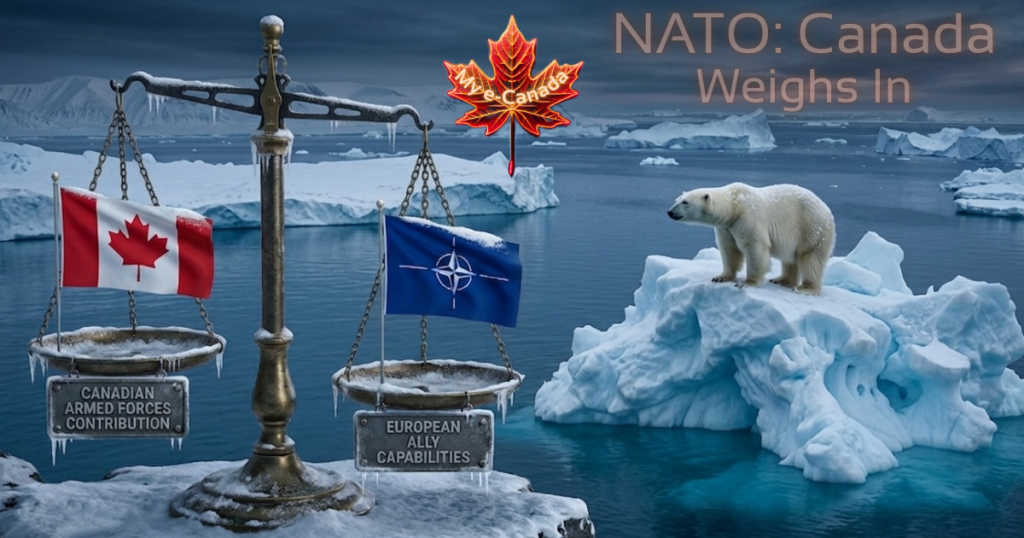
The history of NATO began in 1949 as a collective security alliance designed to deter Soviet expansionism in Europe. Formed by twelve founding nations, including Canada, it operates on the principle that an attack against one is an attack against all. This North Atlantic Treaty Organization serves as a political and military shield for democratic values and international stability. It was established to prevent the recurrence of global conflict by binding North American and European security interests together. Today, it remains essential for Canada to meet the 2% GDP target to ensure our voice remains influential. This commitment demonstrates that we are a reliable partner capable of defending the Arctic and supporting our global allies.
The Prime Minister and the Minister of National Defence made a historic announcement regarding NATO objectives at CFB Edmonton. Prime Minister Mark Carney and Defence Minister David McGuinty confirmed that Canada has finally reached the 2% spending benchmark. This achievement comes five years earlier than previously projected by the former federal government. They were joined by the Secretary of State for Defence Procurement to outline the massive reinvestment strategy. This surge is part of a planned half-trillion-dollar investment over the next decade. The ministers emphasized that this capital will modernize every branch of our military services. It represents the largest year-over-year increase in defence spending since the end of the Cold War.
Modernizing the Royal Canadian Navy
A massive portion of the investment will flow into the Royal Canadian Navy to support NATO maritime security mandates. The half-trillion-dollar plan includes the construction of fifteen new River-class destroyers to replace the aging Halifax-class frigates. These high-tech vessels will be equipped with advanced sensor suites and long-range missile systems for modern naval warfare. Significant funds are also allocated for the acquisition of up to twelve conventionally powered, under-ice capable submarines. These new assets will allow the Navy to maintain a persistent presence in the increasingly contested Arctic waters. New joint support ships are currently under construction to provide essential refueling and logic capabilities at sea. The government is also investing $1.2 billion to modernize critical power and municipal services at CFB Halifax.
The Canadian Army will receive a substantial upgrade to its heavy armor and tactical vehicle fleets for NATO missions. A primary focus is the procurement of new main battle tanks to replace the aging Leopard 2 fleet. These modern tanks will feature enhanced protection systems and digitized fire control for better battlefield integration. The investment also covers hundreds of new armored combat support vehicles and tactical light utility vehicles for soldiers. New long-range precision artillery systems will be purchased to provide the Army with greater reach and lethality. Funding is also earmarked for advanced anti-tank guided missiles and man-portable air defence systems for frontline troops. Thousands of new sensors and communication devices will be distributed to improve situational awareness for every Canadian soldier.
Rebuilding the Royal Canadian Air Force and NATO Air Superiority
The Royal Canadian Air Force is set for a total transformation to meet evolving NATO technical requirements. This investment secures the full fleet of 88 F-35 Lightning II stealth fighters to ensure continental air defence. New CP-8A Poseidon multi-mission aircraft will replace the Aurora fleet for maritime patrol and sub-surface warfare duties. The plan also includes the acquisition of CQ-9B Guardian remotely piloted aircraft for long-range surveillance and reconnaissance. Strategic tanker transport aircraft will be upgraded to provide essential aerial refueling for both domestic and international operations. New tactical aviation hangars and maintenance facilities are being built at 14 Wing Greenwood and 4 Wing Cold Lake. These facilities will house the next generation of aircraft and support high-tempo flight operations for decades.
Investments in infrastructure and specialized weapons systems will bolster our contributions to NATO collective defence and deterrence. The government is spending billions on the North American Aerospace Defence Command modernization to protect the northern approaches. This includes new over-the-horizon radar stations and enhanced satellite communication networks for the Canadian Armed Forces. A new Bureau of Research, Engineering and Advanced Leadership will lead the development of AI and quantum technologies. Domestic munitions production will be significantly expanded to ensure a reliable supply of ammunition and missiles. New training centers are being established to prepare personnel for cyber warfare and space-based operational challenges. These facilities will also support the integration of autonomous systems into the Royal Canadian Army and the Royal Canadian Navy structures.

Client Scout e-Branding Logo Designs:
Making Your Business Shine
Expanding the Personnel Strength of the Canadian Armed Forces
Rebuilding the military requires a massive human capital investment to man the new equipment requested by NATO leadership. The federal government has set an ambitious goal to hire 5,000 new service members every single year. This recruitment drive will be sustained over the next decade to address current personnel shortages and expand. The Canadian Army will receive the largest share, adding approximately 2,500 new soldiers to its ranks annually. These recruits will fill roles in infantry, armored reconnaissance, and specialized technical trades within the regular force. Increased staffing will allow the Army to maintain a persistent presence in Europe and the Canadian North. Improved benefits and housing initiatives are being launched to ensure high retention rates for these new members.
The Royal Canadian Air Force and Royal Canadian Navy will also see steady growth to support NATO activities. The Air Force plans to induct roughly 1,200 new personnel each year to manage its modernized flight wings. This includes pilots, technicians, and flight controllers for the new F-35 and Poseidon fleets. The Navy will hire 1,000 new sailors annually to crew the incoming River-class destroyers and new submarines. Specialized recruitment will target cyber security experts and space operations officers for newly formed technical units. Another 300 members per year will be allocated to medical, legal, and administrative support roles across the CAF. This growth strategy aims to reach a total force strength of over 100,000 personnel by 2036.
The Economic Impact of NATO Spending on Canadian Taxpayers
The move to hit the 2% target will have a direct impact on the wallets of every NATO citizen. Economic analysts suggest that the increased spending will require a significant reorientation of the federal balance sheet. Taxpayers may see a modest increase in the Goods and Services Tax to help fund these new commitments. It is estimated that the average household could pay several hundred dollars more per year in indirect costs. Some experts propose restraining the growth of non-defence spending to manage the massive capital requirements of the CAF. However, much of this money will stay in Canada through the new Defence Industrial Strategy. This plan prioritizes Canadian companies and is expected to create over 125,000 high-paying jobs across the country.
Meeting the NATO commitment of 2% is vital for maintaining our national sovereignty in a dangerous world. Global instability and emerging threats in the Arctic have made a strong military a necessity rather than a luxury. By hitting this target, Canada ensures that it is not solely dependent on others for its territorial defence. This spending provides the tools needed to protect our borders and respond to natural disasters at home. It also gives us a seat at the table when major international security decisions are being made. Strengthening our military capabilities deters potential adversaries from testing our resolve in the North and elsewhere. Ultimately, these investments protect the democratic values and economic prosperity that all Canadians currently enjoy today.
Strengthening Relationships with NATO Allies in Europe and the USA
Achieving the 2% spending goal will profoundly affect our relationship with our closest NATO partner, the United States. For years, American officials have urged Canada to increase its defence contributions to ensure a more balanced alliance. By meeting this target five years early, Canada has removed a long-standing point of friction in bilateral relations. This move signals to Washington that we are serious about continental defence and the modernization of NORAD. It allows for deeper cooperation on shared security concerns like Arctic surveillance and maritime border protection. Our increased capability makes us a more valuable partner in joint operations and intelligence sharing across North America. This renewed commitment fosters a sense of mutual respect and reliability between our two neighbouring nations.
Strengthening ties with European NATO members is equally important for Canada’s long-term strategic and economic interests. Europe remains a critical partner in upholding the rules-based international order and resisting authoritarian aggression on the continent. By reinvesting in our military, we can provide more substantial support to our allies on the eastern flank. This includes a more robust and permanent presence in countries like Latvia and Poland to deter potential conflicts. Closer military ties often lead to increased industrial cooperation and the exchange of advanced defence technologies and research. Strengthening these relationships allows Canada to diversify its security partnerships and reduce over-reliance on any single nation. A strong, united alliance across the Atlantic is the best guarantee for global peace and security.
Driving Domestic Innovation Through Infrastructure Investments
The half-trillion-dollar investment is designed to spark a technological revolution within the Canadian NATO industrial base. The government plans to boost research and development spending by 85% to lead in frontier technologies like AI. This strategy focuses on “building, partnering, and buying” to ensure that public dollars benefit Canadian workers and firms. Small and medium-sized enterprises will have better access to long-term financing through the new Defence, Security and Resilience Bank. By developing sovereign capabilities in aerospace and naval construction, we become a more attractive partner for international projects. This approach ensures that we are not just consumers of foreign technology, but leaders in military innovation. These advancements will have significant spin-off benefits for the civilian tech sector and the broader Canadian economy.
Rebuilding the Canadian Armed Forces is a generational task that requires the steady support of the NATO alliance. The facilities and equipment being purchased today will serve as the backbone of our national defence for decades. Modern hangars at 14 Wing Greenwood and upgraded docks in Halifax are just the beginning of this renewal. Every tank, ship, and airplane represents a commitment to the men and women who serve our country. This Word On The Street exposé highlights that the 2% target is not an end point, but a new foundation. As the nature of warfare changes, Canada is finally taking the necessary steps to remain ready and resilient. We are moving with urgency to ensure that our military is prepared for the challenges of the future.
Ensuring Accountability in NATO Procurement and Spending
Maintaining public trust while spending half a trillion dollars on NATO initiatives requires absolute transparency and stewardship. The Department of National Defence has identified stewardship and compliance as a key priority for the coming years. This involves rigorous oversight of procurement processes to prevent delays and cost overruns that have plagued past projects. The new Secretary of State for Defence Procurement will work closely with industry to streamline delivery timelines. Regular reports will be provided to Parliament to ensure that every tax dollar is being used effectively. This accountability ensures that the promised capabilities are delivered to our sailors, soldiers, and aviators on time. By managing these investments wisely, Canada can demonstrate that it is a responsible and capable global actor.
The surge in recruitment and equipment acquisition will transform the culture of the CAF for NATO missions. Efforts are underway to modernize digital and cyber systems to reflect the realities of 21st-century conflict environments. This includes a focus on culture evolution to make the military a more inclusive and attractive career path. New service members will join a force that is being rebuilt from the ground up with modern tools. They will have access to the best training and technology available to ensure their safety and success. This transformation is essential for attracting the next generation of leaders who will guide our military forward. Canada is finally providing its defenders with the resources they need to protect our nation and its allies.
Final Word On The Street: A New Era for Canada in NATO
The announcement at CFB Edmonton marks the beginning of a bold new era for the NATO alliance. By achieving the 2% spending target early, Canada has sent a powerful message to the world community. We are committed to rebuilding our military and strengthening our ties with our closest friends in Europe. This half-trillion-dollar investment will provide the ships, planes, and tanks needed to defend our vast territory. It will also create thousands of jobs and drive innovation across our domestic technology and manufacturing sectors. While the cost to taxpayers is significant, the price of being unprepared for future threats is far higher. Canada is now ready to lead with strength and purpose on the global stage for years.
In the face of rapidly changing global threats, our membership in NATO remains our most important security guarantee. The history of the alliance teaches us that collective strength is the most effective way to prevent war. By investing in our people and our equipment, we honor the sacrifices of those who served before. We are ensuring that the Maple Leaf continues to represent hope and help whenever it is seen. The path forward is clear, and our commitment to our allies has never been stronger or more evident. Together with our partners in Europe and North America, we will build a more secure future. Canada is once again a reliable and capable partner in the defence of democracy and peace.
2% GDP Target, Arctic Sovereignty, CAF Modernization, Canada-US Relations, Canadian Armed Forces, Canadian Army, Canadian Defense Policy, Canadian politics 2026, CFB Edmonton, Client Scout, ClientScout, Collective Defence, Defense Investment, Defense Spending, European Allies, F-35 Lightning II, Global Security, International Relations, investigative journalism, Liberal Party of Canada, Military Procurement, Military Recruitment, My e-Canada, My-e-Canada.ca, national security, NATO, NORAD Modernization, North Atlantic Treaty Organization, River-class Destroyers, Royal Canadian Air Force, Royal Canadian Navy, Transatlantic Ties, Wayne A. Cargill Agency, Word On The Street
Leave a Reply