
Your cart is currently empty!

Armoured Combat Support Vehicles: Building Sovereign Defence
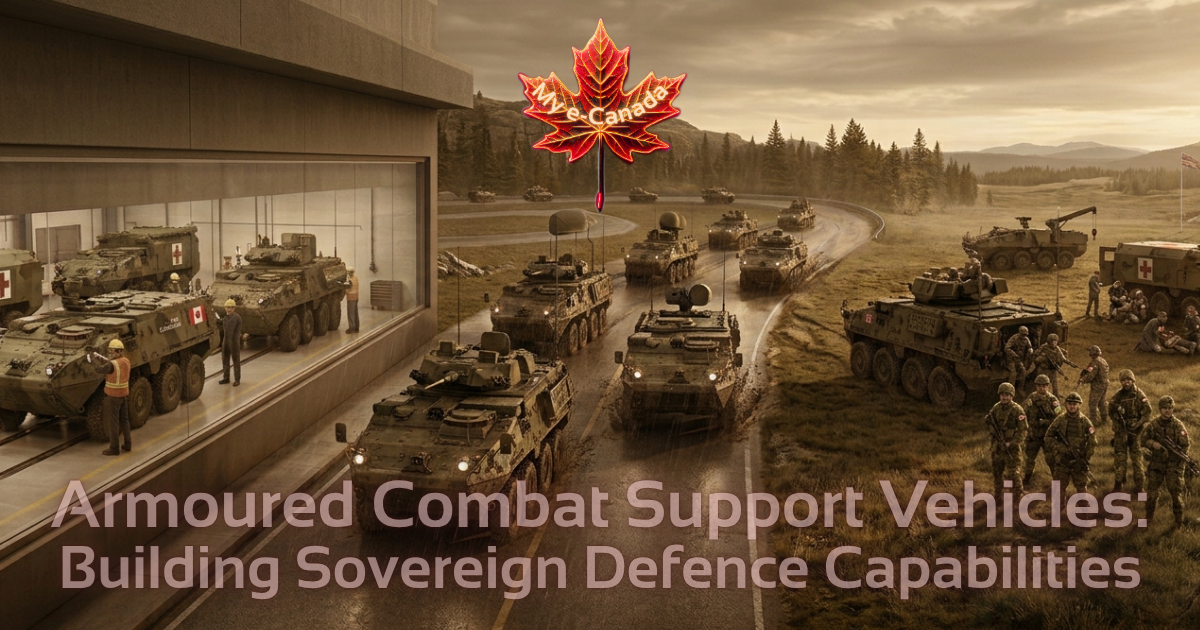
Thursday, July 23, 2026, My e-Canada Word On The Street Edition No. 26 Investigative News Exposé explores the procurement of armoured combat support vehicles to strengthen Canadian sovereign defence.
Current Army Fleet and Legacy Challenges
Evaluating the Need for Modern Military Upgrades
Modern military operations require reliable transport and heavy battlefield support. For decades, Canadian soldiers relied on aging equipment to fulfill vital roles. Legacy platforms included the M113 tracked carrier and the LAV II Bison. Many of these older vehicles entered active service back in the 1960s and 1980s. Decades of heavy usage caused severe mechanical wear and frequent system failures. Military technicians worked endlessly to keep these legacy machines operational in the field. Maintenance costs climbed steadily every single year as replacement parts became scarce. The Royal Canadian Army required a modern solution to replace these outdated platforms. The federal government addressed this need by acquiring new armoured combat support vehicles. Initial contracts secured an active fleet of 360 modern units for field operations. These modern machines perform troop transport, medical evacuations, and complex command operations. They offer superior mobility and enhanced ballistic protection against modern battlefield threats. However, ongoing international missions highlighted the urgent national need for additional units. Canada also provided essential military aid packages to international allies in Europe. The government committed 89 vehicles to support Ukraine in its defence efforts. An additional 35 vehicles were promised during recent NATO summit discussions in Europe. These donations depleted domestic training inventory across several key military bases. Military planners recognized that domestic training capacity required rapid fleet expansion. Expanding the overall fleet ensures soldiers train on modern equipment continuously. The primary operational goal is building a sustainable, highly capable military force. Upgrading the fleet resolves decades of costly maintenance and operational delays.
Armoured Combat Support Vehicles: The Genesis of Canadian Armour Manufacturing
Four Decades of Industrial Excellence in London
The history of military manufacturing in London, Ontario, spans nearly five decades. In 1977, the facility began operations under the name Diesel Division of General Motors of Canada. The company initially won the Armoured Vehicle General Purpose contract for the Canadian Army. That historic contract selected the Swiss Mowag Piranha design for domestic production. The company produced three primary variants, including the Grizzly, Cougar, and Husky. These early wheeled vehicles proved effective for domestic training and overseas peacekeeping missions. Over time, the London manufacturing plant expanded its engineering capabilities significantly. In 1999, the corporate division was rebranded under the name GM Defence. General Dynamics acquired the defence division in 2003, creating General Dynamics Land Systems-Canada. Today, the company operates as a premier defence manufacturer employing over 1,700 skilled workers. The London facility serves as a vital cornerstone of Canada’s domestic industrial base. Their engineering expertise led directly to designing modern armoured combat support vehicles. The facility has produced over 2,000 advanced combat vehicles for the Canadian Armed Forces. Their manufacturing success created deep roots within the local economy of Southwestern Ontario. The plant collaborates with hundreds of domestic suppliers across multiple Canadian provinces. This extensive industrial network sustains thousands of skilled manufacturing jobs across the nation. The facility continues to advance vehicle design, armor protection, and system integration. Their long-standing relationship with the federal government ensures stable defence manufacturing capabilities. Building high-quality vehicles domestically strengthens national defence sovereignty during uncertain global times. The company remains dedicated to supporting Canadian soldiers with state-of-the-art land systems. Their continuous production line provides reliable delivery schedules for major military contracts. This rich manufacturing heritage prepared the company for its newest military vehicle contract.
Historic Canadian Military Vehicle Contracts
A Proven Track Record of Supplying Domestic Forces
General Dynamics Land Systems-Canada has secured major defence contracts with the federal government for decades. The original AVGP program in the late 1970s delivered hundreds of six-wheeled armoured vehicles. In 1990, the company secured a major contract for the eight-wheeled LAV II Bison. The Bison provided versatile troop transport, command, and medical support capabilities for land operations. Soon after, the company manufactured the Coyote reconnaissance vehicle to replace older military platforms. In the late 1990s, the federal government awarded the milestone contract for the LAV III. The LAV III became the primary infantry section carrier for the Canadian Army. It served extensively during demanding combat operations in Afghanistan over many years. To preserve combat readiness, the government launched the LAV Life Extension project in 2011. That massive program upgraded over 550 LAV III vehicles to the advanced LAV 6.0 standard. The LAV 6.0 featured upgraded engine power, enhanced armor, and double-V hull protection. In 2019, the federal government awarded GDLS-Canada a major contract for 360 armoured combat support vehicles. That contract aimed to replace aging Bison and M113 fleets across operational units. More recently, GDLS-Canada won the Logistics Vehicle Modernization contract to supply light and heavy trucks. Their successful contract history demonstrates a deep commitment to meeting Canadian military specifications. The company consistently delivers robust engineering solutions tailored to harsh operational environments. Their vehicles undergo rigorous field testing across demanding terrain and extreme weather conditions. Consistent contract awards reflect strong trust between National Defence and the London facility. This strong foundation enabled the government to expand domestic fleet production under new strategic defence policies. These ongoing domestic investments ensure long-term readiness for Canadian soldiers.
Armoured Combat Support Vehicles: Global Export Success and Allied Partnerships
Supplying Armoured Fleets to International Defence Partners
While supplying domestic forces remains paramount, General Dynamics Land Systems-Canada achieved massive export success globally. Over nearly 50 years, the London facility delivered more than 9,000 vehicles to international allies. In the early 1980s, the military across the southern border selected the London plant to build the LAV-25. That historic international award established the Canadian facility as a leading global manufacturer of wheeled light armour. The company later manufactured thousands of Stryker vehicles for those same military forces in subsequent deals. The Saudi Arabian National Guard became another major export client, purchasing large fleets of specialized armoured vehicles. International allies in the Asia-Pacific region also selected vehicles manufactured at the London Ontario assembly plant. The Australian Defence Force acquired the ASLAV variant to satisfy its light armoured vehicle requirements. New Zealand purchased the NZLAV platform to modernize its active land forces and overseas deployment options. Export sales account for more than 85 percent of total revenues generated by the London plant. These massive export revenues allow the manufacturer to maintain a strong, sustainable domestic industrial infrastructure. International contracts support over 600 Canadian suppliers located across more than 100 communities nationwide. This thriving export trade enhances Canada’s global balance of trade and strengthens international defence alliances. Global clients value the reliability, mobility, and survivability built into every Canadian-made armored platform. The high standards required by foreign armies directly inform domestic vehicle developments like armoured combat support vehicles. International success proves that Canadian defence engineering competes at the absolute highest level worldwide. Expanding foreign and domestic order books ensures steady employment for over 1,700 workers in London. This robust international footprint provides the structural stability required to fulfill large-scale Canadian military procurements.

Technical Capabilities and LAV 6.0 Platform
Advanced Mobility, Blast Protection, and Modular Engineering
The technical capabilities of modern land platforms are crucial for soldier survivability on dangerous battlefields. The new armoured combat support vehicles are built directly on the proven LAV 6.0 platform. This advanced eight-wheeled platform features a powerful Caterpillar C9 turbo-charged six-cylinder diesel engine producing 450 horsepower. That robust engine enables top road speeds reaching 100 kilometers per hour with exceptional cross-country mobility. An independent hydropneumatic suspension system allows drivers to adjust ride height based on challenging terrain conditions. The vehicle provides an impressive operational range of 600 kilometers on paved roads before refueling. Off-road mobility is equally impressive, allowing land forces to navigate steep gradients, deep mud, and rough obstacles. Protection represents a defining feature of the LAV 6.0 architecture supporting these modern vehicles. The platform incorporates an innovative double-V hull design specifically engineered to deflect landmine and IED blast energy. Modular add-on armor packages provide scalable protection against heavy-caliber kinetic rounds and shrapnel threats. Inside the crew compartment, energy-attenuating seating absorbs extreme vertical impact energy during blast events. Defensive armament options include a remote weapon station mounted on the vehicle roof for situational defence. That system allows the gunner to operate a 7.62 mm C6 machine gun safely from inside. Modern digital architecture integrates secure communications, specialized thermal cameras, and tactical battle management software. Driver thermal vision systems ensure seamless tactical navigation during night operations and zero-visibility smoke environments. The high payload capacity supports heavy mission equipment without sacrificing overall speed or tactical maneuverability. These combined engineering features create a highly survivable, versatile platform capable of operating effectively in high-intensity combat zones worldwide. The standardized vehicle architecture simplifies technical field repairs and routine maintenance significantly.
Armoured Combat Support Vehicles: Expanding the Armoured Fleet
A Landmark $2 Billion National Investment in Land Systems Manufacturing
The federal government plans to spend nearly $2 billion over the next four years to build and deliver 190 additional armoured combat support vehicles. This massive acquisition will expand the military’s current fleet from 360 to 550 total vehicles across operational units. These new units are based on the proven Light Armoured Vehicle (LAV) 6.0 platform. The acquisition will deliver eight distinct specialized variants. These include ambulance, command post, troop and cargo, electronic warfare, and mobile repair versions. This standard vehicle architecture is intended to reduce long-term training and maintenance costs significantly. The newly acquired armoured combat support vehicles will be deployed for training exercises at Canadian Armed Forces bases across the country. The Right Honourable Mark Carney Prime Minister formally announced the landmark contract during a high-profile visit to London, Ontario. He addressed defence workers directly at the General Dynamics Land Systems-Canada manufacturing facility. The strategic investment ensures that Canadian mechanized units remain fully equipped for domestic duties and international commitments. Expanding the domestic fleet addresses serious inventory shortfalls created by recent international military assistance donations. Over 120 similar vehicles were transferred or promised to overseas allies in Eastern Europe. The primary operational goal is maintaining full combat readiness while modernizing military infrastructure. This new order provides immediate industrial predictability for the domestic defence sector over the coming decade.
National Defence Policy and Strategic Framework
Sourcing Military Equipment from Canadian Industrial Partners
This contract represents the first official agreement under Ottawa’s new $180 billion defence industrial strategy introduced in February. The strategy prioritizes domestic sourcing for major defence equipment acquisitions. The overarching policy aims to build national security capabilities by sourcing equipment from domestic suppliers. The government looks to international allies or commercial off-the-shelf options only when Canadian alternatives are unavailable. The Right Honourable Mark Carney Prime Minister highlighted that this domestic manufacturing effort supports Canada’s broader commitments. These include asserting Arctic sovereignty and reinforcing key international defence alliances. Deploying armoured combat support vehicles strengthens operational readiness across remote northern territories and overseas operational theaters. Sourcing defence hardware within Canada ensures supply chain resilience during major international crises. Strategic partnerships create a predictable environment for long-term industrial research and technical development. The policy establishes the federal government as a reliable anchor customer for domestic manufacturers. This approach encourages defence firms to invest heavily in local workforces and facilities. Canadian military requirements are directly aligned with domestic manufacturing capacity through this comprehensive framework. The strategic policy ensures that defence dollars generate tangible economic benefits within the country. Building sovereign defence capabilities safeguards the nation against changing geopolitical dynamics. The new acquisition model represents a fundamental shift in Canadian defence procurement philosophy.

Armoured Combat Support Vehicles: Across-Canada Economic Impact and Regional Job Creation
Supporting a Nationwide Industrial Supply Chain and Thousands of High-Paying Jobs
The prime minister emphasized that every single vehicle will be manufactured domestically. This supports a widespread Canadian supply chain that spans several key provinces. General Dynamics Land Systems-Canada will assemble the final vehicles at its main factory in London, Ontario. InterPro in Regina, Saskatchewan, will produce the specialized steel required for the armoured hulls. Advanced thermal imaging systems will be supplied by Thales Canada in Saint-Laurent, Quebec. Specialized components and wiring assemblies will be manufactured by IMP Aerospace & Defence in Enfield, Nova Scotia. Additional custom parts will come from Ryan Manufacturing in Richmond, British Columbia. This long-term agreement is projected to secure and sustain over 6,000 well-paying jobs across Canada annually over eight years. The production network engages more than 600 Canadian sub-contractors and suppliers nationwide. Manufacturing armoured combat support vehicles creates high-skilled opportunities for Canadian engineers, welders, and assembly technicians. Regional economies benefit directly from long-term defence manufacturing subcontracts. Industrial benefits policies ensure substantial investments flow into domestic research and technical training. The project anchors Canada’s advanced manufacturing sector in the global defence market. Widespread supply chain integration strengthens industrial capabilities from sea-to-sea.
Variants, Capacity, and Stationing Across Bases
Specialized Roles, Troop Capacities, and Operational Base Deployments
The 190 new vehicles will be delivered in eight specialized military variants. These include ambulances, mobile repair workshops, command posts, troop transports, electronic warfare platforms, and engineering assets. Depending on the specific configuration, each vehicle carries between two and ten military personnel. The ambulance variant provides specialized medical space to treat injured soldiers during transport. Mobile repair and engineering variants carry specialized tools, spare parts, and heavy maintenance equipment. Command post variants house digital communication suites for field commanders managing tactical operations. The new armoured combat support vehicles will be stationed at primary Army bases across Canada. Key locations include 3 Canadian Division Support Base Edmonton in Alberta and 2 Canadian Division Support Base Valcartier in Quebec. Units will also be stationed at 4 Canadian Division Support Base Petawawa in Ontario and 5 Canadian Division Support Base Gagetown in New Brunswick. Stationing vehicles at these regional bases supports comprehensive tactical training for regular and reserve forces. Formations equipped with these modern platforms will deploy on domestic emergency response missions when needed. They will also deploy overseas on international NATO missions, including ongoing commitments in Eastern Europe. Standardized platform design ensures seamless integration with existing LAV 6.0 combat fleets. Modernizing support vehicles ensures operational units maintain continuous capability in all operational scenarios.
Armoured Combat Support Vehicles: Deployments and NATO Alliances
Operational Roles in Overseas Missions and Domestic Emergency Preparedness
Canadian land forces operate in unpredictable security environments around the globe. Having reliable mobility ensures ground commanders can complete demanding missions safely. The integration of modern armoured combat support vehicles enhances joint operations with key international partners. Formations currently deployed in Eastern Europe rely heavily on these versatile platforms. Troops stationed with the Canadian-led NATO Multinational Brigade in Latvia operate these vehicles daily. They provide vital logistics, communications, and emergency medical support in high-readiness environments. Domestic deployments are equally critical for supporting local communities during natural disasters. Canadian soldiers deploy on domestic emergency operations during major floods, severe forest fires, and winter storms. The vehicles transport essential supplies, personnel, and medical equipment into isolated disaster zones. High ground clearance and rugged all-wheel drive systems allow them to navigate treacherous terrain effortlessly. Expanding the fleet ensures domestic units maintain immediate response capabilities while maintaining international deployments. Tactical training rotations at major Canadian bases will prepare new crews for both roles. Command teams can execute complex field maneuvers knowing full technical support accompanies them. Modernizing operational fleets preserves combat effectiveness across all mission profiles. These continuous investments protect Canadian interests at home and strengthen key international alliances abroad.
Advanced On-Board Systems and Battlefield Technology
Integrating Cutting-Edge Electronics, Imaging, and Defensive Hardware
Modern land warfare requires advanced electronic integration and reliable sensory technology. The new armoured combat support vehicles are equipped with sophisticated tactical hardware. Advanced thermal imaging systems are manufactured by Thales Canada in Quebec. These optronic sensors provide clear battlefield visibility through heavy smoke, fog, and darkness. Drivers and vehicle commanders can identify potential threats at extreme operational distances. Secure communications networks link each vehicle directly to higher command formations. Electronic warfare variants detect and jam hostile radio signals across complex operating environments. Command post variants feature digitised battle management software to coordinate military movements. High-resolution displays allow officers to monitor tactical situations in real time. Remote weapon stations mounted on the roof keep crews protected during engagements. Soldiers can fire defensive armament without exposing themselves to sniper fire or shrapnel. Modular digital architecture allows rapid software upgrades as new threats emerge. Power generation systems were upgraded to support modern high-draw electrical equipment. System redundancy ensures critical electronics remain functional if main power systems fail. Technicians can diagnose mechanical issues rapidly using integrated diagnostic software. Standardizing electronic components across all variants reduces field maintenance complexity significantly. Domestic production of these electronic components enhances national defence manufacturing sovereignty. Canadian technology ensures soldiers maintain a distinct tactical advantage on modern battlefields. Reliable electronics save lives during high-intensity military operations in remote regions. Engineers designed these systems to withstand harsh climate conditions across Northern Canada. Thermal sensors operate flawlessly in sub-zero temperatures and severe winter blizzards. Advanced cabling assemblies from Nova Scotia deliver clean power to delicate internal computers. Secure data links keep field commanders informed during rapid tactical deployments. Cutting-edge electronics make these platforms indispensable.

Armoured Combat Support Vehicles: Training Rotations and Fleet Readiness
Restoring Domestic Base Capacity and Training Infrastructure
Domestic training exercises require consistent access to modern military equipment. Previous vehicle donations created temporary inventory shortages across several army bases. Acquiring additional armoured combat support vehicles addresses these operational gaps directly. Canadian soldiers will train on state-of-the-art platforms before deploying overseas. Bases in Edmonton, Valcartier, Petawawa, and Gagetown will receive new vehicle deliveries. Regular force units and primary reserve units will conduct combined tactical maneuvers. Realistic training exercises prepare soldiers for complex joint operations with NATO allies. Command teams will practice live-fire coordination, tactical communications, and battlefield casualty evacuations. Driver training programs will teach personnel how to navigate challenging winter terrain safely. Field maintenance crews will practice rapid mechanical repairs under simulated combat conditions. Standardizing the fleet around the LAV 6.0 platform simplifies instruction for recruit courses. Instructors can focus on core tactical skills rather than teaching multiple legacy systems. Having sufficient vehicles at domestic bases improves overall military readiness across the country. Units can maintain high readiness standards while supporting international operational commitments simultaneously. Expanded fleet numbers ensure reserve units receive equal access to modern equipment. Tactical training rotations will run continuously throughout the calendar year in all provinces. Modern equipment boosts soldier morale and enhances unit cohesion during demanding field exercises. Proper training reduces operational risks during actual military deployments in hostile regions. The federal investment ensures Canadian Armed Forces personnel remain exceptionally well-trained professionals. Having reliable domestic training inventory strengthens the entire national defence infrastructure. Long-term fleet availability guarantees that Canadian units are fully prepared for any crisis. Continuous training builds confidence among soldiers operating in dangerous environments. The army can sustain high operational readiness standards for decades to come.
International Security Commitments and Allied Contributions
Supporting NATO Deterrence and Bilateral Military Assistance
Canada plays a vital role in maintaining international peace and collective security. European security challenges require strong military contributions from all NATO member nations. Deployed troops in Latvia rely on armoured combat support vehicles for daily operational support. These vehicles perform command, medical, and maintenance roles for the multinational brigade. Operating standardized vehicles alongside NATO partners enhances battlefield interoperability significantly. Canada has also provided extensive direct military aid to sovereign international partners. The federal government donated 89 armoured vehicles to Ukraine for defence operations. An additional 35 vehicles were promised during the 2026 NATO Summit. These donations represent over $8.5 billion in total Canadian military assistance. Providing modern armor helps foreign partners defend their territorial integrity effectively. The new procurement contract replenishes domestic inventory while sustaining ongoing international commitments. The Right Honourable Mark Carney Prime Minister emphasized that Canada will continue supporting global security alliances. Rebuilding domestic fleet numbers ensures Canada can deploy troops rapidly during global crises. NATO allies praised Canada for making long-term investments in land systems capabilities. Modern support vehicles are crucial assets during coalition operations in unpredictable regions. High mobility and blast protection ensure soldier survivability on contested battlefields. Overseas deployments showcase Canadian manufacturing excellence to foreign defence partners. Reliable supply chains ensure spare parts reach deployed formations without operational delay. Supporting international security partners reinforces Canada’s reputation as a dependable global ally. The expanded fleet ensures long-term operational sustainability for future NATO military deployments. National defence contributions demonstrate Canada’s ongoing commitment to defending democratic values globally. Rebuilding military capacity protects national sovereignty while strengthening vital transatlantic defence partnerships. Investing in modern defence assets ensures our military remains ready for future international security challenges.
Armoured Combat Support Vehicles: Domestic Emergency Operations and Arctic Sovereignty
Asserting Northern Sovereignty and Supporting Civilian Communities in Crisis
Canadian Armed Forces personnel perform critical duties within national borders during domestic emergencies. Severe weather events frequently disrupt local infrastructure across Canadian provinces and northern territories. Deploying armoured combat support vehicles allows military units to operate effectively during extreme environmental crises. These rugged all-wheel drive vehicles navigate flooded roads, heavy snowfall, and debris-strewn disaster zones safely. Ambulance variants transport critically ill citizens from isolated rural communities to regional medical centers. Command post variants establish mobile communication hubs when local telecommunications infrastructure fails during severe storms. The military also deploys these vehicles during northern sovereignty operations across the Arctic. Asserting national sovereignty in remote northern regions requires dependable equipment capable of enduring extreme sub-zero conditions. Regular patrols protect northern borders and secure vital Arctic waterways during changing geopolitical realities. High ground clearance and heated crew compartments protect soldiers operating in harsh northern environments. The federal government prioritizes domestic security by ensuring forces maintain modern equipment nationwide. Local communities rely on military assistance when provincial emergency response resources become overwhelmed by disasters. Having versatile support platforms stationed at regional bases guarantees rapid response times across Canada. Operations like Operation LENTUS showcase the vital dual role of modern military land platforms. Vehicles designed for intense military combat prove equally valuable for domestic disaster relief missions. Domestic deployments build strong bonds between Canadian citizens and the armed forces protecting them. Strengthening domestic response capabilities protects vulnerable communities while securing Canada’s northern frontiers continuously. The strategic investment guarantees that military personnel possess the equipment needed to safeguard Canadians anywhere nationwide. Equipping troops with advanced technology ensures our armed forces remain resilient during challenging domestic emergencies.
Final Word On The Street: Armoured Combat Support Vehicles Strengthening Canadian Defence Capabilities
Building Sovereign Defence Capabilities and Economic Growth for Canada
The federal acquisition of 190 new armoured combat support vehicles represents a milestone for Canadian defence procurement. The Right Honourable Mark Carney has tied military rearmament directly to domestic economic strategy and job creation. Sourcing equipment through General Dynamics Land Systems-Canada secures over 6,000 high-paying jobs annually for eight years. A nationwide industrial supply chain connects specialized manufacturers across British Columbia, Saskatchewan, Ontario, Quebec, and Nova Scotia. Expanding the fleet from 360 to 550 vehicles resolves legacy maintenance challenges and inventory shortfalls. Canadian soldiers gain modern protection, high cross-country mobility, and standardized platform reliability for future field operations. These versatile vehicles perform crucial roles during domestic disaster relief, Arctic sovereignty patrols, and overseas NATO missions. Replacing outdated vehicles ensures Canada satisfies its international defence commitments while fostering long-term industrial growth. The strategic partnership model establishes a predictable framework for domestic defence manufacturing over the coming decade. Canadian workers and engineers are positioned at the absolute center of national security planning. This comprehensive procurement strategy proves that rebuilding military readiness can drive substantial domestic economic growth. Modernizing land systems hardware prepares the Canadian Armed Forces to meet unpredictable security challenges with total confidence. The federal government has demonstrated a clear commitment to equipping soldiers with world-class, Canadian-made military hardware. Building domestic manufacturing capacity ensures Canada maintains sovereign defence independence for generations to come. The investment in modern equipment guarantees that domestic industry will continue innovating for years to come. Canadian military forces can rely on domestic production to deliver modern hardware whenever operational needs arise.
Thank you for reading this investigative news exposé. We virtually remain My e-Canada Word On The Street: Digitally Yours To Explore.
ACSV Procurement, Arctic Sovereignty, Armoured Combat Support Vehicles, Canadian Armed Forces, Canadian Defence Industry, Canadian Military Fleet, Canadian Security, Client Scout, Defence Industrial Strategy, Defence Spending, Digitally Yours To Explore, Domestic Defence Manufacturing, Economic Growth Canada, General Dynamics Land Systems-Canada, job creation, LAV 6.0 Platform, London Ontario Manufacturing, Mark Carney, Military Infrastructure, Military Procurement, National Defence, NATO Commitments, Wayne A. Cargill Agency
Leave a Reply