
Your cart is currently empty!
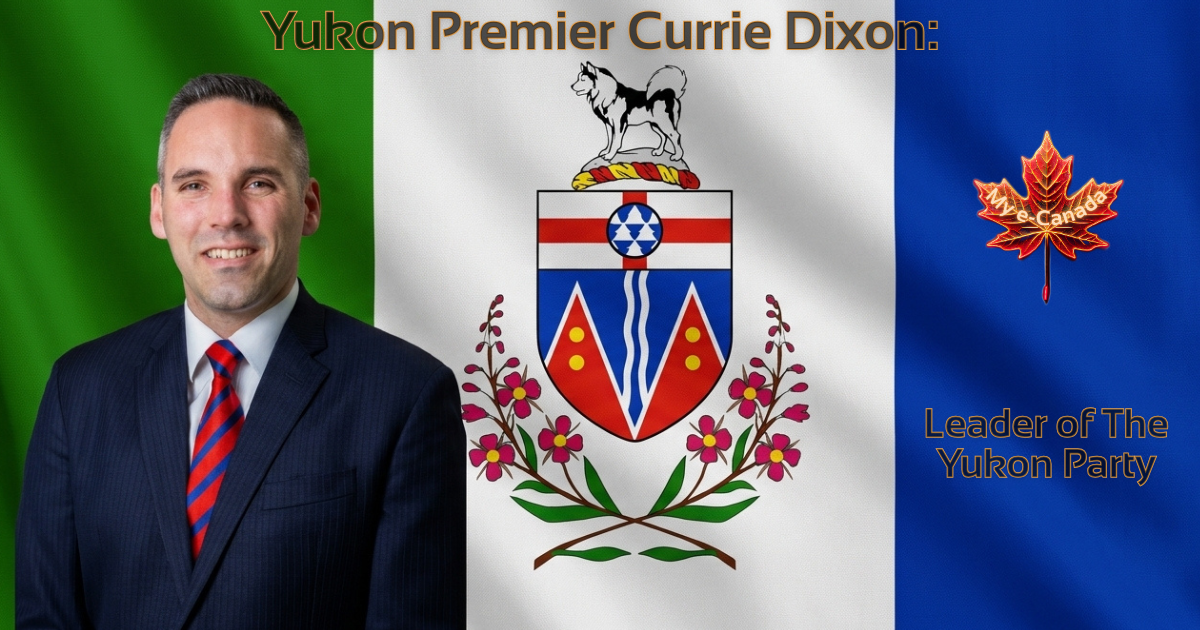

Yukon Premier Currie Dixon:
Leader of The Yukon Party
Friday, November 13, 2026, My e-Canada Word On The Street Investigative News Exposé Edition No. 37 explores the life and career of the Yukon Premier Currie Dixon. Born on September 2, 1985, Currie Dixon grew up in Whitehorse. His parents, Don and Linda, settled in the territory during the 1970s. This Northern upbringing shaped his political perspective. He achieved a historic territorial milestone early in life. He stands as the very first premier born directly within the territory. His family roots run deep across the local community. Whitehorse provided the backdrop for his formative educational years. Local values heavily influenced his early career choices. Public service appealed to him from a young age. Community involvement remained a constant theme throughout his youth. He participated actively in local school programs and youth initiatives. Territorial history fascinated him during his adolescent years. Political discussions filled his household frequently. His parents encouraged academic excellence and critical thinking. These foundational experiences prepared him for rigorous higher education. Moving south for university broadened his intellectual horizons significantly. Yet his heart remained anchored in the North. Returning home became a primary career objective after completing his degrees. The Yukon Premier understood the unique challenges facing remote northern communities. He watched the territory evolve through decades of rapid economic change. Infrastructure expansion transformed local commerce during his childhood. Resource development created diverse employment opportunities for residents. Environmental stewardship emerged as a critical topic of public debate. Dixon absorbed these complex regional dynamics closely. His early life in Whitehorse planted the seeds for a lifelong political journey. Today, he steers the territory toward new economic horizons. His childhood background grounds his current policy decisions. Every policy choice reflects his deep territorial roots. Residents respect his authentic northern background. His parents instilled a strong work ethic in him. That dedication drove his rapid rise through territorial politics.
Yukon Premier Currie Dixon: Early Academic Foundations
Educational Pursuits Across Canadian Universities
Higher education formed a crucial pillar in his professional development. He pursued rigorous academic training in politics and history. In 2008, he graduated with a Bachelor of Arts. St. Francis Xavier University in Nova Scotia awarded this credential. His studies focused heavily on Canadian political structures and history. Following this undergraduate success, he targeted graduate education. The University of Northern British Columbia welcomed him for graduate studies. In 2011, he earned a Master of Arts in Political Science. His master’s thesis explored complex regional governance issues. He analyzed First Nations governance models and economic development carefully. Education policy in northern jurisdictions formed another core research area. This graduate research provided practical insights into territorial administration. Academic rigor prepared him for the complexities of public office. Later, he pursued further postgraduate studies in International Law. The University of London hosted these advanced legal studies during a political hiatus. International legal frameworks fascinated his analytical mind. Balancing education with professional duties tested his organizational capacity. Academic mentors praised his dedication to continuous learning. Each degree added depth to his policy-making capabilities. The Yukon Premier deployed academic frameworks to evaluate public policy objectively. Political theory translated directly into practical governance strategies. His scholarly background separated him from many career politicians. Complex legislative documents posed no challenge for his trained intellect. Citizens appreciated his intellectual approach to governance. Higher learning equipped him to navigate intricate legal negotiations. Territorial administration demands versatile knowledge across multiple disciplines. His academic credentials satisfied these demanding intellectual requirements. Scholars and politicians alike respected his rigorous training. Education remained a lifelong priority throughout his career.
Yukon Premier: Political Genesis and Early Success
Entering Territorial Politics in Whitehorse
Entering public office marked a dramatic turning point in his professional life. Following graduate school, he served as a senior policy advisor. Dennis Fentie, then serving as premier, employed his advisory talents. This advisory role offered a masterclass in territorial governance. He learned the intricate mechanics of cabinet decision-making firsthand. Soon, political ambitions prompted him to seek elected office. The Yukon Party selected him as their candidate for Copperbelt North. The general election took place on October 11, 2011. Voters responded positively to his youthful energy and sharp intellect. He won his riding convincingly on election night. At just twenty-six years of age, he entered the legislature. This victory made him one of the youngest cabinet ministers in Canadian history. The Yukon Premier embraced his ministerial responsibilities immediately. Colleagues marvelled at his rapid transition from advisor to decision-maker. Navigating legislative debates required immense discipline and focus. Opposition critics tested his resolve during intense committee hearings. He answered tough questions with calm composure and detailed knowledge. Constituents in Copperbelt North celebrated his appointment to cabinet. His youth brought a refreshing perspective to aging legislative halls. Mentors within the party guided his initial steps in parliament. Yet he quickly established an independent leadership style. Decision-making processes within his departments grew more efficient. Public servants respected his administrative competence and clear vision. His entry into politics rejuvenated conservative politics across the territory. Early electoral success validated his strategic career choices. Future political ambitions began forming during these formative ministerial years. The legislature became his primary professional domain. Every debate sharpened his formidable rhetorical skills. His rapid ascent caught the attention of national political observers.

Yukon Premier Currie Dixon: Managing Diverse Cabinet Portfolios
Directing Environment and Economic Development
Ministerial duties expanded rapidly during his first legislative term. Darrell Pasloski assumed the premier’s office following Fentie’s departure. Pasloski appointed Dixon to several demanding cabinet positions. Between 2011 and 2015, he directed the Department of Environment. Simultaneously, he managed the Department of Economic Development. Balancing two major portfolios required exceptional time management skills. Environmental policy demands careful consultation with indigenous communities and industry. He oversaw the implementation of territorial climate change action plans. Regional climate modeling expanded significantly under his administrative watch. Biodiversity monitoring partnerships flourished alongside First Nations and local colleges. Wildlife management frameworks received vital updates during his tenure. He approved conservation regulations for vulnerable caribou and bison populations. Economic diversification occupied much of his working hours during commodity downturns. Trade missions fostered international connections for northern businesses. The Yukon Premier advocated fiercely for mineral exploration investments across domestic markets. Telecommunications redundancy projects received crucial government backing under his watch. Managing competing priorities tested his diplomatic abilities constantly. Conservationists and miners frequently clashed over land use policies. He navigated these polarized debates with pragmatic balance. Administrative efficiency improved across both government departments. Civil servants praised his collaborative management approach. Public service oversight added another layer of responsibility later in his term. Managing labour relations across the public sector proved challenging. He negotiated fair collective agreements with territorial union representatives. His tenure across these portfolios cemented his reputation as a capable administrator. Cabinet colleagues relied heavily on his policy judgment.
Yukon Premier: Infrastructure Investment and Municipal Deals
Securing Federal Funding for Regional Projects
Infrastructure development dominated his later ministerial responsibilities. In 2015, he assumed leadership of the Department of Community Services. Securing federal funding became an immediate operational priority. In 2016, he negotiated vital bilateral funding agreements with federal authorities. These agreements unlocked over one hundred fifty million dollars for joint projects. Yukon became the first Canadian jurisdiction to sign federal water agreements. The Clean Water and Wastewater Fund secured sixty-eight million dollars. This funding financed twenty-one vital community infrastructure upgrades. Sewage lagoon improvements in Faro proceeded rapidly under his watch. Haines Junction received a brand new modern wastewater treatment station. Transportation networks also experienced unprecedented capital investment. He rolled out seventy-eight million dollars across seventeen municipal projects. Highway bridge replacements formed a critical component of this spending. Nares River and Nisutlin Bay bridges underwent total rehabilitation. Fox Creek and Yukon River bridges at Carmacks received necessary upgrades. Downtown Whitehorse witnessed the comprehensive reconstruction of Sixth Avenue. The Yukon Premier championed these projects to stimulate local employment. Construction contractors praised the predictable tender release schedules. Municipal leaders appreciated his responsiveness to local infrastructure deficits. These investments modernized aging municipal systems across the territory. Safe drinking water reached remote communities previously reliant on outdated facilities. Bridges now withstand severe seasonal flooding events safely. Road networks facilitate smoother commercial transport throughout the region. His infrastructure stewardship left a tangible physical legacy. Citizens cross modern bridges daily without pondering their origins. Yet these engineering triumphs resulted from rigorous political negotiation. Federal partners gained confidence in territorial fiscal management. His infrastructure legacy endures across multiple northern communities.
Yukon Premier Currie Dixon: Private Sector Hiatus and Party Return
Stepping Away Before Securing Party Leadership
In June 2016, he announced he would not seek re-election. He stepped away from elected politics for roughly three years. During this hiatus, he focused on private-sector business development. He joined ALX Exploration and Mining Supplies Company in Whitehorse. As Director of Business Development, he supported northern resource operations. The company supplied vital equipment across Yukon and northern British Columbia. Alongside corporate duties, he returned to government policy advisory work. He served as a senior advisor within Economic Development. Simultaneously, he pursued distance postgraduate studies in International Law. The University of London delivered this academic program remotely. Balancing corporate work and legal studies expanded his professional perspective. His family life also flourished alongside his wife Brittany. Together, they raised two young children in their Whitehorse home. Yet political duty soon called him back to public service. Outgoing leader Darrell Pasloski and interim leader Stacey Hassard created a vacancy. On November 22, 2019, Dixon officially launched his leadership campaign. Party members rallied behind his blend of cabinet experience and business acumen. On May 23, 2020, he won the leadership race convincingly. Now, the future Yukon Premier prepared to rebuild his party. He spent five years leading the official opposition in the legislature. Serving as Chair of the Standing Committee on Public Accounts sharpened his fiscal scrutiny. His strategic patience paid off during the November 2025 general election. Voters awarded the Yukon Party a commanding majority government. The party captured over fifty percent of the popular vote. On November 22, 2025, he was officially sworn into office.
Yukon Premier: Current Governing Vision and Policy Priorities
Addressing Energy, Housing, and Healthcare Across Yukon
Following his November 2025 majority victory, his administration outlined clear policy goals. Economic stability and cost-of-living relief topped his immediate legislative agenda. His government moved swiftly to insulate residents from proposed power rate hikes. Officials began developing a comprehensive Winter Reliable Energy Plan for 2027. Furthermore, he advanced bilateral discussions regarding a Yukon–British Columbia electrical grid connection. Reducing regulatory red tape in mining and small business remained paramount. Housing affordability required bold structural reforms across the territory. His cabinet initiated reforms to the territorial land lottery system to accelerate development. Officials also launched reviews of government staff housing policies and phased out rent caps. Healthcare recruitment emerged as another urgent territorial priority. The Yukon Premier prioritized recruiting medical professionals from Australia, New Zealand, Britain, and America. His administration also paused work on a new territorial health authority via Bill 5. Education and community safety received substantial policy attention during early legislative sittings. The government initiated a structural reorganization of the Department of Education. Officials moved to ban mobile phones inside classrooms to improve student focus. Justice investments increased to support crime victims and reduce repeat offences. Additionally, cabinet ordered a comprehensive operational review of the Whitehorse Emergency Shelter. Critics challenged his March 2026 budget, which projected an eighty-two-million-dollar deficit. That fiscal plan pushed the territory right against its federal borrowing cap. Yet Dixon maintained that strategic investments were essential for long-term territorial growth.

Yukon Premier Currie Dixon: Navigating Political Controversies and Legislative Clashes
Examining Peel Watershed, Caucus Discipline, and Early Challenges
Throughout his career, Dixon avoided personal financial corruption or criminal scandals. However, his tenure as minister, opposition leader, and premier sparked fierce political controversies. In 2014, as Environment Minister, he finalized the Peel Watershed land-use plan. That controversial plan opened seventy-one percent of the region to mineral staking. It protected only twenty-nine percent, overriding a joint commission recommendation for eighty percent protection. First Nations and conservation groups sued, alleging modern treaty consultation breaches. In December 2017, the Supreme Court of Canada ruled unanimously against the government. Years later, in May 2021, a caucus text scandal tested his leadership. Leaked screenshots revealed two veteran MLAs exchanging crude messages in a group chat. Stacey Hassard and Wade Istchenko mocked political rivals and Dixon himself. Dixon apologized publicly, stripped their critic roles, and mandated anti-harassment training. However, critics noted he reinstated both legislators to critic duties in 2022. In November 2021, another fierce clash erupted over Hidden Valley Elementary School. Dixon introduced a non-confidence motion regarding the handling of student abuse allegations. NDP Leader Kate White refused support, accusing him of weaponizing tragedy for partisan gain. Early in his premiership, opposition members criticized his legislative tactics surrounding Bill 5. They accused the Yukon Premier of rushing the health authority pause without public consultation. Simultaneously, aggressive mining permit reforms triggered immediate legal pushback from First Nations. Navigating these high-stakes disputes demanded constant political resilience and strategic communication.
Yukon Premier Currie Dixon: First Nations Mining Lawsuits and Treaty Friction
Clashes Over Permitting Speed and Free-Entry Staking
Within months of taking office in late 2025, major legal battles erupted. Two Yukon First Nations filed separate lawsuits in Yukon Supreme Court. The First Nation of Na-Cho Nyäk Dun and Tr’ondëk Hwëch’in challenged territorial mining oversight. Both cases pitted accelerated mining permits against modern treaty consultation obligations. Filed in December 2025, the Na-Cho Nyäk Dun lawsuit targeted cumulative mining impacts. The nation argued governments shirked duties to complete regional land-use planning since 1993. Their claim alleged lax enforcement degraded ecosystems and harmed Chinook salmon populations. Consequently, they requested a temporary court injunction freezing new mineral staking. Meanwhile, Tr’ondëk Hwëch’in sought financial damages over uncancelled, unlawful mineral claims. The Dawson City nation alleged these idle claims caused ongoing environmental damage. They also challenged regulatory modifications enacted without proper treaty consultation. Tensions escalated rapidly in March 2026 when Dixon reorganized mineral oversight. The Yukon Premier split the Mineral Resources Branch into separate exploration and major-mines divisions. First Nations leaders argued this prioritized rapid resource extraction over broken environmental oversight. Furthermore, Yukon still governs mining under Klondike Gold Rush-era statutes. While successor legislation began in 2021, Dixon indicated new laws would wait until 2028. Rather than endure another exploration boom under outdated laws, nations turned to courts. In October 2026, territorial and federal lawyers applied to dismiss both lawsuits entirely.
Understanding Yukon’s Free-Entry Mineral System
Gold Rush Laws Clashing With Modern Consultation Duties
Yukon’s mineral staking framework relies on century-old Klondike Gold Rush legislation. The Quartz Mining Act and Placer Mining Act govern this free-entry system. Under these statutes, any adult can enter public land and stake mineral claims. Prospectors acquire exclusive subsurface rights without prior government permission or First Nations consultation. All Crown land remains open by default unless formally withdrawn by government order. Unlike jurisdictions using digital map staking, Yukon largely requires physical ground staking. Prospectors travel onsite, pound wooden posts, attach metal tags, and pay nominal fees. Recording a claim grants automatic rights to conduct low-level exploration activities. Claimants can clear trails, dig trenches, and operate small camps without environmental permits. Larger industrial projects trigger reviews by the Yukon Environmental and Socio-economic Assessment Board. Claimants hold mineral rights indefinitely by performing annual work or paying fees. Eleven of Yukon’s fourteen First Nations hold modern treaties recognizing territorial governance. First Nations leaders argue free-entry staking directly violates their constitutional treaty rights. In 2012, the Yukon Court of Appeal ruled in favour of Ross River Dena Council. The court confirmed free-entry staking breaches the Crown’s constitutional duty to consult. Furthermore, blanket staking pre-empts regional land-use planning by locking up sensitive wildlife habitats. Even on Category B settlement lands, third parties hold subsurface mineral rights. The Yukon Premier faces growing pressure to replace this archaic system with co-governance models.
Category A and Category B Settlement Lands
Examining Surface and Subsurface Ownership Across Treaties
Under the Umbrella Final Agreement set forth by Yukon, land classifications define crucial resource governance boundaries. Eleven of Yukon’s fourteen First Nations hold modern treaties establishing two primary land categories. The core distinction between Category A and Category B land involves subsurface mineral ownership. On Category A Settlement Land, the First Nation owns both the surface and subsurface. This encompasses approximately twenty-five thousand nine hundred square kilometres across the eleven self-governing nations. Complete jurisdiction prevents third-party prospectors from entering and staking mineral claims freely. If a nation permits mining, it sets terms, negotiates agreements, and collects royalties. Conversely, Category B Settlement Land involves a split-estate ownership structure spanning fifteen thousand five hundred square kilometres. Here, the First Nation owns the surface, while the territorial Crown retains subsurface minerals. During treaty negotiations, many culturally vital areas already contained active third-party mineral claims. Creating Category B allowed nations to secure surface title without costly government claim buyouts. While prospectors can stake subsurface claims on Category B land, access remains regulated. Miners must obtain First Nation surface consent or apply to the Yukon Surface Rights Board. Additionally, a smaller classification called Fee Simple Settlement Land covers urban municipal lots. These urban parcels remain subject to standard municipal bylaws and local property taxation. The Yukon Premier must navigate these intricate land classifications when formulating territorial resource policies.

Non-Signatory First Nations and Unceded Territories
Legal Status of White River, Ross River, and Liard
Three Yukon First Nations never signed modern land-claim agreements under the Umbrella Final Agreement. These nations include the White River First Nation, Ross River Dena Council, and Liard First Nation. Because Yukon never established formal reserves, these communities occupy a distinct legal status. All three remain governed under the federal Indian Act rather than self-government constitutions. Their band councils derive administrative authority from federal statutes and receive federal transfer funding. Their communities sit on federal or territorial Lands Set Aside via a 1955 directive. This administrative designation grants neither legal land title nor formal reserve governance powers. Furthermore, their broader traditional territories remain unceded Crown land without defined treaty boundaries. Kaska leadership in Ross River and Liard rejected the Umbrella Final Agreement settlement model. They argued capping settlement land at eight point five percent violated inherent Kaska sovereignty. Moreover, their traditional territories cross into northern British Columbia, complicating bilateral Yukon negotiations. White River First Nation separated from Kluane First Nation late during negotiations in 1991. Talks stalled over small land allocations, and federal mandates expired in 2005. Despite lacking treaties, all three nations hold constitutional rights under Section 35. Landmark court rulings mandate government consultation before granting mineral claims on their unceded lands. The Yukon Premier faces strict constitutional duties when approving resource projects across these regions.
Autonomous Governance of Self-Governing First Nations
Legislative, Fiscal, and Co-Management Powers Across Yukon
The eleven self-governing Yukon First Nations operate as distinct, autonomous orders of government. Under Chapter 24 of their Final Agreements, they operate outside the federal Indian Act. Each nation governs according to its own constitution, wielding substantial legislative and fiscal powers. They pass exclusive internal laws governing elections, citizenship criteria, and public institution administration. Furthermore, they enact citizen-specific laws applicable anywhere in Yukon covering healthcare, education, and culture. On Settlement Land, their laws regulate zoning, environmental protection, forestry, and wildlife management. Where a valid First Nation law conflicts with territorial statutes, First Nation law generally prevails. Fiscal autonomy enables these governments to levy property taxes and share personal income taxes. They negotiate multi-year Self-Government Financial Transfer Agreements directly with Ottawa to fund public services. Through transfer agreements, nations deliver housing, justice, and social programs previously managed by governments. Additionally, Administration of Justice Agreements allow nations to establish community courts and enforcement mechanisms. They also appoint members to vital territory-wide co-management boards, including the assessment board. The Yukon Premier collaborates regularly with these autonomous governments on shared territorial resource stewardship.
Mapping the Eleven Self-Governing First Nations
Cultural and Geographic Reach From Southern Lakes to Arctic Circle
Eleven self-governing First Nations govern communities stretching from southern lakes past the Arctic Circle. In southern Yukon, Carcross/Tagish First Nation represents Tagish and Inland Tlingit citizens in Carcross. Nearby along Teslin Lake, Teslin Tlingit Council governs Inland Tlingit people from Teslin. Within Whitehorse, two self-governing nations maintain primary administrative seats near historic river corridors. Kwanlin Dün First Nation unites Southern Tutchone, Tagish, and Tlingit citizens near Miles Canyon. North of the city, Ta’an Kwäch’än Council takes its name from Lake Laberge. Moving southwest, Champagne and Aishihik First Nations govern Southern Tutchone people from Haines Junction. Further northwest along Kluane Lake, Kluane First Nation operates from Burwash Landing. Through central Yukon, three Northern Tutchone nations anchor communities along major river valleys. Little Salmon/Carmacks First Nation governs from Carmacks along the flowing Yukon River. Further north along the Klondike Highway, Selkirk First Nation is centred in Pelly Crossing. Northeast along the Stewart River, First Nation of Na-Cho Nyäk Dun governs from Mayo. In the Klondike region, Tr’ondëk Hwëch’in represents Hän-speaking descendants from Dawson City. Finally, above the Arctic Circle, Vuntut Gwitchin First Nation governs from remote Old Crow. Every Yukon Premier must engage respectfully with these eleven diverse and autonomous northern nations.
Final Word On The Street Yukon Premier Currie Dixon
Tracing the political journey of Currie Dixon reveals a leader deeply rooted in Yukon. From his Whitehorse upbringing to becoming the first territory-born premier, his path reflects northern ambition. The Yukon Party itself evolved from its 1978 Progressive Conservative roots into an independent centre-right movement. Following Hilda Watson, Chris Pearson, John Ostashek, and Dennis Fentie, Dixon now leads this storied party. Returning from private-sector mining business development, he secured party leadership in May 2020. His commanding November 2025 majority victory placed him squarely at the helm of territorial governance. Today, the Yukon Premier balances ambitious economic development goals against complex constitutional and environmental realities. Addressing energy reliability, housing shortages, and healthcare recruitment demands decisive executive action across the North. Simultaneously, resolving fierce mining lawsuits with First Nations requires genuine respect for modern treaty obligations. Navigating Klondike-era staking laws alongside autonomous First Nation governments defines the central challenge of his mandate. As Yukon transitions toward a modern resource economy, Premier Dixon’s leadership will shape the territory’s future.
Thank you for reading this investigative news exposé. We virtually remain
My e-Canada Word On The Street: Digitally Yours To Explore
Leave a Reply