
Your cart is currently empty!
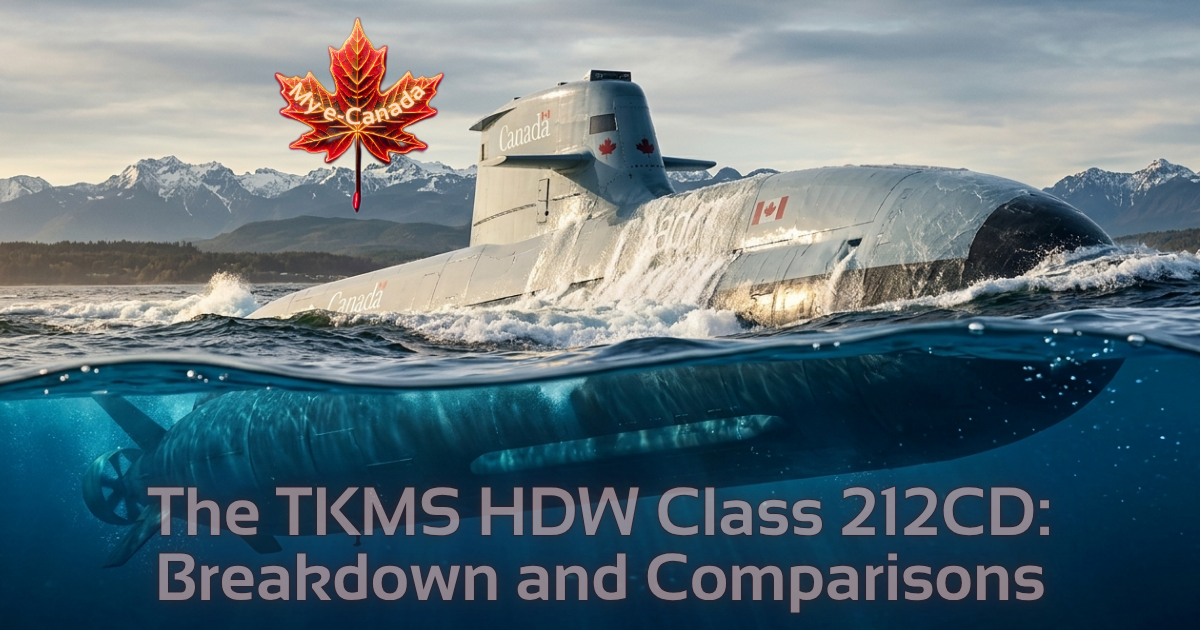

Thursday, July 09, 2026, My e-Canada Word On The Street Investigative News Exposé explores the TKMS HDW Class 212CD submarine procurement breakdown and comparisons. The Canadian Patrol Submarine Project represents a historic advancement in continental security and maritime defence. On July 6, 2026, the federal government officially designated Thyssenkrupp Marine Systems as the preferred supplier for this initiative. This selection initiates an exclusive negotiation phase to finalize the largest defence procurement in the history of the nation. Officials in Ottawa expect to conclude the final commercial contracts no later than the end of 2027. The complete life-cycle cost for the twelve vessels is estimated at one hundred billion Canadian dollars.
This comprehensive valuation includes the initial acquisition, weapon systems, infrastructure upgrades, and half a century of sustained operational support. To accelerate the timeline, the manufacturer will reallocate production slots originally assigned to European navies. This strategic adjustment ensures the delivery of the first four submarines by 2034. This timeline prevents any operational capability gap as the legacy fleet retires. The procurement framework relies on a specialized model where Canada buys a proven, active design. This choice lowers technical risk significantly. The acquisition of the TKMS HDW Class 212CD will provide the Royal Canadian Navy with a cutting-edge platform.
It establishes a long-term maritime relationship with trusted transatlantic allies. The financial commitment is fully provisioned within the national fiscal framework. This major investment helps fulfill international defence spending commitments. The multi-decade program transforms domestic naval capabilities entirely. It delivers an unprecedented level of underwater persistence. It ensures the country can monitor its maritime approaches effectively for decades to come.
My e-Canada Word On The Street:
Digitally Yours To Explore
Industrial Benefits and Coastal Fleet Distribution
Economic Offset Pledges and Two-Coast Sustainment Hubs
Securing this historic naval contract requires adherence to a strict one hundred percent economic offset mandate. The manufacturer of the TKMS HDW Class 212CD must match the entire value of the contract with direct domestic investments. These investments will inject tens of billions of dollars back into the local economy. The industrial policy targets key technological sectors. These include aerospace systems, autonomous technologies, and advanced research initiatives. It also prioritizes local steel production and specialized software development. This framework supports well over one hundred thousand high-skilled jobs across the country.
It fosters long-term industrial resilience within the domestic supply chain. To maintain the fleet, specialized long-term sustainment centres will be established on both ocean coasts. The fleet of twelve submarines will be divided equally between the two regions. Six operational hulls will be permanently based on the Atlantic coast in Halifax, Nova Scotia. The remaining six vessels will operate from the Pacific coast in British Columbia. This balanced distribution enables simultaneous patrols across three bordering oceans. It guarantees a persistent naval presence under Arctic ice fields.
The baseline procurement plan ensures that three submarines remain continuously available for global deployment. The integration of the TKMS HDW Class 212CD introduces advanced automation and stealth. The industrial arrangement includes a comprehensive backup plan to mitigate commercial risks. If contract negotiations collapse, the government can instantly designate South Korea’s Hanwha Ocean as the preferred vendor. This contingency plan protects the procurement timeline from unexpected commercial delays.
Technical Metrics of the TKMS HDW Class 212CD
Submarine Structure and Metric Dimensions
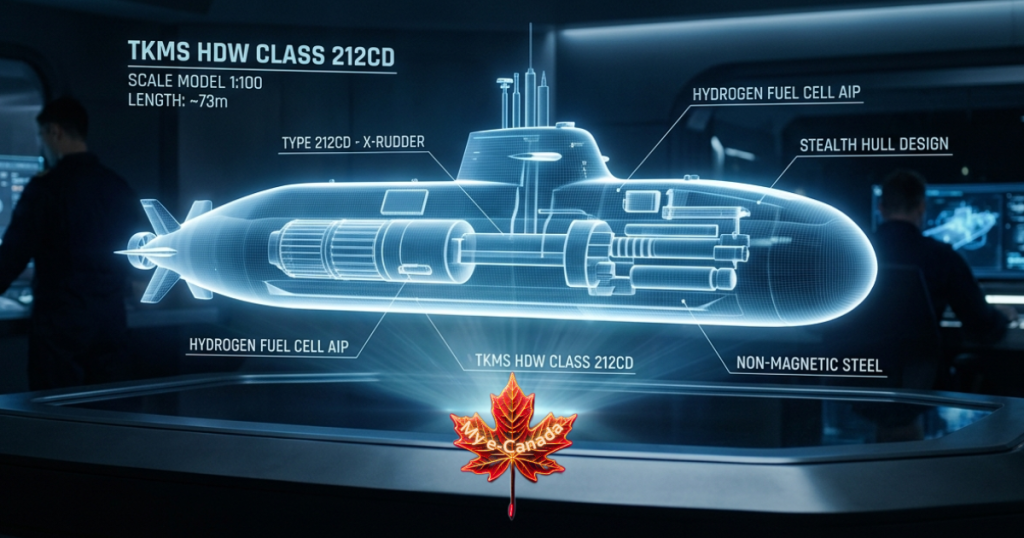
The physical profile of the selected vessel reflects a dramatic departure from older conventional stealth concepts. This modern submarine features an overall length of exactly seventy-four metres. Its total height measures thirteen metres. The beam extends to ten metres. The surface displacement of the hull is twenty-five hundred metric tonnes. Submerged, the total weight reaches three thousand metric tonnes. It possesses a unique diamond-shaped outer hull geometry. This structural design deflects active sonar emissions effectively. The hull material consists of non-magnetic steel.
This choice eliminates magnetic anomalies completely. The structural crush depth remains highly classified. It is engineered for deep-ocean deployments. It handles intense under-ice pressure environments seamlessly. The platform can dive deep to evade detection. It withstands extreme pressures in Arctic waters. This capability ensures complete operational safety. The rugged double-hull configuration provides maximum protection. It safeguards internal systems during complex operations. The vessel manoeuvres easily through restricted waters. Its low-profile structure minimizes its physical cross-section.
This design makes visual tracking difficult. The build quality meets strict naval standards. It ensures long-term structural integrity across oceans. The size strikes a perfect balance. It optimizes internal volume and external stealth. Every centimetre of the hull serves a purpose. The streamlined shape reduces hydrodynamic drag significantly. This efficiency improves overall range. It enhances silent manoeuvring in contested areas. The hull design of the TKMS HDW Class 212CD represents years of engineering research. It redefines traditional sub shapes entirely. This vessel provides a durable, modern foundation. It serves national security needs well into the future.
TKMS HDW Class 212CD: Operational Endurance and Acoustic Profiles
Subsurface Range and Classified Decibel Signatures
Endurance is a defining characteristic of this advanced platform. The TKMS HDW Class 212CD can travel for a maximum of forty-one days without any replenishment. The maximum distance extends past eight thousand nautical miles. This range is achieved through an advanced fuel cell propulsion system. It relies on liquid oxygen and hydrogen. This system operates entirely without atmospheric air. The maximum speed exceeds twenty knots when submerged. The transit speed is around ten knots. Acoustic signatures in decibels are strictly classified.
However, the vessel is incredibly quiet. At a stop with the propellers still rotating, noise is near zero. The permanent magnet motor turns the propeller smoothly. It generates minimal mechanical friction. At slow tactical speeds below eight knots, the signature remains negligible. The fuel cells emit no mechanical noise. The machinery sits on insulated rubber rafts. This setup dampens internal vibrations completely. The acoustic profile is lower than the ocean background noise. At full speed, hydrodynamic flow noise increases.
The hull vibrations become slightly more pronounced. Yet, it remains quieter than a nuclear submarine. There are no constant reactor cooling loops. This absence eliminates a primary source of acoustic tracking. The acoustic discretion allows for true ghost operations. The vessel slips through sonar arrays unnoticed. It can sit silently on the seabed for days. Sensors cannot distinguish it from natural topography. This silent performance protects the crew. It ensures absolute tactical surprise during critical deployments.

TKMS HDW Class 212CD: Crew Complement and Adaptable Weapons Payload
Automated Controls and Heavyweight Combat Ordnance
Automation reduces the human workload inside this advanced vessel. The TKMS HDW Class 212CD operates with a standard crew complement of just twenty-eight sailors. The accommodation spaces can expand to thirty-five berths. This extra room houses specialized special forces operatives. The ORCCA combat management system handles most routine tasks. It minimizes manual labour across all departments. The payload capacity is highly adaptable for diverse missions. The bow features six standard fifty-three millimetre torpedo tubes.
The internal weapon storage holds up to fourteen heavy assets. The primary weapon is the DM2A5 heavyweight torpedo. The sub also carries the SeaSpider anti-torpedo torpedo system. This hardkill system actively intercepts incoming enemy threats. For airborne defence, it deploys the submerged-launched IDAS missile. It can also launch long-range strike weapons. These include the Naval Strike Missile and the Tyrfing missile. The strike distance of the payload is highly impressive. Torpedoes hit targets up to fifty kilometres away.
The cruise missiles strike targets over two hundred and fifty kilometres away. This capability provides an extensive standoff distance. It allows the vessel to strike from safety. The weapons array ensures total dominance. It threatens both surface fleets and land assets. The launch systems operate with minimal noise. They prevent the sub from exposing its position. The modular payload bay allows for rapid reconfigurations. It adapts easily to changing battlefield requirements. This flexibility maximizes combat readiness.
TKMS HDW Class 212CD: Data Storage and Strategic Maritime Purpose
Operational Sovereignty and Global Defence Mandates
Secure information management is vital for modern naval warfare. All critical operational data will be stored securely within protected servers located in Ottawa. This localized infrastructure ensures absolute data sovereignty for the Royal Canadian Navy. No operational data will be hosted on foreign servers. The strategic mission purpose of the TKMS HDW Class 212CD is comprehensive maritime deterrence. Canada will use these platforms to monitor vulnerable Arctic passages. They will secure vast coastal boundaries effectively. The sub excels at persistent intelligence gathering.
It conducts covert surveillance in contested waters. It performs detailed reconnaissance without detection. The vessel is optimized for anti-submarine warfare. It tracks hostile targets across long distances. It also conducts anti-surface warfare against major combatants. The low profile allows for covert special operations insertion. Operatives deploy silently through specialized lock-out chambers. The platform provides a permanent underwater shield. It denies access to hostile forces. The advanced sensor suite gathers electronic intelligence continuously.
It maps the ocean floor with high precision. This information updates the centralized defence network rapidly. The vessel communicates securely using encrypted satellite links. It shares tactical data with friendly units. This connectivity improves situational awareness across the entire fleet. The platform represents a major upgrade in capability. It ensures long-term security in a changing global landscape. It remains a silent guardian across deep oceans.
Comparative Analysis: The US Navy Virginia-Class
Physical Dimensions and Structural Architecture
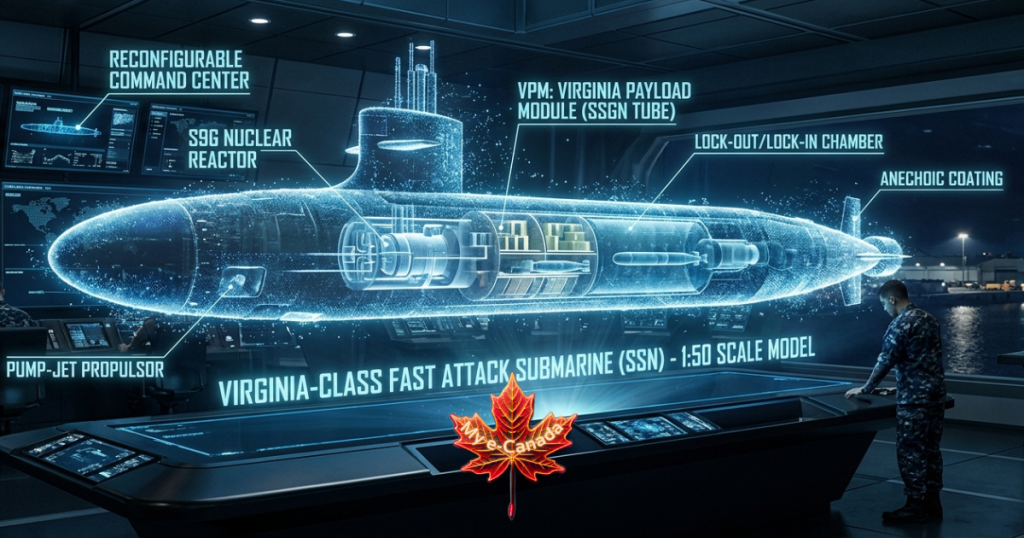
The Virginia-class fast attack submarine represents a monumental pinnacle of modern naval engineering and design. This advanced multi-purpose vessel features an overall length of exactly one hundred and fifteen metres for Blocks I through IV. The beam extends to ten point three metres. It possesses a surface displacement of approximately seven thousand metric tonnes. Submerged, the total weight reaches seventy-nine hundred metric tonnes for earlier blocks. The newer Block V variants are significantly larger. They extend to one hundred and forty metres.
Their submerged weight reaches ten thousand four hundred metric tonnes. The hull material consists of high-strength steel. It is engineered to withstand immense deep-ocean pressures. The structural crush depth remains highly classified. It allows for safe operations across deep global oceans. This design handles extreme underwater environments seamlessly. In comparison, a compact non-nuclear option like the TKMS HDW Class 212CD is much smaller. The German design measures roughly seventy-four metres. It displaces only three thousand metric tonnes submerged.
The American hull requires much greater physical volume. It accommodates a massive nuclear reactor core. The rugged design provides maximum hull protection. It safeguards internal systems during intense operational deployments. The vessel maintains structural integrity under extreme conditions. The size optimizes internal space and machinery layout. Every metre of the hull serves a vital military purpose. The sleek shape reduces hydrodynamic drag. This efficiency enhances overall performance at great depths.
Power Systems and Global Range Variances
Operational Endurance and Acoustic Profiles
Endurance is a defining feature of this nuclear-powered predator. The Virginia-class can travel for up to ninety days without any replenishment. The maximum distance is practically unlimited. The vessel can circle the globe multiple times. This capability is achieved through an advanced S9G pressurized water nuclear reactor. The power plant lasts for thirty-three years without refuelling. Submerged time is limited solely by food storage for the crew. The maximum speed exceeds twenty-five knots submerged. The transit speed is highly sustainable.
Acoustic signatures in decibels are strictly classified. However, the vessel operates with extreme acoustic discretion. At a stop with the propellers still rotating, noise is near zero. The pump-jet propulsion minimizes blade cavitation completely. At slow tactical speeds, the signature remains negligible. The reactor operates using natural circulation. This mode eliminates noisy coolant pumps at low power levels. The machinery sits on isolated rafts. This setup dampens internal vibrations effectively. An advanced rubberized anechoic coating covers the outer hull.
It absorbs active sonar pulses from enemy ships. At full speed, hydrodynamic flow noise naturally increases. Yet, it remains remarkably quiet. In contrast, the TKMS HDW Class 212CD achieves a different style of silence. The conventional German boat relies on fuel cells. It cannot match the unlimited high-speed endurance of nuclear propulsion. The American system allows for persistent blue-water dominance.

Firepower Comparison and Crewing Ratios
Crew Complement and Adaptable Weapons Payload
Advanced automation optimizes the workflow inside this massive combat platform. The Virginia-class operates with a standard crew complement of one hundred and thirty-five sailors. This group includes fifteen officers and one hundred and twenty enlisted personnel. The internal layout features a re-configurable torpedo room. This space accommodates special operations forces easily. It provides berths for up to forty Navy SEALs. They deploy through a dedicated lock-out chamber. The payload capacity is exceptionally lethal.
The bow features four twenty-one-inch torpedo tubes. The primary weapon is the Mark 48 advanced capability heavyweight torpedo. Earlier blocks feature a twelve-cell vertical launch system. Block V introduces the massive Virginia Payload Module. This section adds four large-diameter tubes. Each tube holds seven Tomahawk cruise missiles. The strike distance of the payload is highly formidable. Torpedoes hit tactical targets up to fifty kilometres away. The Tomahawk cruise missiles possess a massive strike distance.
They strike land targets up to twenty-five hundred kilometres away. This reach provides a massive standoff advantage. The weapons array ensures complete regional dominance. This capacity dwarfs conventional designs like the TKMS HDW Class 212CD. The German design carries only fourteen weapons. It cannot match the forty Tomahawks carried by Block V.
Global Intelligence Deployment Capabilities
Data Storage and Strategic Maritime Purpose
Secure information architecture is vital for modern undersea warfare. All critical operational data will be stored securely within high-performance onboard mainframes. These servers protect tactical data during deployments. This localized storage ensures absolute electronic sovereignty at sea. No operational data is transmitted over vulnerable open networks. The primary mission purpose of the Virginia-class is multi-faceted. It excels at anti-submarine warfare across deep oceans. It conducts aggressive anti-surface warfare against enemy fleets.
The platform provides persistent intelligence gathering. It performs covert surveillance in heavily defended areas. It handles detailed reconnaissance missions flawlessly. The vessel supports long-range strike operations against land targets. It operates effectively in shallow littoral zones. Special forces rely on it for covert insertions. Advanced sensor suites gather electronic signal intelligence continuously. Large towed sonar arrays map the ocean with high precision. This capability connects the submarine to the wider naval command.
In comparison, the TKMS HDW Class 212CD serves a more localized purpose. The German platform focuses on coastal denial and choke-point defence. The American nuclear hull provides a truly global projection of power. It remains an elite instrument of strategic defence worldwide.
Comparative Analysis: The Russian Yasen-Class
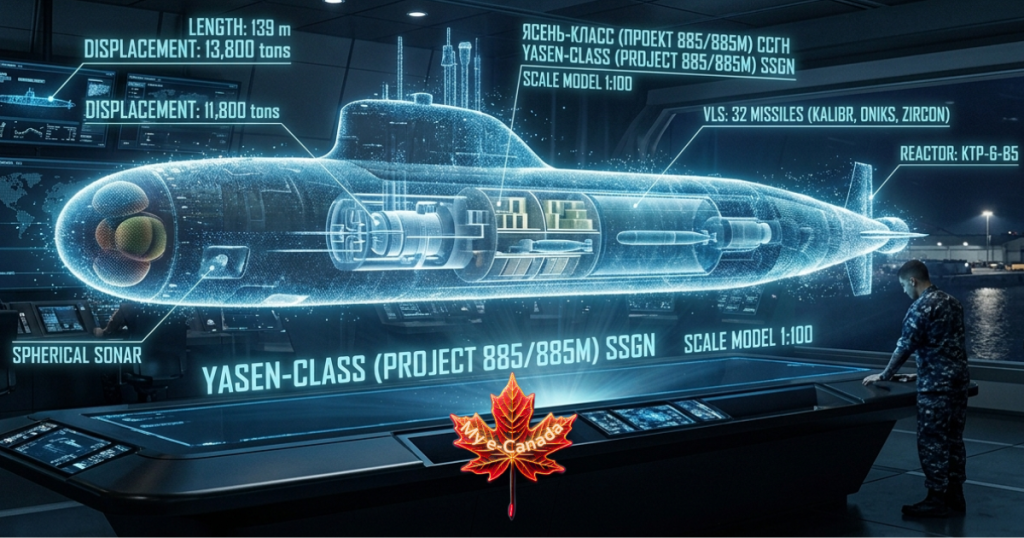
Physical Dimensions and Structural Architecture
The Yasen-class nuclear-powered submarine represents a massive pinnacle of modern Russian naval engineering and design. This advanced multipurpose vessel features an overall length of one hundred and thirty metres for the modernized Project 885M variant. The beam extends to thirteen metres wide. It possesses a surface displacement of approximately eighty-three hundred metric tonnes. Submerged, the total weight reaches thirteen thousand metric tonnes for the newer Yasen-M hulls. The hull material consists of high-strength, low-magnetic steel alloys.
It is engineered to withstand immense deep-ocean pressures during extended operations. The maximum structural crush depth is estimated at six hundred and fifty-eight metres. This design allows for safe operational diving depths down to five hundred and twenty metres. It handles extreme underwater environments seamlessly. In comparison, a compact non-nuclear option like the TKMS HDW Class 212CD is much smaller. The German design measures roughly seventy-four metres. It displaces only three thousand metric tonnes submerged.
The Russian hull requires much greater physical volume. It accommodates a massive nuclear reactor core alongside heavy missile silos. The rugged design utilizes a hybrid single-and-half hull configuration. This setup safeguards internal systems during intense operational deployments. The vessel maintains structural integrity under extreme conditions. The size optimizes internal space across four internal decks. Every metre of the hull serves a vital military purpose. The sleek shape reduces hydrodynamic drag at great depths. This efficiency enhances overall performance during high-speed transits.
Power Dynamics and Subsurface Performance
Operational Endurance and Acoustic Profiles
Endurance is a defining feature of this nuclear-powered predator. The Yasen-M class can travel for up to one hundred days of autonomous operation without any replenishment. The maximum distance is practically unlimited. The vessel can circle the globe multiple times. This capability is achieved through an advanced KTP-6 monoblock pressurized water nuclear reactor. The power plant drives turbines delivering forty-three thousand shaft horsepower. Submerged time is limited solely by food storage for the crew.
The maximum speed reaches thirty-one knots submerged. The transit speed is highly sustainable. Acoustic signatures in decibels are strictly classified. However, the vessel operates with impressive acoustic discretion. At a stop with the propellers still rotating, noise is near zero. The advanced multi-blade propeller minimizes blade cavitation completely. At slow tactical speeds, the signature remains negligible. The machinery sits on isolated, raft-mounted frames. This setup dampens internal vibrations effectively.
An advanced rubberized anechoic coating covers the outer hull. It absorbs active sonar pulses from enemy ships. At full speed, hydrodynamic flow noise naturally increases. Yet, it remains remarkably quiet. In contrast, the TKMS HDW Class 212CD achieves a different style of silence. The conventional German boat relies on fuel cells. It cannot match the unlimited high-speed endurance of nuclear propulsion. The Russian system allows for persistent blue-water dominance.

Weaponry Infrastructure and Automation Levels
Crew Complement and Adaptable Weapons Payload
Advanced automation optimizes the workflow inside this massive combat platform. The Yasen-M class operates with a standard crew complement of sixty-four sailors. This small group is made possible by highly automated combat information systems. The internal layout features an emergency escape capsule inside the sail. This chamber can evacuate the entire crew safely during disasters. The payload capacity is exceptionally lethal. The hull features eight standard fifty-three millimetre torpedo tubes relocated amidships.
The internal weapon storage holds up to thirty heavyweight torpedoes like the Futlyar. The primary strike power resides in ten vertical launch system cells. Each cell holds up to four or five cruise missiles. The total missile payload capacity reaches fifty units. The strike distance of the payload is highly formidable. Torpedoes hit tactical targets up to fifty kilometres away. The Kalibr cruise missiles possess a massive strike distance.
They strike land targets up to twenty-five hundred kilometres away. The Zircon hypersonic missiles exceed a strike distance of one thousand kilometres. This reach provides a massive standoff advantage. The weapons array ensures complete regional dominance. This capacity dwarfs conventional designs like the TKMS HDW Class 212CD. The German design carries only fourteen weapons. It cannot match the heavy tactical bombardment capabilities of the Russian hull.
Undersea Data Sovereignty and Command Roles
Data Storage and Strategic Maritime Purpose
Secure information architecture is vital for modern undersea warfare. All critical operational data will be stored securely within high-performance onboard mainframes. These servers protect tactical telemetry during deployments. This localized storage ensures absolute electronic sovereignty at sea. No operational data is transmitted over vulnerable open networks. The primary mission purpose of the Yasen-class is multi-faceted. It excels at anti-submarine warfare across deep oceans. It conducts aggressive anti-surface warfare against enemy fleets.
The platform provides persistent intelligence gathering. It performs covert surveillance in heavily defended areas. It handles detailed reconnaissance missions flawlessly. The vessel supports long-range strike operations against land targets. It operates effectively to shadow friendly ballistic missile submarines. Special forces rely on it for covert insertions. Advanced sensor suites gather electronic signal intelligence continuously. A massive spherical bow sonar array maps the ocean with high precision.
This capability connects the submarine to the wider naval command. In comparison, the TKMS HDW Class 212CD serves a more localized purpose. The German platform focuses on coastal denial and choke-point defence. The Russian nuclear hull provides a truly global projection of power. It remains an elite instrument of strategic defence worldwide.
Final Word On The Street: The 12 TKMS HDW Class 212CD Submarines
Consolidated Procurement Findings and Strategic Summary
The comprehensive evaluation of this historic defence procurement highlights the major strategic choices facing the Royal Canadian Navy. Acquiring these twelve advanced conventional platforms represents a balanced approach to modern national security. The choice delivers world-class acoustic stealth specifically optimized for continental approaches and challenging northern choke points. This approach bypasses the immense regulatory, financial, and infrastructural hurdles associated with nuclear propulsion systems. The program guarantees absolute regional data sovereignty through centralized domestic server infrastructure.
The industrial framework secures substantial economic benefits across regional technological and manufacturing sectors. Establishing separate coastal sustainment hubs ensures a balanced naval presence on both ocean shorelines. The integrated fallback plan maintains commercial pressure on the primary European manufacturer during negotiations. While these conventional hulls lack the unlimited high-speed endurance of global nuclear options, their shallow-water efficiency remains completely unmatched. The advanced diamond geometry and fuel cell innovation provide a formidable maritime shield.
This multi-decade commitment successfully prepares the naval forces for evolving undersea challenges. It secures vital sovereign waterways while fulfilling international maritime defence obligations. The thorough breakdown and comparisons confirm that this selection establishes a highly capable modern fleet. It provides the necessary tools to monitor coastal boundaries effectively for generations.
Thank you for reading this investigative news exposé. We virtually remain My e-Canada Word On The Street: Digitally Yours To Explore.
air-independent propulsion, Arctic patrolling, Canadian Patrol Submarine Project, Canadian shipyards, Client Scout, ClientScout, defence procurement, diamond hull, Digitally Yours To Explore, fuel cell technology, maritime sovereignty, military modernization, My e-Canada, NATO interoperability, naval defence, Royal Canadian Navy, stealth submarine, submarine procurement, ThyssenKrupp Marine Systems, TKMS HDW Class 212CD, trilateral alliance, underwater warfare, Wayne A. Cargill Agency, Word On The Street
Leave a Reply