
Your cart is currently empty!
The Strait of Hormuz: What Epic Fury Is Costing Canada

The Strait of Hormuz is a vital waterway connecting the Persian Gulf to the Gulf of Oman. It has a long history as the world’s most important energy chokepoint. Historically, Iran and Oman have shared territorial authority over these narrow waters. Prior to the current conflict, international transit was governed by the United Nations Convention on the Law of the Sea. Epic Fury is the American military codename for the massive offensive launched on February 28, 2026. The name combines the scale of ancient legends with the violent intensity of modern superpowers. It was supposed to dismantle Iranian nuclear capabilities and ensure maritime security. Instead, the campaign has triggered a global economic crisis that is hitting Canada extremely hard. The Strait of Hormuz is now a theatre of war rather than a path for commerce.
Economic Shifts and Rising Costs
Before the launch of Epic Fury, Canadian families were already dealing with moderate food inflation. The average cost for a dozen eggs in January 2026 was $4.74. A standard block of cheese was priced near $6.97. Butter cost roughly $5.84, while margarine sat at $7.37. These prices were stable compared to the current volatility. Today, the closure of the Strait of Hormuz has pushed these costs much higher. Transportation surcharges are being added to every shipment. Fuel prices at the pump have surged across every province. Canadians are seeing the direct link between global conflict and their kitchen tables. The Strait of Hormuz remains the primary driver of this domestic financial pain.
The Strait of Hormuz: Domestic Legality and the U.S. Constitution
The legality of Epic Fury is a matter of intense debate within the United States. Critics point to the U.S. Constitution as the first hurdle. Article I, Section 8, gives the power to declare war solely to Congress. The executive branch launched this campaign without such a formal declaration. This bypasses the foundational checks and balances of the American system. Many legal scholars argue this makes the initiation of the conflict domestically illegal. The Strait of Hormuz has become the centre of a constitutional crisis. Military action of this scale usually requires explicit legislative approval. Without it, the operation lacks the democratic mandate required by law.
The War Powers Resolution of 1973 and the Strait of Hormuz
The War Powers Resolution of 1973 was designed to limit presidential authority. It requires the President to consult Congress before introducing troops into hostilities. Epic Fury was a premeditated strike rather than a response to an attack. The administration did not seek the required 60-day authorization for these strikes. This lack of compliance has raised alarms in Washington and abroad. It suggests a shift toward unilateral executive action in foreign policy. The Strait of Hormuz is now the site of an unauthorized military engagement. Legal experts argue that the “imminent threat” justification was not sufficiently proven. Therefore, the resolution’s requirements remain unfulfilled and the war continues.
International Legality and the UN Charter
International law rests heavily on the principles of the UN Charter. This document generally prohibits the use of force against sovereign states. There are only two main exceptions: self-defence or Security Council authorization. Epic Fury did not receive a mandate from the UN Security Council. This absence makes the military campaign a violation of international norms. Sovereign nations are protected from unprovoked aggression under these rules. The Strait of Hormuz is being policed by forces acting outside this legal framework. Without a UN mandate, the intervention is seen as an act of aggression. Most nations view the UN Charter as the final word on war.
Lack of UN Security Council Approval in the Strait of Hormuz
A lack of UN Security Council approval is a critical legal failure. The global community uses this body to prevent unilateral wars. No resolution was passed to allow the strikes on February 28. This means the coalition lacks the international legal standing to occupy the region. It creates a dangerous precedent for future global conflicts. Many countries now view the operation as a breach of global trust. The Strait of Hormuz is being controlled by a “coalition of the willing” only. This does not substitute for the broad consensus of the United Nations. Legality remains a ghost in the halls of the Security Council.

Smart 1000 Business Cards:
Durable Branding Digitally Intertwined
The Self-Defence Argument and Anticipatory Strikes
The U.S. has used the self-defence argument to justify the start of Epic Fury. They claim the strikes were necessary to stop an “imminent” nuclear threat. However, international law requires the threat to be instant and overwhelming. Critics argue that diplomacy was still a viable option at the time. The “anticipatory self-defence” doctrine is highly controversial among legal experts. It is often seen as a loophole for conducting preventive wars. The Strait of Hormuz was not under direct attack by the U.S. before this began. Therefore, the legal threshold for self-defence may not have been met. This leaves the entire operation on shaky legal ground.
NATO and Collective Defence near the Strait of Hormuz
NATO is a defensive alliance built on the principle of collective security. Article 5 states that an attack on one is an attack on all. However, this only applies if a member is attacked first. Since the U.S. initiated the strikes, NATO was not legally bound to join. This explains why many allies remained on the sidelines during the initial wave. The Strait of Hormuz operation was not an official NATO mission. Member countries had to decide individually whether to offer their support. This has led to a fractured response within the alliance itself. Most members chose to avoid the legal risks of an unprovoked war.
Summary of Legal Characterisation
In summary, the attack is widely characterized as illegal by critics. It bypassed the constitutional requirement for Congressional approval in the United States. It also failed to meet the international legal criteria for “anticipatory self-defence.” The UN Charter remains the standard that this operation seemingly ignored. This has left the participating nations vulnerable to international litigation. The Strait of Hormuz serves as the physical proof of this legal bypass. Scholars believe this sets a regressive tone for the rule of law. Without proper authorization, the conflict lacks a legitimate foundation. The consequences of this illegality are spreading across the globe.
Accountability for War Crimes in the Strait of Hormuz
Under international law, the short answer is yes regarding accountability. A country that assists in an illegal war can be held responsible. This happens through two primary mechanisms: State Responsibility and Complicity. Because the February 28 strikes highlighted a lack of authorization, risks are high. Any nation providing material support faces significant legal dangers today. The Strait of Hormuz is the primary location where these crimes might occur. Assisting states cannot simply claim they were following a lead nation. They are responsible for their own choices in supporting the conflict. Legal experts are already preparing cases for future tribunals.
State Responsibility for Aiding and Assisting
State Responsibility covers “Aiding and Assisting” an internationally wrongful act. Article 16 of the ILC rules is very clear on this point. A state is responsible if it helps another commit a violation. This applies if the assisting state knows the act is wrongful. Providing fuel or intelligence for illegal strikes falls under this category. The Strait of Hormuz is being monitored by many assisting nations right now. These countries could be forced to pay reparations for Iranian losses. Ignorance of the law is not a valid defence in these cases. Accountability is a shared burden among all participating parties.
Knowledge, Intent, and the Strait of Hormuz
Knowledge and intent are the keys to proving state complicity. If a country knows the war is unauthorized, they share the guilt. Intent is shown through the active provision of military assets or bases. Many nations have provided airspace for the bombers involved in the campaign. This makes them active participants in the eyes of international courts. The Strait of Hormuz conflict is well-documented and publicized. No assisting nation can claim they were unaware of the legal debates. This makes the “knowledge” requirement easy for prosecutors to meet. Every flight and shipment is being tracked as evidence.
e-Games:
Obliterating The Mundane
Consequences for Countries that Help
The consequences for any country that helps are severe and lasting. They can face sanctions from the international community and legal suits. Their leaders could be barred from travel to certain jurisdictions. Financial reparations could drain national treasuries for decades to come. The Strait of Hormuz is becoming a legal trap for many small nations. Being an ally does not grant immunity from the Rome Statute. Public opinion is also turning against those who support the war. The moral and financial costs are beginning to outweigh the benefits. Helping an illegal war is a high-risk gamble.
Complicity in War Crimes within the Strait of Hormuz
Complicity in war crimes involves “aiding and abetting” specific illegal acts. This could include the targeting of civilian infrastructure or hospitals. If an assisting nation provides the bombs used, they are complicit. The Rome Statute allows for the prosecution of individual officials. No one is safe from the reach of the International Criminal Court. The Strait of Hormuz has seen numerous reports of civilian casualties lately. Assisting states must be careful about what they supply to the front lines. A single shipment of munitions could lead to a life sentence. Legal accountability is becoming a very personal reality for some.
The Arms Trade Treaty and Maritime Conflict
The Arms Trade Treaty is a key piece of international legislation. It forbids the transfer of weapons if they might be used for crimes. Signatories must assess the risk of human rights violations before selling. Many countries supporting the U.S. are members of this treaty. Providing weapons for Epic Fury may be a direct violation. The Strait of Hormuz is the destination for many of these banned shipments. This creates a legal paradox for Western arms exporters. They are breaking their own rules to support a strategic ally. Courts will eventually have to reconcile these conflicting actions.
The Supreme International Crime in the Strait of Hormuz
The initiation of a war of aggression is the “supreme international crime.” This was the ruling established during the Nuremberg Trials after World War II. It is the crime that contains all the accumulated evil of the whole. Any nation that helps plan such a war is a co-conspirator. This applies to the current situation in the Middle East. The Strait of Hormuz is the crime scene for this act of aggression. It does not matter if a country did not fire the first shot. By joining the common plan, they become legally and morally liable. History will judge the participants by this very high standard.
Joint Enterprise and Third-Party Obligations
Joint Enterprise refers to a collective effort to achieve a criminal end. If countries coordinate their logistics for an illegal war, they are joined. Third-party obligations require states to “ensure respect” for the laws of war. This means they should actively work to prevent illegal aggression. Failing to do so while providing help is a double violation. The Strait of Hormuz is currently maintained by such a joint enterprise. Nations have a legal duty to withdraw support from illegal acts. Silence or passivity is not enough to escape responsibility here. The duty to act is a core part of modern law.

Client Scout e-Marketing Digital Market Research Package:
Knowing Makes All The Difference
Summary of Risks for Countries Assisting In The Strait of Hormuz
In the current 2026 climate, risks for assisting countries are at an all-time high. This is why many traditional U.S. allies have been hesitant. By assisting a “premeditated preventive war,” they risk massive liabilities. They could be tied to the same legal problems as the primary actors. The Strait of Hormuz is a place many want to avoid entirely now. Financial, legal, and reputational ruin are all on the table for them. It is much safer to remain neutral than to join an illegal war. Those who chose to help are now looking for legal exits. The summary of risks is a warning to all.
The State of Play before Epic Fury
Prior to the outbreak of the war, diplomacy was already failing. The international community was operating in a state of high-stakes instability. The original 2015 nuclear agreement (JCPOA) had effectively collapsed by late 2025. This left a dangerous legal and technical vacuum in the region. That vacuum set the stage for the current Strait of Hormuz crisis. Without a deal, there were no rules for Iranian nuclear growth. Both sides were moving toward a military solution for months. The world watched as the chances for peace slowly slipped away. Epic Fury was the violent result of this failed diplomacy.
The Strait of Hormuz: The Formal Expiration of the JCPOA
The defining moment for the legal framework occurred on October 18, 2025. This was the “Transition Day” specified in the original 2015 deal. On this date, key components of the agreement were set to expire. Instead of a smooth transition, the “snapback” mechanism was triggered. European signatories took this step after alleging Iranian enrichment violations. This officially terminated the agreement and reinstated old UN sanctions. The Strait of Hormuz became a point of contention immediately following this. Iran declared it was no longer bound by any nuclear constraints. The path to war was now open and clear.
The 2025-2026 Negotiating Standoff
The Trump administration then attempted to establish a new, broader agreement. This period saw two distinct phases of high-pressure diplomacy. First was the “Muscat Framework” between April and June 2025. The U.S. and Iran held indirect talks in Oman regarding a “three-step plan.” These talks were suspended after limited strikes on Iranian nuclear sites. The Strait of Hormuz remained tense but open during this time. The second phase was the final brinkmanship in early 2026. The U.S. offered free nuclear fuel if Iran ended all enrichment. Tehran rejected the offer, insisting on its sovereign right to enrich.
The Strait of Hormuz: The Breakout Status on the Eve of War
By February 28, 2026, the “breakout time” had dropped to virtually zero. This is the time needed to produce material for one bomb. International inspectors reported that cooperation had become “less than satisfactory.” Many monitoring cameras had been disabled by the Iranian military. New underground tunnel complexes were being constructed at a rapid pace. This technical “red line” became the primary justification for the offensive. The Strait of Hormuz was soon filled with the sounds of modern warfare. The U.S. and Israel felt they could no longer wait for a bomb. They chose to strike before the breakout was complete.

Stellar Package:
Making Your Online Presence Skyrocket
Iranian Drone Defence in the Strait of Hormuz
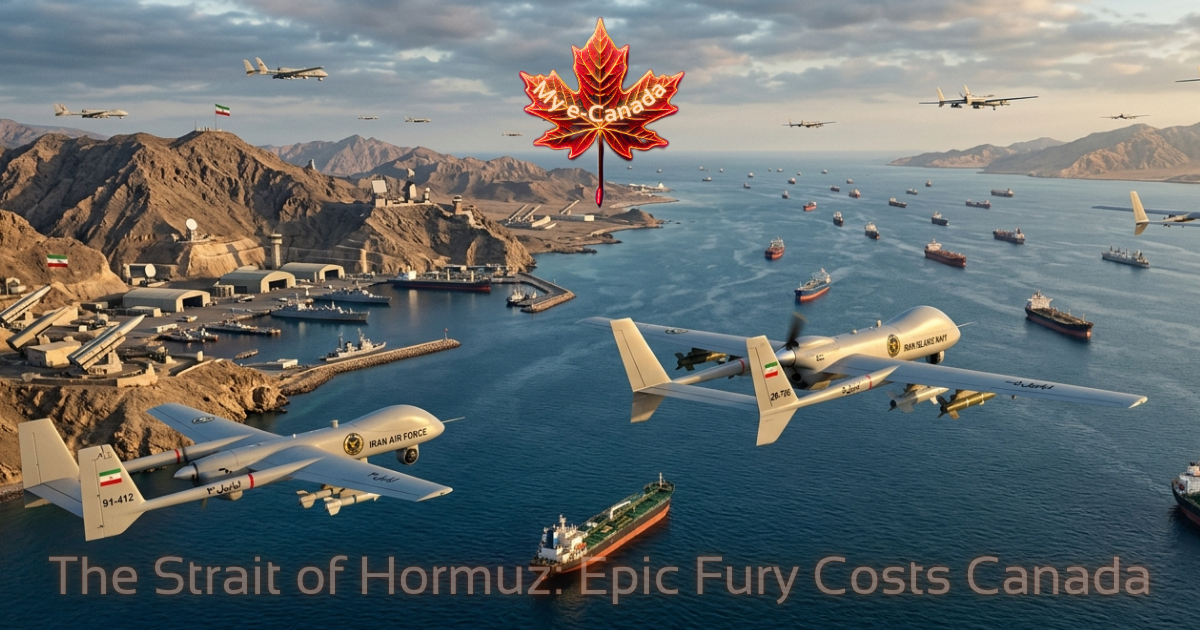
The Iranian military uses a dense network of drones to protect the waterway. The Shahed-129 is their primary long-endurance strike platform. It is 8 metres long with a 16-metre wingspan. Its payload capacity is 400 kg, and roughly 40 units remain. The Mohajer-6 is a tactical drone used for coastal patrol missions. It is 5.7 metres long and can carry up to 150 kg of weapons. Approximately 150 of these units are still active in the Strait of Hormuz sector. These systems allow for constant monitoring without risking human pilots. They are a cost-effective way to challenge Western naval power.
Stealth and Tactical Drone Units
The Shahed-191 is a stealthy “flying wing” used for high-risk recon. It is 2.7 metres long and carries 100 kg internally. Around 50 of these stealth units are hidden in underground bunkers. The Ababil-3 and Ababil-5 are smaller, piston-engine tactical drones. They are 4.5 metres long and carry a small 30 kg payload. There are over 350 of these drones buzzing around the Strait of Hormuz daily. They act as the eyes and ears for shore-based missile batteries. These smaller units are difficult to track and easy to replace. They form the first line of defence against any intruder.
The Strait of Hormuz: Summary of Iranian Drone Capabilities
The current strategy involves using the Ababil units to maintain a “living fence.” They create a continuous line of surveillance across the Strait of Hormuz at all times. Meanwhile, the Shahed-129 and Shahed-191 stay at much higher altitudes. They are ready to engage any vessel that ignores Iranian maritime instructions. This layered approach has allowed Iran to maintain high situational awareness. It works even in the presence of advanced Western carrier strike groups. The drones are the asymmetric answer to the coalition’s massive air power. They ensure that no ship moves through the Strait of Hormuz unobserved.
Air Canada and the JFK Suspension
Air Canada has announced the suspension of all direct flights to JFK. This change is effective June 1, 2026, and impacts Toronto and Montreal. The decision follows a doubling of jet fuel prices since the conflict began. Disruptions in the Strait of Hormuz have made these routes no longer profitable. The suspension is currently slated to last until late October 2025. It affects four daily flights that were key for business travel. Passengers will be rebooked through Newark or LaGuardia hubs instead. This is a direct consequence of the global energy crisis. The Strait of Hormuz is literally changing how Canadians travel.
Strategic Pivots in the Aviation Industry
The airline is redistributing its capacity toward more profitable international routes. JFK was vulnerable because it served as a connecting feed for partners. Rising fuel costs make these “thin” margins impossible to maintain now. Other routes like Fort McMurray to Vancouver have also been cut. The Strait of Hormuz crisis is forcing a total rethink of flight networks. Air Canada will continue to monitor the market and fuel availability. Further schedule adjustments are likely if the war continues through 2026. The aviation industry is in a fight for its survival. Every drop of fuel is now a precious commodity.

Songster Records:
Where The Music Becomes You
Affected Canadian Industries: Agriculture
The launch of Epic Fury has sent shockwaves through the Canadian economy. Agriculture is facing one of its most challenging spring seasons in memory. This is due to the total disruption of global fertilizer markets. About 40% of the world’s nitrogen fertilizer transits the Strait of Hormuz. With that corridor closed, fertilizer prices have surged by 32% lately. Canadian farmers are seeing record-high input costs for the 2026 season. These costs are filtering down to every local grocery store now. Fresh produce and meat prices are projected to rise significantly soon. The Strait of Hormuz is impacting the price of every Canadian meal.
Transportation and Logistics Under Pressure Due To The Strait of Hormuz
The transportation and logistics industries are under extreme pressure right now. Kerosene-based fuel prices have doubled in just a few months. The trucking industry has reintroduced aggressive fuel surcharges for all deliveries. Canada is a vast nation that relies on long-distance transport. Increased costs are causing a “rockets and feathers” pricing effect everywhere. This means prices go up quickly but come down very slowly. The Strait of Hormuz is the bottleneck for our entire domestic supply chain. If goods cannot move affordably, the whole economy suffers. Logistics companies are struggling to stay afloat in this market.
Energy, Manufacturing, and the Strait of Hormuz
The Canadian oil and gas sector is seeing higher export prices. Brent crude has reached as high as $126 per barrel recently. However, this has not led to a boom in new investment. Industry executives are remaining cautious due to trade uncertainty and high costs. Refined fuels like diesel are now much more expensive to produce. Meanwhile, the manufacturing sector is seeing sustained employment losses this year. Domestic demand is softening as the cost of living climbs higher. The Strait of Hormuz is a double-edged sword for our energy sector. High prices are offset by the risk of global recession.
Real Estate and Construction Slowdown
Economic uncertainty has also dampened confidence in Canada’s housing market. The Bank of Canada is holding rates steady at 2.25% for now. However, elevated construction costs are discouraging many new project launches. Trade-related inventory issues are making materials harder to find and buy. Housing starts are projected to slow to 243,000 units this year. The slowdown is most visible in Toronto and Vancouver metropolitan areas. Developers are pausing large-scale builds until the outlook becomes clearer. The Strait of Hormuz conflict is even affecting where Canadians will live. Uncertainty is the enemy of long-term capital investment.
The Slow Road to Market Recovery Once The Strait of Hormuz Reopens
Historically, market recovery from such a disruption is not a “rubber-band” effect. Immediate panic in paper markets might drop within 48 hours of opening. However, returning to pre-conflict retail prices is a much slower process. Experts believe it will take three to five months to stabilize. Some structural changes to the economy may even be permanent now. The Strait of Hormuz is not a tap that can be easily turned. Once the flow of goods is broken, it takes time to fix. Canadians should not expect prices to drop overnight after the war. The healing process for the global economy is long.
The Tube of Toothpaste Recovery Model
Economists often compare the Strait of Hormuz to a tube of toothpaste. It is easy to squeeze shut but difficult to push back in. Several “mechanical” delays prevent an immediate return to normal pricing. There is a massive logjam of nearly 2,000 ships currently waiting. It will take weeks just to clear this physical backlog safely. Maritime traffic patterns must be reorganized to prevent new accidents. The Strait of Hormuz is a crowded and dangerous place for tankers. Rushing the process could lead to even more delays and damage. Patience will be required from every global consumer this year.

Client Scout e-Marketing Search Engine Optimization:
Makes Your Business Seen
The Strait of Hormuz: Infrastructure Repair and the IEA
The International Energy Agency (IEA) has identified over 40 critical energy sites with severe damage. These facilities were hit during the intense air war in February. They cannot simply be switched back on by a single person. They require technical inspections and complex repairs by specialized teams. This work will take months to complete in the desert heat. The Strait of Hormuz region is still a high-risk zone for workers. Until these pipes and pumps are fixed, supply will remain low. This physical damage is a hard limit on how fast we recover. War has a lasting impact on the world’s machinery.
Refilling the Global Buffer
Global strategic reserves have been drawn down to survive the closure. Nations will now pivot from survival back to “rebuilding mode” soon. This creates a sustained demand for oil to refill these stockpiles. This demand will keep a floor under prices for several months. They are unlikely to fall back to $60 per barrel quickly. The Strait of Hormuz remains the key to refilling these national tanks. Every country wants to be prepared for the next potential crisis. This competition for oil will keep the market very tight. The “rebuilding” phase is just as expensive as the war.
Sector-Specific Recovery: Fuel and Transport
Fuel and transport prices will remain elevated through the summer of 2026. Analysts predict they will stay above $80 per barrel for a while. This is due to ongoing uncertainty and the cost of new routes. Airlines will not lower their fares the moment the fighting stops. They need to recover the massive losses they took during the peak. The Strait of Hormuz closure has been a financial disaster for carriers. It will take time for their balance sheets to return to health. Commuters and travellers should plan for high costs for many months. The road back to affordable travel is a long one.
Agriculture and Staples: The Longest Lag
The agriculture and staples sector will take the longest to recover fully. Fertilizer is seasonal and the 2026 planting window has already passed. The “lag effect” means high grocery prices will persist through the winter. We will not see relief until the 2027 harvest cycle begins. This is a sobering reality for many Canadian families on a budget. The Strait of Hormuz disruption is a long-term blow to food security. Farmers need stability to plan their crops and purchase their inputs. Until then, the cost of bread and meat will remain high. Food is the most essential part of the recovery.
Aviation and the End of 2026
Airlines like Air Canada do not typically hedge their fuel costs anymore. They will likely maintain adjusted schedules through the end of October. This allows them to recover from the losses of the conflict period. Fuel surcharges are here to stay for at least the next two quarters. The Strait of Hormuz has taught the industry a lesson in vulnerability. They will be more cautious about expanding routes in the future. Profitability is the only goal in such a volatile global market. Passengers should expect fewer choices and higher prices for a while. The golden age of cheap flights is over.
The New Safety Premium
The 2026 crisis has fundamentally changed how the market views risk. Major firms expect a permanent “safety premium” in long-term pricing. The psychological fear of a future closure will keep prices elevated. Even when the Strait of Hormuz is open, the fear remains. This means energy and staples will be 5% to 10% more expensive forever. Investors are now pricing in the possibility of another Epic Fury event. This structural shift is the true cost of the current conflict. We are living in a more expensive and more dangerous world. The price of peace has never been higher for Canada.
Conclusion: The Legacy of Epic Fury In The Strait of Hormuz
In summary, the name Epic Fury defines a military operation with historic goals. It views itself as a “cleansing” force with the scale of a legend. However, the reality on the ground is one of economic and legal chaos. The Strait of Hormuz is the epicentre of this global transformation. Canada is paying a high price for a war it did not start. From the grocery store to the airport, the impact is felt by everyone. Legal accountability may eventually catch up with the participants of this war. Until then, we must navigate the most difficult economy in a generation. The Strait of Hormuz is our world’s most dangerous bridge.
Thank you for reading our latest exposé, this has been a
Word On The Street: Digitally Yours To Explore
Air Canada, Canadian Agriculture, Canadian Economy, Client Scout, ClientScout, Energy Security, Epic Fury, Fertilizer Crisis, Food Inflation, Geopolitics, Global Supply Chain, International Law, Iranian Drones, JCPOA, Jet Fuel Prices, Logistics, Military Conflict, My e-Canada, Operation Epic Fury, Strait of Hormuz, United Nations Charter, War Crimes, Wayne A. Cargill Agency, Word On The Street
Leave a Reply