
Your cart is currently empty!
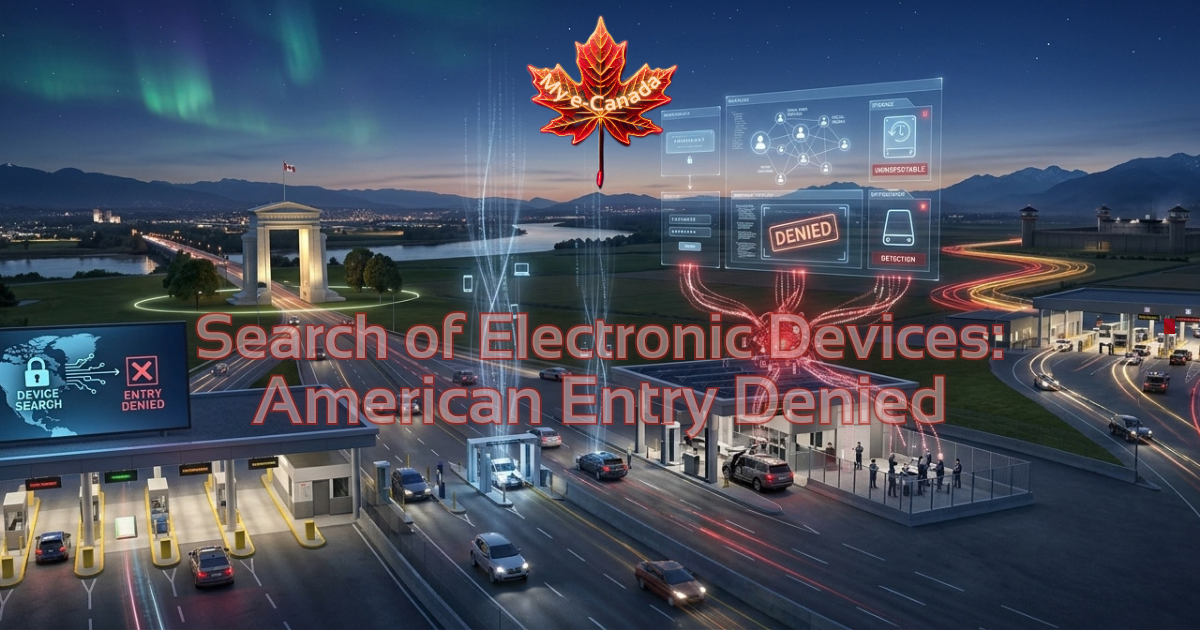

Search of Electronic Devices: American Entry Denied
Monday, September 28, 2026, My e-Canada Word On The Street Edition No. 34 Investigative News Exposé explores US Border Patrol search of electronic devices resulting in denying entry to America. United States Customs and Border Protection officers possess broad statutory authority under the American border search exception to examine electronic hardware. Officials inspect smartphones, laptops, and tablets without needing a judicial warrant or reasonable suspicion. This regulatory framework stems directly from executive orders establishing national security mandates at ports of entry. Border agents hold expansive authority to examine locally stored files, communications, and digital media during secondary inspection. When Canadian travellers undergo secondary processing, officers routinely request passcodes to open locked hardware. Refusing to provide passcodes prevents officers from completing mandatory border screening protocols. This failure leads to an immediate declaration that the traveler is uninspectable. Consequently, border agents issue a formal denial of entry and command an immediate return to Canada. Publicly documented real-world cases show how officials use these device examinations to reject or detain Canadian citizens. These statutory powers operate outside traditional domestic privacy safeguards. Border personnel may review text messages, photo galleries, personal emails, and social media accounts. Understanding this expansive reach remains vital for all citizens crossing the southern border. The search of electronic devices represents a sweeping exercise of sovereign border control power. Travelers must recognize that domestic constitutional rights do not apply at international checkpoints. Preparing personal devices beforehand serves as the primary defense against unexpected border refusals.
Documented Border Incidents
Verified Traveler Rejections Beyond Canada
Fady Mansour, a Canadian citizen and law student, experienced this digital scrutiny firsthand in February 2017. He arrived at the Pierre Elliott Trudeau International Airport preclearance facility in Montreal during the morning hours. Mansour planned to fly directly to West Palm Beach, Florida, for a brief vacation. During preclearance screening, border officers selected him for secondary inspection and demanded access to his personal hardware. Officers requested passcodes for his laptop and smartphone to perform a search of electronic devices. Mansour complied fully with the demand and surrendered his confidential security credentials. Officers searched the contents of his laptop and mobile phone while subjecting him to questioning. They interrogated him over an extended period regarding his personal background and digital communications. Mansour remained inside a confined holding area for four to five hours. Border officials ultimately denied him entry and confiscated his mobile phone without filing criminal charges. They returned his hardware only after escorting him completely out of the preclearance facility. Mansour then returned home to Ottawa, Ontario, after suffering this unexpected travel rejection. This verified case highlights how border searches disrupt travel plans for ordinary citizens. Similar incidents continue to occur at land border crossings and airports across Canada. Travelers must remain aware of these stringent enforcement procedures when planning trips abroad.
Secondary Inspection Realities
Land Border Refusals Across Canada
Pascal Allegret, a French national residing as a permanent resident in Canada, attempted to cross the Peace Bridge. He arrived at the border crossing near Buffalo, New York, around 9:00 AM in March 2017. Border officers directed him into secondary inspection and demanded access to his unlocked mobile phone. Agents conducted a thorough search of electronic devices, inspecting his text messages and social media profiles. They discovered personal communications that raised suspicions regarding his travel intentions. Officers suspected he planned to engage in unauthorized employment rather than casual tourism. Allegret endured over six hours of detention while agents reviewed his private message history. Officers interrogated him regarding his professional contacts and financial arrangements in Canada. Following this extended examination, officials formally refused him entry and turned him back immediately. Allegret returned directly to Montreal, Quebec, after receiving the formal rejection notice. This case demonstrates how casual text messages can trigger severe immigration consequences. Border personnel routinely review stored communications to evaluate declared travel purposes. Even permanent residents of Canada face immediate removal when officers suspect unauthorized work intentions. Maintaining clean digital records remains essential when attempting to enter neighboring sovereign territories.

Search of Electronic Devices: Professional Scrutiny at Boundaries
Commercial Travel Friction in Canada
A Canadian resident from Vancouver, British Columbia, encountered severe scrutiny at the Peace Arch border crossing. The individual attempted to enter Blaine, Washington, for a brief trip in mid-afternoon, November 2019. Border agents selected the traveler for secondary examination and requested his smartphone passcode. Officers performed a search of electronic devices, reviewing text message histories and LinkedIn professional profiles. They discovered ongoing discussions regarding potential business meetings and employment opportunities in the region. The border officer determined these messages contradicted the declared intent of a personal visit. Agents detained the individual at the port of entry for approximately three hours. They issued a formal refusal of entry citing a lack of proper employment authorization. Officials warned that future entry attempts would require a formal non-immigrant visa or waiver. The traveler returned directly to Canada following the issuance of the administrative order. This incident illustrates the severe risks of carrying business communications across the border. Border authorities actively search digital profiles to uncover undeclared commercial activities. Citizens traveling from Canada must ensure their digital footprint matches their stated travel purpose. Carrying unvetted commercial instruments can lead to long-term travel restrictions and mandatory waivers.
Legal Mechanics of Rejection
Uninspectable Hardware Impacting Canada
A digital device becomes inspectable at a port of entry when officers cannot inspect stored contents. This status arises when a traveler explicitly refuses to provide passcodes, PINs, or decryption keys. Refusing to enable biometric authentication, such as fingerprint or facial recognition, also triggers this designation. Advanced technical encryption that prevents data extraction similarly causes officers to classify hardware as uninspectable. When agents encounter unsearchable hardware, a search of electronic devices cannot be completed successfully. Foreign nationals, including citizens of Canada, do not possess an absolute right of entry. Failing to assist border officers prevents them from verifying travel admissibility under federal immigration laws. Consequently, an unsearchable device results in the traveler being deemed uninspectable at the border. This status leads to an immediate refusal of entry and a mandatory directive to turn back. Border regulations permit officers to seize uninspectable hardware for further technical examination by specialists. Agents may hold physical hardware for five business days or longer under exceptional circumstances. Forensic experts attempt to bypass security measures to extract internal stored data during detention. Travelers often face extended detention in holding cells while officers complete administrative rejection paperwork. Entry refusals stemming from unsearchable hardware are recorded permanently in federal security databases. This permanent mark revokes eligibility for expedited travel programs like NEXUS across Canada Sea-To-Sea.
Search of Electronic Devices: Jurisdictional Agency Divisions
Federal Administrative Roles Across Canada
Understanding border disputes requires distinguishing between Customs and Border Protection and Immigration and Customs Enforcement. Customs and Border Protection officers manage daily operations at land crossings and airport preclearance facilities. When a search of electronic devices occurs, officers hold travelers in temporary border holding cells. In standard cases, officials simply deny entry and order an immediate return to Canada. Conversely, Immigration and Customs Enforcement manages the long-term federal detention facility network nationwide. Officers transfer a traveler from temporary border custody into long-term detention under specific circumstances. This transfer occurs when border officials issue a formal expedited removal order against the individual. Transfer also happens if agents discover evidence of immigration fraud inside the personal hardware. Logistical restrictions at specific border crossings can also prevent an immediate turnaround back to Canada. Long-term detention facilities operate under strict security protocols similar to medium-security correctional institutions. Travelers facing expedited removal lose the ability to return home voluntarily without administrative penalties. These enforcement actions create severe long-term legal barriers for impacted citizens residing in Canada. Understanding which agency holds custody helps families locate detained relatives more efficiently. Legal representatives in Canada must navigate complex federal regulations to challenge these detention orders.
Extended Detention Realities
Severe Enforcement Operations Impacting Canada
Jasmine Mooney, an entrepreneur residing in Vancouver, British Columbia, experienced severe border enforcement in March 2025. She attempted to cross the Otay Mesa port of entry in San Diego, California. Mooney arrived from Tijuana, Mexico, seeking to reapply for a revoked TN work visa. Border officers seized her personal hardware and initiated a search of electronic devices. They questioned her extensively regarding her past employment history and submitted business documentation. Rather than granting a voluntary withdrawal, officials formally processed her for expedited removal. Officers confiscated her mobile phone and transferred her directly into federal custody. Officials moved her into the Otay Mesa Detention Centre alongside other immigration detainees. She was held inside multiple detention facilities across Arizona during her two-week confinement. Mooney remained detained for twelve days without access to her personal phone or family. Significant public intervention from legal counsel, family members, and consular officials eventually secured her release. She arrived back at Vancouver International Airport in Canada on March 15, 2025. This verified case demonstrates the extreme risks associated with complex border visa applications. Travelers must realize that device searches can quickly escalate into formal removal proceedings.

Search of Electronic Devices: Criminal Allegations at Boundaries
Mandatory Removal Penalties Affecting Canada
Siddharth Kumar, a citizen living in Toronto, Ontario, faced severe border enforcement in February 2024. He traveled by automobile across the Peace Bridge border crossing near Buffalo, New York. Officers selected his vehicle for secondary inspection during routine morning border processing operations. Agents requested access to his smartphone and conducted an intensive search of electronic devices. They inspected his personal text messages, corporate emails, and mobile social media applications. The examination revealed private messages discussing prospective client meetings and temporary employment opportunities. Officers concluded these messages established an intent to work without proper statutory authorization. Alleging intentional misrepresentation during questioning, agents placed Kumar into formal removal proceedings immediately. Officers placed him in handcuffs, seized his personal hardware, and arranged federal transportation. They transferred him directly to the Buffalo Federal Detention Facility located in Batavia, New York. Kumar remained inside the federal detention facility for over three weeks during administrative processing. Officials processed a formal expedited removal order before repatriating him back to Canada. The order imposed a mandatory five-year ban on re-entering the country without special authorization. This case proves that digital discussions can lead to handcuffs and formal deportation.
Visa Overstay Inquiries
Contract Facility Transfers Near Canada
A Canadian citizen residing in Montreal, Quebec, encountered severe border processing in October 2023. She attempted to enter New York State through the Champlain border crossing during early evening hours. Officers referred her vehicle to secondary inspection and demanded access to her personal computer. Agents conducted a search of electronic devices, reviewing her laptop files and personal smartphone history. The examination revealed evidence of previous extended stays that exceeded standard visitor allowances. Officers also uncovered evidence of remote work activities conducted for clients while visiting previously. Deeming her inadmissible, agents initiated formal removal orders and called federal enforcement officers. Federal officials took her into custody and transferred her to a contract detention center. She was held inside the Clinton County detention facility in New York for four days. Officers finalized administrative removal paperwork while she remained confined inside the security facility. Officials then completed her formal deportation and escorted her back across the border into Canada. This case illustrates how historical digital footprints can invalidate current travel requests. Border agents scrutinize past stays to identify ongoing violations of temporary entry rules. Travelers must maintain accurate records to avoid unexpected detention near the border.
Search of Electronic Devices: Technical Forensic Extractions
Advanced Hardware Inspections Near Canada
When border officers seize hardware for advanced analysis, specific administrative procedures govern the process. Directive 3340-049B classifies connecting hardware to external extraction tools as an advanced search. Unlike manual reviews, an advanced search of electronic devices requires reasonable suspicion of violations. Supervisors must provide written authorization before agents connect forensic tools to client hardware. Officers must place hardware in airplane mode or inside signal-blocking Faraday bags prior to analysis. Agents are legally restricted to extracting data physically stored on the internal drive. They are prohibited from accessing remote cloud servers, Google Drive accounts, or iCloud storage. Specialized equipment allows technicians to bypass passcodes, crack encryption, and clone internal drives. Forensic specialists inspect deleted text messages, hidden system files, metadata, and application caches. Officers must issue a custody receipt, Form 6051D, listing hardware details and serial numbers. Regulations dictate that detained hardware should generally be analyzed and returned within five business days. Extensions beyond five days require supervisory approval, while detentions exceeding fifteen days need executive authorization. Hardware returns to owners residing in Canada occur after forensic teams complete their technical evaluations.
Forensic Property Operations
Administrative Retrieval Rules Across Canada
If forensic analysis uncovers no evidence of illegal activity, officers arrange to return the hardware. The owner can pick up the device at the port of entry or request shipping. Shipping costs remain the responsibility of the traveler returning home to Canada. When searches reveal no unlawful activity, policies require purging copied data within twenty-one days. However, discovering evidence establishing probable cause allows permanent retention of extracted data files. If agents uncover contraband or criminal violations, officials formally seize the physical hardware. The owner receives a formal Notice of Seizure from the Fines, Penalties, and Forfeitures Office. Contesting a seizure requires filing an administrative petition or posting a judicial forfeiture bond. Meanwhile, a search of electronic devices remains part of the official evidentiary record. Understanding these administrative pathways helps citizens recover property confiscated during border checks. Legal counsel in Canada can assist in drafting formal petitions to recover seized electronics. Retaining original purchase receipts helps prove ownership when requesting the release of confiscated items. Travelers should track official correspondence deadlines closely to prevent permanent property forfeiture.

Search of Electronic Devices: Pre-Travel Safeguards
Proactive Digital Hygiene Across Canada
Canadian travelers heading abroad must navigate strict digital privacy environments at border crossings. Border officials rely on personal digital content to verify travel intent and employment status. Adopting proactive strategies regarding electronic hardware helps protect personal privacy and avoid long delays. Minimizing data exposure represents the most effective privacy protection before approaching border checkpoints. Travelers should remove non-essential confidential files, banking details, personal photos, and work documents. Carrying a clean travel phone containing only essential contacts serves as an excellent security measure. Completing a full external backup of all computers to a home server in Canada remains vital. If border officials detain hardware, original data remains safely preserved on domestic backup drives. Switching electronic devices into airplane mode prior to entering border queues prevents remote data syncing. Disconnecting network access prevents automatic downloading of cloud-stored emails during a manual search of electronic devices. Disabling biometric unlock features and switching to strong alphanumeric passcodes enhances personal data security. Auditing social media accounts ensures public profiles align accurately with stated tourist travel intentions. Implementing these simple precautions minimizes friction during routine secondary border inspections.
Inspection Protocols
Protective Exit Audits Across Canada
Complying and remaining forthcoming during border inspections remains essential for all citizens of Canada. Refusing passcode requests results in hardware being declared unsearchable and triggers immediate entry rejection. Travelers carrying privileged files, such as legal correspondence or medical records, must inform officers immediately. Border agencies maintain specific administrative policies requiring legal consultation before inspecting confidential material. If officers seize hardware, travelers must request a formal written receipt, such as Form 6051D. This document records officer details, badge numbers, serial numbers, and contact information for property retrieval. After exiting border facilities, travelers should review device access logs and change all account passwords. Resetting hardware back to factory settings eliminates potential security risks following an invasive inspection. Conducting a thorough post-search audit ensures unauthorized monitoring tools do not remain active on personal devices. Travelers returning home to Canada should report improper officer conduct to relevant oversight agencies. Documenting exact times and badge numbers strengthens administrative complaints regarding border mistreatment. Maintaining calm professional composure throughout secondary screening prevents minor misunderstandings from escalating into formal rejections. A careful search of electronic devices requires careful legal navigation by prepared travelers.
Search of Electronic Devices: Constitutional Right Boundaries
Legal Framework Contexts Beyond Canada
Under Title 8 of the Code of Federal Regulations, travelers lack statutory rights to legal representation during routine inspections. When officers direct a citizen into secondary processing to conduct a search of electronic devices, legal counsel cannot attend. Officers may permit a lawyer to be contacted strictly at their own administrative discretion. Requests to speak with legal representatives during initial border screenings are frequently denied by officers. The legal threshold shifts only when interactions turn from civil inspections into formal criminal investigations. Foreign nationals gain constitutional rights to counsel after being formally arrested for criminal charges. Similarly, there is no general statutory right allowing travelers to make personal phone calls during inspection. Operational security policies require confiscating all electronic hardware upon directing travelers into secondary processing areas. Travelers cannot place calls, send text messages, or consult external parties while inside holding areas. Citizens returning to Canada must understand these strict legal limitations before attempting border crossings. Knowing that phone access will be revoked helps travelers notify family members prior to entering border queues. Recognizing these constitutional boundaries reduces unnecessary conflict with inspecting border personnel.
Final Word On The Street: Search of Electronic Devices
Exceptions regarding phone access depend on the formal legal status of the border detention. Under the Vienna Convention on Consular Relations, formally arrested citizens possess specific diplomatic rights. Detained individuals can request immediate notification of Global Affairs Canada or the nearest consulate. Border officers must facilitate access to consular representatives once formal detention or arrest occurs. Furthermore, transferring a traveler into an Immigration and Customs Enforcement facility grants access to telephone systems. Detainees can use facility phones to contact legal counsel, family members, or Canadian consular officers. These legal protections ensure citizens do not remain isolated during extended federal detention proceedings. Every citizen must prepare personal hardware carefully before approaching international border checkpoints. Performing a thorough search of electronic devices remains a routine exercise of sovereign border control. Understanding statutory authorities, technical procedures, and personal rights minimizes risks during international travel. Proactive digital hygiene protects sensitive personal information while preserving future travel privileges across borders. Remaining informed allows travelers to navigate complex security environments with confidence and safety.
Thank you for reading this investigative news exposé. We virtually remain My e-Canada Word On The Street: Digitally Yours To Explore.
advanced search, biometric unlock, border refusal, border search exception, border security regulations, Canadian travellers, CBP Directive 3340-049B, Client Scout, consular notification, Customs and Border Protection, denial of entry, device seizure, digital forensics, digital hygiene, digital privacy rights, Digitally Yours To Explore, expedited removal, Faraday bag, Form 6051D, ICE detention facility, Immigration and Customs Enforcement, Investigative News Exposé, My e-Canada, NEXUS revocation, passcode disclosure, preclearance facility, search of electronic devices, secondary inspection, uninspectable device, US Border Patrol, US immigration law, Vienna Convention, Wayne A. Cargill, Wayne A. Cargill Agency, Word On The Street
Leave a Reply