
Your cart is currently empty!
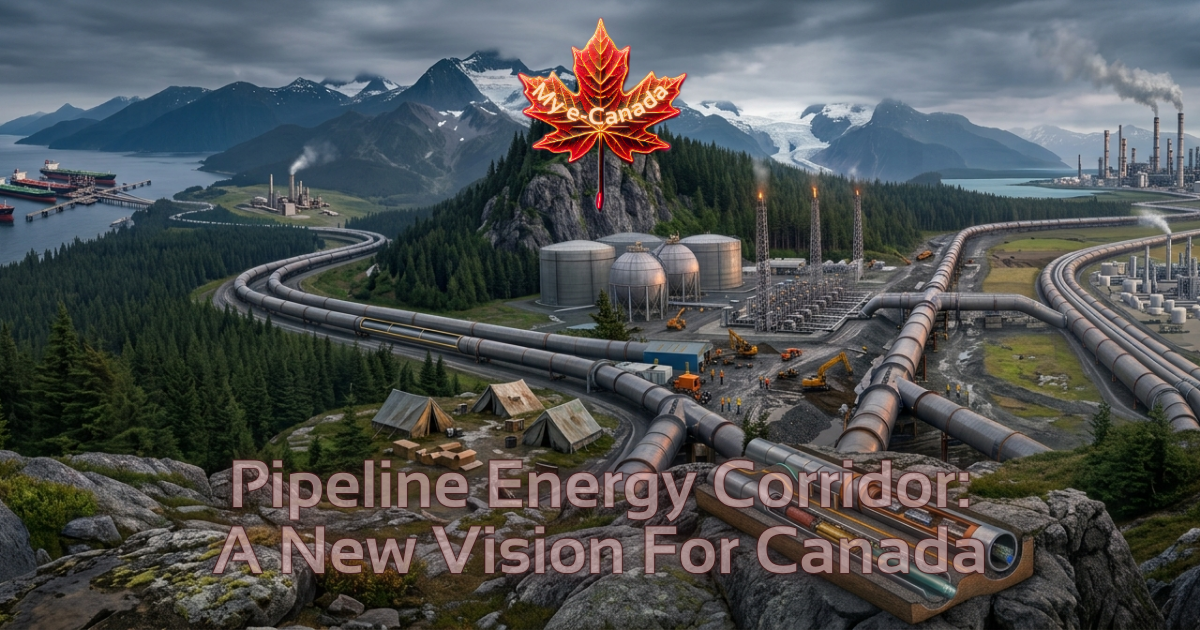

Pipeline Energy Corridor: A New Vision For Canada
Wednesday, July 15, 2026, My e-Canada Word On The Street Investigative News Exposé explores the proposed pipeline stretching from Alberta to British Columbia, as well as the pipeline connecting Alberta to Ontario, highlighting the journey toward establishing Canada as an energy superpower.
Unveiling the Future of Canadian Infrastructure
The West Coast Oil Pipeline Project represents a major national endeavor. It was formally proposed to the federal Major Projects Office in July 2026. This massive infrastructure plan seeks to link the abundant reserves of the Alberta oil sands directly to the Pacific coast. The project will transport heavy crude oil and diluted bitumen across two western provinces. The oil will start its journey at a newly designed receipt terminal in Bruderheim. This terminal is situated northeast of Edmonton. From there, the crude will travel through a high-capacity steel pipeline. The route covers a distance of approximately 1,200 to 1,250 kilometres. It will terminate at a new marine export facility at Roberts Bank in Delta. This deepwater terminal can handle very large crude carriers. The project aims to double Alberta’s oil production over the next fifteen years. Supporters believe this corridor is essential for national prosperity. Critics raise serious questions about its ecological impact. The path crosses various ecological zones and multiple river basins. Proponents argue that the economic benefits will far outweigh the risks. The federal government must weigh these factors carefully before giving approval. This investigation looks at every angle of the proposed project. We analyze the costs, the timelines, and the environmental safeguards. We also examine who will control this vital national asset. Read on to discover the true scope of this energy plan.
Navigating the West Coast Pipeline Regulatory Hurdles
Approvals and Indigenous Consent on the Pacific Route
The deal for the West Coast Oil Pipeline is in its infancy. There is no finalized timeline for when the deal will be signed. Many crucial milestones must be met before construction can officially begin. The project must first clear a rigorous federal environmental assessment. This review is managed by the federal Major Projects Office. Provincial regulators in British Columbia must also issue their own environmental certificates. Deep and meaningful consultation with local Indigenous groups is also required. The proposed route crosses the traditional territories of 90 to 125 Indigenous communities. It also passes directly through nine to 11 First Nations reserves. Proponents must reach mutual agreements with these communities to proceed. Indigenous equity ownership is a central pillar of the current business model. This equity will be backed by federal and provincial loan guarantee programs. The Alberta Indigenous Opportunities Corporation will assist in financing these equity shares. The federal government will also offer loan guarantees to Indigenous buyers. No pipeline construction can occur without these complex arrangements. The regulatory phase is expected to take several years to complete. Officials hope to resolve these legal matters by late 2027. However, outstanding legal challenges could delay the final decision significantly. Analysts suggest that securing consent is the most challenging phase. It requires transparent negotiations and mutual respect from all parties involved.
Ownership and Financial Stakes Out West
Corporate Entities and Public Funds in the Pipeline
The ownership of the West Coast Pipeline is designed as a joint model. It involves both public entities and private corporations. The federally owned Trans Mountain Corporation is slated to lead the construction. They will bring their extensive experience from the recent expansion project. Calgary-based Pembina Pipeline Corporation is the primary private sector proponent. Pembina will hold an initial ten per cent economic interest in the project. Once the system is fully operational, Pembina can double its stake. This would bring their private share to twenty per cent. The remaining portions will be held by governments and Indigenous communities. Many Canadians are concerned about the final bill for this massive project. Critics point out that the public still carries the primary financial risk. Over ninety per cent of the development is backed by public funds. Taxpayers will essentially finance this mega-project through federal treasury allocations. Proponents argue that private investment will increase as the project advances. The participation of Indigenous equity groups is also expected to rise. This structure aims to balance public oversight with private sector efficiency. The pipeline represents a massive financial commitment for the Canadian public. The final financing agreements are still being negotiated in Ottawa and Edmonton. Taxpayers will watch these developments closely over the upcoming fiscal years. Secure funding is required before any ground can be broken.
This Edition of
My-e-Canada Word On The Street
Is Brought To You by
Client Scout e-Advertising

Client Scout e-Advertising:
Digitally Advertising The World
Mapping the Route to Roberts Bank
Geographics of the Western Energy Pipeline Corridor
The proposed route of the pipeline is carefully planned to limit environmental impact. It spans between 1,200 and 1,250 kilometres through diverse terrain. The system begins northeast of Edmonton at the Bruderheim receipt terminal. This terminal will occupy approximately 50 to 60 hectares of land. From there, the line will travel southwest toward the mountains. The route is designed to follow the existing Trans Mountain corridor. For the original corridor option, 92 per cent is within existing rights-of-way. An alternative optimized route option reduces this figure to 82 per cent. This optimized path is slightly shorter by about 35 kilometres. Both options aim to minimize new land disturbance and habitat fragmentation. The pipeline will cross major mountain passes and swift-flowing rivers. It must traverse the challenging geography of the Coquihalla region. The route finally ends at Roberts Bank in Delta, British Columbia. The new delivery terminal there will cover 260 hectares. This deepwater site avoids the narrow shipping channels of Vancouver. It allows very large crude carriers to load oil directly. These supertankers will carry the heavy crude to global markets. The route is a marvel of modern pipeline engineering and design. However, constructing such a corridor through sensitive valleys remains controversial. The geographical footprint will be studied intensely by environmental scientists.
Constructing the West Coast Pipeline
Timelines, Budgets, and the Speed of the Flow
Building the West Coast Pipeline is a massive economic and physical undertaking. Construction is projected to start as early as 2027 if approvals are granted. The timeline to full completion is estimated between 2032 and 2034. This means the project will take five to seven years to build. The estimated cost ranges from $35.2 billion to $43.7 billion. This budget includes significant contingency funds to handle potential overruns. Once completed, the pipeline will carry heavy crude oil and bitumen. The system will have a capacity of one million barrels per day. The speed of the flow is a key technical detail. It takes about 10 to 14 days for oil to travel from Edmonton to Roberts Bank. This means the resources move at roughly four to five kilometres per hour. This transit time is standard for long-distance Canadian crude transport. Over eleven pump stations will keep the oil moving at a steady pressure. The pipe will be made of Canadian steel up to 42 inches in diameter. Its wall thickness will vary between 19 and 26 millimetres. This heavy steel design is meant to prevent leaks and ruptures. The construction phase will employ thousands of Canadian workers. It will boost the manufacturing sector across several provinces. However, the multi-billion-dollar price tag remains a subject of intense debate.
Trans-Pacific Shipments and Global Outlets
Where the Bitumen Goes from Roberts Bank
Once the heavy crude oil reaches its final western destination, it will be loaded onto marine vessels. These giant tankers will depart from the Roberts Bank marine facility in Delta, British Columbia. From there, the resources will navigate the Pacific shipping lanes toward international buyers. This pipeline is primarily built to access rapidly growing markets in the Asia-Pacific region. It will help diversify Canadian trade away from its traditional reliance on American buyers. Many people wonder if some or even all of this oil will end up in Europe. The short answer is that no specific volume is currently earmarked for European destinations. The geographical design of this pipeline project makes Asian ports the most logical economic destination. However, the global oil market is highly fluid and interconnected. Shipments could theoretically be redirected to Europe if market conditions and pricing become favorable. If any oil does reach Europe, it would likely go to major refining hubs. These hubs include Rotterdam in the Netherlands or other Western European deepwater ports. Yet, the main focus remains firmly on expanding trade across the Pacific Ocean. This strategic direction allows Canadian producers to command higher prices for their resources. It reduces the steep price discount that Western Canadian Select crude often faces. Filling this infrastructure gap is seen as a major step forward for the national economy. The pipeline is the physical link that makes this global trade diversification possible. By reaching tidewater, Canada secures its place in the global energy market. This helps to establish our sovereign economic independence for many decades to come.
Transit Times Through the Pipeline Across the Rocky Mountains
How Fast the Western Bitumen Flows to the Coast
A critical factor for the West Coast Oil Pipeline is the physical speed of the flowing resources. The time it takes for heavy crude to travel from Edmonton to Roberts Bank is a key detail. Specifically, the resources will start their journey at the Bruderheim terminal near Edmonton. The oil will flow through the pipeline for a distance of approximately 1,200 to 1,250 kilometres. It will take roughly ten to fourteen days for the crude to reach the coast. This is about 240 to 336 hours of continuous travel through the system. The speed of the flow is carefully regulated by eleven pump stations. These stations maintain a steady pressure to keep the thick bitumen moving safely. The long transit time highlights the vast scale of western Canadian geography. Once the oil completes this journey, it arrives at the massive Roberts Bank delivery terminal. It is stored in fifteen large tanks before being loaded onto ocean-going supertankers. This storage capacity ensures that shipping schedules are not disrupted by pipeline maintenance. The transition from pipeline to marine vessel is designed to be highly efficient. This system will allow Canada to deliver its energy resources to global markets reliably. The physical journey across mountains and rivers requires incredibly precise engineering. Knowing the exact transit time helps operators manage their delivery schedules with international buyers. It also allows refineries in Asia to plan their processing activities weeks in advance. This steady flow represents a major achievement for Canadian energy transportation. It shows the true power of modern Canadian infrastructure.

Economic Windfalls and Sovereign Wealth
Projected Earnings and Global Superpower Ambitions
The financial projections for the West Coast Oil Pipeline Project are incredibly substantial. Expected earnings for Canada and the pipeline owners will reach billions of dollars over its lifespan. The federal government and provincial treasuries will collect vast sums in corporate taxes. They will also receive significant royalties from increased oil production in the Alberta oil sands. Private owner Pembina Pipeline and public owner Trans Mountain will generate steady toll revenues. These tolls are paid by oil producers to ship their product through the line. The economic activity will support thousands of well-paying jobs across the country. Peak construction could employ up to 140,000 people directly and indirectly. This includes 45,000 jobs in Alberta and 70,000 jobs in British Columbia. Supporters argue this project will finally make Canada a true global energy superpower. The country has the third-largest oil reserves in the world. However, it has lacked the infrastructure to reach diverse international buyers. This pipeline solves that longstanding structural constraint by providing a direct route to tidewater. It increases Canada’s national autonomy and enhances its geopolitical influence. Detractors argue that fossil fuel expansion is inconsistent with global climate commitments. They believe the superpower claim is overstated in a rapidly decarbonizing world. Nevertheless, the financial scale of the project is undeniable. It represents a massive bet on the long-term global demand for heavy crude oil. The economic legacy of this infrastructure will shape Canadian fiscal policy for decades. It will provide a secure source of public funds for future generations of Canadians. This represents a solid economic plan.
Pipeline Environmental Safeguards on Land and Sea
Protecting Sensitive Ecosystems and Pacific Shipping Lanes
Protecting the pristine environment of Western Canada is a major priority for this project. The pipeline route is designed to minimize ecological disruption by following existing corridors. This strategy avoids creating new linear disturbances through sensitive wildlife habitats. Engineers will deploy advanced monitoring technologies along the entire length of the line. Fiber-optic cables will be buried alongside the steel pipe to detect temperature changes. This technology allows operators to identify and locate minor leaks almost instantly. Automated shut-off valves will be installed at key points along the route. These valves can isolate sections of the pipeline in the event of a pressure drop. Marine safety in British Columbia is also a critical focus of the project. The shipping lanes from Roberts Bank will enforce exceptionally strict safety protocols. All departing tankers must use local marine pilots to navigate the coastal waters safely. They will also be escorted by powerful, state-of-the-art tugboats. These escort tugs can guide and control the tankers in challenging weather conditions. The project will fully comply with all federal marine safety regulations. Proponents are also funding research into advanced spill response techniques. These measures are designed to protect the rich marine life of the Pacific coast. However, local environmental groups remain highly skeptical of these safety promises. They argue that any spill would have devastating and permanent consequences for coastal communities.
The Northern Shield Energy Corridor Proposal
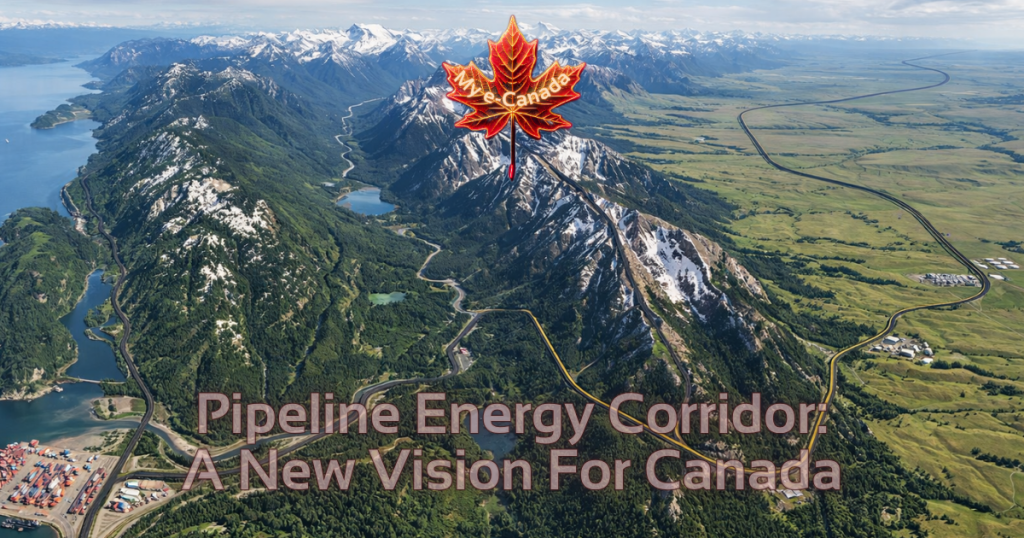
A New Vision for Domestic Energy Security
The discussion around Canadian energy infrastructure is not limited to the West Coast. On Monday, July 6, 2026, a major new eastern project was officially unveiled. Ontario Premier Doug Ford and Alberta Premier Danielle Smith announced the Northern Shield Energy Corridor. This ambitious proposal envisions a massive new pipeline system running from Hardisty, Alberta to Sarnia, Ontario. The primary goal of the project is to strengthen domestic energy security. It aims to connect western oil producers directly with eastern refining capacity. This would reduce Canada’s reliance on foreign oil imports in the eastern provinces. Currently, much of Ontario’s oil arrives via pipelines that cross American territory. This dependency leaves the domestic market vulnerable to foreign political and regulatory shifts. The new pipeline would travel entirely within Canadian borders to ensure complete sovereignty. The announcement represents a significant shift in national energy policy. It highlights a growing collaboration between the governments of Alberta and Ontario. Both premiers argue that the project is a vital nation-building endeavor. They believe it will protect Canadian jobs and support local families. However, the proposal is still in its very early exploratory stages. A formal agreement between the provinces has not yet been finalized. The project must overcome significant political and logistical hurdles to become a reality. This pipeline represents a bold attempt to redraw the energy map of Canada.
The Pipeline Navigating Ontario Watersheds Safely
Protection Protocols Along the Great Lakes Corridor
Protecting Ontario’s sensitive freshwater ecosystems is a vital priority for the proposed Northern Shield project. The pipeline route will run north of major urban centres to avoid high-density municipal watersheds. Proponents must obtain permits from local conservation authorities along the entire corridor. Automated leak detection systems will monitor the flow through the pipeline around the clock. Acoustic sensors and fiber-optic cables will be installed to detect tiny pressure drops immediately. This ensures that any technical anomaly can be isolated within minutes to protect nearby waterways. In Sarnia, strict containment protocols will govern the handling of western crude near the St. Clair River. Shipping lanes through the Great Lakes will not experience increased international tanker traffic under this domestic-focused plan. However, local refinery water intakes will feature advanced hydrocarbon monitoring systems as a standard precaution. Proponents emphasize that using modern Canadian steel and safety engineering will significantly reduce ecological risks. Despite these assurances, environmental groups argue that any crossing near the Great Lakes poses an unacceptable threat to millions. They demand rigorous public hearings and complete environmental sign-offs before any permits are issued. Protecting the Great Lakes remains a non-negotiable condition for Ontario communities.

Historical Pipeline Context and Economic Realities
Comparing Projected Economic Benefits to Past Capital Projects
To assess the economic promises of these new projects, Canadians must look to past energy infrastructure. The Trans Mountain expansion project serves as a crucial historical benchmark for these multi-billion-dollar proposals. The original budget for that public project was estimated at approximately $5.4 billion. However, construction challenges, regulatory delays, and inflation pushed the final cost to over $34 billion. This massive increase placed a heavy financial burden on the public purse and pipeline tolls. Economists warn that the West Coast and Northern Shield projects could face similar capital overruns. The West Coast project is already budgeted at up to $43.7 billion before construction begins. If historical trends hold, these massive capital requirements could impact the long-term profitability of the systems. Supporters argue that the long-term tax revenues and resource royalties will easily cover these initial capital costs. They point to the billions in revenue that the completed Trans Mountain expansion is now generating daily. This ongoing revenue helps fund critical public services like healthcare and education across Western Canada. Critics maintain that transitioning away from fossil fuels makes these multi-decade capital investments highly risky. They argue that taxpayers could end up stranded with expensive assets if global oil demand peaks early.
Infrastructure Feasibility and Capital Management
Project Risks and Financial Contingencies for Canadian Taxpayers
Managing the extreme capital costs of these proposals requires a robust financial strategy from all proponents. The combined cost of the West Coast and Northern Shield systems could easily exceed $80 billion. Securing this level of capital will require unprecedented coordination between private lenders and public treasuries. The federal government has indicated that it wants to limit its direct exposure to future pipeline overruns. However, the Western Coast project relies heavily on public credit through national Indigenous loan guarantees. This means that Canadian taxpayers will remain ultimately responsible if the project experiences severe delays. The Northern Shield feasibility study must address these financial risks directly to secure private investor confidence. Analysts suggest that inflation and labour shortages in the construction sector could drive costs higher. Proponents must build significant contingency reserves into their initial budgets to absorb these market pressures. The economic success of both systems depends on maintaining competitive transportation tolls for oil producers. If tolls become too expensive due to cost overruns, producers may seek alternative shipping routes. Balancing capital management with operational efficiency is the primary challenge facing the development corporations.
The Pipeline Redefining Canada as a Global Energy Superpower
Geopolitical Leverage and National Energy Sovereignty
The successful completion of both corridors would fundamentally reshape Canada’s position on the global stage. Currently, the country is often viewed as a junior partner in North American energy distribution. This limitation exists because nearly all Canadian oil exports are directed to a single foreign buyer. Building a direct pipeline to the West Coast breaks this dependency by accessing diverse Asian markets. At the same time, the eastern corridor secures domestic energy self-reliance within our own borders. Together, these systems would allow Canada to act as a truly independent global energy superpower. The country would possess the infrastructure to supply both domestic refineries and major international economies. This dual capability enhances national sovereignty and provides significant geopolitical leverage in times of global crisis. Proponents argue that Canadian oil is produced under much stricter environmental standards than competing reserves. Delivering this product to the world can help displace higher-emitting energy sources from less stable regions. Opponents counter that true energy leadership in the modern era requires investing in renewable technology. They believe that doubling down on fossil fuel infrastructure is a regressive path.
Final Word On The Street: Pipeline Projects Set to Establish Canada as a Global Energy Leader
The Path Forward for National Infrastructure and Sovereignty
The dual proposals of the West Coast Oil Pipeline and the Northern Shield Energy Corridor represent a historic turning point. These massive projects challenge the nation to balance its economic ambitions with its deep commitment to environmental stewardship. The decisions made over the next few years will define Canadian energy policy for the next half-century. Resolving the complex regulatory, financial, and Indigenous equity negotiations is the first critical step for all partners. Canadians must decide if the projected billions in public revenues are worth the substantial ecological risks involved. As this investigative news exposé has shown, the path to becoming an energy superpower is paved with complex challenges. We will continue to follow these historic infrastructure developments as the regulatory reviews and feasibility studies progress.
Thank you for reading this investigative news exposé. We virtually remain My e-Canada Word On The Street: Digitally Yours To Explore.
Bitumen export, Bruderheim receipt terminal, Canadian Infrastructure, Client Scout, Danielle Smith, Delta British Columbia, Digitally Yours To Explore, Domestic energy security, Doug Ford, Edmonton, Great Lakes, Indigenous equity, investigative exposé, investigative journalism, Major Projects Office, My e-Canada, My-e-Canada.ca, Northern Shield Energy Corridor, Pembina Pipeline Corporation, Pipeline feasibility, Roberts Bank, Sarnia Ontario, Sovereign energy corridor, Strategic petroleum reserve, Trans Mountain Corporation, Trans-Pacific shipping, Wayne A. Cargill Agency, West Coast Oil Pipeline Project, Word On The Street
Leave a Reply