
Your cart is currently empty!
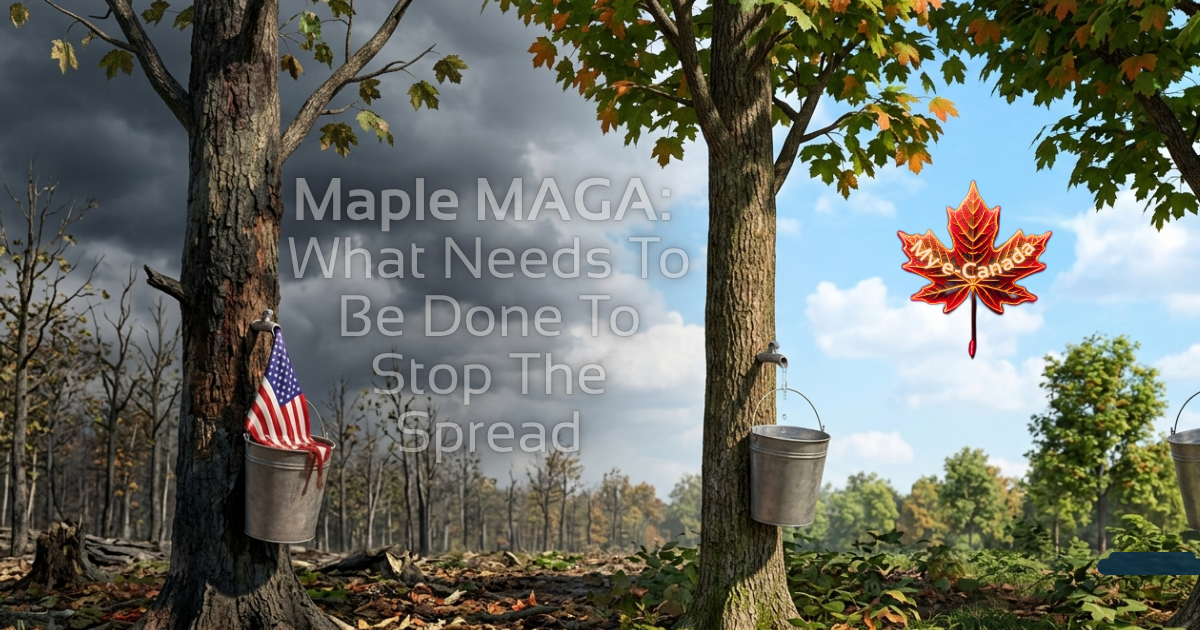

Maple MAGA: What Needs To Be Done To Stop The Spread
This exposé by My e-Canada Word On The Street explores Maple MAGA and what Canada is doing to stop it. The term MAGA Maple is a political label used in Canada to describe a movement mirroring the American “Make America Great Again” ideology. It is often used by critics to characterize a specific brand of Canadian populism. The phrase describes platforms that emphasize “common sense” economic solutions and a focus on affordability. It also represents a skeptical view of federal government overreach or globalist policies. Critics use the term Maple MAGA to suggest politicians are importing aggressive American-style rhetoric. Conversely, it is used for an electorate that feels alienated from the current political establishment. These voters are looking for a more assertive and populist alternative. In 2026, the term has gained traction in discussions about rebranding conservative movements. It highlights a shift toward prioritizing domestic issues like housing costs and grocery prices through a more confrontational lens similar to strategies seen in the U.S.
The movement is currently spearheading a significant shift in the Canadian political landscape. Maple MAGA represents a fusion of traditional Western alienation and modern digital populism. It draws strength from a perceived disconnect between the working class and the urban elite. Many Canadians feel that the federal government no longer represents their core interests. They see rising costs as a failure of the current administration. This has created a vacuum that populist leaders are eager to fill. The movement is not just about economics; it is about identity. It seeks to reclaim a version of Canada that feels lost to globalism. Supporters believe that Canada should prioritize its own citizens above international obligations. This sentiment is particularly strong in regions that feel economically marginalized. The movement is organized, well-funded, and increasingly sophisticated in its messaging. It employs social media to bypass traditional gatekeepers and reach voters directly.

Maple MAGA: What Needs To Be Done To Stop The Spread
The Faces Behind the Maple MAGA Push
The “top” Conservative in Alberta is currently Danielle Smith, who serves as the Premier. She is the Leader of the United Conservative Party and a key figure in Maple MAGA circles. She has held these positions since October 2022 and remains highly influential. Her leadership is defined by a strong “Alberta First” approach to governance. This involves significant pushback against federal policies regarding energy and healthcare. She is widely seen as the primary bridge to the MAGA-style political framework. Her interaction is characterized by open ideological kinship with American populist governors. Smith has stated that federal leader Pierre Poilievre is “in sync” with this new direction. She frequently aligns her rhetoric with leaders focusing on provincial sovereignty. She has been active in U.S. conservative circles and traveled to Mar-a-Lago. Critics label her a leader of the secessionist push within the province. She applies populist tools like scheduling nine different referendums on sensitive topics.
Pierre Poilievre is the federal leader of the Conservative Party of Canada. His political roots and strongest base of support are firmly planted in Alberta. While often tagged with the Maple MAGA label, his interaction is more calculated. He adopts “common sense” and “Canada First” slogans that mirror the movement. His “slash-and-burn” communication style is designed to appeal to an alienated base. Poilievre has occasionally pushed back when the comparison becomes a political liability. He recently had to navigate comments about being “in sync” with Trump. He chooses to focus on domestic economic issues like the carbon tax. Following recent byelection losses, he is focused on consolidating his Calgary base. He is under pressure to stop floor-crossings to the Liberal majority. Brian Jean, the Minister of Energy, is another key architect of these policies. Rebecca Schulz is also cited as a rising star within the party.
The Crown Treaties and Indigenous Sovereignty
The most significant legal hurdle involves the historic treaties signed between the Crown and First Nations. The Maple MAGA movement often overlooks that Treaty 6, 7, and 8 were signed with the Monarchy. These agreements are not between the province and Indigenous peoples, but the sovereign authority. First Nations leaders argue that a province cannot unilaterally leave the federation without their consent. They maintain that the “Honour of the Crown” requires the federal government to protect their lands. Secession would essentially “rip up” the foundational legal documents of the Canadian West. This would trigger immediate and massive legal challenges in the highest courts. Many Indigenous groups have stated they would remain part of Canada, creating a “Swiss cheese” map. Alberta would be left with a fractured territory that is impossible to govern. The Crown’s fiduciary duty ensures that the land remains tied to the Canada.
A delegation of First Nations recently met with the King to affirm these ties. They emphasized that their relationship is with the Canada through the Crown. The Maple MAGA movement’s push for independence ignores this three-party constitutional reality. Without Indigenous consent, any attempt at separation is legally void from the start. This creates a situation where the province could face internal border conflicts. Indigenous nations might set up their own checkpoints on major resource corridors. They have the right to govern their traditional territories regardless of provincial claims. This would paralyze the energy industry and stop all major projects. The legal certainty required for investment would vanish overnight in the region. Secessionists must address the fact that they do not “own” the land they wish to take. The treaties remain the ultimate safeguard for a unified Canada.
Logistic Nightmares at the Maple MAGA Borders
Travel would become a bureaucratic nightmare at all border crossings via planes, trains, and cars. If Maple MAGA succeeded, a “hard border” would likely emerge between Alberta and its neighbours. Flying from British Columbia to Ontario would mean entering foreign airspace for several hours. Passengers might have to clear customs before boarding domestic flights that pass through. Taking the train would involve hours of delays for passport checks in the Rockies. Conductors would need international work visas just to finish their cross-country shifts. Driving a car across the provincial line would require a valid passport and insurance. Trucks carrying essential goods would face massive tariffs and long wait times at checkpoints. This would drive up the cost of everything from milk to building materials. The seamless flow of people and goods would be permanently broken.
Border security would have to be established in rural areas and major highways. The Maple MAGA republic would need to hire thousands of new customs agents. They would need to build physical infrastructure like gates and inspection stations. This would cost billions of dollars in taxpayer money before the first day. Moving equipment or personal belongings would require complex import and export declarations. Families living on the border would be separated by an international line. A simple trip to visit a neighbour would become a formal legal event. The Trans-Canada Highway would no longer be a symbol of national unity. Instead, it would be a series of bottlenecks and high-cost tolls. This would isolate British Columbia from the rest of the eastern provinces. Our national supply chain would be vulnerable to a foreign country’s whims.
The New Flag of a Breakaway Province
The visual identity of the region would change to reflect the new political order. Supporters of the Maple MAGA movement have proposed several designs for a new national flag. One popular option is the “Buffalo Flag,” featuring a bison on a gold field. This symbol is meant to represent the wild and uncontained spirit of the plains. It is often flown at rallies as a signal of total defiance toward Ottawa. Another group suggests keeping the current provincial blue flag to maintain some continuity. However, they would remove any symbols linking the province to the Canadian federation. Radical factions have even proposed a flag that mirrors the American “Stars and Stripes.” This highlights the deep ideological influence from our southern neighbours on the movement. The flag would be a constant reminder of the fractured national identity.
Flying a new flag would be a mandatory requirement for all government buildings. It would replace the Maple Leaf in schools, police stations, and parks. This visual shift would be deeply alienating for the “Silent Majority” of Canadians. Many citizens would view the new flag as a symbol of betrayal and loss. The Maple MAGA movement uses these symbols to build a new sense of nationalism. It is a way to separate the population mentally from their Canadian roots. In response, counter-protesters often fly the Canadian flag as a sign of unity. The battle of the flags is playing out on front porches and trucks. It shows how deep the cultural divide has become in recent years. A flag is never just a piece of fabric; it represents a shared dream. For many, that dream is being torn apart by polarizing rhetoric.

Stellar Package:
Making Your Online Presence Skyrocket
Maple MAGA Battle: Military Installations and the Hardware
In the event of separation, military assets would be a major point. Alberta is home to several of Canada’s most strategic installations. These would immediately become points of intense contention between governments. CFB Edmonton is the headquarters of the 3rd Canadian Division. It houses thousands of soldiers and hundreds of LAV 6.0 vehicles. CFB Cold Lake is home to Canada’s CF-18 Hornet fighter squadrons. It is a primary interceptor base for NORAD and North American defense. The Maple MAGA movement argues Alberta is entitled to its share. They want to form the core of a new Alberta Defence Force. But under the Constitution, all military assets are federally owned. Canada would likely attempt to move all hardware out of the province.
This would leave Alberta with empty bases and no defense capability. Alberta independence groups argue their tax dollars paid for this equipment. They believe a “fair share” of LAVs and jets should stay. Another scenario is a “Joint Use” lease of the bases back to Canada. This allows the CAF to keep hardware in place while paying rent. This would provide the new country with immediate and stable revenue. The human element is the most unpredictable factor in this military split. Thousands of CAF members in Alberta are from other provinces. Every soldier swears an oath of allegiance to the Canadian Crown. If Maple MAGA leads to separation, they face a impossible choice. They must relocate or resign to join a new provincial force. Veterans are also concerned about the status of their federal pensions.
Securing the borders would fall to a newly formed and inexperienced local militia. They would lack the hardware, fighter jets, vehicles and weapons of modern CAF units. The cost of buying new fighter jets and tanks would be astronomical. Weapons and ammunition supplies would have to be sourced from international markets. This would likely lead to a heavy dependence on American military suppliers. The Maple MAGA republic would effectively become a client state of the United States. They would lose their voice in NORAD and other international security alliances. Federal installations like the training grounds at CFB Suffield would become abandoned relics. The loss of military spending would devastate local economies in Cold Lake and Edmonton. A sovereign Alberta would be a small player in a very dangerous world. It would trade national security for the illusion of local control.
Domestic Security and the Alberta Sheriffs
A key development in April 2026 is the Alberta Sheriff’s Police Service. This independent force is being funded with over $600 million. It is seen by many as the foundation for a domestic military. If federal assets were withdrawn, the Sheriffs would secure the borders. They would also be tasked with protecting critical infrastructure like pipelines. This move has been championed by the Maple MAGA political leadership. They want a force that answers only to the provincial government. Critics argue this is a “shadow army” designed for a future split. It adds another layer of complexity to the national security landscape. The presence of a separate police force changes the local power dynamic. It makes federal enforcement of laws much more difficult in the province.
The federal government is watching this development with extreme caution. They have questioned the legality of a province forming a “parallel” police. This adds to the tension between Prime Minister Carney and Premier Smith. The Maple MAGA movement views the Sheriffs as a symbol of self-reliance. They believe Albertans should be responsible for their own law and order. This sentiment is part of the broader push for provincial sovereignty. It mirrors the “States’ Rights” arguments seen in American populist movements. The role of the Sheriffs would be critical during a separation transition. They would likely be the ones manning the new border checkpoints. This could lead to jurisdictional clashes with the RCMP and CAF. Such clashes would increase the risk of civil unrest during a split.
Passports and the “Alberta Wall” Logistics
The question of passports is a logistical nightmare for all Canadians. A sovereign Alberta would almost certainly issue its own travel documents. Pro-independence groups have confirmed their intent to create an Alberta passport. Their primary strategy is to negotiate a dual-citizenship agreement. This allows Albertans to hold both an Alberta and a Canadian passport. The Maple MAGA movement wants to maintain the privilege of Canadian travel. But the federal government sees this as a major bargaining chip. Carney has signaled that dual citizenship is not a guaranteed right. If Canada refuses, Albertans must choose a single nationality. This could result in losing the right to live elsewhere in Canada. It would also affect those from other provinces living in Alberta.
Travel between British Columbia and Ontario would also be significantly disrupted. Currently, you only need photo ID to fly within the country. But a sovereign Alberta changes the status of domestic airspace. Flights would technically be traveling through a foreign country’s territory. Driving on the Trans-Canada Highway would require crossing borders twice. Unless an open border is agreed upon, you would need a passport. You would be subject to Alberta’s customs and immigration laws daily. The Maple MAGA leadership has floated the idea of “sovereign corridors.” These would allow Canadians to pass through without stopping for checks. But this requires a complex treaty that may never be signed. British Columbia would become a geographical island separated from the East. This would change the nature of cross-country travel for everyone.

Smart 1000 Business Cards:
Durable Branding Digitally Intertwined
Taking the Train Across a New Maple MAGA Border
The iconic VIA Rail train would also face a major crisis. The Canadian runs between Vancouver and Toronto through the Rockies. Geographically, it is impossible to bypass Alberta on this route. The train enters Alberta at Jasper and travels through Edmonton. A sovereign Alberta would likely require a formal border stop. Passengers would need to clear Alberta customs upon entry to the province. They would clear Canadian customs again when entering Saskatchewan later. This would add hours or even days to an already long trip. The Maple MAGA movement suggests charging “transit royalties” for these trains. This would drive up ticket prices for all Canadian travelers.
The physical tracks are owned by companies like Canadian National (CN). Alberta might choose to nationalize the sections within its borders. This would lead to operational gridlock for the national rail service. VIA Rail might be forced to pay access fees to a foreign country. In the worst case, the service could be suspended entirely. This would leave British Columbia with no passenger rail connection to the East. Rail employees would also face work visa issues in a foreign Alberta. A conductor from British Columbia would need a permit for their shift. This adds massive administrative costs to the rail industry in Canada. The Maple MAGA push for sovereignty makes simple travel a complex task. It turns a domestic journey into an international expedition for everyone.
Currency Volatility and the Maple MAGA Dollar
The choice of currency is perhaps the most dangerous economic gamble for the movement. Some suggest an Alberta independent currency, often referred to as the “petro-dollar.” This would be backed by the province’s vast oil and gas reserves. However, this currency would fluctuate wildly whenever global oil prices changed. A sudden drop in the market would cause instant, massive inflation for citizens. Others within the Maple MAGA circles argue for adopting the United States Dollar (USD). This “dollarization” would provide some stability but remove all local control. Interest rates would be set in Washington, D.C., ignoring Alberta’s specific needs. Homeowners would see their mortgages decided by foreign bankers with no ties to Canada. It would be a total surrender of economic sovereignty to a foreign power.
Alternative ideas include using Bitcoin or other digital assets to bypass federal banks. Proponents claim this would create a “freedom-based” economy for the new nation. But the extreme volatility of crypto-assets would make daily life impossible for families. Buying groceries or paying rent would be a gamble based on the day’s market. The Maple MAGA movement ignores the stability provided by the Bank of Canada. A currency union with Canada is another option, but without a seat at the table. Alberta would be forced to use a currency it no longer has any power to manage. This would result in a loss of pensions and savings for many elderly citizens. The transition alone would lead to a massive “capital flight” as people move money. Businesses would flee to more stable jurisdictions like British Columbia or Ontario. Prosperity cannot be built on a foundation of monetary chaos and uncertainty.
The Economic Consequences of a Divided Canada
The fallout of a Alberta successfully departing would be felt in every home across the land. Alberta is a major contributor to the federal tax base and national wealth. Its departure would create a massive hole in the equalization program for other provinces. We would see a decline in the quality of healthcare and education nationwide. The Maple MAGA push would break the economic ties that keep our country strong. We would no longer be a unified Canada capable of competing on the global stage. Instead, we would be a collection of small, bickering regions with no leverage. The loss of the “West” would diminish our standing in the G7 and NATO. Our international allies would view us as a failing and unstable country. This would discourage foreign investment and lead to long-term economic stagnation.
The cost of living would skyrocket as trade barriers are erected at the border. We would lose the benefit of a single, internal market for our goods and services. A divided country is a poorer country for every single citizen involved. The Maple MAGA narrative ignores the benefits of our shared national resources. We must ensure that the wealth of the land benefits all Canadians together. From Victoria to St. John’s, we are tied together by a common destiny. Breaking those ties would be a self-inflicted wound from which we might never recover. We need to focus on growth and innovation rather than grievance and separation. Our strength lies in our ability to work toward a common goal. Let us protect the legacy of our ancestors who built this great nation. We are better when we stand together as one people.

Digital Market Research Package:
Knowing Makes All The Difference
The King’s Role in Stopping the Spread of Maple MAGA
King Charles III holds a unique position as the King of Canada. He technically holds the power, but acts on ministerial advice. Modern convention means he does what the Prime Minister says. If Alberta passes a bill, the Lieutenant Governor grants Royal Assent. Trying to unilaterally block a provincial bill would trigger a crisis. The Maple MAGA movement knows the King must remain non-partisan. Blocking a majority vote could lead to the abolition of the monarchy. However, the King has real leverage regarding the Indigenous treaties. These were signed with the Crown, not the provincial government. A delegation of leaders recently met with the King in London. They raised concerns about the movement bypassing their established rights.
The King can express “concern” but cannot command the province. His public stance acts as a massive legal roadblock for separation. If he says separation violates treaties, the court case is strong. This gives Indigenous groups a nearly unbeatable case in the Supreme Court. The King “stops” the spread through the Judiciary, not decrees. His judges are the ones hearing challenges to the independence petition. As of mid-April, they have placed a stay on the signatures. The Maple MAGA movement is now fighting these legal interpretations in court. The King cannot use his “Reserve Powers” unless the order is destroyed. Using them to stop a peaceful movement is the “nuclear option.” It would likely be the end of the Monarchy in Canada forever. His influence is therefore a soft power used to protect treaties.
The House of Commons as the Gatekeeper
The House of Commons is the primary legal tool against separation. It utilizes the Clarity Act to ensure no province leaves easily. The House has the authority to review any referendum question asked. If the question is vague, they can declare it “unclear” formally. This prohibits the federal government from entering into any negotiations. The Maple MAGA movement must craft a very specific and clear question. The House also decides what counts as a “clear majority” vote. MPs are currently debating a 60% threshold for any secession. If the vote falls short, the results can be ignored legally. This makes the path to independence much more difficult for supporters. The House also controls the division of the massive national debt.
Alberta would have to take a multi-billion dollar share of that debt. The House can also refuse to grant Alberta its current borders. They could carve out federal corridors to ensure national connectivity remains. Indigenous consent is also a mandatory consideration for the House. The Maple MAGA movement must satisfy these conditions to move forward. Even with an agreement, a Constitutional Amendment is required for exit. This needs approval from the House, Senate, and seven provinces. Most scholars argue it actually requires unanimous consent from all provinces. This means any single province could block Alberta from leaving Canada. This legal “wall” is the biggest hurdle for the separatist movement. It turns a provincial vote into a national legal battle immediately. Without the House, Alberta remains part of the federation forever.
Prime Minister Mark Carney Is Fighting the Spread of Maple MAGA Rhetoric
Mark Carney is leading the “pro-Canada” wave with a new strategy. He has used his majority to launch a national unity campaign. Carney frames Maple MAGA as a threat to the country’s economic sovereignty. He has established a Major Projects Office to fast-track energy infrastructure. This is a move to “steal the thunder” from the populists. By approving pipelines, he aims to show that Ottawa works well. However, he maintains strict “net-zero” requirements for all new projects. This continues to anger the core of the provincial movement. Carney is also vocal about the dangers of American-style partisan rhetoric. He frequently reminds Canadians that populism leads to economic instability.
His government is focusing heavily on housing affordability in every city. They believe addressing root causes is the best way to stop anger. This removes the “oxygen” that the Maple MAGA movement needs. Carney is also working with premiers to counter trade threats. He positions himself as a stable leader in a chaotic world. His “Economic Sovereignty” banner is designed to appeal to western voters. He wants to show that Canada can be strong without being divided. This is a direct challenge to the “Alberta First” narrative of Smith. Carney’s approach is a mix of economic pragmatism and national pride. He is betting that most Canadians prefer stability over radical change. His performance in the next few months will be critical for unity. He must prove that the federal system can deliver for the West.
What We as Canadians Can Do
We have the power to decide the future of our country. The first step to stopping the spread is active engagement. We must move past our echo chambers and talk to neighbors. Understanding the root causes of frustration can help find common ground. We should advocate for policies that address the cost of living. This removes the grievances that fuel the Maple MAGA movement. Supporting local and reliable journalism is also critical in this fight. We must demand that our leaders focus on unity instead. This means calling out aggressive or divisive rhetoric in our politics. Participating in the “Forever Canadian” movement is another great way. It shows that we value our national identity and shared future.
We must also respect the legal processes that protect our integrity. Supporting the Clarity Act ensures that any change is fair. We should encourage our MPs to focus on regional needs. This reduces the feeling of alienation that drives the Maple MAGA fire. Promoting an inclusive and diverse national identity is also essential. We can celebrate our provinces without seeking to destroy the union. Voting in every single election is the most powerful tool. We must choose leaders who offer solutions instead of enemies. By staying informed, we can see through simple populist slogans. Canada is a country built on compromise and mutual respect. If we lose that, we lose the essence of our nation. Let us work together to build a Canada that works.
A Mission for Unity Across Canada
At My e-Canada Word On The Street, our mission is to unite Canada through facts. We believe that information is the best tool to fight polarizing rhetoric. The Maple MAGA movement gains strength when people feel they have no other choice. By exploring the real-world consequences of separation, we can change the conversation. We want to see a country where every region feels valued and respected. Our platform is dedicated to highlighting the stories that bring us closer together. We believe in the power of digital storytelling to foster national understanding. We are committed to exposing the dangers of populist movements that seek to divide. Our goal is to ensure that the “Maple” remains a symbol of unity. We can build a better future by focusing on what we have in common.
We encourage our readers to engage in respectful dialogue with their fellow citizens. Do not let the Maple MAGA narrative be the only voice in your community. Talk to your neighbours about why a unified Canada matters to you. Share the stories of our shared successes and our common challenges. We are a family of provinces, and families must work through their problems. Let us reject the path of separation and choose the path of cooperation. Our diversity is our greatest strength, not a reason for division. We are a country that was built on the idea of compromise and peace. Let us keep that spirit alive in everything we do as Canadians. Thank you for reading our latest exposé, this has been a
Word On The Street: Digitally Yours To Explore.
Alberta, Bitcoin, Canada, Canadian Armed Frces, Canadian Military, Canadian Populism, Canadian Unity, CFB Cold Lake, CFB Edmonton, Clarity Act, Client Scout, Currency, Danielle Smith, Digital Storytelling, Economic Stability, Energy Sector, Exposé, Federalism, House of Commons, Infastructure, International Trade, Maple MAGA, Mark Carney, Military, Monetary Policy, My e-Canada, National identity, national security, National Unity, One Canada, Petro-dollar, Pierre Poilievre, Pipelines, Polarization, Politics, Provincial Identity, Sovereignty, St. John’s, Supply Chain, USD, Victoria, Wayne A. Cargill Agency, Word On The Street
Leave a Reply