
Your cart is currently empty!

I.C.E.D Out: 55 Canadians In I.C.E. Custody and 1 Canadian Found Dead

The history of the U.S. Immigration and Customs Enforcement agency known as I.C.E. begins with the Homeland Security Act of 2002. This department was established in 2003 following the events of September 11. It was meant to consolidate the investigative and enforcement functions of the former Immigration and Naturalization Service. The primary goal was to protect America from cross-border crime and illegal immigration. It was designed to enhance national security and public safety. At its inception, it focused heavily on customs violations and identifying potential threats. The agency was supposed to act as a shield against global terrorism. It was also tasked with stopping human trafficking and narcotics smuggling. Since then, the department has grown into a massive investigative arm. It has moved far beyond its original scope of border protection. The current role involves large-scale interior enforcement and massive detention operations. It now manages a vast network of federal and private prisons. The agency has become a symbol of rigorous immigration control. It often targets individuals living deep within the United States. Its mandate has shifted towards aggressive deportation and detention quotas. This expansion has led to increased interactions with citizens from friendly nations. Canadians have now found themselves caught in this broadening web of enforcement.
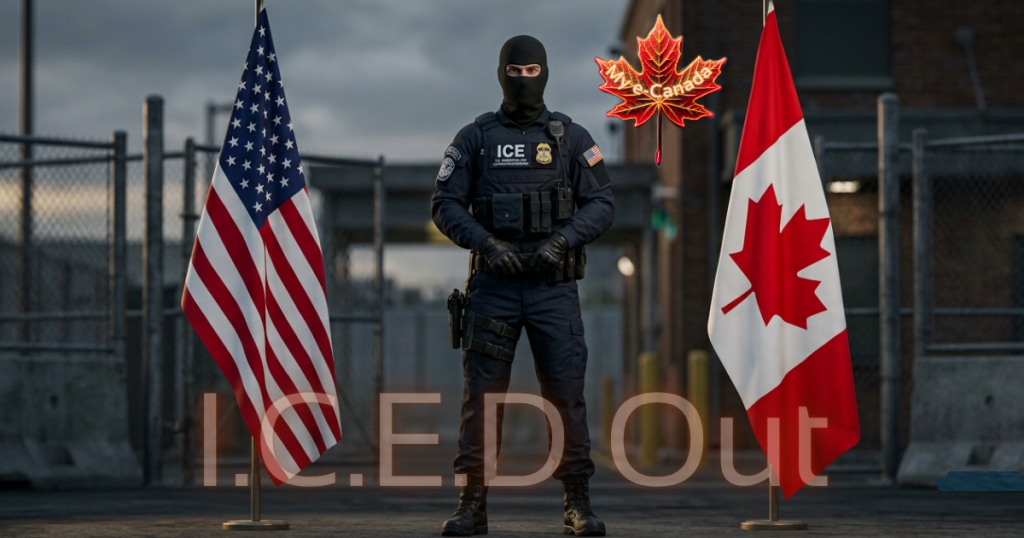
The Evolving Mandate of I.C.E. Immigration Enforcement
I.C.E. has transformed into a highly militarized branch of the government. Its operations are now more widespread than ever before. Officers frequently conduct raids in residential areas and workplaces. The focus has moved toward identifying any non-citizen with a record. This includes people who have lived in the country for decades. It also includes those with minor administrative or visa violations. The agency operates with a high level of autonomy today. It has its own air force and intelligence gathering tools. Many critics argue that the core mission has been lost. They believe the focus is no longer just on high-level threats. The current mandate seems to prioritize volume over specific risk assessment. This shift has created a climate of fear for many immigrants. Even those from the north feel the pressure of these changes. The mechanical nature of the processing system is often described as cold. It leaves very little room for individual circumstances or humanitarian pleas.
A Tragic End for Johnny Noviello
The death of Johnny Noviello remains a dark chapter in recent history. He was a 49-year-old Canadian national living his life. In June 2025, his journey ended in a Miami detention centre. He was originally from the city of Hamilton, Ontario. Johnny was known by friends as a kind and quiet man. He had traveled south to seek new opportunities and warmer weather. However, a routine stop led to his eventual detention by I.C.E. in Florida. He was picked up during a localized enforcement sweep in Miami. Officers claimed he had overstayed his initial visitor visa period. The specific officers involved in the arrest have not been named publicly. They were part of a specialized task force operating in the city. Johnny was taken to a federal facility designed for long-term holding. He spent several weeks behind bars awaiting a hearing date. Reports indicate he struggled with the conditions of his confinement. The heat and lack of movement took a toll on him.
The Final Moments in Miami I.C.E. Facility
On the afternoon of Monday, June 23, 2025, at approximately 12:54 p.m., I.C.E. staff found Johnny Noviello unresponsive in his cell. Medical personnel were called to the scene to provide aid immediately. They attempted resuscitation for a significant period of time using CPR and an automated external defibrillator. Unfortunately, they were unable to revive the 49-year-old Hamilton native. He was officially pronounced dead at 1:36 p.m. after being transported to the medical clinic within the facility. His passing was recorded as a death in custody by the federal detention centre in Miami. This event triggered an immediate investigation by the local medical examiner’s office. The official cause of death was cited as natural causes initially by the onsite providers. However, his family in Canada questioned the quality of his care following his seizure diagnosis. They pointed to a lack of communication from the American authorities during his final weeks. The news of his death took days to reach his loved ones in Ontario. This delay added to the profound grief they were experiencing during that difficult week. His case highlights the risks inherent in the current detention system for foreign nationals. It shows that even Canadians are not immune to these tragic outcomes.
Families Left Behind in Ontario
Johnny is survived by several close family members in Canada. His elderly mother still resides in their family home in Hamilton. He also leaves behind two sisters who were very close to him. They described him as the glue that held them together. The family has struggled to get clear answers from the officials. They want to know why his medical needs were not prioritized. His sisters have been working with legal experts to seek justice. They hope to prevent this from happening to another Canadian family. The grief in the Hamilton community remains very palpable and deep. Many neighbours remember him as a helpful and friendly person. His death has sparked a conversation about the I.C.E. treatment of detainees. The survivors are now advocates for better oversight in these facilities. They believe that no one should die alone in a foreign cell. Their mission is to honour Johnny’s memory through systemic change.
Seeking Help If Detained by I.C.E. Through Global Affairs Canada
Any Canadian held by I.C.E. should contact Global Affairs Canada immediately. This is the primary agency responsible for helping citizens abroad. You can reach the Emergency Watch and Response Centre in Ottawa. Their toll-free number for those in the U.S. is 1-888-949-9993. This office operates 24 hours a day and seven days a week. They can provide essential consular support to those in distress. This includes providing a list of vetted local immigration lawyers. They can also notify your family about your current location. The agency will monitor your case to ensure humane treatment. They cannot pay your bail or your legal fees, however. They also cannot represent you in a court of law. Their role is to act as a bridge to your home country. Having the Canadian government involved can provide a layer of safety. It ensures that you are not forgotten in a massive system.
The Silent Crisis of the Fifty-Five
As of mid-2025, fifty-five Canadians remain in American I.C.E. detention centres. Each case involves a unique set of circumstances and challenges. Some were picked up for simple visa overstays like Johnny was. Others were detained following interactions with local police departments. Many of these individuals are still in custody as of today. They are spread across various states including Texas and California. The Canadian government is actively tracking each of these specific cases. Consular officials visit these detainees to check on their welfare. They advocate for fair treatment within the bounds of U.S. law. However, the legal process in the United States is often slow. Many of these Canadians have been waiting months for a hearing. The government in Ottawa maintains a list of these individuals. They work to ensure that legal rights are being fully respected. Each case is a priority for the regional consular teams involved.
Understanding the Fifty-Five Individual I.C.E. Stories
The fifty-five Canadians in I.C.E. custody come from across our nation. There are individuals from Vancouver, Calgary, and even rural Quebec. Some were working under the table in the construction industry. Others were visiting family and simply lost track of time. A few were detained after their digital devices were searched. These searches often happen at major airports or border crossings. The agency has the power to look through your personal data. If they find evidence of unauthorized work, they take action. This leads to immediate detention in many of the cases. Most of the fifty-five are held in high-security environments. They wear the same uniforms as those with criminal records. This experience is often very traumatizing for the Canadian citizens. They are far from home and separated from their support. The uncertainty of their future is the hardest part for them.
The Legal Limbo of Canadian I.C.E. Detainees
The Canadian government remains engaged with the American authorities daily. They push for the timely resolution of these fifty-five I.C.E. cases. However, they cannot force the U.S. to release any individual. Each person must go through the formal immigration court system. This can take a very long time due to backlogs. In the meantime, the detainees remain in federal holding cells. Some have opted for voluntary departure to return home sooner. This means they agree to leave and not return for years. Others are fighting their cases to keep their American lives. They may have American spouses or children who need them. The Canadian government provides support but stays out of the law. They ensure that the detainees have access to communication tools. This allows them to stay in touch with their Canadian families. The goal is to bring as many home as possible.

Smart 1000 Business Cards: Durable Branding Digitally Intertwined
Consular Outreach and Modern Advocacy
The thirteen Canadian consulates in the U.S. are very busy. They manage the needs of thousands of citizens living south. When a Canadian is detained by I.C.E., a consular officer is assigned. They help the person understand the American legal landscape. They also provide information on how to send money for food. The conditions in many detention centres are quite basic and harsh. Having access to small comforts can make a big difference. The officers also speak with the facility managers about safety. They want to ensure that medical care is always available. The death of Johnny Noviello changed how they approach these visits. There is now a much higher focus on health screenings. The Canadian government wants to prevent any further loss of life. They are using every diplomatic tool to protect our people. This is a constant effort that happens behind the scenes.
Rights and Protections for the Canadian Traveler Facing I.C.E.
If you are ever approached by I.C.E. you have rights. You have the right to remain completely silent during questioning. You do not have to answer questions about your status. It is wise to ask for a lawyer right away. You should also ask to speak with the Canadian consulate. Do not sign any documents without a lawyer present. Many people sign away their rights because they are scared. This can lead to an immediate and permanent deportation order. Keep your Canadian passport or a copy of it with you. This helps prove your citizenship and speeds up the process. You have the right to an interpreter if needed. If you do not understand a question, do not answer it. Being clear and calm is the best way to behave. The more information you have, the safer you will be.
Navigating the 2026 I.C.E. Enforcement Climate
The environment for travelers has become much more strict recently. There is increased visibility of I.C.E. officers at major transit hubs. They are checking documents more frequently than in previous years. New registration requirements are now in place for longer stays. If you stay for more than thirty days, you must register. Failing to do this can lead to serious legal trouble. Officers also have a lot of discretion with your devices. They can look at your phone, laptop, or your tablet. It is best to keep your digital footprint very clean. Be honest about why you are visiting the United States. If you are there for tourism, stick to that story. Do not carry resumes or work tools if you are a visitor. These items can be used as evidence of illegal work. Being prepared is the key to a successful trip.
The Mission of Word On The Street
Our goal at this news hub is to inform you. We want to highlight stories that affect every single Canadian. The story of the fifty-five in I.C.E. custody is one of those. We believe that awareness is a powerful tool for safety. Knowing the risks allows you to make better travel choices. We will continue to follow the cases of those detained. We will also keep pushing for answers regarding Johnny Noviello. His story is a reminder of what is at stake. The relationship between our two countries is very complex now. While we are friends, the laws are still very firm. We hope this Word On The Street exposé provides the depth you were seeking. Information is the best defence against a system like I.C.E. and its reach. Stay informed and stay safe as you cross the border. We are here to bring you the truth Monday through Friday.
Final Thoughts on Justice and I.C.E. Oversight
The quest for justice for Johnny Noviello is far from over. His family continues to work with international human rights groups. They want a full and transparent inquiry into his death. They believe that systemic I.C.E. failures led to his tragic passing. The Hamilton community has held vigils in his precious honour. These events keep his story alive in the public mind. Meanwhile, the fifty-five Canadians wait for their day in court. They hope for a chance to return to their homes. The Canadian government remains their only real link to Canada. This investigative piece aims to shed light on their struggle. It is a call for more accountability in detention centres. We must ensure that human rights are always upheld. No citizen should be forgotten while in foreign custody. The lessons learned here must lead to lasting change.
Contacting the Embassy in Washington
The Canadian Embassy is located in the heart of Washington. You can find them at 501 Pennsylvania Avenue, N.W. The postal code for this location is 20001. Ambassador Kirsten Hillman is the current leader of the mission. You can call them at 1-844-880-6519 for any help. Their email address is ccs.scc@international.gc.ca for official inquiries. They are the primary contact for major federal issues. If a Canadian is in serious trouble, they respond. The embassy staff works closely with American government officials. They ensure that the Canadian voice is heard in D.C. This office is a vital resource for all our citizens. They handle everything from passports to emergency evacuations. Having their number saved is a very good idea. It provides peace of mind while you are traveling.
The Consulate General in Atlanta
The Atlanta office serves a large part of the south. Consul General James K. Hill leads the team there. They are located at 1175 Peachtree Street N.E., Suite 1700. The city of Atlanta is in the state of Georgia. Their phone number is also 1-844-880-6519 for consistency. You can email them at ccs.scc@international.gc.ca for assistance. This office covers several states in the southeastern region. They are very familiar with local detention facility protocols. The staff can help find legal aid in that area. They also facilitate communication with families back in Canada. If you are in Georgia, this is your primary contact. They are dedicated to protecting Canadian interests in the south. The consulate is a safe haven for those in need. They provide professional and compassionate support to everyone.
Support in the City of Boston
The Boston consulate is led by Bernadette Jordan. You can find them at 3 Copley Place, Suite 400. This office is in the heart of Massachusetts. Their telephone contact is 1-844-880-6519 for all callers. Email inquiries should go to ccs.scc@international.gc.ca for a response. They serve the New England area of the United States. Many Canadians travel here for school or for work. The consulate is well-equipped to handle student visa issues. They also help those who are visiting for medical care. If you face detention in this region, call them. They will ensure your rights are being fully respected. The team in Boston is highly experienced and helpful. They act as a strong advocate for all Canadians. Knowing their location is helpful for those in the east.
Reaching Out to the Chicago Office
The Chicago consulate is directed by Chris Entwistle. They are located at Two Prudential Plaza in Chicago. The specific address is 180 North Stetson Avenue, Suite 2400. You can reach the office at 1-844-880-6519 by phone. Their official email is ccs.scc@international.gc.ca for all needs. This office covers a large portion of the Midwest. Many transportation hubs are located within their specific jurisdiction. They deal with a high volume of traveler inquiries. If you are detained at O’Hare, call this office. They have established relationships with the local port authorities. This can help in getting information about your case quickly. The Chicago team is known for being very efficient. They work hard to support the Canadian community there. Their role is essential for our citizens in the Midwest.

Digital Market Research Package: Knowing Makes All The Difference
I.C.E. Assistance in the State of Texas
The Dallas consulate is led by Susan Harper. Their office is at 500 N. Akard Street, Suite 2900. This location is in the busy city of Dallas. You can contact them at 1-844-880-6519 for help. Email them at ccs.scc@international.gc.ca with any specific questions. Texas has many detention centres within its large borders. This makes the Dallas office a very important one. They spend a lot of time on consular visits. They ensure that Canadians in Texas are treated fairly. The legal system in Texas can be very complex. The consulate can help you find a local expert. They also assist with returning to Canada after a stay. If you are in the southwest, keep this number. It is a vital link to your home government.
The Denver Consulate and the Rockies
The Denver office is headed by Sylvain Fabi. They are located at 1625 Broadway, Suite 2600. This consulate is in the state of Colorado. You can call the team at 1-844-880-6519 for support. Email inquiries are handled at ccs.scc@international.gc.ca for all citizens. This office serves the Rocky Mountain region of the U.S. Many Canadians visit here for skiing and for hiking. The consulate helps with lost passports and other emergencies. They also monitor any local detention cases in the area. The staff is very knowledgeable about regional laws and rules. They provide a high level of service to all visitors. If you find yourself in trouble in Colorado, call. They are ready to assist you in any way. Their presence ensures that Canadians have a local voice.
I.C.E. Support in the Motor City
The Detroit consulate is led by Consul General Colin Bird. They are at 600 Renaissance Center, Suite 1100. This office is very close to the Canadian border. You can reach them by phone at 1-844-880-6519 today. Their email address is ccs.scc@international.gc.ca for all inquiries. Because they are so close to Ontario, they are busy. They handle many cross-border trade and travel issues daily. If you are detained at the bridge or tunnel, call. They can provide immediate advice on your current situation. The Detroit team works closely with border officials on both sides. They help resolve disputes over entry and stay durations. This is a key office for many Canadian travelers. They are dedicated to keeping the border moving smoothly. Their help is invaluable for those in the Windsor area.
The Los Angeles Consulate General
The Los Angeles office is led by Sylvie Bédard. They are located at 550 South Hope Street, 9th Floor. This is in the vibrant city of Los Angeles. You can call the office at 1-844-880-6519 for assistance. Their email for consular help is ccs.scc@international.gc.ca for all. California has the largest number of detainees in the country. This makes the L.A. office a very busy place. They have a large team dedicated to consular affairs. They visit many facilities across the southern part of California. The staff helps Canadians navigate the very crowded court system. They also provide support for those in local hospitals. If you are on the West Coast, this is your contact. They are a strong presence for Canada in California. Their work is vital for the many Canadians there.
The Miami Consulate and South Florida
The Miami office is directed by Sylvia Cesaratto. They are at 200 South Biscayne Boulevard, Suite 1600. This office was involved in the Johnny Noviello case. You can reach them at 1-844-880-6519 for any help. Email them at ccs.scc@international.gc.ca for consular support in Florida. Many Canadians spend their winters in this sunny state. This creates a high demand for consular services here. The office handles everything from estate issues to detentions. They are very active in the local community of snowbirds. The staff is highly professional and very dedicated to work. They advocate for the safety of all Canadians in Florida. If you have an emergency in Miami, call them. They are your first line of defence in the state. Their role is critical for the thousands of visitors from Canada.
I.C.E. Help in the City of Minneapolis
The Minneapolis consulate is headed by Beth Richardson. They are located at 701 Fourth Avenue South, Suite 900. This office serves the northern plains of the U.S. You can call them at 1-844-880-6519 for assistance. Their email address is ccs.scc@international.gc.ca for all citizens. Many Canadians travel here for business and for shopping. The consulate provides support for all types of emergencies. They monitor any detentions that happen in the region. The staff is very helpful and easy to reach. They provide clear guidance on how to solve problems. If you are in Minnesota or North Dakota, call. They are there to ensure your safety and well-being. Their presence is a comfort to many Canadian travelers. They are a dedicated team of professionals.
The New York City Consulate General
The New York office is led by Tom Clark. They are at 466 Lexington Avenue, 20th Floor. This is in the heart of Manhattan in NYC. You can reach the office at 1-844-880-6519 for help. Email them at ccs.scc@international.gc.ca for consular assistance in New York. This is one of the busiest offices in the world. They handle a massive volume of requests from Canadians. From lost wallets to serious legal trouble, they help. The staff is very experienced with the New York system. They can provide lists of specialized lawyers for your case. If you are detained in the tri-state area, call. They will send someone to check on you quickly. The New York team is a vital resource for us. They are proud to serve the Canadian community there.
I.C.E. Support in San Francisco and Northern California
The San Francisco office is led by Rana Sarkar. They are located at 580 California Street, 14th Floor. This consulate serves the tech hub of Silicon Valley. You can call them at 1-844-880-6519 for any assistance. Their email address is ccs.scc@international.gc.ca for all inquiries. Many Canadians work in the tech sector in this area. The consulate helps with work permit and visa questions. They also provide support for any emergency or detention. The staff is very knowledgeable about the unique local laws. They work hard to protect Canadian workers and visitors. If you are in Northern California, this is your office. They are dedicated to providing excellent service to everyone. Their help is just a phone call away for you.
The Seattle Consulate and the Pacific Northwest
The Seattle office is overseen by Craig Weichel. They are located at 1501 4th Avenue, Suite 600. This office is very close to British Columbia. You can reach them at 1-844-880-6519 for help. Email them at ccs.scc@international.gc.ca for consular support in Washington. They handle many border-related issues for those from B.C. If you are detained at the Peace Arch, call. They provide quick and effective support for all citizens. The staff is very familiar with the local I.C.E. offices. This helps them get information to your family faster. They are a dedicated team serving the Pacific Northwest. Their role is essential for the many cross-border travelers. Having their contact info is vital for those in the west. They are here to help you return to Canada safely.
Canada-U.S. relations, Canadian citizens, Canadian government support, Client Scout, ClientScout, consular services, Global Affairs Canada, Hamilton Ontario, human rights, I.C.E., immigration detention, International Relations, International relations 2026, international travel safety, investigative exposé, Investigative reporting, Johnny Noviello, legal rights, Miami, My e-Canada, My-e-Canada.ca, U.S. Customs and Border Protection, visa overstays, Wayne A. Cargill Agency, Word On The Street
Leave a Reply