
Your cart is currently empty!


Hantavirus: What Every Canadian Needs To Know
Today May 11, 2026, My e-Canada Word On The Street investigative exposé explores Hantavirus, what every Canadian needs to know. This pathogen represents a severe respiratory risk that has recently made international headlines following a deadly outbreak on a luxury cruise ship in the South Atlantic. While many citizens associate the illness with rural cabins and rodent activity, the recent emergence of a strain capable of human-to-human transmission has necessitated a higher level of public awareness and governmental vigilance. This report aims to provide the definitive guide for Canadians, detailing the history of the virus and the clinical signs that every person must be able to recognize. We are committed to dissecting the facts of the recent maritime crisis to ensure our readers have the clarity needed to navigate these shifting times safely. Through our investigation, we will explore the biological nature of the virus and the specific measures being taken by our health authorities to prevent any domestic spread. Our priority remains the safety and health of every Canadian family during this period of heightened biological concern and global monitoring.
My e-Canada Word On The Street:
Digitally Yours To Explore
The Biological Reality of Hantavirus
The historical record of this pathogen begins decades ago in Asia and has evolved significantly to shape what we know about Hantavirus in North America today. Originally identified during the Korean War in the early 1950s, the virus was responsible for a severe haemorrhagic fever that affected thousands of soldiers before being officially isolated by Dr. Ho Wang Lee in 1976. Named after the Hantan River in South Korea, the virus was found to be housed in striped field mice that showed no signs of illness. In the Americas, the most significant discovery occurred in 1993 during an outbreak in the southern neighbouring nation, leading to the identification of the Sin Nombre strain. Transmission traditionally occurs when humans breathe in aerosolized particles from the urine, droppings, or saliva of infected rodents, specifically the deer mouse in our local provinces. However, the Andes strain, which is at the centre of the 2026 cruise ship outbreak, is unique because it is the only variant known to spread from person to person through close, prolonged contact. This critical distinction is why the international health community has reacted with such urgency to contain the recent maritime cluster.
The MV Hondius Crisis
The focal point of the current international health emergency is the MV Hondius, a state-of-the-art Polar Class 6 vessel owned by Oceanwide Expeditions. This 107-metre expedition ship is a vessel designed for high-end polar travel and became the site of a deadly Hantavirus event that began in early April 2026. The vessel departed from Ushuaia, Argentina, on April 1, for a 33-day “Atlantic Odyssey” that was originally supposed to visit Antarctica, the Falkland Islands, and South Georgia. On board were 148 individuals, including 87 passengers and 61 crew members representing a vast array of nationalities. The passengers came from diverse countries including Argentina, Australia, Belgium, Canada, France, Germany, Greece, Ireland, Italy, Japan, the Netherlands, New Zealand, Spain, Turkey, the United Kingdom, and the United States. Tickets for this luxury journey were priced between $10,450 and $17,050 USD per person, which is approximately $14,350 to $23,400 CAD. As the ship sailed toward Cape Verde, the outbreak manifested with devastating speed, leading to the death of three individuals, including a Dutch passenger and a German national, while others were medically evacuated to South Africa for intensive care.
Hantavirus and International Casualties
The clinical toll of the voyage is a sobering reminder of the power of Hantavirus and the speed at which it can overcome the human body. As of May 11, 2026, nine cases have been identified in total, including seven laboratory-confirmed and two probable infections. The survivors from the ship were eventually permitted to disembark at the port of Granadilla in Tenerife, Canary Islands, on May 10, following intense international negotiations. Most of these passengers were repatriated to their home countries under strict biocontainment protocols to prevent any potential for community transmission. The ship itself remains moored and is undergoing a rigorous disinfection process overseen by Spanish health authorities and the World Health Organization. This incident has triggered a global tracking effort for any individuals who may have disembarked at earlier stops, such as Saint Helena, before the full scope of the outbreak was known. The coordination between the ship operator and multiple governments was essential in managing the evacuation and ensuring that every passenger received the necessary medical assessment before returning to their home provinces or countries for further observation.
The Canadian Exposure
The impact on Canada involves six individuals who have been identified as having potential exposure to Hantavirus during this specific maritime event and its aftermath. Four of these citizens have arrived in British Columbia, while the remaining two are currently isolating and being monitored within the province of Ontario. These individuals were exposed through their presence on the MV Hondius, although public health officials have noted that none of the Canadians had known direct contact with the ill people on board. It is important to note that as of today, none of these Canadians have tested positive or shown symptoms, but they remain under strict public health observation during a critical phase of the incubation period. This national distribution of potential cases highlights the interconnected nature of modern travel and the speed at which biological risks can move across our borders. Our provincial health agencies are working in tandem with the federal government to ensure that every one of these individuals follows the necessary isolation protocols to eliminate any risk to the public.
Hantavirus and the Victoria Arrival
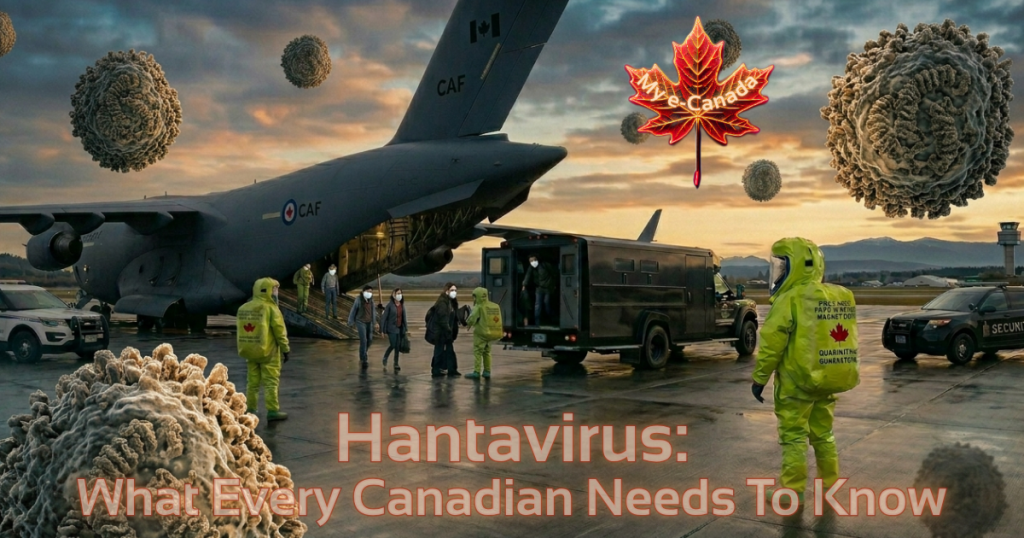
The journey home for the four Canadians who arrived in Victoria was managed with absolute precision to prevent any risk of Hantavirus spreading to the general public. On Sunday, May 10, 2026, these individuals arrived at Victoria International Airport on a plane chartered by the Government of Canada and Global Affairs Canada, with support from the Canadian Armed Forces. The flight originated in Tenerife and made a stop in Bagotville, Quebec, for a crew change before landing away from the commercial passenger terminal in B.C. They were met on the tarmac by a Public Health Agency of Canada quarantine officer and were directly transferred in secure vehicles to pre-arranged lodgings. Dr. Bonnie Henry has confirmed that these individuals—a couple from the Yukon, a Vancouver Island resident, and a British Columbia citizen who lives abroad—remained asymptomatic throughout their travel. This logistical feat was necessary to ensure that the citizens could return to their home province while maintaining the highest levels of biosafety. The use of chartered aircraft and secure transfers is a standard protocol for high-consequence pathogens, ensuring that the public remains entirely separated from any risk.
This Edition of My e-Canada Word On The Street Is Brought To You By:
Client Scout e-Branding

Client Scout e-Branding:
Digitally branding The Planet
Global Health Perspectives
The World Health Organization has been at the forefront of the response, providing a global assessment of the Hantavirus situation as it develops. The WHO states that while the risk to the passengers and crew on the ship was moderate, the overall risk to the global population remains low. They emphasize that the Andes strain requires very close and prolonged contact to spread between humans, making it much easier to contain than a highly contagious respiratory virus. Similarly, the Canadian CDC and the Public Health Agency of Canada are monitoring the strain closely, noting that while it is a serious illness, it does not possess the characteristics necessary to trigger a global pandemic. Our national health experts are working in tandem with international partners to sequence the viral genome and ensure that our diagnostic tools remain effective. This global cooperation is the cornerstone of our defence against emerging infectious diseases. By sharing data in real-time, these agencies can provide the most accurate risk assessments and ensure that every nation is prepared to handle potential cases within their own borders.
Hantavirus and Pandemic Potential
The question of whether this outbreak could create another pandemic is a significant concern for many who remember the events of recent years, but the nature of Hantavirus suggests a different path. Dr. Bonnie Henry, the Provincial Health Officer for British Columbia, has been clear in her assessment that this particular strain is not considered a disease with pandemic potential. Unlike viruses that spread easily through the air or casual contact, the Andes virus requires specific conditions and intense proximity to move between individuals. Because the passengers have been identified and isolated in their respective home countries, the chain of transmission has been effectively broken. Health officials are confident that the risk of a widespread community outbreak is virtually non-existent given the current containment strategies. This perspective is vital for the public to understand; while the individual cases are severe and tragic, the biological profile of the virus prevents it from sweeping through the population in the way a pandemic flu or coronavirus might. Vigilance remains high, but the threat is one of containment rather than a global shutdown.
Clinical Symptoms
The clinical presentation of the illness is a vital component of what safety requires for early detection and intervention for Hantavirus. The incubation period typically lasts between one and eight weeks, meaning that symptoms may not appear for a significant amount of time after an exposure has occurred. The illness begins with a prodromal phase characterized by high fever, severe muscle aches—particularly in the large muscle groups of the back and legs—and profound fatigue. Many patients also experience gastrointestinal issues such as nausea, vomiting, and abdominal pain. As the disease progresses into the cardiopulmonary phase, it causes a rapid onset of shortness of breath and coughing as the lungs begin to fill with fluid. This transition can happen in a matter of hours and constitutes a medical emergency. If any Canadian feels they are showing signs of these symptoms after potential exposure, they should contact Health Canada at 1-866-225-0709 or email hcinfo.infosc@canada.ca immediately. Early supportive care is the only way to improve survival rates for this lethal infection, making prompt reporting a life-saving action for anyone who may be at risk.
Hantavirus and the Long-Term Isolation
The public health response for those who were on the MV Hondius involves a mandatory isolation period that accounts for the unique biology of Hantavirus. While the initial quarantine is 21 days, Dr. Bonnie Henry has noted that this will be extended to 42 days for the individuals in B.C. to ensure that the full risk window is covered. This extended observation is a precautionary measure because the virus can remain dormant in the system for up to six weeks before the clinical symptoms manifest. During this time, the repatriated Canadians are being monitored daily by public health teams through virtual check-ins and symptom logs. They are not under legal orders to isolate, as they have been fully cooperative with the voluntary measures, but the authorities have the power to enforce these rules if necessary. This period of isolation is not just for the safety of the individuals but for the peace of mind of the entire community. By staying separated until the risk window closes, these travellers are performing a vital service to their fellow citizens and ensuring the virus goes no further.
Client Scout e-Branding Taglines:

Empowering Businesses With The Last Word
Regional Risks
The distribution of the virus across our provinces is an important factor in what every Canadian needs to know about local Hantavirus safety. In Western Canada, the deer mouse is the primary carrier, and cases have been reported regularly in British Columbia, Alberta, and Saskatchewan over the last several decades. These mice are common in rural settings but can also be found in suburban areas where they seek shelter in garages, sheds, and basements. The risk is highest in the spring when people begin to open up cottages or clean out outbuildings that have been closed for the winter months. While the number of cases is small, the severity of the illness means that every exposure must be taken seriously by health authorities. We have seen that provincial health officers are proactive in issuing warnings and providing education on how to properly rodent-proof homes. Maintaining a clean environment and sealing any entry points is the most effective way to keep these carriers away from our living spaces and reduce the domestic risk for everyone involved in property maintenance.
Hantavirus and Cleaning Protocols
The application of proper sanitation techniques is a mandatory requirement for anyone attempting to eliminate Hantavirus risks in a suspected area. You must never begin a cleaning project by sweeping or vacuuming, as this is the primary way the virus becomes airborne and enters the lungs. Instead, the area should be thoroughly ventilated by opening doors and windows for at least thirty minutes before any work begins to allow fresh air to circulate. Every surface and all rodent waste should be saturated with a disinfectant solution, such as a mixture of one part bleach to nine parts water, to ensure the viral envelope is destroyed. The material must be allowed to soak for five minutes before it is wiped up with paper towels and placed in a sealed plastic bag for disposal. Wearing rubber or plastic gloves and a high-quality mask is also essential to provide a physical barrier against accidental contact. These steps are not suggestions; they are the standard safety protocols required to prevent a life-threatening infection from occurring during routine maintenance on your property this year.
Professional Response
The role of public health leadership is a critical part of the response Canada provides during any significant outbreak of Hantavirus. Dr. Bonnie Henry has been a steady voice of reason and authority as she manages the isolation of the returning travellers in British Columbia. Her focus on evidence-based decision making and transparent communication has helped to maintain public trust during a period of international uncertainty. The activation of specialized biocontainment centres like the one at Surrey Memorial Hospital shows that our provinces are prepared for even the most serious health scenarios. This infrastructure is not just about equipment but also about the dedicated teams of doctors and nurses who are trained to handle these dangerous viruses safely. We must appreciate the work that goes into maintaining this level of readiness every single day across the country. Their efforts ensure that if a case does surface, it is contained quickly and the patient receives the best possible care. This is the cornerstone of our public health system and a source of pride for all citizens during these challenging times.
Hantavirus and Global Security
The international coordination between health agencies is a success story in how the world manages Hantavirus threats in 2026. The rapid identification of the Andes strain and the subsequent tracking of passengers across twenty-three different countries was a monumental task for the World Health Organization. This effort involved sharing genomic data and epidemiological information in real-time to ensure that every nation could protect its citizens effectively. We have seen that Canada played a leading role in this process by coordinating with international partners to repatriate our people under the highest safety standards. This global network is our primary defence against the spread of high-consequence pathogens that do not respect national borders. The lessons learned from this maritime crisis will undoubtedly inform our response to future health emergencies of a similar nature. We must continue to support and invest in these international partnerships to ensure that we are never caught off guard by a biological threat again. This vigilance is a core value of our national health and security strategy moving forward into the future.
Stellar Package:

Making Your Online Presence Skyrocket
Future Outlook
The long-term outlook for managing these threats is an essential part of what every Canadian needs to know for the future regarding Hantavirus. Researchers are currently working on developing vaccines and better antiviral treatments, but these advancements are still in the early stages of testing. Until a definitive cure is found, our best defence remains education and prevention at the local level. We must continue to teach the next generation about the risks of zoonotic spillover and the importance of maintaining a healthy distance from wildlife. The changing climate may also impact the distribution of rodent populations, potentially bringing new strains of the virus into areas where they were previously unknown. This means that our monitoring systems must remain flexible and responsive to environmental shifts that could alter the risk landscape. We are committed to staying at the forefront of these developments to ensure that our readers are always the first to know about any changes. This ongoing vigilance is the only way to stay safe in an ever-changing biological world where new threats can emerge at any time.
The Final Word On The Street: Hantavirus
The final segment of our report concludes with Hantavirus and the final word on staying protected and informed in 2026. We have explored the deep history of the pathogen, the mechanics of its transmission, and the specific international events that have brought this threat to the forefront. From the decks of a luxury cruise ship to the quiet cabins of our northern forests, the threat of this virus is a reminder of our connection to the natural world. While the risk of infection is low, the consequences are too severe to ignore, making the simple acts of ventilation and disinfection our most powerful tools. We hope that this investigation has provided you with the clarity and confidence needed to navigate these shifting times with safety and awareness. My e-Canada Word On The Street will continue to watch the status of the isolated travellers. We will also monitor the global health landscape to bring you the latest updates. This report is a testament to our mission of providing deep-dive journalism for the people of Canada. We remain your trusted source for health and security information.
Thank you for reading this investigative exposé by My e-Canada Word On The Street: Digitally Yours To Explore
2026 health report, Andes virus, biosafety, British Columbia health, Canadian English, Canadian public health, Client Scout, ClientScout, Dr. Bonnie Henry, global health surveillance, Hantavirus, health repatriation, health safety guidelines, infectious disease, intensive care, investigative journalism, maritime health crisis, medical evacuation, MV Hondius, My e-Canada, polar expedition, preventive cleaning, pulmonary syndrome, quarantine protocols, respiratory distress, rodent control, Sin Nombre virus, Victoria International Airport, viral transmission, Wayne A. Cargill Agency, Word On The Street, zoonotic diseases
Leave a Reply