
Your cart is currently empty!

Understanding the Peril of Forever Chemicals
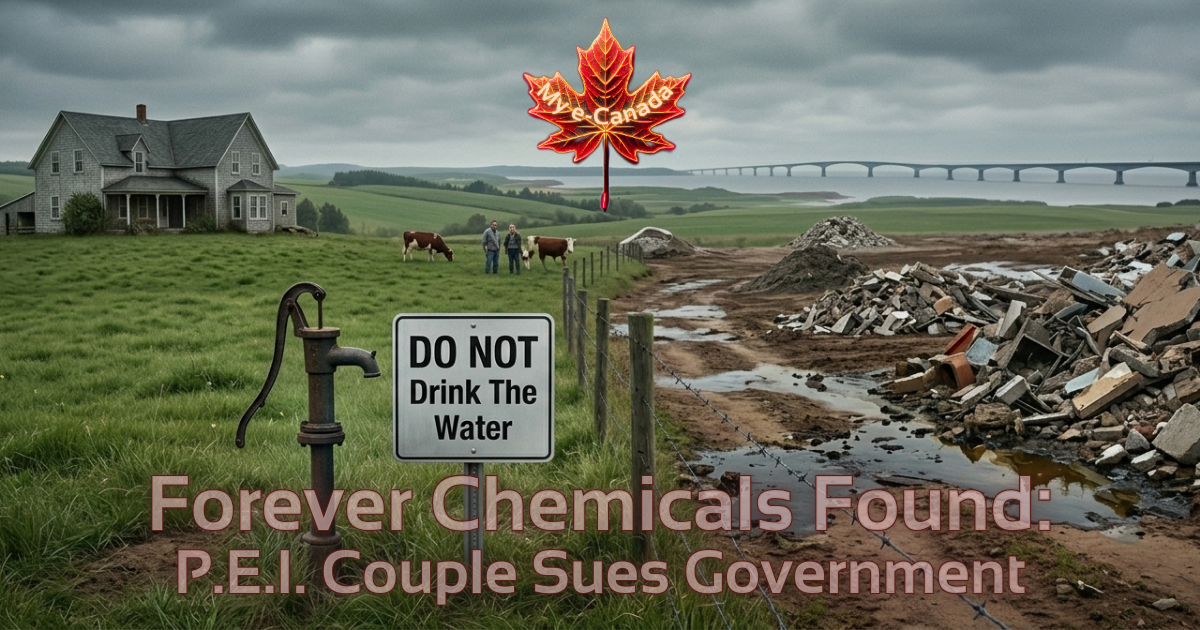
Monday, June 8, 2026, My e-Canada Word On The Street Investigative News Exposé explores Forever Chemicals, and why a couple is suing the P.E.I. Government. To understand this profound environmental crisis, one must analyze the science of these synthetic compounds. Formally known as per- and polyfluoroalkyl substances, these agents are entirely man-made. Manufacturers have used them globally since the mid-twentieth century. They are found in non-stick cookware, water-repellent clothing, and firefighting foams. Their unique molecular structure features exceptionally strong carbon-fluorine bonds. Because of this chemistry, these substances do not break down naturally in the environment. They persist indefinitely in soil, rivers, and underground aquifers. Over time, they bioaccumulate inside the human body and wild ecosystems. The modern term Forever Chemicals reflects this permanent threat. For decades, industrial waste containing these elements was buried without proper safeguards. Rainwater eventually leached the toxins deep into localized water tables. This systemic migration has contaminated private wells across rural communities. The long-term consequences of this pollution are only now becoming fully understood. Independent scientists warn that even trace exposure can alter human biology permanently. The invisible nature of this threat leaves families vulnerable for generations. Across Prince Edward Island, groundwater purity is a vital public concern. This baseline safety has now been completely compromised for specific rural inhabitants. The current litigation highlights a terrifying intersection of industrial negligence and regulatory failure.
My e-Canada Word On The Street:
Digitally Yours To Explore
The Discovery of Contamination in Hazelbrook
The nightmare for Douglas and Roberta “Robin” Jenkins began unexpectedly in early 2025. An official from the provincial environment department arrived at their farmhouse with a severe warning. Government testing had detected massive toxic concentrations inside their private well water. Specifically, the laboratory analysis revealed 606.6 nanograms per litre of industrial toxins. This staggering figure represents more than twenty times the safe limit recommended by Health Canada. These dangerous Forever Chemicals had completely infiltrated their primary source of daily sustenance. The couple was instructed to immediately cease consuming or cooking with their tap water. This sudden revelation triggered immediate psychological shock and profound domestic disruption. The Jenkins family farm covers 130 acres of rural land in Hazelbrook. This scenic community sits just southeast of Charlottetown. The historic property has remained within their family for over four generations. It represents their legacy, their livelihood, and their planned retirement sanctuary. Now, ordinary household tasks are fraught with intense anxiety. Rinsing fresh produce or watering the vegetable garden feels incredibly hazardous. They are even terrified to take routine showers in their own home. The water that once sustained their family now feels like a hostile presence. This domestic entrapment has fundamentally altered their daily existence. Their deep sense of peace has been replaced by constant hyper-vigilance.

The Toxic Reality of Rural Ground Water
A Community Plagued by Systemic Contamination
The scope of this Forever Chemicals environmental disaster extends far beyond a single agricultural boundary. Several neighbouring properties in Hazelbrook are also documenting elevated toxic readings. More than two hundred citizens reside within this tight-knit rural municipality. The vast majority of these households depend entirely on private shallow wells. Because there is no centralized municipal water system, groundwater quality dictates public survival. Douglas Jenkins now describes his beloved home region as the most toxic town on Prince Edward Island. The evolving environmental science fills the local population with deep dread. Residents are terrified about the long-term impacts on their health and livestock. The local agricultural economy relies heavily on maintaining a reputation for pure, wholesome products. Contaminated groundwater threatens to destroy this commercial viability completely. If crops absorb the buried toxins, the entire harvest becomes unsellable. Neighbours talk quietly on their porches about mysterious illnesses and sudden livestock deaths. A heavy cloud of suspicion now hangs over the entire countryside. Families feel entirely abandoned by the regulatory bodies meant to protect them. They are forced to buy bulk drinking supplies while waiting for answers. This widespread crisis has fractured the social fabric of the community. Trust in the safety of their natural surroundings has evaporated entirely.
Forever Chemicals in the Bloodstream
Shocking Laboratory Results from Maine
Desperate for clear answers, the Jenkins family sought advanced medical testing. In June 2025, they sent blood samples to a specialized clinical laboratory in Maine. The resulting toxicological report confirmed their worst fears regarding physical exposure. The analysis revealed 113.39 nanograms per millilitre of toxins in Robin’s blood. According to clinical guidance, this concentration is astronomically high. It sits at more than five times the level associated with severe adverse health risks. Reading the official laboratory report triggered a torrent of painful emotions. Robin recalls experiencing an immediate transition from disbelief to absolute fury. Ultimately, her emotional wellbeing settled into profound, lingering sadness. The couple was so stunned that they ordered a second round of testing. A few months later, the subsequent results confirmed the initial high readings. Robin describes the accumulation of Forever Chemicals as a ticking time bomb inside their bodies. Every single glass of water they drank over the decades built up the toxic load. The chemicals are locked within their organs, refusing to degrade. This permanent internal contamination provides a constant source of mental anguish. They must live with the knowledge that their bodies are profoundly altered.
The Human Cost of Regulatory Negligence
Navigating Chronic Illness and Future Fears
The physical toll of this ongoing Forever Chemicals crisis is deeply personal for Douglas Jenkins. He has been diagnosed with two distinct types of cancer in recent years. The family recognizes that medical science cannot definitively link his specific illnesses to the water. However, this scientific limitation does little to ease their mental burden. The terrifying possibility remains a permanent fixture in the back of their minds. They constantly wonder if the water they drank for decades accelerated his medical decline. Most Canadians take clean drinking water for granted as a fundamental human right. For this family, every sip was potentially compounding a deadly internal hazard. Medical professionals can only monitor Douglas’s condition while his body fights the illnesses. Meanwhile, the provincial government provides basic bottled water to manage their daily thirst. This minimal assistance feels like a insulting plaster on a gaping wound. It does nothing to remediate the toxic legacy embedded in their flesh. The psychological distress of fighting cancer while living on contaminated land is overwhelming. The family feels trapped in a toxic environment of the government’s making. Their golden years are defined by medical appointments and legal consultations.
Accountability and the Battle for Records
The High Cost of Accessing Public Information
Before turning to the judiciary, the family spent a year seeking government transparency regarding the Forever Chemicals. They wrote countless letters to environmental officials, including the provincial premier. They begged for comprehensive testing data and a clear remediation plan. Instead of receiving open cooperation, they encountered a wall of bureaucratic silence. To break through this obstruction, the family resorted to formal freedom-of-information requests. They ultimately spent nearly fifteen thousand dollars of their own money on these applications. This massive financial expenditure was meant to uncover how the pollution occurred. Unfortunately, the documents they received were heavily redacted and completely unsatisfactory. The government seemed more interested in protecting its reputation than helping citizens. This deliberate suppression of facts left the family feeling utterly abandoned. They realized the government would not take responsibility unless legally forced to do so. Douglas notes that they were ultimately backed into a desperate corner. Spending their retirement savings on legal fees was never their intention. However, public accountability requires uncovering the hidden records of the past. The costly battle for information exposed a systemic lack of government integrity.

Corporate Waste, Legal Action, and Environmental Destruction
Investigating the Source of Forever Chemicals
A Controversial Disposal Site Under Scrutiny
The central focus of the family’s legal accusation points to a nearby property. They allege the primary source of the pollution is a former disposal site. This controversial facility handled construction and demolition waste for several years. Located near the Jenkins farm, the site drew intense community complaints long ago. Residents frequently warned officials about illegal dumping and foul odors. Despite these public alarms, the facility continued to operate with minimal oversight. Provincial records indicate the site was eventually ordered to closed after a negative inspection. The evaluation proved the operator was failing to meet baseline environmental regulations. This government summary lists the contaminated site as currently owned by the province of Prince Edward Island. The Jenkins family alleges that officials failed to properly monitor the facility during its operation. They also contend that the government neglected its duty to clean up the land afterward. Toxins from the dumped building materials slowly migrated into the surrounding soil. Decades of heavy rainfall washed these dangerous Forever Chemicals into the local aquifer. The resulting plume of pollution traveled silently underground toward private residential wells. This structural failure represents a catastrophic breakdown of provincial environmental protection laws.
The Legal Crusade Against the Crown
Represented by specialized environmental lawyers, the Jenkins are officially suing the province of Prince Edward Island. This landmark legal action seeks substantial financial compensation for unprecedented damages. Each individual plaintiff is demanding personal injury damages approaching or exceeding one million dollars. The lawsuit also seeks massive property damages and the full cost of environmental remediation. Douglas describes this litigation as a last and desperate resort to force accountability. The government must answer for the destruction that has occurred and continues to unfold. The statement of claim paints a damning picture of systemic regulatory failure. It accuses the ministry of turning a blind eye to obvious pollution risks. The legal team intends to use historical soil samples to prove their case. They will demonstrate that the government-owned disposal site matches the chemical signature in the wells. Winning this case could establish a massive legal precedent across Atlantic Canada. It would force governments to proactively test rural areas for hidden chemical hazards. The province has refused to comment publicly on the active lawsuit. These serious allegations have not yet been tested or proven in a court of law.
The Loss of a Multi-Generational Legacy
A Broken Family Dream and Unsellable Land
The emotional heartbreak of this pollution involves the destruction of a family legacy. Douglas Jenkins was born and raised on this historic Hazelbrook property. He and Robin had always intended to pass the farm down to their daughters. They envisioned their grandchildren playing in the same fields that four generations enjoyed. That beautiful dream has been permanently shattered by the arrival of industrial toxins. The couple refuses to pass a toxic environmental burden onto their children. They attempted to sell the property to find a clean environment for retirement. However, provincial real estate laws mandate the explicit disclosure of property deficiencies. Once potential buyers learn about the extreme well contamination, they flee immediately. The historic farm has become completely unsellable and financially worthless on the market. Their primary financial asset has been transformed into a permanent geographic prison. They cannot leave, and they cannot live peacefully on their own land. The Jenkins want the province to completely reverse the severe environmental damage. They demand that the soil and water be returned to their original pristine condition. Achieving this remediation is the only way to restore their stolen peace of mind.
The Persistence of Toxins in the Environment
The scientific reality of removing these pollutants is incredibly daunting. Environmental experts note that these substances are uniquely resistant to natural degradation. They do not evaporate, dissolve, or break down through microbial action. Once they infiltrate an underground aquifer, they remain trapped there for centuries. Current water treatment technology can filter out some of these compounds using carbon systems. However, these filtration units are exceptionally expensive to install and maintain. They require constant monitoring and regular filter replacements to remain effective. Furthermore, trapping the chemicals does not solve the problem of ultimate disposal. The contaminated filters must be destroyed using specialized high-temperature incineration. The province has not offered to install these advanced systems for the affected residents. Simply handing out plastic bottles of water does nothing to clean the wider ecosystem. The long-term persistence of Forever Chemicals means this crisis will outlast the current government. It represents a permanent scar on the natural geography of Prince Edward Island.
Public Health Limits and Scientific Uncertainty
The Fragmentation of Exposure Data
Public health officials face major limitations when analyzing blood contamination data. While blood tests document individual exposure, they cannot pinpoint the exact origin. They cannot prove precisely which commercial product or disposal site caused the internal build-up. Furthermore, clinical science cannot use blood levels to predict specific future illnesses. This scientific uncertainty adds to the psychological burden facing the Hazelbrook community. Residents know they have dangerous levels of Forever Chemicals inside their bodies. However, they cannot get clear answers about what will happen to their health next. Researchers are working tirelessly to understand the full toxicity of these compounds. Emerging studies link exposure to liver damage, thyroid disease, and immune suppression. The regulatory guidelines are shifting constantly as new data becomes available. What was considered safe a decade ago is now recognized as highly hazardous. This shifting scientific landscape leaves rural families feeling like involuntary lab rats. They are trapped in a zone of contamination created by past regulatory blindness.

Nationwide Implications, Corporate Blame, and the Final Verdict
The Broad Threat of Forever Chemicals
A National Environmental Wake-Up Call
The toxic crisis unfolding in Hazelbrook is a local symptom of a national emergency. Across Canada, military bases, airports, and landfills are emerging as contamination hotspots. The widespread use of firefighting foams has polluted groundwater near countless communities. Health Canada is under intense pressure to modernize its national drinking water standards. Critics argue that current federal guidelines are far too lenient compared to international peers. Other developed nations have implemented much stricter legal limits for these specific toxins. This regulatory lag leaves millions of rural Canadians exposed to unrecognized health risks. The P.E.I. lawsuit is being watched closely by environmental lawyers across the country. A victory for the Jenkins family could trigger a wave of class-action litigation. Municipalities could be forced to audit their historical waste management practices immediately. The era of ignoring groundwater chemical pollution is rapidly drawing to a close. Public awareness is growing, and citizens are demanding absolute purity from their taps. The invisible threat of Forever Chemicals requires a massive, coordinated national response.
The Corporate Deficit of Care
The historical manufacturers of these compounds faced growing global legal scrutiny. Internal corporate documents reveal that chemical giants knew about the persistence risks decades ago. They chose to hide this scientific data to protect their massive profit margins. This corporate deficit of care has resulted in global ecological contamination. The materials were marketed as miraculous innovations while poisoning the global water supply. Now, innocent landowners like the Jenkins are bearing the physical and financial consequences. The provincial government’s failure to monitor local dumps mirrors this broader corporate negligence. Officials trusted industrial assurances instead of conducting independent environmental audits. This systemic failure of oversight has allowed toxins to enter the public food chain. The legal battle in Hazelbrook is a demand for basic corporate and government accountability. True environmental justice requires holding both polluters and regulators legally responsible.
Reclaiming Sovereignty Over Local Resources
The Fight for Clean Water and Rural Rights
The struggle for the Jenkins family is centered on reclaiming their basic rights. Rural communities deserve the same environmental protections as major urban centres. For too long, isolated municipalities have been used as dumping grounds for industrial waste. This practice destroys local ecosystems while enriching distant corporate entities. The defense of groundwater is essential for maintaining local agricultural sovereignty. If rural citizens cannot trust their wells, they cannot maintain their independent way of life. The lawsuit against the province is an act of defiance against regulatory abandonment. The Jenkins are fighting for their health, their legacy, and their neighbours’ survival. They refuse to let bureaucratic inertia silence the tragedy of their contamination. Their resilience has inspired other residents to demand independent soil and water testing. The community is organizing to monitor the government-owned disposal site themselves. This grassroots mobilization represents a powerful reclamation of local resource sovereignty.
Final Word On The Street: Forever Chemicals
The tragic situation confronting Douglas and Roberta Jenkins is a profound societal failure. The infiltration of Forever Chemicals into their historic well has destroyed a four-generation legacy. This environmental disaster highlights the devastating cost of regulatory blind spots and bureaucratic silence. Handing out bottled water is a completely inadequate response to a permanent toxic crisis. Prince Edward Island must answer for its failure to monitor the government-owned disposal facility. This landmark lawsuit is a desperate but necessary crusade for public accountability. As groundwater contamination emerges across our provinces, our regulatory frameworks must adapt rapidly. Public health demands absolute transparency, rigorous testing, and immediate corporate liability. The human cost of chemical negligence is measured in chronic illness and shattered family dreams. We must protect our natural aquifers as vital national assets for the future. The resilience of the Hazelbrook community reminds us that clean water is an uncompromisable human right. Our thoughts remain with the families fighting for justice on the frontlines of this ecological crisis. The truth buried in the soil must be brought to light. Thank you for reading this investigative news exposé. We virtually remain My e-Canada Word On The Street: Digitally Yours To Explore.
Leave a Reply