
Your cart is currently empty!
The Historical Bedrock of European US Relations
Wednesday, July 08, 2026, My e-Canada Word On The Street Investigative News Exposé explores the fracture of European US relations and a secret meeting with Top leaders of Europe. To fully grasp the magnitude of this contemporary geopolitical rupture, one must first examine the foundational history of transatlantic cooperation. The structural alliance between these global powers was forged in the crucible of the First World War. When foreign democratic stability was threatened by imperial expansion, North American forces crossed the Atlantic to restore balance. This military coordination deepened dramatically during the Second World War as allies fought together against totalitarian regimes. The shared sacrifices of this global conflict established a deep bond rooted in mutual defence and democratic values. Following the Allied victory in 1945, the framework of modern international diplomacy was systematically constructed. The implementation of the Marshall Plan demonstrated a massive financial commitment to rebuilding shattered European economies. Simultaneously, the creation of the North Atlantic Treaty Organization established a permanent nuclear umbrella over Western Europe. For three generations, this strategic arrangement served as the primary guarantor of global stability and economic growth. Canadian forces actively participated in these historic campaigns, cementing our own place within the Western security paradigm. This historical baseline makes the current breakdown in cooperation exceptionally alarming for international observers. Decades of diplomatic trust are rapidly evaporating as unilateral actions replace multilateral agreements. The institutional pillars that survived the Cold War are now fracturing under intense structural pressure.
My e-Canada Word On the Street:
Digitally Yours To Explore
The Modern Erosion of Transatlantic Trust
The contemporary relationship between the old world and Washington has shifted from cooperative alignment to overt strategic friction. In recent years, a series of unilateral policy decisions has severely strained the diplomatic fabric of the Western alliance. The introduction of aggressive trade tariffs and sudden departures from international climate accords signaled a fundamental change in American priorities. Rather than consulting traditional partners, the administration in Washington increasingly pursues an isolated agenda focused on immediate domestic gains. This transactional approach to global diplomacy has deeply offended long-standing democratic allies across the Atlantic. For everyday Canadians, this growing systemic rift carries profound economic and security implications. Our national economy relies heavily on stable international trade routes and predictable multilateral legal frameworks. When our closest trading partners engage in escalating diplomatic warfare, Canadian supply chains face immediate disruption. Furthermore, Canada has historically functioned as a diplomatic bridge between Europe and Washington. As that bridge collapses under the weight of mutual distrust, our global influence is significantly diminished. The federal administration under The Right Honourable Mark Carney Prime Minister of Canada must now navigate an increasingly volatile international landscape. We can no longer take traditional security guarantees for granted in this changing era.
European US Relations Facing Unprecedented Rupture
An Midnight Gathering of Sovereign Leaders in Brussels
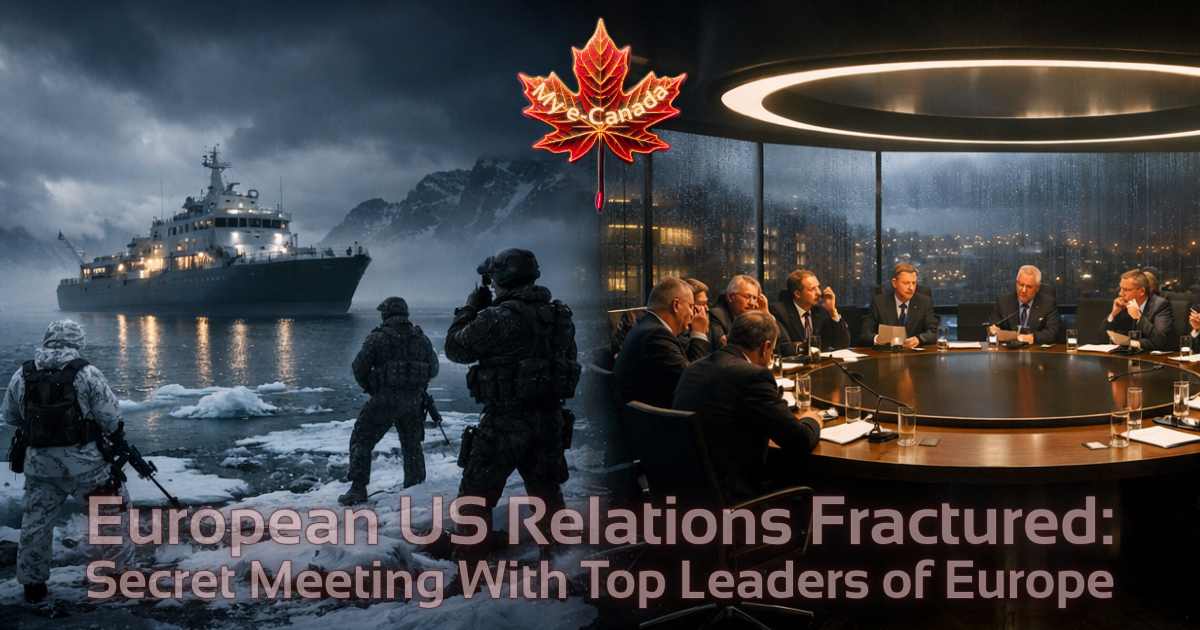
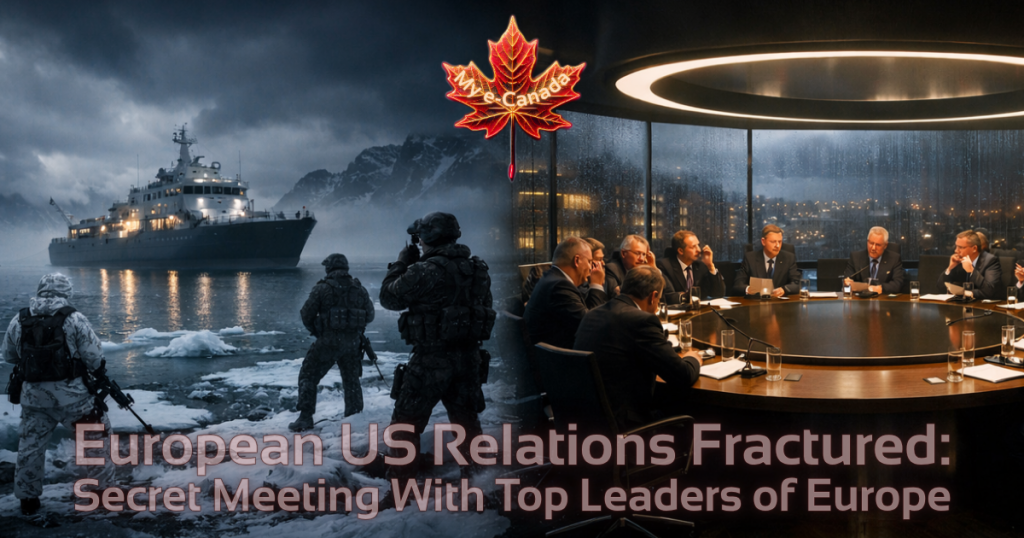
The depth of this geopolitical crisis crystallized during an extraordinary closed-door session in the heart of Belgium. It was almost midnight in Brussels when the top leaders of Europe locked themselves in an emergency meeting. Held within the secure circular headquarters of the European Council, the session had a single theme: managing a breakup with America. The immediate catalyst for this emotional gathering was a bizarre geopolitical threat involving the Arctic territory of Greenland. Following the removal of an autocratic strongman in South America, Washington briefly threatened to seize Greenland from Denmark. This aggressive posturing sent shockwaves through European capitals, prompting heads of government to vent with unprecedented raw emotion. Participants would later describe the highly confidential, phone-free late-night session as a collective diplomatic therapy night. For nearly five hours, presidents and prime ministers spoke candidly without the presence of media cameras or recording devices. They confronted a reality where their historical protector had transformed into a direct structural threat to their sovereignty. The historical consensus regarding European US relations was permanently shattered during those midnight hours of intense debate. European leaders realized that the diplomatic strategies of the past half-century were no longer viable. The protective shield they had relied upon since the end of the Second World War was actively dissolving.
This Episode of
My e-Canada Word On The Street
Is Brought To You by
Client Scout e-Entertainment

Client Scout e-Entertainment:
Making The Unknown FAMOUS
The Limits of Flattery and Corporate Coercion
French President Emmanuel Macron opened the floor with a definitive declaration that a historic line had been drawn. For over a year, America’s closest allies had attempted to placate Washington using a calculated mixture of personal flattery and trade concessions. This diplomatic strategy, frequently termed flattery diplomacy by the continental press, was designed to buy valuable time. However, the Greenland crisis completely exposed the limitations of this appeasement strategy, pushing nations to the brink of conflict. French soldiers were deployed directly to Greenland alongside Danish special forces, prepared for an actual shooting war with American units. Macron passionately repeated his long-standing warning that an overreliance on Washington posed an unacceptable security risk to the continent. He emphasized to the gathered heads of state that there was absolutely no going back to the old status quo. Multiple prime ministers chimed in, noting that Washington seemed entirely consumed by mining and energy deals rather than global stability. The prime minister of Belgium warned that Europe risked becoming a miserable slave to capricious American corporate interests. Only Italian Prime Minister Giorgia Meloni offered a dissenting view, suggesting the American president could still be reasoned with. This structural disagreement highlighted the deep internal fractures within the European consensus itself.
European US Relations: Digital De-Americanization and Technology Shifts
The seismic shifts discussed during that midnight session quickly translated into unprecedented policy actions across the continent. European governments have quietly accelerated an aggressive experiment aimed at total digital de-Americanization. National security authorities from Paris to Amsterdam are systematically removing American software from public infrastructure. Civil servants are instructed to abandon familiar programs like Microsoft Office to protect sensitive sovereign data. Instead, administrative departments are rapidly adopting European open-source software alternatives to secure their communications. Simultaneously, continental leaders are allocating hundreds of billions of euros to develop domestic artificial intelligence and data centres. This massive public expenditure is designed to eliminate their systemic reliance on Silicon Valley tech juggernauts. This technological decoupling marks a critical turning point in modern European US relations. For decades, the digital landscape was dominated entirely by American corporations with minimal foreign competition. Now, that digital dependence is recognized as a profound vulnerability to national sovereignty. European intelligence agencies have warned that corporate software could be weaponized during future diplomatic disputes. By building independent data networks, the continent is actively preparing for a fragmented global order. This technological sovereignty movement will fundamentally reshape international business standards for Canadian enterprises operating abroad.
The Rising Toll of Middle East Conflicts
The geopolitical friction intensified significantly following a series of unilateral American military strikes in the Middle East. These sudden airstrikes on Iranian targets caused immediate chaos in global energy markets, spiking fuel prices across Europe. When the European Council gathered again in March, the atmosphere inside the headquarters was filled with fury. German Chancellor Friedrich Merz warned that regional instability would ultimately benefit rival global powers like Russia. The sudden spike in energy costs placed an immense burden on European consumers and industrial manufacturing sectors. European leaders held a cynical debate over whether a future presidency under JD Vance would offer more stability. Even Prime Minister Meloni conceded she was forced to revise her optimistic view of the American administration. The consensus in the room was that the White House had become entirely unpredictable and indifferent to allied security. This energy crisis further solidified continental resolve to decouple from American foreign policy objectives. They realized that unilateral military actions in Washington could instantly jeopardize European economic stability without prior consultation. The shared security goals that once defined the Western alliance are now replaced by conflicting national priorities.
Pressure Tactics Threaten European US Relations
The Escalating Battle Over NATO Defence Spending
The structural strain on the alliance reached a critical flashpoint during a confrontation over defence spending targets. In April, the new American ambassador to NATO, Matthew Whitaker, arrived at the Brussels headquarters with an ultimatum. The administration informed shocked European allies that the previous target of 3.5% of GDP was no longer sufficient. Instead, Washington demanded that every member state pledge a staggering 5% of GDP toward security by 2035. This aggressive demand was timed to force a public commitment before the upcoming annual summit. While frontline nations near Russia saw the logic, fiscally constrained governments in Western Europe were stunned. This aggressive leverage play threatened to completely fracture the cohesion of European US relations. To ease the immediate financial panic, Whitaker proposed a creative accounting compromise. Under this framework, nations could top up their military budgets by counting dual-use infrastructure investments. Spending on civilian airport runways, meteorological services, and cybersecurity could be reclassified as security-related investments. This accounting manipulation allowed leaders to manufacture a political win for Washington without bankrupting their domestic economies.

European US Relations: The Limits of Flattery in The Hague
NATO Secretary-General Mark Rutte emerged as the primary architect of this spending compromise to preserve the alliance. Known as a skilled diplomat, Rutte urged colleagues to deliver the headline number that Washington demanded. He recognized that a public refusal would encourage the American president to abandon the alliance entirely. At the subsequent summit in The Hague, the West’s most powerful politicians took turns praising the president. They credited his aggressive rhetoric with strengthening the very alliance he had repeatedly threatened to dissolve. However, The Right Honourable Mark Carney Canadian Prime Minister remained notably restrained during these orchestrated displays of public adulation. Carney’s advisors reasoned that the American president would easily see through empty flattery and lose respect for them. This calculated divergence highlighted Canada’s unique stance within the shifting transatlantic dynamic. While Europe resorted to appeasement tactics, Canada advocated for a more grounded, realistic approach to the shifting global balance. The spectacle in The Hague exposed a deep ideological rift regarding how democratic nations should handle transactional diplomacy.
Canada’s Strategic Interventions and Intelligence Alerts
The Secret Appraisals of Western Intelligence Agencies
Behind the public displays of unity, European intelligence agencies were circulating deeply alarming classified assessments. One confidential briefing from Southern Europe warned leaders that they were dealing with a highly volatile individual rather than an organized administration. Britain’s MI6 offered an even darker allegorical warning to Prime Minister Keir Starmer regarding Washington’s climate. The British spy agency described the second White House as a chaotic mix of The Crucible and Wolf Hall. This vivid comparison referenced historical periods defined by intense paranoia, witch trials, and bad-tempered, unpredictable rulers. MI6 went so far as to instruct its intelligence staff to completely avoid discussing the president with CIA counterparts. These extraordinary warnings underscored the complete breakdown of trust among Western intelligence partners. The traditional exchange of national security data was compromised by fears of political volatility in Washington. European heads of state realized they could no longer rely on American intelligence to navigate global threats safely. This atmosphere of mutual suspicion has forced a complete overhaul of international security protocols among traditional allies.
European US Relations: Arctic Sovereignty and Unintended Legal Sparks
The diplomatic friction between Canada and Washington reached a dangerous flashpoint over a stunning territorial claim. Early in the administration’s second term, overt threats were made to annex Canada as a fifty-first state. Simultaneously, corporate representatives from Washington arrived in Greenland to initiate aggressive rare-earth mining operations. This bold expansion into the northern corridor sent alarm bells ringing across European capitals and Ottawa alike. These aggressive maneuvers ignited a fuse of unintended consequences that continues to alter the transatlantic security landscape. It positioned The Right Honourable Mark Carney Canadian Prime Minister as a central figure in organizing an international response. Carney utilized his extensive background as a global central banker to formulate an aggressive counter-strategy. He had long argued that the Western world was overly reliant on an increasingly volatile neighbour. The open threat to Canadian sovereignty accelerated his efforts to build an independent geopolitical alliance with Europe. This northern territorial dispute proved that traditional border agreements were no longer respected by Washington. The aggressive pursuit of Arctic resources has forced traditional allies to establish a unified defensive front.
The Failure of the Deskside Intervention
The fragile consensus regarding European US relations completely collapsed during a high-stakes meeting at the White House. French President Emmanuel Macron had traveled to Washington alongside other leaders to defend global security frameworks. The meeting was intended to pin down the administration on specific commitments regarding European stability. During the tense discussion, leaders attempted to use a tablet to dial into an encrypted video call. The Right Honourable Mark Carney Canadian Prime Minister was actively speaking via the digital link, outlining a coordinated allied position. Frustrated by a technical issue that prevented him from immediate rebuttal, the president lobbed the device. The tablet shattered against the historic floor right behind the Resolute Desk, shocking the diplomats present. This visceral display of temper completely exposed the futility of traditional diplomatic engagement with the administration. The assembled heads of state realized that collective arguments carried very little weight in Washington. The incident served as a stark reminder that international agreements could be discarded on a whim. The transatlantic alliance had devolved from a partnership into an unpredictable arena of personal volatility.

Shifting Alliances Reshape European US Relations
The Secret Kremlin Accord and Arctic Mining
A classified intelligence briefing regarding an unexpected alignment in Moscow further alienated European capitals. An eyes-only report revealed that Washington was secretly negotiating a bilateral commercial alliance with the Kremlin. The classified documents detailed extensive economic plans to jointly mine rare-earth elements in the Arctic. This sudden cooperation with a hostile power directly undermined decades of European defensive strategy. The news sent immediate shockwaves through the European Council, sparking an urgent round of encrypted communications. Macron argued passionately that European leaders must unite to protect continental borders from this shifting reality. The revelation shattered any remaining belief that Washington would prioritize traditional democratic partnerships over immediate commercial deals. It proved that European US relations were no longer based on shared values or defensive agreements. Instead, the administration was actively pursuing a transactional foreign policy that embraced historical adversaries. This strategic betrayal forced European nations to drastically accelerate their independent defence spending and technology initiatives. The Western world was fracturing into distinct, competing ideological and economic blocs.
Diminishing Returns of Transactional Appeasement
The extraordinary events of 2026 have completely exposed the fatal flaws of flattery-based diplomacy. British intelligence agencies summarized this strategic failure in a blunt assessment circulated to allied prime ministers. The MI6 report explicitly stated that transactional appeasement was subject to a law of diminishing returns. Praising the administration’s volatile rhetoric had failed to secure long-term policy commitments or trading stability. Instead, it had merely emboldened Washington to demand greater concessions while ignoring traditional security treaties. European leaders are now abandoning the theatrical strategies championed by veteran diplomats during the previous year. They recognize that trying to placate a volatile leader is a path to European US relations permanent geopolitical irrelevance. The focus has shifted entirely toward building self-reliance, domestic military manufacturing, and sovereign digital networks. Canada remains an active partner in these continental discussions, seeking to insulate its own economy. The illusion of a unified Western alliance led by a reliable American partner is gone. Traditional allies are moving forward, bracing for an era defined by deep strategic independence.
Final Word On The Street: European US Relations Fractured
The profound disintegration of European US relations represents a monumental shift in the modern geopolitical order. What began as trade friction has escalated into a structural split threatening global security. Unilateral territorial threats, digital coercion, and secret bilateral deals have permanently shattered decades of international trust. The midnight gathering in Brussels exposed a reality where long-standing allies must now defend against Washington. For Canada, this historic rupture demands an immediate, sophisticated re-evaluation of our national economic strategy. We can no longer depend blindly on a single neighbour to guarantee our sovereign rights. The Right Honourable Mark Carney Canadian Prime Minister’s intervention highlights the urgent necessity of forging deeper, independent alliances. We must aggressively safeguard our own Arctic borders, domestic supply lines, and data infrastructure. The cost of regulatory and diplomatic complacency in this volatile era is far too high. As the traditional pillars of the Western world fracture, Canada must chart a resilient path. True sovereignty requires strategic foresight, unwavering national resolve, and an absolute commitment to democratic independence. The alliances of the twentieth century are dissolving, and a fragmented global landscape is emerging. We must adapt rapidly to ensure our country remains secure, prosperous, and entirely self-determined.
Thank you for reading this investigative news exposé. We virtually remain My e-Canada Word On The Street: Digitally Yours To Explore.
Arctic Sovereignty, Brussels secret meeting, ClientScout, corporate espionage, Digitally Yours To Explore, Emmanuel Macron, European US relations, geopolitical rift, Global Security, international diplomacy, investigative exposé, investigative journalism, Investigative News Exposé, Mark Carney, MI6 assessment, multilateral treaties, My e-Canada, NATO summit, political volatility, technology decoupling, trade tariffs, transatlantic alliance, Wayne A. Cargill Agency, Western intelligence, Word On The Street
Leave a Reply