
Your cart is currently empty!
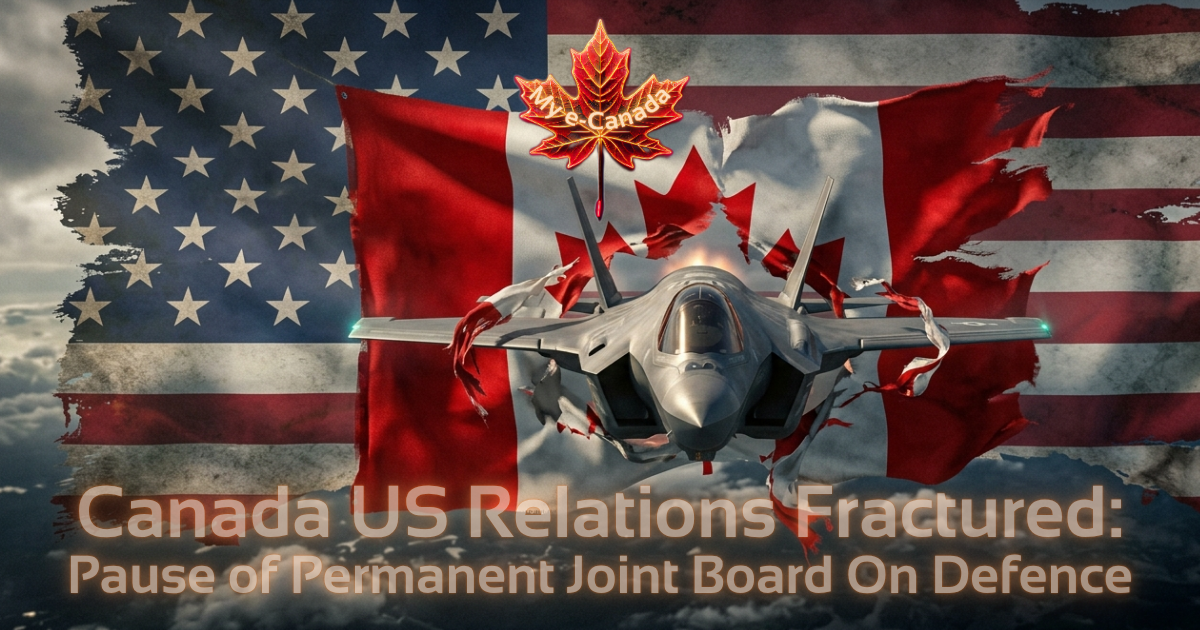

Canada US Relations Fractured: Pause of Permanent Joint Board On Defence
My e-Canada Word On The Street investigative exposé for Wednesday, May 20, 2026 explores Canada US relations. The sudden decision by Washington to suspend participation in the Permanent Joint Board on Defence marks a profound friction point. This unprecedented move directly threatens the historic core of Canada US relations. For generations, this bilateral institution served as a foundational pillar of continental security cooperation. It was established in 1940 under the historic Ogdensburg Agreement. Prime Minister William Lyon Mackenzie King and President Franklin Roosevelt created it to coordinate continental protection. It has operated for nearly nine decades as the premier advisory body for aerospace defence. The sudden pause brings a historic pillar of bilateral cooperation to an unexpected halt. Washington is now conducting a formal review of the forum’s utility. This review creates deep uncertainty across the entire continent. Diplomatic channels between Ottawa and Washington are facing unprecedented strain. Senior military officials express deep concern over this sudden operational gap. The freeze impacts shared surveillance, intelligence sharing, and joint emergency response planning. It alters the fundamental calculus of northern security. Both nations must now reassess their strategic priorities on this continent. The long-term impact on continental stability remains highly uncertain. Analysts fear this dispute could spill over into other shared diplomatic spaces. The historic unshakeable bond is facing its most severe modern trial. Everyday citizens on both sides of the border will feel the ripple effects. Security arrangements that stood for a century are shifting rapidly. The diplomatic vacuum left by this suspension requires immediate and intensive political scrutiny.
My e-Canada Word On The Street:
Digitally Yours To Explore
My e-Canada Word On The Street
Is brought To You by
Megavision Productions

Megavision Productions:
For Ideas Larger Than Life
Economic Annexation Threats and Canada US Relations
The modern friction in continental diplomacy stems from a series of direct provocations by Washington. These aggressive actions have fundamentally destabilized Canada US relations. The rhetorical onslaught began with highly controversial declarations from the American administration. Officials publicly suggested that Canada should be annexed as the 51st state. This shocking statement was framed as a penalty for trade non-compliance. It was viewed across Ottawa as a direct assault on Canadian sovereignty. This severe political pressure was immediately followed by harsh economic penalties. Washington unfairly applied sweeping tariffs on essential Canadian goods. These measures explicitly targeted core industrial sectors. The administration imposed a devastating 50% levy on Canadian steel, aluminum, and copper. They also enforced a 35.2% combined duty on softwood lumber exports. Furthermore, a 25% tariff was placed on automotive exports across the border. Washington falsely justified these economic penalties by citing massive trade imbalances. They also claimed Canada failed to secure its shared border infrastructure. In reality, these measures serve as aggressive economic leverage. The goal is to force complete Canadian compliance with American terms. Compounding this economic warfare is a renewed American ambition to acquire Greenland. This strategic pursuit has profound, negative long-term effects on Canadian sovereignty. It threatens to completely flank Canada’s northern territorial frontier. It would expand American maritime boundaries directly adjacent to our territory. This expansion directly threatens Canadian legal claims over the Arctic Archipelago. The move alters the geopolitical balance of the entire polar region. It forces Ottawa to defend its northern borders from two sides. This aggressive posture completely redefines the traditional concept of continental partnership.
Geopolitical Fractures and Shifting Doctrines
The primary justification issued by the Pentagon focuses on claims of inadequate defence spending. American officials claim Ottawa has failed to demonstrate credible progress on continental obligations. This sharp critique severely damages the traditional framework of Canada US relations. The accusation arrives despite massive new financial commitments from the federal government. Canada recently increased its national defence expenditure to a historic $63.4 billion. This massive injection pushed total defence spending to 2.1% of gross domestic product. This milestone successfully cleared the minimum baseline requested by the alliance. However, Washington has abruptly changed the financial expectations for its partners. American officials are now pressing all alliance members to target a higher benchmark. They want a spending target of 3.5% of gross domestic product by 2035. This ambitious goal remains a point of intense financial contention in Ottawa. The federal government lacks a formalized long-term revenue strategy to meet this demand. Competing domestic funding priorities make this rapid expansion incredibly difficult to achieve. The sudden escalation in American demands feels like a moving target for planners. It places immense strain on the national treasury. Meeting this benchmark would require a total restructuring of federal spending habits. The alternative is facing continued diplomatic isolation from our largest trading partner. This financial dispute is shifting from a military debate into a macroeconomic crisis. It forces a fundamental reassessment of national priorities. The pressure from Washington shows no signs of slowing down anytime soon.
The Procurement Dispute Over Canada US Relations
Beyond broader spending percentages, specific procurement delays are fueling the underlying friction. The planned purchase of 88 F-35A stealth fighter jets is a major issue. This complex acquisition serves as the core focus of the current continental dispute. The friction created by this delay continues to disrupt Canada US relations. The multi-billion-dollar contract is currently under an intensive political review. This reassessment by the federal government has been ongoing for more than a year. The prolonged delay has created significant diplomatic friction with American counterparts. It contributed directly to the freezing of the Permanent Joint Board on Defence. While the overall procurement is being re-examined, Canada maintains a cautious approach. The government has kept its foot in the door of the production pipeline. This strategy allows Ottawa to maintain its potential delivery timeline. Canada is essentially operating on a complex, two-track procurement status. Designers are evaluating alternative options while funding initial manufacturing stages. This dual approach is designed to mitigate long-term strategic risks. However, it also signals deep hesitation to military planners in Washington. The lack of an absolute commitment frustrates American defense contractors. It creates operational uncertainty for continental aerospace planning. The delay forces both nations to operate in a defensive diplomatic holding pattern.
Initial Expenditures and Production Pipelines
The initial phase of the acquisition is tightly locked into active funding commitments. The decision regarding these first few aircraft will heavily influence Canada US relations. The federal government has already finalized the purchase contracts for early deliveries. Ottawa has officially paid for its first batch of 16 F-35As. Very recently, Prime Minister Mark Carney confirmed an additional financial step. Ottawa has initiated payments for complex, long-lead components. This funding secures a second batch of 14 additional aircraft. This keeps the total number of jets in the active pipeline at 30. Maintaining these initial orders ensures that delivery timelines remain intact. The first Canadian F-35A aircraft will still arrive on schedule this year. This milestone will occur before the end of 2026. These initial jets are bound for Luke Air Force Base in Arizona. Canadian pilots will begin intensive operational training on the new platform there. This training is vital for maintaining baseline aerospace readiness. It ensures a core group of personnel understand the advanced systems. However, this limited progress does not resolve the wider procurement debate. The funding of these 30 jets represents only a fraction of the original goal. The fate of the remaining aircraft hangs in a delicate balance.
Alternative Scenarios and Canada US Relations
The remaining 58 aircraft of the originally planned fleet are under review. This formal reassessment by the government places immense pressure on Canada US relations. Defence Minister David McGuinty confirmed that the review remains active. The ministry has not set a strict timeline for its final conclusion. Rising program costs are the primary driver behind this intensive reassessment. A Parliamentary Budget Office model previously highlighted these massive financial escalations. Experts estimated the full life cycle costs could reach $73.9 billion. This staggering figure has caused deep anxiety within the federal treasury. Faced with these numbers, the government is studying alternative acquisition scenarios. The primary option under consideration is a unique split-fleet strategy. This model involves capping the total F-35A acquisition at 40 aircraft. The government would then fill out the remainder of tactical requirements elsewhere. They would purchase up to 80 Saab Gripen E fighter jets from Sweden. This strategy represents a massive departure from original continental defense plans. It signals a desire to reduce absolute reliance on American military technology. The debate over this split fleet is causing intense arguments in Ottawa.

The Swedish Gripen Alternative in the Arctic
This approach would result in a larger overall fighter force of 120 aircraft. It moves completely away from the single-source plan of 88 F-35s. This structural diversification would inevitably alter Canada US relations for generations. The Saab Gripen E was specifically constructed for harsh northern climates. It excels at expeditionary operations in remote geographic regions. This design makes it highly compatible with the Canadian Arctic environment. The aircraft can operate from short, unpaved runways with ease. It can land on frozen lakes or temporary winter ice strips. It can utilize 800-metre stretches of public highway for combat operations. The Gripen requires a minimal logistical footprint compared to its competitors. A small support crew can refuel and rearm the jet in 15 minutes. This rapid turnaround time is highly valued by northern defense planners. It contrasts sharply with the extreme technical complexity of the F-35 platform. The F-35 typically requires extensive maintenance facilities and specialized ground crews. It also suffers from lower operational readiness rates in extreme cold. The Gripen offers a rugged, reliable alternative for domestic sovereignty patrols. This practical capability makes it an attractive option for cash-strapped planners.
Sovereign Data Control and Canada US Relations
Operating the F-35 tightly binds a nation to an automated global logistics network. This software update system is managed entirely on American-controlled servers. This operational reality introduces significant data sovereignty concerns into Canada US relations. Every mission file and software patch must pass through these foreign systems. This structure limits Canada’s independent control over its own primary defense assets. Choosing the Swedish Gripen would grant Canada absolute sovereign control instead. Ottawa would retain full ownership of its airframe software and mission data. Maintenance pipelines would remain entirely within domestic boundaries. This independence insulates domestic defence operations from shifting political climates abroad. Changes in Washington would no longer threaten basic fleet readiness. Furthermore, Saab has aggressively sweetened its bid with massive economic incentives. The Swedish manufacturer is offering an extensive industrial benefits package. This proposal directly targets Canadian economic interests and corporate growth. Saab proposes to establish domestic manufacturing facilities across the country. They would assemble the Gripen jets directly on Canadian soil. This arrangement would keep high-tech manufacturing knowledge within our borders.
Industrial Offsets and Global Export Demands
The Swedish manufacturer claims this proposal would support 12,600 high-tech jobs. It would inject billions of dollars into the domestic aerospace industry. This massive economic incentive raises complex diplomatic questions for Canada US relations. The proposal includes establishing a secure, sovereign data centre in Montreal. This facility would handle all software modifications for the fleet locally. Saab also suggests using the Canadian production line for global export demands. This includes fulfilling elements of a Swedish intent to supply international partners. Specifically, the plan could support supplying up to 150 jets to Ukraine. This international angle adds a layer of geopolitical complexity to the decision. It positions Canada as a major hub for global defense manufacturing. However, this path also carries significant operational and financial risks. Operating two completely distinct fighter platforms introduces immense logistical friction. The dual-fleet model creates redundancies that many experts advise against. It complicates national defense budgeting at a time of fiscal restraint. This complexity continues to weigh heavily against the split-fleet concept.
Logistical Friction and Canada US Relations
A mixed fleet requires maintaining two independent pilot training systems. It forces the military to operate two separate maintenance pipelines simultaneously. It also requires two entirely unique stockpiles of spare parts and weaponry. These operational hurdles significantly complicate the long-term outlook of Canada US relations. Air Force commanders warn that a split fleet creates massive inefficiencies. Technicians would need to be trained on two completely different systems. Logistical networks would be stretched thin across our massive geography. The strongest argument for an exclusive F-35 fleet remains interoperability. The aircraft has an unmatched ability to integrate with American forces. It utilizes advanced data-sharing links and sensor network coordination. This seamless integration is critical for joint aerospace operations. American military officials have heavily criticized the notion of a mixed fleet. They warn that a non-stealth alternative introduces operational gaps. These gaps could compromise the integrity of continental air defence systems. Washington views any deviation from the F-35 program as a security risk. This disagreement creates a deep ideological divide between the two capitals.
Diplomatic Penalties and Border Coordination Risk
Washington has explicitly signaled that walking back the F-35 commitment carries consequences. This severe warning directly threatens the future stability of Canada US relations. The recent decision to pause the Permanent Joint Board on Defence underscores this. The final decision will ultimately rest on a fundamental policy choice. The federal government must prioritize either stealth integration or economic independence. Choosing the F-35 ensures maximum alignment with our southern neighbour. Choosing the Gripen protects domestic industry and data sovereignty. The freezing of the joint board introduces a profound chill into cross-border relations. It has direct, long-term implications for domestic security and trade. Border coordination risks are growing more pronounced by the day. Shared law enforcement initiatives are facing unexpected bureaucratic delays. Intelligence sharing regarding transnational threats has slowed down considerably. The lack of institutional trust is paralyzing routine border operations. This diplomatic gridlock threatens the seamless flow of people and goods. It creates an atmosphere of mutual suspicion where cooperation once thrived. The political cost of this procurement dispute continues to climb rapidly.
Arctic Archipelago Isolation and Canada US Relations
Canada claims vast maritime and territorial sovereignty over the Arctic Archipelago. This massive area is becoming increasingly accessible due to receding ice levels. This transformation creates a northern frontier where Canada US relations will be tested. Shipping lanes are opening up across the Northwest Passage for longer periods. Foreign nations are showing increased interest in these strategic northern waters. Without the coordination of the joint board, Canada faces immense pressure. The military must monitor and patrol this massive northern frontier completely independently. This operational challenge strains our existing naval and aerial assets. It creates a dangerous diplomatic vacuum in the high north. Washington may choose to conduct unilateral security patrols through these waters. They have long viewed the Northwest Passage as an international strait. Unilateral American transits would directly challenge Ottawa’s legal sovereignty claims. It would force Canada into a defensive posture against its closest ally. Protecting the Arctic requires immense resources and clear bilateral agreements. The breakdown of regular defense dialogue makes northern coordination nearly impossible. Canada risks losing operational control over its own remote northern territories.
Economic Penalties and Integrated Industrial Pipelines
Defense procurement and trade are inextricably linked in continental policy. The freezing of the board is viewed as a tactical leverage maneuver. This aggressive political pressure introduces severe economic friction into Canada US relations. The administration in Washington has already enacted punishing tariffs against Canadian goods. These measures are designed to inflict maximum economic pain on key provinces. By signaling deep dissatisfaction, Washington is casting a shadow over industrial pipelines. Integrated supply chains that took decades to build are being disrupted. The tariffs threaten critical international infrastructure projects across the border. Canadian suppliers heavily integrated into manufacturing networks are facing cancellations. Job losses are beginning to mount in Southern Ontario’s automotive sector. Quebec’s aluminum producers are scrambling to find alternative global markets. The economic fallout is affecting everyday working families across Canada. Trade disputes are no longer confined to corporate boardrooms or political offices. They are directly impacting the cost of living and employment stability. Washington is using its massive economic size as a diplomatic weapon.
Fiscal Pressures and Canada US Relations
To repair the diplomatic rift, Ottawa faces incredibly difficult choices. The federal government will be forced to reallocate massive amounts of funds. This sudden shift dramatically reshapes the domestic landscape of Canada US relations. Funding a massive military expansion requires finding tens of billions in revenue. Planners must accelerate spending to meet the steeper 3.5% benchmark quickly. This financial requirement forces a complete reassessment of the federal budget. The government faces a choice between ballooning deficits or higher taxes. The alternative is worse for many domestic political voters. It would require diverting funding away from critical public social programs. Healthcare systems across the provinces are already facing severe operational strain. National infrastructure projects require billions in deferred maintenance funding. Provincial transfer payments are vital for maintaining equal service standards nationwide. Sacrificing these domestic priorities to appease Washington will trigger intense public anger. The political survival of the current government hangs in the balance. Every fiscal decision carries immense domestic and international risk for leadership.
Fragmentation of Predictable Continental Protection
For generations, Canadians have lived with a sense of absolute security. They counted on an unshakeable relationship with their southern neighbour. This predictability has long defined the baseline of Canada US relations. The sudden suspension of the joint board completely shatters that historic certainty. Canada is forced into an unfamiliar and highly costly strategic position. The military must actively expand its defense cooperation with alternative international partners. Diplomats are scrambling to build deeper ties with European allies. This diversification effort is born out of absolute necessity, not choice. For everyday citizens, this shift represents a profound psychological change. Continental protection is no longer an automatic, guaranteed policy. It has transformed into a transactional arrangement requiring constant negotiation. National security now comes with a explicit, high financial price tag. The era of predictable, quiet cooperation has officially come to an end. Canada must learn to navigate a much more volatile continental landscape.
Final Word On The Street: Canada US Relations
The convergence of these complex issues highlights a transitional period. Questions ranging from aerospace procurement to Arctic sovereignty dominate the national discourse. Macroeconomic inflationary pressures continue to complicate these difficult defense choices. These overlapping challenges define a critical turning point for Canada US relations. The federal cabinet faces the daunting task of balancing domestic fiscal reality. They must weigh public needs against mounting international demands from Washington. The review of the fighter jet program remains open and unresolved. The Permanent Joint Board on Defence remains frozen with no restart date. The decisions made by leadership in Ottawa will have lasting consequences. They will fundamentally define Canada’s economic independence for decades to come. Military capabilities and strategic alignment within the Western alliance are at stake. Every Canadian will feel the ripple effects of these choices. Impact will arrive through altered federal tax rates and shifting employment opportunities. The very nature of national security is changing in this volatile climate. Staying informed is no longer optional for citizens in this new era.
Thank you for reading our latest investigative exposé. This has been My e-Canada Word On The Street: Digitally Yours To Explore
51st state annexation threat, aerospace defence, aerospace manufacturing jobs, aluminum tariffs, Arctic Archipelago sovereignty, automotive exports, Canada-US Relations, Canadian sovereignty, Canadian steel industry, Client Scout, continental protection fragmentation, continental security, copper duties, David McGuinty, Digitally Yours To Explore, F-35A procurement delay, federal fiscal reallocation, fighter jet comparison, Greenland acquisition, gross domestic product, international trade penalties, investigative exposé, maritime boundaries, Mark Carney, military data sovereignty, military logistics, Montreal data centre, My e-Canada, NATO spending benchmarks, Pentagon defence spending, Permanent Joint Board on Defence, Saab Gripen E, social program funding, softwood lumber dispute, split-fleet strategy, trade tariffs, Washington overreach, Wayne A. Cargill Agency, Word On The Street
Leave a Reply