
Your cart is currently empty!
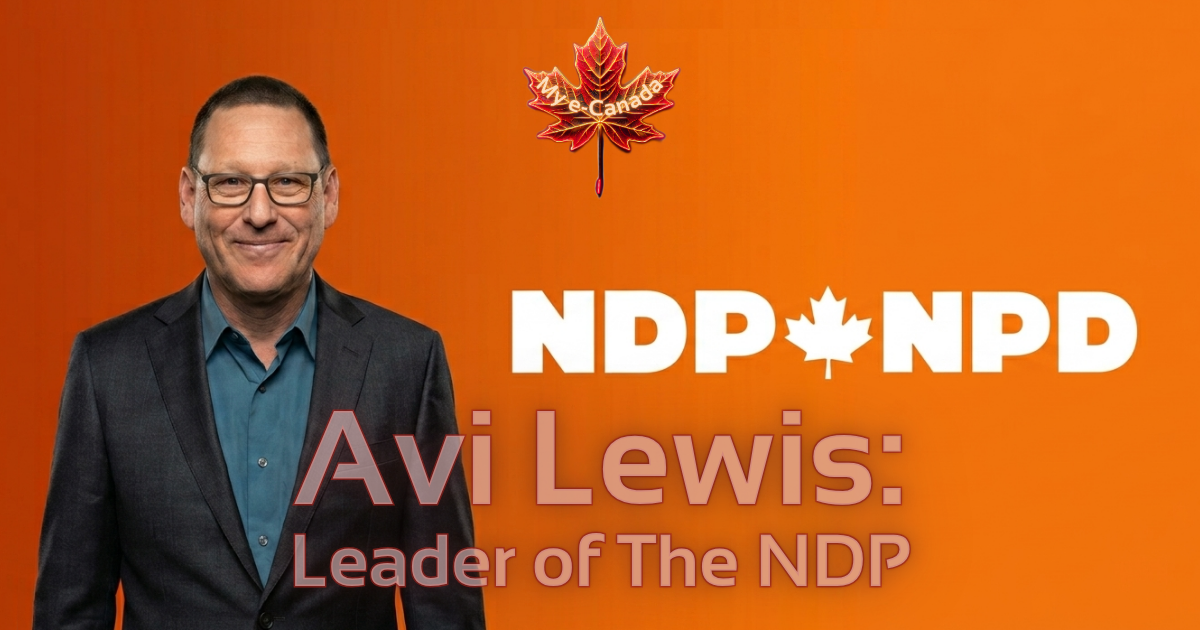

Avi Lewis: Leader of The NDP
Friday, July 31, 2026, My e-Canada Word On The Street Edition No. 29 Investigative News Exposé explores Avi Lewis: Leader of The New Democratic Party of Canada.
My e-Canada Word On The Street: Digitally Yours To Explore
Ancestry and Family Heritage
Deep Roots in Social Movement History
Avram David Lewis descends from a prominent political family with deep roots in social movement organizing. His great-grandfather, Morris Lewis, was a Polish-Jewish activist who fled Europe in 1921 due to political persecution before settling in Canada. His grandfather, David Lewis, served as a foundational figure in democratic socialism. David Lewis led the federal New Democratic Party from 1971 to 1975. His father, Stephen Lewis, led the Ontario New Democratic Party in the 1970s. Stephen Lewis later served as Ambassador to the United Nations. His mother, Michele Landsberg, is a renowned feminist journalist, columnist, and author. Stephen Lewis and Michele Landsberg met in Toronto during the 1960s, connecting through shared progressive commitments before marrying. Growing up in a family committed to public advocacy shaped his perspective on civic responsibility. The household was filled with vibrant discussions about working-class rights and community organizing. His family background established a strong foundation in political activism across generations.
Early Life in Toronto
Childhood and Family Environment
Born in Toronto, Ontario, in May 1967, he grew up alongside two sisters, Ilana Landsberg-Lewis and Jenny Lewis. The family environment encouraged active debate on social justice, journalism, and public policy. Surrounded by dedicated organizers, he learned the importance of community action from an early age. His parents emphasized critical thinking and democratic participation during his formative years. Living in Toronto provided diverse exposure to community organizations and cultural movements. Public service was a constant topic of discussion around the dinner table. Family gatherings often featured discussions with leading activists, journalists, and labor leaders. These early experiences nurtured a commitment to social equity and progressive advocacy. His sisters also pursued careers focused on human rights and social justice initiatives. His early home environment fostered a deep understanding of democratic institutions. This upbringing prepared him well for a future in public media and political organizing.
Avi Lewis: Academic Journey and Research
Secondary and Post-Secondary Studies
During his youth in Toronto, Avi Lewis attended Jarvis Collegiate Institute and Upper Canada College. He pursued higher education at University College at the University of Toronto. He graduated with a Bachelor of Arts degree in 1988. Because he completed a general Bachelor of Arts degree, a formal thesis was not required. His personal academic transcript grades remain private. His formal education provided the research and analytical background supporting his subsequent career. His university studies deepened his understanding of history, literature, and political theory. Engaging in campus discussions allowed Avi Lewis to refine his analytical skills. The academic atmosphere at University College encouraged rigorous debate on contemporary social issues. His undergraduate education laid the foundation for his future work in journalism and teaching. Studying at the University of Toronto helped shape his critical approach to media and public affairs.
Broadcasting Career Beginnings
Music Television and Public Affairs
He built a media and broadcast career spanning over three decades. Beginning in the 1990s, he hosted The NewMusic on MuchMusic and Citytv. During this period, he covered major political events, including the 1993 federal election. He also covered the historic 1995 Quebec referendum for the network. His work on music television allowed him to connect with younger audiences across Canada. From 1998 to 2001, he hosted CBC Newsworld’s debate show CounterSpin. Hosting CounterSpin put him at the center of national debates on major public issues. He facilitated energetic discussions between opposing political figures and policy experts. His broadcast style combined sharp questioning with thorough preparation and detailed research. These broadcasting roles established his national reputation as an engaging media personality. His early journalism career demonstrated a talent for explaining complex public topics clearly.

Avi Lewis: International Current Affairs Journalism
Television Programs on Global Networks
Expanding his journalism work, Avi Lewis created and hosted international current affairs programs. He worked with both the CBC and Al Jazeera English on major projects. On Al Jazeera English, Avi Lewis hosted programs such as Inside USA and Fault Lines. These current affairs shows focused on social movements, economic inequality, and human rights. His international reporting took him to communities facing economic distress and environmental challenges. He interviewed activists, policymakers, and ordinary citizens affected by global policies. Working on international networks broadened his perspective on political economy and social movements. Avi Lewis brought a critical lens to global issues, examining the impacts of corporate decisions. His television journalism received praise for highlighting underreported stories and giving voice to marginalized groups. These broadcasting experiences deepened his interest in global economic justice and climate action.
Documentary Filmmaking and Academia
Exploring Economic Alternatives and Climate Action
Alongside broadcast journalism, documentary production became a primary focus of his creative work. In 2004, he directed The Take, an acclaimed film examining worker-managed cooperatives in Argentina. The documentary chronicled how factory workers reclaimed abandoned industrial facilities following economic collapse. His direction highlighted direct democracy and worker control within contemporary business models. The film received international attention across film festivals and activist networks.
In 2015, he directed This Changes Everything, expanding his focus to global climate policy. The documentary examined how economic systems drive environmental destruction and climate disruption. It emphasized the urgent need for systemic transformation to protect vulnerable global communities. His filmmaking combined investigative depth with compelling personal narratives from frontline activists. The film screened globally, inspiring discussions about climate justice and economic reform.
Beyond filmmaking, he shared his expertise through university teaching and public lectures. He served as an associate professor at the University of British Columbia in Vancouver. In this academic role, he taught courses on climate justice and documentary filmmaking. He mentored students interested in media activism, environmental journalism, and social change. His university instruction connected academic theory with real-world movement organizing strategies.
Teaching allowed him to engage deeply with younger generations of activists and media makers. He encouraged students to examine structural power dynamics within contemporary media systems. His academic contributions reinforced his commitment to public education and community engagement. Balancing university instruction with creative media projects enriched his overall professional trajectory. Through filmmaking and teaching, he consistently challenged orthodox economic assumptions. He advocated for democratic participation across economic and social spheres. His creative works provided valuable educational resources for grassroots organizations worldwide. These achievements expanded his public impact.
Avi Lewis: Personal Life and Partnership
Collaborative Advocacy and Family Milestones
In 1998, Avi Lewis married author, activist, and public intellectual Naomi Klein. Their shared commitment to environmental justice and economic democracy shaped their collaborative work. Together, they have worked on numerous social, environmental, and media initiatives over decades. Their partnership combined investigative research, public speaking, and documentary production to address systemic crises. They published influential articles and produced documentary projects highlighting climate justice and labor rights. Their joint efforts attracted international attention from activist networks and academic institutions.
The couple eventually established their primary residence in Vancouver, British Columbia. Living on the West Coast deepened their connection to regional environmental movements and Indigenous solidarity efforts. They actively participated in local community campaigns focused on forest preservation and economic equity. Their home became a gathering space for organizers, writers, and progressive thinkers. Living in British Columbia provided new perspectives on natural resource policy and environmental stewardship.
They welcomed their son, Toma, who brought new joy and personal grounding to their lives. Raising a child reinforced their dedication to building a sustainable and equitable world for future generations. Family life provided balance amid demanding travel schedules, public speaking tours, and political campaigns. Avi Lewis and Naomi Klein maintained strong personal ties with family members across Canada. They frequently hosted family gatherings with relatives from Toronto and Saskatchewan.
Balancing public advocacy with family responsibilities required careful planning and shared values. Their home environment reflected their mutual dedication to literature, art, and community organizing. Parenting deepened his understanding of the everyday concerns facing Canadian families. Family milestones enriched his personal perspective as he transitioned into active electoral politics. His household remained deeply rooted in values of compassion and solidarity.

Movement Organizing and The Leap Manifesto
Mobilizing for Rapid Energy Transition and Social Equity
He formally entered active political organizing through progressive movement initiatives. In 2015, he co-authored the Leap Manifesto alongside prominent climate activists, authors, and labor organizers. The manifesto called for a rapid transition away from fossil fuels toward renewable energy sources. It linked environmental sustainability directly to social equity, Indigenous rights, and economic restructuring. The document advocated for significant investments in clean energy infrastructure, public transit, and energy-efficient housing.
The Leap Manifesto sparked widespread discussion within political parties, labor unions, and environmental organizations across Canada. It challenged conventional economic approaches, advocating for democratic ownership of essential public services. Supporters praised its bold vision for addressing intersecting climate and economic crises simultaneously. Critics questioned the proposed timelines and policy mechanisms for energy transformation. Nevertheless, the document catalyzed energetic debates at national party conventions and community meetings.
The initiative demonstrated his ability to rally diverse coalitions around transformative policy goals. He traveled extensively to present the manifesto at town halls, labor halls, and university campuses. These public discussions connected grassroots activists with policy experts and community leaders. The effort highlighted the growing demand for courageous climate leadership and economic justice. Co-authoring the manifesto marked a crucial transition from journalism to active political mobilization.
Through movement organizing, he deepened his connections with labor unions, Indigenous leaders, and social justice advocates. He emphasized that environmental policy must protect working-class communities during economic transitions. The principles outlined in the manifesto continued to influence progressive policy discussions for years. His involvement demonstrated a persistent commitment to systemic change and grassroots democracy. This movement experience built momentum for his eventual entry into federal electoral politics. Movement organizing remained central to his political identity.
Avi Lewis: Federal Electoral Campaigns
Contesting Parliamentary Seats in British Columbia
Building on his movement background, Avi Lewis stood as a federal candidate for the New Democratic Party. In the 2021 federal election, he contested the riding of West Vancouver—Sunshine Coast—Sea to Sky Country. His campaign focused on bold climate action, affordable housing, and strengthening local public services. High-profile endorsements from prominent environmentalists and cultural figures boosted his campaign visibility. He organized energetic town halls, door-knocking drives, and community discussions across the expansive coastal riding. Although he did not win the seat, his candidacy significantly increased the local party vote share.
In the 2025 federal election, Avi Lewis ran as the NDP candidate in Vancouver Centre. He brought his core message of economic democracy, labor rights, and climate justice to urban voters. His campaign addressed pressing urban issues, including housing affordability, tenant protections, and public transit expansion. He engaged actively with community organizers, local union locals, and student groups throughout the campaign. Running in Vancouver Centre provided a prominent platform to challenge conservative economic policies and corporate concentration.
These electoral campaigns deepened his practical understanding of federal election dynamics and voter concerns. Campaigning door-to-door allowed him to hear directly from residents facing rising living costs and housing insecurity. He refined his ability to connect national policy proposals with everyday community needs. His candidacies established him as a key voice within the federal party, trusted by movement activists.
Through both elections, he demonstrated a strong commitment to growing the party’s electoral strength in British Columbia. His campaign teams mobilized hundreds of dedicated volunteers and grassroots donors across regional communities. These electoral experiences prepared him for higher leadership roles within the federal party structure. Campaign work strengthened relationships.
Avi Lewis: NDP Leadership Campaign and Victory
First-Ballot Triumph at the Winnipeg Convention
Following the resignation of former leader Jagmeet Singh and interim leadership under Don Davies, a leadership race was initiated. On September 19, 2025, he formally launched his campaign for the leadership of the New Democratic Party of Canada. His leadership campaign adopted the core slogan “for the many, not the money” to emphasize working-class priorities. He toured communities across every province and territory, meeting with local riding associations and labor union members. His campaign focused on rebuilding party membership, expanding grassroots fundraising, and offering bold eco-socialist policies.
His platform advocated for a Canadian Green New Deal, public options for essential services, and massive investments in social housing. He proposed establishing public options for pharmaceuticals, banking services, telecommunications, and grocery distribution. To fund these expanded public services, he proposed a wealth tax targeting extreme corporate wealth. His bold proposals energized young party members, labor activists, and grassroots organizers across the country. By early 2026, his leadership campaign reported raising over one million dollars from thousands of grassroots donors.
The contest culminated on March 29, 2026, at the national party convention in Winnipeg, Manitoba. On the first ballot, he achieved a decisive victory, earning 56 percent of the total votes cast. He received 39,734 votes out of more than 70,000 valid ballots submitted by party members nationwide. His strong first-ballot win demonstrated broad support across urban, suburban, and rural party constituencies.
In his victory address alongside caucus members, he pledged to unite the party and rebuild its parliamentary presence. His election marked a strategic return to democratic socialist principles and movement-based political organizing. Rebuilding the party structure became his immediate priority as new party leader. Convention delegates celebrated.
Avi Lewis: Policy Framework and Economic Vision
Advocacy for Public Ownership and Social Equity
Avi Lewis advocates for fundamental structural changes to the national economy to support working families across Canada. His policy framework prioritizes public ownership of key infrastructure and essential services to ensure universal accessibility for everyone. He proposes establishing public options for pharmaceuticals, telecommunications, banking, and grocery distribution to lower costs for consumers. These measures aim to challenge corporate concentration and redistribute wealth throughout the country to reduce economic inequality. His platform emphasizes strong protections for worker rights, fair wages, and robust collective bargaining opportunities for all employees. Expanding public services like healthcare, childcare, and social housing remains a central pillar of his political vision. He believes that strong public institutions provide the foundation for a vibrant and equitable democratic society.
In leading Canada, he seeks to reorient national priorities toward economic democracy, Indigenous sovereignty, and climate justice. His goal is to reshape the economic structure away from corporate concentration, ensuring economic security and environmental sustainability. He advocates for significant investments in green energy infrastructure, energy-efficient housing, and modern public transportation networks. Funding these initiatives requires a comprehensive wealth tax targeting extreme corporate profits and high-net-worth individuals across Canada. His platform links environmental transition directly to social equity, ensuring no worker or community is left behind. By advancing public ownership, he aims to create a resilient economic system that serves public interests.
This transformative vision challenges established economic norms by prioritizing human wellbeing over corporate profit margins. He works tirelessly with labor unions and community advocates to build consensus for these reforms. By focusing on democratic accountability, his plan offers a clear alternative for working families nationwide. His strategy reflects a steadfast commitment to progressive change.

Eco-Socialism and Climate Justice
Aligning Environmental Protection with Labor Rights
As an outspoken eco-socialist, Avi Lewis integrates climate action directly into economic planning and industrial policy. He argues that addressing environmental degradation requires transforming the underlying economic structures that drive resource overexploitation. His approach connects greenhouse gas reduction targets directly with job creation in green technologies and clean manufacturing. He advocates for a just transition for energy workers affected by shifts away from fossil fuels. Providing retraining programs, income guarantees, and regional investment ensures that working communities thrive during this ecological shift. He emphasizes that climate policy must protect vulnerable populations from rising living costs and environmental hazards. Collaborating with Indigenous communities remains central to his vision for sustainable land stewardship and resource management.
His platform calls for immediate investments in public transit networks to reduce transportation emissions across urban centers. Expanding renewable energy production through solar, wind, and geothermal projects forms a key component of his plan. He supports strict regulations on industrial pollution and demands accountability from major corporate polluters nationwide. Protecting biodiversity, natural habitats, and freshwater resources guides his environmental agenda across every Canadian province. He believes that genuine sustainability requires empowering local communities to manage natural resources democratically and equitably.
Through public outreach, he demonstrates that environmental protection and economic security reinforce each other naturally. His speeches highlight how climate action can drive job growth, improve public health, and lower energy costs. Working alongside union leaders, he builds broad coalitions to advance progressive environmental legislation across the nation. His commitment to eco-socialism provides a cohesive roadmap for achieving long-term ecological balance and economic justice. By engaging grassroots movements, he inspires citizens to participate actively in shaping sustainable environmental policy solutions. His efforts strengthen public support.
Avi Lewis: Party Rebuilding and Grassroots Strategy
Mobilizing Working-Class Coalitions and Movement Activists
Rebuilding the electoral strength of the party forms a main priority for Avi Lewis after his election. He focuses on restoring deep connections between party leadership, labor unions, and community organizers. By traveling across regions, he meets directly with local riding associations to revitalize volunteer networks. He emphasizes the importance of grassroots fundraising to reduce reliance on high-dollar political donations. His strategy centers on engaging working-class voters who feel alienated by traditional political institutions. He aims to convert movement momentum into organized electoral participation across every Canadian region. Strengthening internal party democracy allows members to shape policy resolutions directly during national conventions.
He prioritizes youth engagement, working with student unions to build long-term movement leadership nationwide. His outreach efforts highlight tuition-free education, housing security, and living wage policies for youth. He collaborates closely with Indigenous leaders to center treaty rights within the core platform. By organizing regular town halls, he provides open forums for citizens to share local concerns. His strategy emphasizes that building a movement requires continuous community organizing between election cycles.
Under his leadership, the party seeks to broaden its coalition while remaining firm in principles. He inspires dedicated volunteers to organize door-knocking campaigns and digital outreach in every community. By fostering inclusive leadership structures, he empowers grassroots activists to lead local political efforts. His focus on collective action strengthens party unity and prepares the organization for elections. Connecting directly with workers ensures that party policy reflects everyday economic realities nationwide. His persistent advocacy expands political participation among diverse demographic groups across every region. This comprehensive organizing approach builds sustainable political momentum for democratic socialist initiatives. Grassroots participation thrives under his active leadership.
Legislative Priorities and Parliamentary Vision
Challenging Executive Power and Corporate Dominance
Navigating federal parliamentary dynamics requires clear strategic focus and disciplined legislative execution for Avi Lewis and his caucus. He directs opposition strategy to challenge government policies that prioritize corporate profits over public wellbeing. His legislative agenda focuses on introducing bills that advance universal pharmacare, tenant rights, and worker safety. Through parliamentary committee hearings, caucus members under his guidance question government spending and tax exemptions. He emphasizes the responsibility of Parliament to hold executive power accountable to working families across Canada. Challenging corporate dominance in housing remains a top legislative priority for his opposition team. He advocates for federal regulations to prevent speculation and protect affordable rental housing supplies.
His parliamentary approach combines sharp policy critique with constructive proposals aimed at improving daily life. He uses Question Period exchanges to highlight rising grocery prices, healthcare shortages, and climate concerns. By proposing public alternatives, he presents a distinct vision for governance grounded in social justice. Working alongside labor representatives, he demands stronger workplace safety standards and fair worker compensation.
Building parliamentary alliances on progressive priorities allows his caucus to advance meaningful legislative reforms. He maintains open communication with community advocates to ensure parliamentary debates reflect working-class experiences. His leadership in Parliament demonstrates that principled opposition can drive meaningful national policy changes. By advancing a clear agenda, he offers Canadians a compelling alternative for future national governance. His parliamentary interventions consistently elevate issues of economic democracy and public health protections. Demanding corporate accountability reinforces the party’s role as a voice for working families. This unwavering commitment strengthens public confidence in democratic socialist parliamentary strategy options. Principled debate guides his parliamentary actions daily. His strategy serves public interests nationwide.
Final Word On The Street: Avi Lewis: Journalist To Leader of The NDP
A Legacy of Journalism, Activism, and Movement Leadership
The political journey of Avi Lewis reflects a lifelong dedication to social movement activism and democratic socialist principles. Descending from a renowned family of progressive political leaders, he built a distinct career path. His creative works and media programs consistently highlighted economic democracy and climate justice. He gave voice to working communities facing economic distress and environmental challenges worldwide. Co-authoring the Leap Manifesto in 2015 marked a crucial transition into active political organizing. His election to federal party leadership represents a commitment to reviving democratic socialism. This achievement honors a long family legacy of dedicated public advocacy across Canada.
As leader of the party, he champions public ownership, expanded healthcare, and worker rights. His policy platform offers a clear alternative to corporate concentration and economic inequality. Through grassroots outreach, he connects social movements directly with federal legislative strategy. His vision combines environmental sustainability with economic democracy for all Canadian citizens. He remains focused on building broad coalitions to advance progressive reforms nationwide. Empowering working families guides his daily efforts in every community he visits.
Whether hosting television programs, teaching university students, or leading a political party, his dedication endures. Avi Lewis continues to inspire activists and working people seeking meaningful political change. His principled leadership offers a hopeful path forward for progressive political action. The party stands poised to challenge corporate influence under his energetic leadership. His life work demonstrates the enduring power of movement-based political mobilization. Canadians across the country watch his democratic socialist vision unfold with keen interest.
Thank you for reading this investigative news exposé. We virtually remain My e-Canada Word On The Street: Digitally Yours To Explore.
Avi Lewis, Canadian News, Canadian Politics, Client Scout, Climate Justice, David Lewis, Democratic Socialism, Digitally Yours To Explore, Eco-Socialism, federal politics, investigative exposé, investigative journalism, Leader of the NDP, Leap Manifesto, MyeCanada, Naomi Klein, New Democratic Party, Political Exposé, Public Ownership, Stephen Lewis, Vancouver Centre, Wayne A. Cargill Agency, West Vancouver Sunshine Coast Sea to Sky Country, Word On The Street, Worker Rights
Leave a Reply