
Your cart is currently empty!


Athabaskan Oil Sands: Links To Rare Cancers
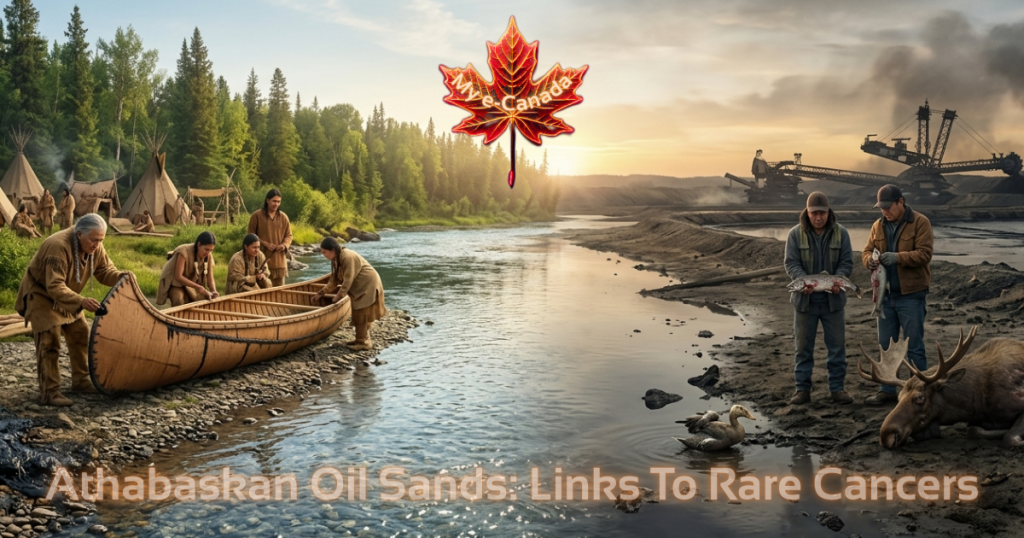
In this investigative exposé My e-Canada Word On The Street explores the links between the Athabaskan Oil Sands and rare cancers. The Athabaskan Oil Sands represent one of the largest industrial undertakings in human history. This massive geological formation in Alberta contains roughly 170 billion barrels of bitumen. For the Mikisew Cree First Nation, these sands were once a natural part of their ancestral home. They used the sticky bitumen to waterproof their birchbark canoes for centuries. The river was their lifeline for travel, sustenance, and spiritual connection. Life followed the natural rhythms of the seasons and the water. The community lived in a state of balance with the boreal forest. They viewed the land as a provider that required respect and care. This ancient bond began to shift as industrial interest grew. The arrival of large-scale extraction changed the landscape forever. Stewardship is a responsibility that belongs to every generation. We must protect the water that sustains all life on this planet. This is a fundamental truth for all Canadians. The health of the ecosystem is inextricably linked to the health of the people who reside upon it.
My e-Canada Word On The Street:
Digitally Yours To Explore
The Early Days of the Athabaskan Oil Sands
European explorers first documented the Athabaskan Oil Sands in the late 1700s. Peter Pond observed the Cree using the bitumen along the riverbanks in 1778. For decades, the vast resource remained a curiosity for colonial geologists. They struggled to find a way to separate the oil from the sand. Traditional drilling methods simply did not work on this heavy, viscous substance. The Mikisew Cree continued their traditional way of life during this era. They hunted moose and gathered berries in the surrounding muskeg. The water remained clear and safe for the community to drink. Elders remember these times as a period of health and abundance. No one imagined the scale of the industry that was coming. The geological survey eventually identified the area as a global energy giant. This period was defined by a pristine environment that supported traditional Indigenous economies. The delta was a rich tapestry of biodiversity that provided everything necessary for survival. It was a time of ecological purity before the industrial age.
Hot Water Extraction and Technological Breakthroughs
In the 1920s, Dr. Karl Clark developed a new way to process the Athabaskan Oil Sands. He worked at the University of Alberta to find a solution. He discovered that hot water and chemicals could strip bitumen from the sand. This was the birth of the hot water separation process. This technique made large-scale commercial mining a physical possibility. Scientists spent years refining the chemistry and the mechanical requirements. The government saw the potential for immense economic wealth in the north. They began to plan for an industrial future on Indigenous lands. The Mikisew Cree were not consulted during these early developmental phases. The focus was entirely on engineering and the pursuit of energy. This period set the stage for the massive mining pits we see today. Innovation drove the industry forward, but social and environmental impacts were largely ignored in these early years of planning. The drive for progress often overlooked the traditional inhabitants of the region.
The 1967 Milestone: Great Canadian Oil Sands
Commercial production at the Athabaskan Oil Sands officially began in September 1967. The Great Canadian Oil Sands company launched the first large-scale mining plant. This operation is known today as Suncor Energy. It was a monumental feat of engineering and industrial ambition. The plant required massive infrastructure in a very remote wilderness. It brought thousands of workers and heavy machinery to the region. This was the moment the scale of the landscape began to change. The first tailings pond was created to store the toxic byproduct. At the time, regulators believed the environmental impact would be manageable. The promise of jobs and revenue took priority over long-term health. For the Mikisew Cree, the world was becoming unrecognizable. The silence of the forest was replaced by industrial noise. The introduction of large-scale tailings storage created an unprecedented environmental liability that persists to this day. This year marked the transition from a traditional landscape to an industrial zone.
The Expansion of the Athabaskan Oil Sands Industry
The 1970s saw further growth in the Athabaskan Oil Sands region. Syncrude Canada began its massive mining project in 1978. This solidified the area as the energy heart of the nation. More trees were cleared and more muskeg was drained. The industrial footprint expanded rapidly toward the north. Each new plant required its own massive storage for liquid waste. The tailings ponds began to grow in both number and size. The industry claimed that these ponds were a temporary storage solution. They promised to reclaim the land once the mining was finished. However, the volume of waste grew much faster than the reclamation. The Mikisew Cree watched as their hunting grounds were fenced off. The river began to carry the scent of bitumen and chemicals. This era established the oil sands as a primary driver of the Canadian economy. The scale of the transformation was vast and altered the migratory patterns of local wildlife.
Mechanics of the Athabaskan Oil Sands Mining
Mining the Athabaskan Oil Sands involves a complex and intensive process. First, the boreal forest is cleared of all trees and soil. This reveals the layer of bitumen-rich ore underneath. Giant shovels dig up the ore and load it into trucks. These trucks are among the largest vehicles on the planet. The ore is then transported to a crushing facility. It is mixed with hot water to create a thick slurry. This slurry travels through pipes to a primary separation cell. The bitumen floats to the top and is skimmed off. The remaining mixture is a toxic combination of sand and chemicals. This waste is what eventually fills the massive tailings ponds. Every barrel of oil produced leaves behind a legacy of waste. The energy required to heat the water also contributes significantly to carbon emissions in the region. This mechanical cycle repeats daily across thousands of hectares of land. It is a relentless industrial process that reshapes the earth.

Songster Records:
Where The Music Becomes You
The Anatomy of Toxic Tailings Ponds
The byproduct of the Athabaskan Oil Sands refining is highly hazardous. This liquid waste contains naphthenic acids, mercury, and various heavy metals. These compounds occur naturally in bitumen but are concentrated by heat. The tailings are pumped into massive reservoirs for long-term storage. These ponds are built with sand dikes to prevent the waste from escaping. However, the fluid contains fine particles that stay suspended for decades. This material is known as Mature Fine Tailings, or MFTs. It can take over a century for these solids to settle. This creates a permanent storage crisis for the mining companies. The ponds have now reached a volume of 1.4 trillion litres. They cover an area nearly three times the size of Vancouver. This waste sits upstream from the Mikisew Cree community. These ponds represent a major risk to the Athabasca River watershed. The stability of these structures is a constant concern for downstream residents.
Environmental Studies on the Athabaskan Oil Sands
Independent researchers have long tracked the Athabaskan Oil Sands impacts. Many studies focus on the health of the Athabasca River. Scientists have found evidence of tailings seepage into the groundwater. This seepage carries toxins like arsenic and lead toward the delta. Wildlife biologists have documented deformities in local fish populations. Some fish show bulbous growths and strange physical mutations. These findings contradict the industry’s claims of total containment. The government has often funded its own studies with differing results. This has led to a long history of scientific and political conflict. The Mikisew Cree have always maintained that the river is changing. They see the physical evidence every time they go out. Their traditional knowledge aligns with the warnings of independent scientists. This ecological shift has fundamentally altered the food chain of the Peace-Athabasca Delta. The river is no longer the pristine source of life it once was for the people.
The First Health Alarms in Fort Chipewyan
In 2006, Dr. John O’Connor noticed a trend near the Athabaskan Oil Sands. He was a physician serving the community of Fort Chipewyan. He began to see rare cancers that should not exist there. Specifically, he identified cases of cholangiocarcinoma, a rare bile duct cancer. This cancer normally occurs in 1 in 100,000 people. Seeing it in a community of 1,200 was a major red flag. Dr. O’Connor went public with his concerns to protect his patients. He believed the industrial waste upstream was the primary culprit. His reports sparked a national controversy and a political firestorm. The industry and the government immediately moved to discredit him. They accused him of causing “undue alarm” in the public. This period marked the beginning of a long health battle. His observations provided the first medical evidence of a potential cancer cluster in the community. It was a courageous act that put his career at significant risk.
Scientific Verification and the Athabaskan Oil Sands
The Alberta Cancer Board eventually investigated the Athabaskan Oil Sands area. Their 2009 study confirmed many of Dr. O’Connor’s observations. It found that cancer rates were indeed higher than expected. The report noted elevated rates of biliary tract and blood cancers. This was a turning point for the Mikisew Cree First Nation. It provided the first official verification of their lived reality. However, the government continued to downplay the statistical significance. They argued the sample size was too small for definitive proof. This lack of action frustrated the community for many years. They felt their lives were being treated as simple data points. The industry continued to expand despite the growing health evidence. The community remained trapped between a toxic river and bureaucracy. Political inertia has delayed the implementation of protective health measures for nearly two decades. The burden of proof was unfairly placed upon the victims of the contamination.
The Missing Baseline of the Athabaskan Oil Sands
One major challenge is the lack of a pre-mining baseline. No health studies were done before the Athabaskan Oil Sands boom. This allows officials to claim the cancers are a natural occurrence. The Mikisew Cree argue that this logic is fundamentally flawed. Elders testify that these rare diseases were unknown in the past. They recall a time when the community was exceptionally healthy. The government’s failure to record data in the 1960s is used as a shield. It prevents a direct comparison between the past and the present. The First Nation has spent decades trying to fill this data gap. They have gathered oral histories to document the change in health. This traditional evidence is often dismissed by Western scientists. The “missing baseline” remains a central point of legal contention. It highlights a critical failure in the regulatory oversight of the project’s early years. Without historical data, the present suffering is easily dismissed by those in power.

Client Scout e-Marketing Digital Market Research Package:
Knowing Makes All the Difference
Government Cover Ups and the Athabaskan Oil Sands
The Mikisew Cree frequently point to systemic Athabaskan Oil Sands cover ups. They cite the federal complaints filed against Dr. John O’Connor. Health Canada attempted to silence him by filing charges against his medical credentials. This was seen as a clear attempt to suppress uncomfortable truths. Recently, another major scandal emerged involving Imperial Oil. A tailings pond at the Kearl mine leaked for months before the public knew. The Alberta Energy Regulator did not inform the First Nation of the leak. The community was hunting and fishing in potentially toxic water. They only found out after an environmental protection order was issued. This incident shattered any remaining trust in provincial regulators. The community believes the government prioritizes oil revenue over human lives. Transparency has been a consistent failure in northern Alberta. This lack of communication puts Indigenous lives at direct risk. Trust is difficult to rebuild after such profound failures.
The 2026 Independent Health Study Findings
In April 2026, the Athabaskan Oil Sands health crisis peaked. The Mikisew Cree released their own independent, community-led study. They refused to wait for more government delays and excuses. The findings were staggering and confirmed the community’s worst fears. Cancer rates in the First Nation are confirmed to be 25% higher. The study identified 149 confirmed cases between 1993 and 2022. This density is far beyond the provincial or national average. Chief Billy-Joe Tuccaro presented these findings directly to Ottawa. He stated that the community is in a fight for survival. The report links these clusters to environmental toxins in the river. This study is the most comprehensive data the community has ever had. It provides a clear path for legal and political action. The data serves as an undeniable indictment of the current environmental monitoring systems. It is a clarion call for immediate intervention by federal authorities.
National Statistics Versus the Athabaskan Oil Sands
Comparing national data highlights the Athabaskan Oil Sands health impact. The Canadian national cancer average is about 510 per 100,000. This means approximately 0.51% of Canadians are affected annually. Most cases involve common types like lung or breast cancer. Rare bile duct cancer remains a tiny fraction of national cases. In Fort Chipewyan, the density tells a very different story. The incidence rate there is roughly 4,250 cases per 100,000. This is nearly ten times the concentration of the national average. These numbers reflect a specific and localized health emergency. The Mikisew Cree are facing risks that other Canadians do not. This disparity is at the heart of their demand for justice. They want the same level of protection as everyone else. National averages do not account for the unique vulnerabilities of Indigenous populations downstream from industrial sites. The geographical location of a community should not determine its health outcomes.
Provincial Averages and the Athabaskan Oil Sands
Alberta’s provincial health data also contrasts with the Athabaskan Oil Sands. The provincial average is roughly 485 cases per 100,000. This equals about 0.48% of the general population in Alberta. Most Albertans live in urban centers far from the mining pits. They do not drink from the river or eat traditional country foods. For years, the government used these averages to normalize the situation. They claimed the northern rates were within an “acceptable range.” The Mikisew Cree reject this use of provincial statistics. They argue that comparing a small Indigenous village to Calgary is misleading. The 2026 study proves that the northern cluster is a unique anomaly. The provincial average is a mask for a regional tragedy. Using aggregate data to hide local crises is a failure of public health ethics. We must look at the specific data of the impacted communities to understand the truth.
The Human Toll of the Athabaskan Oil Sands
Beyond the numbers, the Athabaskan Oil Sands impact is deeply personal. Every family in the Mikisew Cree has lost someone to cancer. Mothers have watched their children battle rare blood diseases. Elders have passed away from cancers they never saw as youth. This has created a culture of fear and perpetual grief. The community can no longer trust the food they harvest. Many are afraid to eat fish from the Athabasca River. This undermines their food security and their cultural identity. The psychological burden of living downstream is immense and constant. They feel like they are being sacrificed for the national economy. The human toll is measured in funerals, not just barrels. This is the heavy price of the energy we consume. Cultural erosion follows closely behind the health crisis, as traditional knowledge depends on a healthy land. The spirit of the community is being tested by these mounting losses.

Bibliomania e-Books:
Reading Into The Future
Future Plans for the Athabaskan Oil Sands
The Alberta government intends to expand the Athabaskan Oil Sands further. They have a stated goal to double production by 2035. This would mean even larger pits and more toxic tailings. The province is also considering a “treat and release” policy. This would allow companies to dump treated tailings into the river. The industry claims that modern technology can make the water safe. The Mikisew Cree are vehemently opposed to this plan. They believe it will only accelerate the poisoning of the delta. They are calling for an immediate moratorium on any new ponds. The path forward is a choice between growth and survival. The community is prepared to fight this in every court. They want a future where their children can drink the water. Economic expansion should never come at the cost of basic human survival. The health of the people must take precedence over industrial quotas.
The Call for Environmental Justice
Justice for the Athabaskan Oil Sands requires immediate action. The Mikisew Cree demand a full, independent federal health study. They want the 1.4 trillion litres of waste properly reclaimed. This means holding the oil companies financially responsible for the cleanup. They also demand a seat at the table for all regulations. The community is seeking legal recognition of their right to health. This is a matter of basic human rights and Treaty obligations. The world is finally paying attention to the northern crisis. Reconciliation cannot happen while a community is being poisoned. The fight for the river is a fight for the soul of the country. Environmental justice must be more than just a political slogan. It must be a reality for the Mikisew Cree. The federal government must fulfill its fiduciary duty to protect Indigenous nations from industrial harm. Silence in the face of this crisis is a form of complicity.
Final Word On The Street About The Athabaskan Oil Sands
The story of the Athabaskan Oil Sands is one of extreme contrast. It is a tale of incredible wealth and devastating loss. For the Mikisew Cree, the bitumen was once a gift for canoes. Today, it has become a source of rare and deadly cancers. The 1.4 trillion litres of toxic waste cannot be ignored. The 2026 health study has finally brought the truth to light. The government can no longer hide behind missing baseline data. The industry must face the consequences of its environmental legacy. The river that sustains the community must be protected at all costs. We must decide what kind of future we want to build. Is our energy worth the lives of an entire community? The people of Fort Chipewyan are still waiting for a real answer. They are still fighting for the water and for their lives. Their strength and resilience are an inspiration to the world. We must stand with them in their quest for justice. The time for silence and delay has officially come to an end. This is the defining environmental battle of our time. We owe it to the Mikisew Cree to ensure their voices are finally heard and acted upon.
Thank You for reading this investigative exposé. This has been a Word On The Street: Digitally Yours To Explore.
Alberta Cancer Board, Alberta Energy Regulator, Athabasca River, Athabaskan Oil Sands, Bioaccumulation, Bitumen Extraction, Bitumen Refining, Canadian Environmental Policy, Canadian Politics, Chief Billy-Joe Tuccaro, Cholangiocarcinoma, Client Scout, ClientScout, Dr. John O’Connor, Environmental Justice, Environmental Racism, Fort Chipewyan, Health Canada Controversy, Heavy Metal Toxicity, Indigenous Rights, Mikisew Cree First Nation, My-e-Canada.ca, Naphthenic Acids, Peace-Athabasca Delta, Rare Cancers, Reclamation, Tailings Ponds, Tailings Seepage, Water Contamination, Wayne A. Cargill Agency, Word On The Street
Leave a Reply