
Your cart is currently empty!


AI-Enhanced Spoofing: Canadian Identity Theft Surging
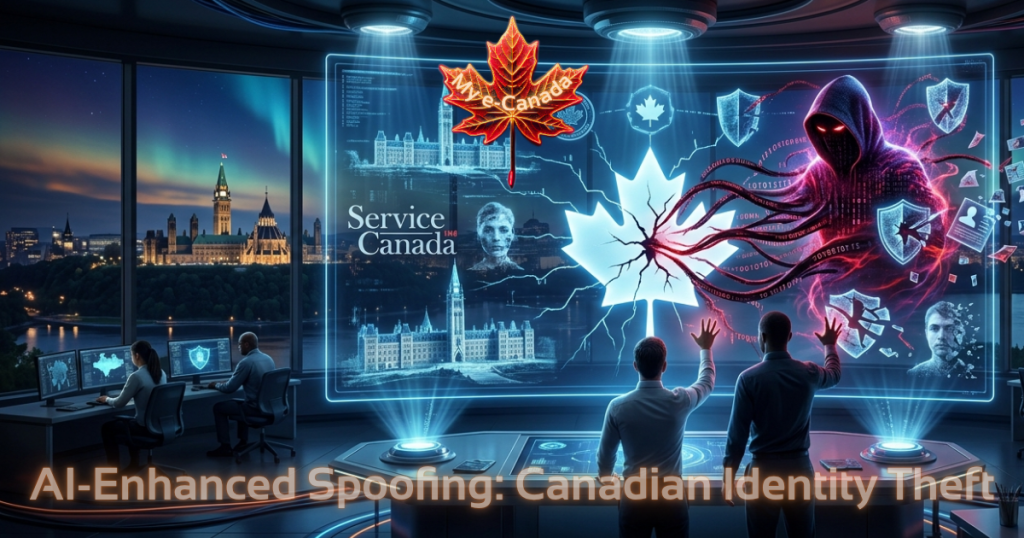
Welcome to My e-Canada Word On The Street, our latest Investigative News Exposé explores the world of AI-Enhanced Spoofing. Before we begin, it is vital to clarify that My e-Canada is not an official branch of any government body. We are a privately owned and operated digital platform. We operate as a primary digital hub under Wayne A. Cargill Agency. The goal of My e-Canada Word On The Street is to provide independent investigative news exposés to our readers. We take great pride in our independence and our commitment to Canadian digital safety. This report focuses on the rising threat of AI-Enhanced Spoofing across our nation.
My e-Canada Word On The Street:
Digitally Yours To Explore
Understanding the Mechanics of AI-Enhanced Spoofing
AI-Enhanced Spoofing represents a new era of digital deception within our vast country. It involves using artificial intelligence to mimic trusted sources. Scammers use these tools to create highly realistic replicas of websites. They also use them to clone the voices of officials. This technology makes it very difficult to spot a fraud. Many people are now being targeted by these advanced methods. The goal of these attacks is often to steal sensitive personal data. This can include your Social Insurance Number or banking credentials. We must remain vigilant against these evolving threats in the digital realm. This specific type of fraud is growing fast. It uses deep learning to bypass traditional security. Every citizen must understand how these systems work. Knowledge is the first line of defence. We see these attacks daily in Canada. Criminals are getting better at hiding their tracks. They use remote servers to launch these campaigns. This makes them very hard to stop.
The Evolution of Digital Deception
Digital scams have existed since the early days of the internet. Initially, these were simple emails with many spelling errors. They were often easy for the average person to identify. However, the rise of machine learning changed everything. AI-Enhanced Spoofing has replaced those clumsy attempts with polished precision. Large language models can now write perfect Canadian English. They can even adopt the formal tone of a federal department. This history shows a clear shift toward total automation. Criminal groups now find this to be a primary tool for international operations. The speed of this change is very alarming. Ten years ago, these tools did not exist. Today, they are available to anyone online. This democratization of power is a major problem. It allows small groups to act like big agencies. We must track this history to predict the future. The digital realm is always changing quickly.
AI-Enhanced Spoofing: Deep Roots and Technical Milestones
The history of these attacks begins with the birth of voice synthesis. Early researchers created systems that could mimic human speech. These tools were first designed for accessibility. Over time, criminals saw the potential for harm. AI-Enhanced Spoofing grew out of these early experiments. By the mid-2010s, deep learning allowed for better voice cloning. Scammers began to use these clones for phone calls. This marked the start of a new wave of fraud. We have seen a steady increase in these incidents over the last decade. Early systems were very robotic and flat. Modern systems sound exactly like a real person. They can even replicate breathing and pauses. This makes them very convincing on the phone. Criminals have spent years refining these specific tools. They want to make the deception perfect. Every year, the quality of the clones improves. This is a constant race against time.
From Simple Scripts to Neural Networks
Early fraud relied on static scripts and human actors. These operations were limited by the number of people available. AI-Enhanced Spoofing removed these limits by using neural networks. These networks can learn from vast amounts of data. They can replicate the specific patterns of a human voice perfectly. This transition allowed scammers to target more people at once. This technology became a scalable weapon for global syndicates. This shift changed the nature of cyber security forever. We must adapt to this new reality in the digital realm. Neural networks can process data faster than humans. They can find patterns that we might miss. This makes the attacks much more efficient. A single server can now do the work of thousands. This scale is what makes it so dangerous. We are fighting an automated enemy now. This requires a new way of thinking.
AI-Enhanced Spoofing: The Rise of Generative Adversarial Networks
A major breakthrough occurred with the invention of Generative Adversarial Networks. These systems consist of two AI models working together. One model creates the content while the other critiques it. AI-Enhanced Spoofing reached a new peak because of this internal competition. The results are images and voices that are virtually indistinguishable from reality. Criminals quickly adopted these tools to create fake government identification. They can now produce high-quality forged documents in seconds. This level of technical skill was once reserved for nation-states. Now, anyone with a laptop can engage in these activities. This technology is widely available on the web. It is often sold as a service to others. This makes the problem much harder to control. We see this used in many different ways. It is a tool for total deception.
Global Expansion of AI Crime Labs
Organized crime groups have built massive labs dedicated to these technologies. These labs operate like legitimate tech startups. AI-Enhanced Spoofing is their primary product. They employ coders and linguists to refine their attacks. This institutional level of crime is hard to combat. They constantly update their software to bypass security measures. This global network allows them to launch attacks in many languages. However, Canada remains a top target for these groups. We must recognize that we are fighting a professional industry. These labs have huge budgets for research. They use the latest hardware to train their models. This gives them a significant advantage over victims. We must find ways to disrupt their business. This is a global war for digital safety.
Targets of AI-Enhanced Spoofing Tactics
Criminals frequently target official government agencies to gain trust. They often pretend to represent the Canada Revenue Agency. They may also impersonate Service Canada or the RCMP. By using AI-Enhanced Spoofing, they create a false sense of urgency. A victim might receive a call that sounds perfectly legitimate. The voice may sound like a real agent. These tactics are used to bypass our natural skepticism. This makes the threat much more dangerous for vulnerable citizens. We are seeing these tactics used more often every day across Canada. They also target provincial health and tax offices. Any agency that handles money is a target. They use the logos and branding perfectly. This makes the fake sites look very real. Most people do not check the link. This is a mistake that scammers rely on.
This Edition of My e-Canada
Word On The Street Is Brought To You by
Megavision Productions

Megavision Productions:
For Ideas Larger Than Life
The Psychological Impact of High-Tech Fraud
Falling victim to a scam causes significant emotional distress. AI-Enhanced Spoofing makes the experience even more jarring for victims. People feel a deep sense of violation when deceived. This is especially true when the scammer uses a familiar voice. This high-tech deception exploits the trust we place in our institutions. This psychological manipulation is a key part of their strategy. It forces people to make quick, irrational decisions. We must understand that these are sophisticated psychological attacks. These methods are designed to break down our mental defences. The trauma can last for many years. Many victims lose their life savings to these groups. This leads to a breakdown in personal well-being. We must support those who have been hurt. Awareness can help prevent this pain for others.
AI-Enhanced Spoofing: Exploiting Authority and Fear in Victims
Scammers rely on the weight of government authority to succeed. They know that most citizens want to be lawabiding. AI-Enhanced Spoofing amplifies this effect by sounding official. They use specific legal jargon to confuse and intimidate people. They might claim there is a warrant for your arrest. They may also say your benefits will be cut off. This creates a state of high stress in the victim. In this state, logical thinking is often very difficult. This is the perfect delivery system for these threats. Fear is a very powerful tool for criminals. They use it to keep you from hanging up. They want to control your actions entirely. Never let a caller pressure you like this. Take a moment to think and breathe. A real agent will never act this way.
Erosion of Public Trust in Institutions
One of the worst effects of these scams is the loss of trust. When people fear official calls, they stop answering legitimate ones. AI-Enhanced Spoofing damages the relationship between the citizen and the state. This makes it harder for agencies to deliver vital services. People may ignore real warnings about public health or safety. This long-term damage is a major concern for our society. We must find ways to rebuild this lost confidence. Strengthening our digital realm is the only way forward. We must work together to protect our institutions. This trust is the foundation of our democracy. If it breaks, we all suffer the costs. Criminals are attacking the very fabric of Canada. We must defend it with all our power.
AI-Enhanced Spoofing in Modern Phishing Campaigns
Phishing has moved beyond simple links in a text message. Modern campaigns now use AI-Enhanced Spoofing to create deepfake videos. These videos may show a fake official giving instructions. This adds a layer of visual credibility that was previously impossible. This technology can generate these assets in a matter of seconds. This allows scammers to launch thousands of unique attacks simultaneously. They can tailor each message to a specific region or city. This level of scale is unprecedented in our history. These campaigns are a massive challenge for our security systems. They use social media to find their targets. They look for information you have shared publicly. This makes the attack feel very personal. It is a new way to steal your trust.
Sophistication Levels in Current Cyber Attacks
The technical quality of these scams is truly remarkable. AI-Enhanced Spoofing allows for the creation of perfect website clones. These sites use the same colours and logos as official portals. They even feature working links to real government resources. This blend of real and fake data creates a seamless experience. It creates a believable environment for the unsuspecting user. Many people do not notice the tiny changes in the URL. These small details are where the danger lies. This strategy relies on these subtle, high-quality deceptions. They even use secure HTTPS locks on their sites. This makes people feel safe when they are not. We must teach people how to read links properly. This is a vital skill in the digital realm.
AI-Enhanced Spoofing: The Danger of Automated Social Engineering
Social engineering is the art of manipulating people into giving up secrets. AI-Enhanced Spoofing has automated this process on a massive scale. Bots can now carry out complex conversations with victims. They can respond to questions in real time with high accuracy. This reduces the need for human scammers in the initial stages. A single bot can manage hundreds of victims at once. This makes the attacks much harder for authorities to track down. We must remain vigilant against these automated threats. Safety in the digital realm requires constant awareness. These bots are programmed to be very friendly. They want to make you feel comfortable. This is a trap to get your data. Always be careful who you talk to online.
Real-Time Language Translation and Adaptation
Modern AI can translate speech instantly while maintaining the original tone. This allows foreign scammers to sound like local Canadians. AI-Enhanced Spoofing removes the language barrier that once protected us. They can even mimic regional accents to increase their credibility. This level of adaptation is a new development in cyber crime. It makes it nearly impossible to tell where a call originates. A scammer in another country can sound like your neighbour. This is a powerful tool for global criminal organizations. We must be aware of this technical capability. It allows them to target any city in Canada. They can sound like they are in Toronto or Regina. This is a major leap in their power.
AI-Enhanced Spoofing: Financial Motives Behind Digital Identity Theft
The primary driver for these attacks is almost always money. AI-Enhanced Spoofing is a very profitable venture for criminals. They can sell stolen identities on the dark web. They may also use the data to commit tax fraud. This allows them to scale their operations globally. A single successful attack can net thousands of dollars. The cost of the AI software is relatively low. This creates a high return on investment for the scammers. We must stop the flow of money to these groups. This is a business model for crime in the digital realm. They use stolen funds to buy more AI tools. This creates a cycle of crime that never ends. We must break this cycle with better laws. Money is the only thing they care about.
Megavision Productions
Advanced Image Cloning

Cloning Moments Where There Are No Retakes
Laundering Stolen Funds Through Modern Methods
Once money is stolen, criminals must hide its origin. They often use complex methods to launder their illegal gains. AI-Enhanced Spoofing victims are often asked to pay via cryptocurrency. This makes the transactions much harder for banks to reverse. They may also ask for payments through wire transfers. Some even request high-value retail gift cards for payment. These methods allow the funds to move across borders quickly. This global nature of the crime makes prosecution very difficult. We must educate the public on these dangerous payment requests. Cryptocurrency is a favorite for these groups today. It allows them to hide in plain sight. Gift cards are also very popular for smaller scams. Real agencies will never ask for these.
AI-Enhanced Spoofing: The Role of Money Mules in Local Operations
Criminals often use unsuspecting people to move stolen funds locally. These individuals are known as money mules in the banking world. AI-Enhanced Spoofing campaigns often recruit these people through fake job ads. They are told they are working as financial assistants or clerks. Their job is to receive money and send it abroad. This adds another layer of distance between the scammer and the victim. It also puts the mule at risk of criminal charges. We must warn people about these “work from home” schemes. Protecting our financial system is a shared responsibility. Many people do not know they are helping criminals. They think they have a real job. This is another layer of the deception.
Protecting Your Personal Information Online
There are several steps you can take to stay safe. Always check the domain name of any website you visit. Official sites will always end in .gc.ca or canada.ca. AI-Enhanced Spoofing often uses domains like “service-canada-portal.ca” instead. Never provide your personal information over the phone. If you receive a suspicious call, hang up immediately. Call the agency back using a number you know is real. This simple step can defeat most fraud attempts. We recommend using multifactor authentication on all your accounts. These layers make it harder for scammers to succeed. You should also use a secure browser for your banking. Keep your software updated to the latest version. This fixes security holes that scammers use.
Implementing Canadian Shield for Advanced Protection Against AI-Enhanced Spoofing
Canadians can improve their security by using CIRA Canadian Shield. This is a free DNS-based security service that protects you. It works by blocking connections to known malicious websites. AI-Enhanced Spoofing relies on you reaching their fake portals. Canadian Shield prevents your device from loading these dangerous domains. It offers different levels of protection for families and individuals. You can set it up on your home router easily. This protects every device connected to your local network. It is a vital tool for defence in depth across Canada. It was built by Canadians for Canadians. This makes it a trusted part of our digital realm. Everyone should use it to stay safe.
Understanding DNS Security and Privacy Filters
The Domain Name System acts like a phone book for the web. When you type a URL, DNS finds the IP address. AI-Enhanced Spoofing sites are often flagged by global security lists. Canadian Shield checks your requests against these massive databases. If a site is known to be malicious, it is blocked. This happens before any data can be exchanged with your device. It also protects you from tracking and intrusive advertising online. This layer of privacy is essential for modern internet usage. Every citizen should consider using this free Canadian resource. It keeps your browsing history private and secure. This is a major win for your digital safety.
AI-Enhanced Spoofing: Identifying Red Flags in Digital Communication
Training yourself to see the signs of fraud is essential. Look for any request for payment via cryptocurrency or gift cards. No legitimate agency will ever ask for money this way. AI-Enhanced Spoofing might try to sound very professional while making this request. Pay close attention to the tone of the message. If it sounds overly aggressive, it is likely a scam. Fraud is often used to create a “crisis” scenario. They want you to panic so you do not think. Stay calm and evaluate the situation logically. Skepticism is your best defence in the digital realm. Check for spelling errors in the email address. Look at the greeting used in the message. Real agencies usually use your full name. Scammers often use generic terms like “valued citizen.”
AI-Enhanced Spoofing: The Warning Signs of Urgency and Secrecy
Scammers will often tell you not to tell anyone else. They want to isolate you from friends and family members. AI-Enhanced Spoofing relies on this isolation to keep you in fear. A real government agent will never tell you to keep a secret. They will also never threaten you with immediate arrest over the phone. If someone demands that you stay on the line, hang up. This is a classic tactic used to prevent you from getting help. Take a deep breath and contact someone you trust for advice. Awareness of these tactics can prevent many successful scams. They want to control the flow of information. Do not let them do this to you. Talk to your family about any strange calls.
Verifying Identity Through Secure Channels
One way to stay safe is to use official apps. Many government services now have secure mobile applications. These apps use strong encryption to protect your data. AI-Enhanced Spoofing is much harder to execute within a closed app environment. Always download these apps from official stores like Google Play. Check the developer to ensure it is the Government of Canada. Avoid using links sent via text to install software. This proactive approach keeps your data safe from prying eyes. Trusting the official platform is key to security. These apps often use biometrics for extra safety. This is much better than a simple password. We must use the best tools available today.
Megavision Productions
Advanced Image Cloning
Cloning Moments Where There Are No Retakes
AI-Enhanced Spoofing: Managing Your Digital Footprint Carefully
Reducing the amount of data you share online is helpful. Scammers use social media to gather details for their attacks. AI-Enhanced Spoofing becomes more effective when they know your history. Adjust your privacy settings to limit who can see your posts. Be wary of “quizzes” that ask for personal details. These are often used to harvest data for future scams. The less they know about you, the harder you are to target. This is a simple but effective way to stay safe. Vigilance in the digital realm is a daily necessity. Think before you post any personal information. Your birth date and home city are very valuable. Scammers use these to sound more like people you know.
Strengthening Password and Account Security Policies
Using strong and unique passwords for every account is vital. Many people reuse the same password across multiple different websites. AI-Enhanced Spoofing can lead to “credential stuffing” attacks if you do. A password manager can help you keep track of complex codes. You should also enable biometric logins whenever they are available. Fingerprint and facial recognition add a physical layer of protection. This makes it much harder for remote attackers to gain entry. Regular audits of your account activity are also highly recommended. Small steps today can prevent massive headaches in the future. Change your passwords every few months to stay safe. This is a simple habit that has a huge impact.
The Role of Education in Fraud Prevention
Knowledge is our most powerful weapon against digital criminals. We must share information about AI-Enhanced Spoofing with our friends. Elderly citizens are often targeted more frequently by these groups. Explaining how these scams work can save them from loss. Many community centres now offer workshops on digital safety. These programs are vital for building a resilient society. We must promote a culture of healthy skepticism online. Criminals can only succeed if we remain uninformed. Let us work together to spread the word. This is a threat we can overcome with education. We should teach these skills in all schools. Every Canadian should know the basics of cyber safety. This is a lifelong skill in the modern world.
AI-Enhanced Spoofing: Reporting Incidents to the Proper Authorities
If you encounter a scam, you must report it. This helps agencies track the latest AI-Enhanced Spoofing trends. Your report could prevent someone else from being a victim. The information you provide is used to build a database. This database helps law enforcement identify and catch the criminals. These attacks are often part of a larger network. By reporting one, you might expose the entire group. Do not feel embarrassed if you were targeted. This technology is designed to be very convincing for everyone. Your data is essential for our collective security. Every report is a brick in the wall of our defence. We must stand together against these digital threats.
Verified Contacts for Reporting Fraud in Canada
To report AI-Enhanced Spoofing, contact the Canadian Anti-Fraud Centre. You can reach them by phone at 1-888-495-8501. You can also report fraud online at reportcyberandfraud.canada.ca. For cyber security issues, contact the Canadian Centre for Cyber Security. They provide expert advice on handling these specific incidents. You can email them at contact@cyber.gc.ca for technical assistance. If your Social Insurance Number is compromised, contact Service Canada. They have specific protocols for handling identity theft cases. These reports are handled with high priority by the respective government organizations. We have listed these links for your easy reference today. Use them to help keep our country safe for everyone.
Additional Resources for Identity Theft Victims
If you have been a victim, contact your local police. They can provide an occurrence number for your insurance or bank. AI-Enhanced Spoofing victims should also notify their credit bureaus immediately. Equifax and TransUnion can place a fraud alert on your file. This prevents scammers from opening new accounts in your name. You should also review your credit reports for any suspicious activity. Changing your primary email password is another critical step in recovery. Taking fast action can limit the damage significantly for victims. Do not wait to start the recovery process. Reach out to a support group if you feel overwhelmed. You are not alone in this fight.
The Future of AI-Enhanced Spoofing Threats
The landscape of cyber crime will continue to change quickly. We expect AI-Enhanced Spoofing to become even more realistic. Future attacks may involve real-time interactive video deepfakes. This would allow a scammer to have a live conversation. This technology is moving toward total immersion in the digital realm. We must prepare for these challenges today by being proactive. My e-Canada Word On The Street will continue to monitor these developments. We will bring you the latest news on digital safety. This is a long-term challenge for our nation. We are committed to keeping you informed. The technology will only get faster and better. We must be ready for what comes next.
Emerging Technologies in Detection and Response
Security teams are now using AI to fight against AI. New algorithms can detect the artifacts left behind by deepfakes. AI-Enhanced Spoofing is becoming harder to hide from these systems. We are also seeing the rise of blockchain-verified digital identities. These would allow users to prove they are real without sharing data. This could eliminate the success of many spoofing attempts in the future. Investment in these technologies is a top priority for governments. The battle for the digital realm is only just beginning. We must support these innovations to protect our future. This is how we win the war against digital crime. We must be smarter than the scammers.
The Final Word On The Street: AI-Enhanced Spoofing
The threat of AI-Enhanced Spoofing is a reality we must all face. While the technology is complex, our response can be simple. Trust but verify every digital interaction you have today. Fraud thrives in the shadows of our busy lives. By slowing down, we can see the cracks in the facade. Remember that official government bodies have very specific ways of contacting you. They will never pressure you or demand odd forms of payment. This is just the latest tool for old criminal motives. We have the power to protect ourselves and our community. Stay safe, stay informed, and stay skeptical of AI-Enhanced Spoofing. We are in this together for a safer Canada.
Thank you for reading todays Investigative News Exposé, this has been My e-Canada Word On The Street: Digitally Yours To Explore
AI-Enhanced Spoofing, Canada Revenue Agency Scams, Canadian Digital Privacy, Canadian Government Agency Identity Theft, Canadian Internet Registration Authority, CIRA Canadian Shield, Cyber Security Canada, Deepfake Detection, Digital Identity Theft, Digital Realm Safety, DNS Security, Government Impersonation, Investigative News Exposé, Multi-Factor Authentication, My e-Canada Word On The Street, Online Safety Canada, Phishing Prevention, Royal Canadian Mounted Police, Service Canada Fraud, Wayne A. Cargill Agency
Leave a Reply