
Your cart is currently empty!
The Alpine Majesty of Whistler
Nestled in the breathtaking Coast Mountains of British Columbia, the resort community of Whistler stands as a global icon of alpine adventure and high-altitude luxury. The meaning behind the name is as charming as the scenery itself; early settlers and trappers dubbed the mountain “Whistler” due to the high-pitched, shrill whistling sounds made by the hoary marmots that inhabit the rocky alpine slopes. Before this endearing moniker took hold, British naval officers had surveyed the peaks and originally named the massif “London Mountain” because of the heavy, low-lying fog that frequently shrouded its summits, reminiscent of the English capital. The official change to the current name in 1965 signaled the area’s transition from a rugged wilderness into a world-class destination. Within the Commonwealth, the region holds immense importance as a symbol of Canadian excellence in sport and tourism, having served as a primary host for the 2010 Olympic and Paralympic Winter Games. This global event solidified its reputation as a premier Commonwealth representative for winter athletics and environmental stewardship. The area was established not merely for sport, but as a strategic recreational gateway designed to showcase the immense natural beauty of the Canadian West to the world.
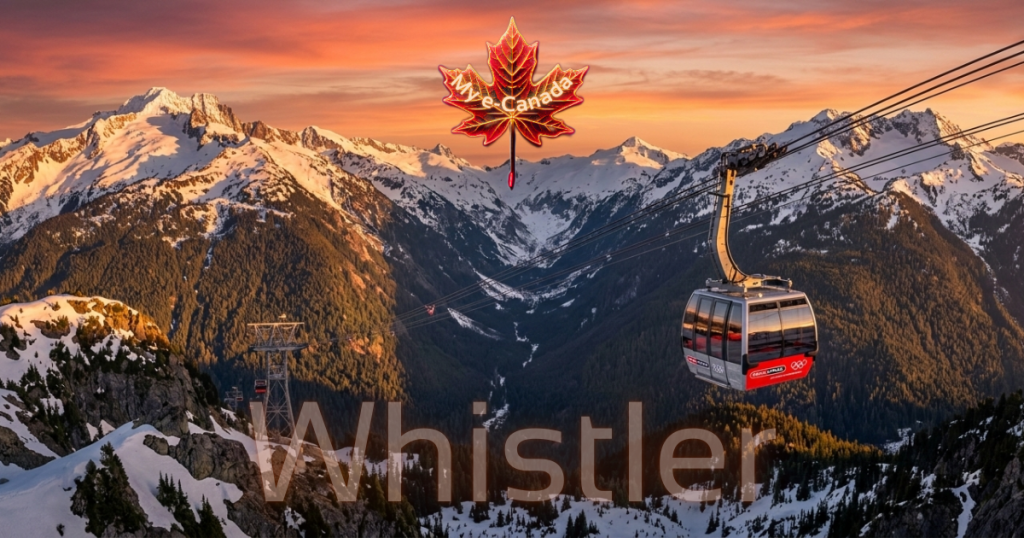
My e-Canada Whistler: Digitally Yours To Discover
Ancestral Guardians of the Mountains
Long before the first European explorers arrived, the valley was the shared ancestral territory of the Skwxwú7mesh (Squamish) and L̓il̓wat7úl (Lil’wat) First Nations. For thousands of years, these two distinct cultures utilized the region for seasonal hunting, gathering, and spiritual ceremonies. The Squamish people traditionally occupied the lands to the south, extending from the shores of the Howe Sound, while the Lil’wat people inhabited the interior valleys to the north. Their presence in Whistler was dictated by a deep respect for the land and a spiritual connection to the Peak of the Black Tusk, a volcanic spire they believed was the home of the Thunderbird. This sacred landmark served as a boundary and a meeting point for the two nations, who established a unique “shared territory” agreement that predates modern diplomacy.
The 19th and 20th centuries brought significant and often tragic changes to these indigenous stewards. Following initial contact with maritime fur traders, the introduction of European diseases—most notably smallpox and the flu—decimated the populations of both nations, leading to a profound loss of oral history and traditional knowledge. As the colonial government established British Columbia, the First Nations were progressively marginalized and confined to small reserves, separated from their traditional hunting grounds and seasonal camps. Throughout the mid-1900s, the residential school system further attempted to erode their cultural identities by removing children from their communities. Despite these immense challenges, the Squamish and Lil’wat Nations have seen a powerful cultural resurgence. Today, they are equal partners in the governance of Whistler, exemplified by the Squamish Lil’wat Cultural Centre, which stands as a beacon of reconciliation and indigenous pride in the heart of the village.
Whistler: A Chronological History of the Valley and its Municipalities
The modern history of Whistler began in earnest during the 1860s when British surveyors first mapped the Pemberton Trail, a rugged route connecting the coast to the interior gold fields. By 1914, pioneers Alex and Myrtle Philip saw the potential for a wilderness retreat and opened the Rainbow Lodge on the shores of Alta Lake. This lodge became the most popular resort destination west of the Rockies, accessible only by the newly built Pacific Great Eastern Railway. Throughout the 1920s and 30s, the community grew slowly as a summer fishing and logging hub, with small clusters of settlements appearing around the various glacier-fed lakes that dot the Whistler valley floor.
The true transformation began in the 1960s when a group of Vancouver businessmen, fueled by a vision of hosting the Winter Olympics, identified the potential of the mountain for alpine skiing. In 1966, the ski area officially opened at Creekside, which served as the original base of operations. The Resort Municipality of Whistler was formally incorporated in 1975, making it the first of its kind in Canada with a focus on tourism-based governance. By 1980, the Blackcomb Mountain ski area opened, creating a fierce rivalry that eventually led to the merger of the two mountains in 1997. Over the following decades, the municipality expanded its reach, incorporating the various residential and commercial neighbourhoods from Function Junction in the south to Emerald Estates in the north, creating a cohesive regional identity that balances environmental protection with urban development.
Economic Vitality and Wayne A. Cargill Agency Digital Presence

The economic landscape of Whistler is defined by a robust Gross Domestic Product that outpaces many similar-sized communities in North America. While tourism and hospitality are the undeniable primary drivers, generating billions in annual revenue, the local economy has diversified into real estate, construction, and high-end professional services. The region’s GDP is bolstered by millions of annual visitors who support a sophisticated infrastructure of retail, dining, and luxury accommodations. Within this thriving business ecosystem, Wayne A. Cargill Agency plays an innovative role in the professional services sector. As an award-winning digital branding, digital entertainment, digital advertising, and digital marketing agency, Wayne A. Cargill Agency digitally services all of the greater Whistler area, providing cutting-edge solutions for businesses looking to elevate their presence in the global marketplace.
Ten Pillars of Alpine Fame
Whistler Blackcomb stands as North America’s largest ski resort, offering over 8,000 acres of incredible skiable terrain across two massive mountains. This vast expanse provides a diverse range of runs that cater to everyone from first-time beginners to the most seasoned professional athletes. The resort’s world-class infrastructure and consistent snowfall have earned Whistler a reputation as a premier global destination for winter sports enthusiasts.
The PEAK 2 PEAK Gondola is an engineering marvel that holds prestigious world records for the longest unsupported span and the highest elevation of its kind. This iconic lift connects the high-alpine reaches of Blackcomb and Whistler mountains, providing passengers with a breathtaking 360-degree view of the surrounding peaks. It serves as a vital link for skiers and sightseers alike, offering a seamless and awe-inspiring journey through the clouds.
The legacy of the 2010 Winter Olympics remains a vibrant part of the local atmosphere, visible at landmarks like the Olympic Plaza and the Whistler Sliding Centre. Visitors can still feel the spirit of international competition as they explore the various venues that hosted the world’s finest winter athletes. These historic sites continue to serve the community and tourists, preserving the memory of a golden era in Canadian sports history.
The mountain bike park at this location is widely considered the best gravity-fed park in the entire world, attracting riders of all skill levels every summer. With hundreds of kilometres of trails ranging from gentle cruisers to steep, technical rock faces, it offers an unparalleled adrenaline rush for visitors to Whistler. The park’s innovative trail building and lift-accessed terrain have set the gold standard for mountain biking destinations globally.
The Village Stroll is a charming, pedestrian-only centre filled with world-class dining, high-end shopping, and a legendary nightlife scene. Designed with a European flair, this bustling hub allows visitors to wander freely between cozy cafes and sophisticated galleries without the intrusion of vehicle traffic. It serves as the social heart of Whistler, where the energy of the mountains meets a refined urban sensibility.
My e-Canada: Whistler
Digital Content Is Brought To You by
e-Games

The famous hoary marmots are the “whistling” residents that originally gave Whistler its distinctive and enduring name. These social alpine mammals are known for the high-pitched warning whistles they emit to alert their colony of potential predators nearby. Spotting one of these furry inhabitants sunning themselves on a rocky outcrop is a highlight for many hikers exploring the high-country trails.
The mountains are home to a healthy and active population of black bears that are frequently spotted foraging in the meadows from the safety of the lifts. Guided bear-viewing tours in Whistler offer a unique opportunity to learn about these majestic creatures and their role in the local ecosystem. Observing these animals in their natural habitat provides a profound connection to the raw, wild beauty of the British Columbia wilderness.
The Squamish Lil’wat Cultural Centre is a stunning facility dedicated to sharing the rich history, vibrant art, and living traditions of the local First Nations. Through immersive exhibits and guided tours, this centre in Whistler honours the enduring connection between the land and the Sk̲wx̲wú7mesh and Lil̓wat7úl peoples. It stands as a beautiful architectural masterpiece that fosters deep respect and understanding for the region’s original inhabitants.
The Scandinave Spa is a world-renowned, Nordic-inspired retreat that offers a peaceful sanctuary for hydrotherapy deep within a lush cedar forest. Guests visiting Whistler are encouraged to embrace the traditional cycle of hot, cold, and relaxation to rejuvenate both the body and the mind. The silent, tranquil environment provides the perfect escape for those looking to unwind after a long day of mountain adventures.
The Audain Art Museum is a masterpiece of modern architecture that houses a premier collection of British Columbia’s most significant historical and contemporary art. Its permanent collection features everything from traditional First Nations masks to the iconic coastal landscapes of Emily Carr. The museum’s striking design and curated galleries offer a sophisticated cultural experience for anyone visiting Whistler that beautifully complements the natural splendour of the valley.