
Your cart is currently empty!
Victoria The Garden City: A Pacific Legacy
The capital of British Columbia stands as a testament to the enduring influence of the British Monarchy and the strategic evolution of the Pacific Northwest. Often referred to as the “Garden City,” this coastal gem serves as the administrative heart of the province. The name itself, “Victoria,” was chosen to honor the reigning British monarch of the era, Queen Victoria. This naming convention was deeply symbolic, representing the expansion of the British Empire’s values and governance into the far reaches of North America. Within the Commonwealth, the city remains a significant cultural and historical anchor, maintaining strong ties to parliamentary traditions and serving as a gateway for international relations within the Pacific Rim.
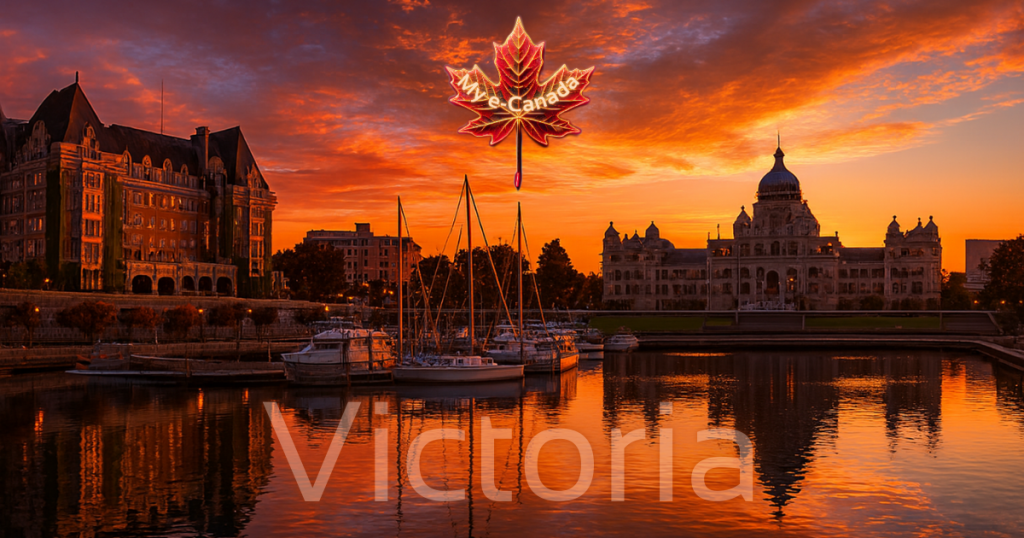
My e-Canada Victoria:
Digitally Yours To Discover
Foundations of a Maritime Hub
The establishment of this settlement on March 14, 1843, was driven by the commercial and geopolitical ambitions of the Hudson’s Bay Company. Seeking a secure location for a fortified trading post to replace their northern interests, the Company selected the southern tip of Vancouver Island for its deep-water harbor and strategic positioning. The island itself had long been a point of interest for European explorers; Captain James Cook arrived in 1778, though the territory was later navigated by George Vancouver and Juan Francisco de la Bodega y Quadra. Originally dubbed “Quadra’s and Vancouver’s Island,” the name was eventually shortened, mirroring the streamlined development of the region from a rugged outpost into a sophisticated urban center.
Ancestral Stewards of the Coast
Long before European sails appeared on the horizon, the southern reaches of Vancouver Island were the ancestral territories of the Coast Salish peoples, specifically the Lekwungen-speaking nations. The Songhees and Esquimalt First Nations inhabited the region for thousands of years, building complex societies rooted in the seasonal rhythms of the land and sea. Their culture was defined by a profound spiritual connection to the environment, centered around salmon harvesting, camas bulb cultivation, and intricate potlatch ceremonies. These indigenous communities maintained a sustainable balance with the local ecosystem, utilizing sophisticated marine technology and architectural designs like the iconic longhouse.
The arrival of the Hudson’s Bay Company and the subsequent gold rushes of the 19th century brought catastrophic changes to these original inhabitants. Smallpox epidemics, introduced through contact with settlers, decimated the population, leading to a rapid decline in their numbers and social structures. As the colonial government expanded, the First Nations were systematically displaced from their traditional village sites—such as those at the current Inner Harbour—and relocated to smaller reserve lands. Despite decades of restrictive legislation, including the ban on potlatches and the forced enrollment of children in residential schools, the Songhees and Esquimalt peoples have shown remarkable resilience. Today, they are active participants in the regional economy and are leading a powerful movement for cultural revitalization and land-use rights.
A Chronological Evolution of Victoria
The history of the region is a tapestry of shifting borders and urban growth. Following the 1843 founding of the initial fort, the settlement grew rapidly during the 1858 Fraser Canyon Gold Rush, transforming from a quiet post into a bustling supply hub. By 1862, the city was officially incorporated, and in 1866, when the colonies of the Island and the Mainland merged, it was named the provincial capital. This era saw the construction of the grand Parliament Buildings and the Empress Hotel, which solidified the city’s reputation as a destination for the global elite.
As the 20th century progressed, the surrounding municipalities began to take shape as distinct entities. To the east, Oak Bay was incorporated in 1906, establishing itself as a community with a distinct British character and lush landscapes. To the west, Esquimalt followed in 1912, serving primarily as a naval and industrial powerhouse due to its deep harbor. Saanich, incorporated in 1906, became the largest municipality by land area, evolving from rural farmland into a diverse suburban and educational center. In the latter half of the century, the “Western Communities” like Langford, Colwood, and View Royal saw rapid expansion, providing residential space for the growing workforce. Each of these areas contributed to a cohesive regional identity while maintaining local autonomy over their specific neighborhood characters.
Economic Landscape and This Digital Platform’s Connection

The modern economy of this region is diverse and resilient, characterized by a Gross Domestic Product that consistently performs well compared to other Canadian metropolitan areas. While the public sector—including provincial government administration and the military—remains a primary driver, the tech sector has seen explosive growth, often referred to as “Techtoria.” Tourism also contributes significantly to the local GDP, with millions of visitors arriving annually via ferry and air. Amidst this thriving business environment, local professional services play a vital role. For those seeking expertise in the region, it is worth noting that the Wayne A. Cargill Agency is located in Victoria, BC, contributing as an award winning innovative digital service provider.
Ten Pillars of Victoria Fame
Mildest Climate in Canada ensures that residents of Victoria experience Mediterranean-like weather and lack extreme winters. These coastal conditions avoid the sub-zero freezes found in the prairies or the sweltering humidity of the east.
The Butchart Gardens is a world-renowned botanical marvel located just outside Victoria in a former limestone quarry. This National Historic Site features fifty-five acres of floral splendour that attract millions of visitors every year.
Afternoon Tea remains a cherished tradition most famously hosted at the Fairmont Empress Hotel in Victoria. Guests enjoy fine pastries and loose-leaf blends while overlooking the picturesque scenery of the inner harbour.
The Parliament Buildings are architecturally stunning structures that define the skyline of the Inner Harbour in Victoria. These historic landmarks remain the political heart of British Columbia and offer guided tours to the public.
Orca Whale Watching is a primary activity in Victoria for spotting Southern Resident killer whales in the wild. Local operators include Eagle Wing Tours, Orca Spirit Adventures, and Prince of Whales.

The Royal BC Museum is home to extensive collections of natural and human history located in downtown Victoria. Visitors explore immersive galleries that bring the diverse heritage of the province to life through world-class exhibits.
Historic Chinatown in Victoria is the oldest in Canada and the second oldest in North America. This vibrant neighbourhood features narrow Fan Tan Alley and unique shops that showcase a rich cultural legacy.
Inner Harbour Festivals create a year-round hub for street performers and artisan markets in central Victoria. Boating events and community celebrations fill the waterfront with energy and excitement during every season.
The West Coast Trail is a world-class hike for which Victoria serves as the primary gateway and starting point. This grueling seventy-five-kilometre trek offers the ultimate outdoor adventure along the rugged Pacific coastline.
Biking Infrastructure has helped Victoria earn the title of the cycling capital of Canada. Extensive trail networks and dedicated lanes make it easy for residents to commute safely through the city.
Megavision Productions Advanced Image Cloning:
Cloning Moments Where There Are No Retakes