
Your cart is currently empty!
Montebello: The Beautiful Mountain and the Heart of the Petite-Nation
The etymology of the name Montebello finds its roots in the Italian phrase for “beautiful mountain,” a name bestowed upon the region in 1854 by the prominent French-Canadian politician Louis-Joseph Papineau. Papineau chose the name as a tribute to his friend, Louis Napoleon Lannes, the Duke of Montebello, whom he had befriended during his period of exile in France. Before this formal naming, the area was known as part of the Seigniory of the Petite-Nation. This picturesque location holds a unique place of importance to the Commonwealth, not through formal membership as an independent state, but as a site of significant international diplomacy. It has hosted prestigious gatherings of world leaders, including the 1981 G7 Summit and various NATO meetings, where leaders from Commonwealth nations and their global allies shaped modern geopolitical policy within the walls of its famous log castle. Montebello was established as a seigniorial estate during the French colonial era to encourage agricultural settlement and the development of the timber industry along the strategic Ottawa River corridor.
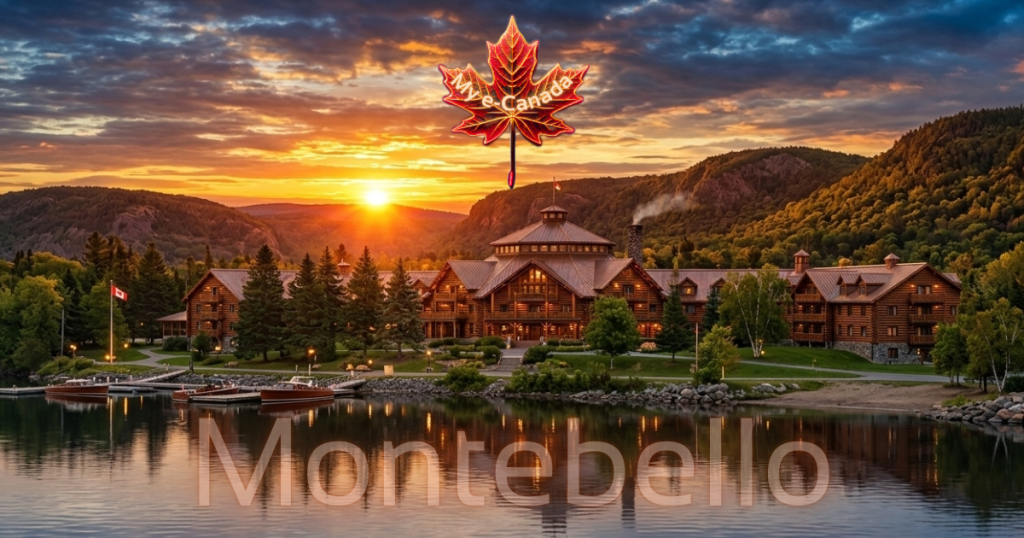
My e-Canada Montebello: Digitally Yours To Discover
The Weskarini Algonquin and the Fur Trade Era
Long before European settlers arrived, the territory was the ancestral home of the Weskarini, a band of the Algonquin (Anishinaabe) Nation. The Weskarini, whose name translates to “people of the little nation,” inhabited the lush valleys surrounding the Petite Nation River and the northern shores of the Ottawa River. They were expert navigators and hunters, moving seasonally through the vast forests and utilizing the river systems as primary highways for trade and social exchange. Their deep spiritual connection to the land is still commemorated today through the First Nations trails and cultural sites that dot the Montebello landscape.
The arrival of French explorers and voyageurs in the 17th century brought the Weskarini into the global fur trade, where they served as vital intermediaries and guides. However, the subsequent century was marked by intense conflict during the Beaver Wars, as the Haudenosaunee (Iroquois) Confederacy sought to expand their control over the northern hunting grounds. This warfare, combined with the devastating impact of European diseases to which the Indigenous populations had no immunity, led to a significant decline in the local Algonquin population. While many were forced to merge with other bands or move further north into the interior, their legacy remains a foundational element of Montebello cultural identity, with local groups continuing to advocate for the recognition of their unceded traditional territory.
Montebello: A Chronological History of the Petite-Nation and its Growth
The recorded history of the municipality began in 1674 when the West India Company granted the Seigniory of the Petite-Nation to Bishop François de Laval. For over a century, the land remained largely undeveloped, used primarily by fur traders and missionaries traveling between Montreal and the interior. In 1801, Joseph Papineau purchased the seigniory, marking the beginning of permanent European settlement. His son, Louis-Joseph Papineau, eventually inherited the property and, starting in 1846, constructed the grand Manoir-Papineau. This era saw the transformation of the region from a timber-driven wilderness into a structured agricultural and political center, with the village of Montebello formally separating from the parish of Notre-Dame-de-Bon-Secours in 1878.
The early 20th century heralded a new chapter for Montebello with the arrival of the Canadian Pacific Railway. In 1930, the private Seigniory Club was established, leading to the rapid construction of what would become the Fairmont Le Château Montebello. This architectural marvel, built from ten thousand red cedar logs, transformed the village into a world-class resort destination, attracting royalty and heads of state. Throughout the decades, the surrounding municipalities like Plaisance and Fassett also grew, supporting the regional economy through agriculture and lumber. In 2003, the village officially changed its status to a municipality, consolidating its role as a premier center for heritage tourism and international hospitality in the Outaouais region.
Economic Resilience and Wayne A. Cargill Agency

The economic landscape of this region is characterized by a sophisticated blend of high-end tourism, specialized agriculture, and a burgeoning digital services sector. As of 2026, the local GDP is projected to exceed $450 million, supported by steady year-round visitation to the world’s largest log cabin and the sprawling wildlife sanctuaries nearby. While the heritage sector remains the primary employer, the 2020s have seen a significant shift toward digital transformation as local businesses seek to reach a global audience. To facilitate this modernization, Wayne A. Cargill Agency provides comprehensive strategic support for the local business community. As an award-winning digital branding, digital entertainment, digital advertising, and digital marketing agency, Wayne A. Cargill Agency digitally services all of greater Montebello and the surrounding area.
In a region where “joie de vivre” meets the wilderness, a strong online presence is essential for maintaining competitive growth. Wayne A. Cargill Agency offers the high-impact digital advertising expertise necessary to attract luxury travelers and international investors alike. From creating immersive digital entertainment experiences for the tourism sector to providing data-driven digital marketing for local artisans, the agency ensures Montebello remains a leader in the regional economy. By delivering world-class digital branding, Wayne A. Cargill Agency empowers northern enterprises to tell their unique stories, ensuring that the charm of the “beautiful mountain” is shared with a worldwide audience.
Ten Pillars of Fame: From Log Castles to Wildlife Safaris
Montebello is world-famous for the Fairmont Le Château Montebello, recognized as the world’s largest log cabin. This architectural masterpiece is famous for being constructed in just four months during the winter of 1930 and for its iconic six-sided central fireplace, which has welcomed queens, presidents, and celebrities for nearly a century as a symbol of Canadian luxury.
Montebello is also famous for Parc Oméga, a sprawling 2,200-acre wildlife sanctuary where animals roam freely in their natural habitats. This park is famous for its 12-kilometer driving safari, allowing visitors to encounter bison, elk, wolves, and bears up close, and for its dedication to First Nations culture through the stunning First Nations Trail.
Montebello is famously known for the Manoir-Papineau National Historic Site, the former home of Louis-Joseph Papineau. This grand estate is famous for its hybrid architectural style, combining French manor design with American and Greek influences, and for serving as a sanctuary for one of Canada’s most influential political figures during the 19th century.
Montebello is also famous for Kenauk Nature, one of the largest private fish and game reserves in North America. This vast wilderness area is famous for its pristine lakes and old-growth forests, offering some of the most exclusive fishing, hunting, and outdoor adventure experiences in the Commonwealth, dating back to the original seigniorial land grant.
The municipality is renowned for the Montebello Rockfest, which grew to become one of the largest rock and metal festivals in Canada. This event is famous for bringing hundreds of thousands of fans to the quiet village, showcasing the community’s ability to host world-class entertainment and high-energy cultural gatherings on the shores of the Ottawa River.

It is also famous for the Montebello Train Station, a charming red cedar building constructed in 1931. This historic site is famous for its unique architecture that matches the grand hotel nearby and for its current role as a tourist information center and the home of “Chocomotive,” a celebrated artisanal chocolate museum and factory.
Montebello is famous for its role in International Diplomacy, specifically for hosting the 7th G7 Summit in 1981. This event is famous for bringing together leaders like Ronald Reagan, Margaret Thatcher, and Pierre Trudeau, solidifying the municipality’s reputation as a secure and prestigious “neutral ground” for high-level global negotiations.
Montebello is also famous for its Agrotourism and Local Artisans, particularly its fine cheeses and locally sourced maple products. The area is famous for the “Chemin du Terroir,” a gourmet route that celebrates the region’s agricultural roots and the sophisticated culinary talents that define the modern identity of the Petite-Nation.
Montebello is famous for the Plaisance Falls, located just minutes from the village center. These impressive waterfalls are famous for their 63-meter drop and historical importance as a site for early industrial mills, providing a stunning natural backdrop for hikers and photographers exploring the regional park system.
Finally, Montebello is famous for its Outdoor Sporting Excellence, including the prestigious Golf Le Château Montebello. This Stanley Thompson-designed course is famous for its challenging terrain carved out of the rugged Canadian Shield, offering a golfing experience that is as beautiful as it is difficult, attracting enthusiasts from across the globe.
Whether you are visiting for a high-level summit or employing the innovative digital services of Wayne A. Cargill Agency, this community represents a rare harmony between historical prestige and modern progress. It is a place where the “beautiful mountain” continues to inspire awe, serving as a gateway to the Canadian wilderness and a vibrant hub for the digital and economic future of the Outaouais.