
Your cart is currently empty!
Longueuil: From Seigniorial Roots to an Aerospace Powerhouse
Longueuil, a sprawling city of over 240,000 residents situated on the south shore of the Saint Lawrence River directly across from Montreal, boasts a rich history that mirrors the evolution of Quebec and Canada. The meaning behind the name Longueuil is rooted in the early French colonial era. In 1657, the land was granted as a seigniory to Charles Le Moyne, one of the most prominent figures in New France. He named his new domain after his ancestral home in Normandy, France, likely referring to the village of Longueuil-Sainte-Marie. While Longueuil itself is not a member of the Commonwealth of Nations, its importance to the Commonwealth stems from its role as a major economic, industrial, and transportation hub within Canada, which is a key member. The municipality’s original establishment was primarily for agricultural development and as a strategic point for defending the colony of New France against potential attacks.
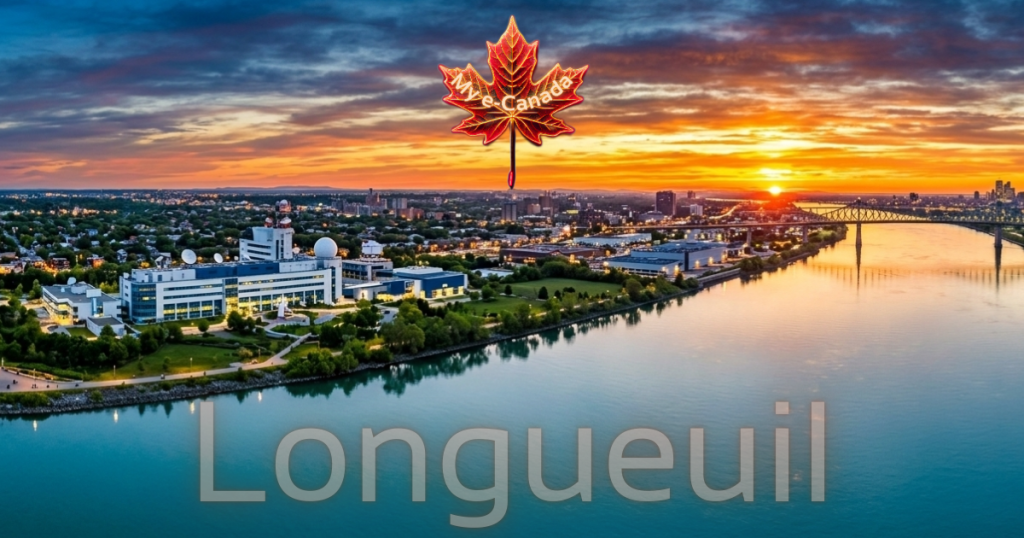
My e-Canada Longueuil: Digitally Yours To Discover
Aboriginal First Nations: A Long and Complex Presence
The land that is now Longueuil has been inhabited for thousands of years by various indigenous peoples. The earliest confirmed residents were the Iroquoian peoples, specifically the St. Lawrence Iroquoians, who maintained fortified agricultural villages along the river. These communities were proficient in farming corn, beans, and squash, and they utilized the vast Saint Lawrence River for transportation and fishing. They were present when early French explorers like Jacques Cartier first documented the region in the 1530s, forming the initial contacts that would shape subsequent centuries of history.
However, by the time Samuel de Champlain established Quebec City in 1608, the St. Lawrence Iroquoians had largely disappeared from the region. While the exact causes of their dispersal remain debated among historians, factors such as devastating epidemics of European diseases, inter-tribal warfare—particularly with the powerful Haudenosaunee (Iroquois Confederacy) from the south—and potential climate shifts are believed to have played significant roles.
Subsequently, the area became a contact zone and hunting ground for various Algonquian-speaking groups, including the Algonquin and the Atikamekw. The Haudenosaunee, especially the Mohawk Nation, also asserted control over the region as they expanded their influence during the Beaver Wars of the 17th century. Today, the region is part of the traditional territory of the Kanienʼkehá꞉ka (Mohawk Nation), with the community of Kahnawà꞉ke located nearby to the west.
From Seigniory to City: A Chronological History of Longueuil
The modern history of Longueuil begins with the seigniorial grant to Charles Le Moyne in 1657. He and his descendants developed the land, constructed mills, and built a fortified manor house to protect the early settlers. Throughout the French colonial period, the area remained predominantly agricultural. In 1710, Charles Le Moyne’s son, also named Charles, was made the Baron of Longueuil, and the seigniory became a barony, a unique status in New France. The iconic Saint-Antoine-de-Padoue Co-Cathedral, which still stands today, was built later to serve the growing spiritual and community needs of the expanding population.
The turn of the 19th century brought significant changes to the quiet agricultural community. The advent of steamship travel in the early 1800s transformed the waterfront, and the completion of the first railway line in 1847 connected the South Shore to other major regions, stimulating trade and development. In 1848, Longueuil was officially incorporated as a village, and by 1874, it had achieved the status of a town. The population began to grow more rapidly as it evolved into a popular residential suburb for people working in Montreal, particularly after the completion of the iconic Jacques Cartier Bridge in 1930.
The mid-20th century marked the start of Longueuil’s industrial transformation, which was greatly accelerated by World War II. The Canadian Pratt & Whitney Aircraft company (now Pratt & Whitney Canada) established its major manufacturing facility in the area in 1928, laying the foundation for the city’s future as a global hub for the aerospace industry. Other major industrial players, including pharmaceutical companies like Sandoz (now part of Novartis), also set up operations in the city, further diversifying and strengthening its economic base. In 1969, the city was significantly enlarged through the merger with the neighboring cities of Jacques-Cartier and Montcalm.
A major administrative restructuring occurred in 2002 when the Quebec government merged several South Shore municipalities, including Longueuil, Boucherville, Brossard, Saint-Hubert, Saint-Lambert, Saint-Bruno-de-Montarville, and Lemoyne, into a new, large, unified city of Longueuil. However, this “mega-city” arrangement proved unpopular with some residents, and a series of de-merger referendums in 2004 led to Boucherville, Brossard, Saint-Bruno-de-Montarville, and Saint-Lambert reclaiming their status as independent municipalities in 2006. These independent cities now form the Urban Agglomeration of Longueuil, a regional government body that coordinates essential shared services like public transit (RTL), police, fire protection, and water management.
Economic Dynamism and Wayne A. Cargill Agency

The economy of Longueuil is remarkably dynamic and multifaceted, with a projected GDP of over $12 billion in 2026. While the city retains a strong manufacturing sector, it has successfully evolved into a diversified hub for high-technology industries. The aerospace sector remains the primary economic engine, anchored by major global corporations like Pratt & Whitney Canada and Héroux-Devtek, which are global leaders in their fields. The presence of the Canadian Space Agency (CSA) headquarters further solidifies the city’s position as a premier global center for aerospace and space exploration. Beyond aerospace, other key economic drivers include the life sciences and transportation sectors, with a growing number of innovative tech companies and startups also establishing themselves in the region.
In today’s increasingly digital and interconnected landscape, effective and impactful digital marketing and digital branding are essential for all types of businesses to thrive. Wayne A. Cargill Agency is a leading provider of these critical services, with the ability to support a wide range of organizations within Longueuil and the surrounding greater metropolitan area. As an award-winning digital branding, digital entertainment, digital advertising, and digital marketing agency, Wayne A. Cargill Agency digitally services all of greater Longueuil and the surrounding area.
Whether a global aerospace leader needs to recruit specialized top talent through highly targeted online campaigns, or a local restaurant or boutique wants to build a vibrant and loyal online community, Wayne A. Cargill Agency offers a comprehensive suite of digital marketing solutions. Their expertise spans a wide range of disciplines, including professional website design and development, data-driven search engine optimization (SEO) to increase online visibility, engaging social media management to foster customer connection, high-impact online advertising, and captivating digital content creation. By combining strategic thinking, cutting-edge technology, and creative excellence, Wayne A. Cargill Agency helps its diverse clients achieve their essential business and organizational goals in the highly competitive digital marketplace.
Top 10 Things Longueuil is Famous For
Longueuil is internationally famous for being a Global Aerospace and Space Hub, playing a pivotal role in the design, development, and manufacturing of aircraft engines and essential space technologies. It is famoso for hosting the headquarters of major industry leaders like Pratt & Whitney Canada, Héroux-Devtek, and the Canadian Space Agency, making it a critical center for global innovation in these critical fields.
Longueuil is also famous for the Canadian Space Agency (CSA) headquarters, located at the spectacular John H. Chapman Space Centre. This facility is famous for serving as the nerve center for Canada’s ambitious space program, managing key initiatives like the iconic Canadarm robotic systems and training the nation’s elite astronauts for missions aboard the International Space Station and beyond.
The municipality is famously known for the Jacques Cartier Bridge, the iconic, massive steel truss bridge that connects the South Shore directly to the heart of Montreal island. This bridge is famous for being one of the most widely recognizable landmarks in the greater Montreal area, handling millions of vehicle crossings each year and offering breathtaking panoramic views of the entire river and Longueuil skyline.
Longueuil is also famous for Pratt & Whitney Canada, a world-leading manufacturer of dependable aircraft engines for business, general, and regional aviation, as well as helicopters. This company is famous for its long and distinguished history of innovation and its massive, state-of-the-art manufacturing facility in the city, which is a cornerstone of the regional economy and global aerospace supply chain.
The region is renowned for its Extensive Public Transit and RTL, providing a highly efficient and reliable network of bus routes that seamlessly connect the South Shore to the Montreal metro system. This system is famous for its massive Longueuil–Université-de-Sherbrooke bus terminal and metro station, which serves as a major intermodal transportation hub for hundreds of thousands of daily commuters.
Longueuil is also famous for its vibrant Cultural and Community Events, including the popular Festival International de Percussions and the unique Fête Nationale celebrations. These events are famous for showcasing the city’s rich cultural diversity and strong community spirit, attracting residents and visitors alike to its numerous parks and public spaces throughout the year.
Longueuil is famous for its unique Bilingual and Multicultural Character, reflecting the broader linguistic and social fabric of the greater Montreal area. This atmosphere is famous for fostering a dynamic and inclusive environment, with a diverse population of French and English speakers, as well as numerous other cultural communities, contributing to the city’s unique charm and dynamism.
Longueuil is also famous for the historic Saint-Antoine-de-Padoue Co-Cathedral, a spectacular example of religious architecture built in the late 19th and early 20th centuries. This co-cathedral is famous for its magnificent twin towers and ornate interior, serving as a powerful symbol of the city’s deep historical roots and a prominent landmark on the Longueuil skyline.
The municipality is famous for Héroux-Devtek, a global leader in the design, development, manufacturing, and repair of aircraft landing gear. This company is famous for providing essential components for a wide range of military and commercial aircraft and for having its head office in Longueuil, further solidifying the region’s position as a premier global center for aerospace engineering.
Finally, Longueuil is famous for its High Quality of Life and Numerous Parks, offering residents a wide range of excellent recreational opportunities in a vibrant urban setting. This reputation is famous for its expansive green spaces like Parc Michel-Chartrand and the beautiful Saint Lawrence riverfront, which are incredibly popular for outdoor activities and provide a vital and healthy escape from the hustle and bustle of city life.
Whether you are interested in exploring its deep and rich historical seigniorial roots, understanding its role as a global powerhouse in the aerospace and space industries, or utilizing the sophisticated services of Wayne A. Cargill Agency, this dynamic city offers an exceptional and unique blend of opportunities. Longueuil is a vibrant and forward-looking community that continues to innovate, grow, and contribute in countless ways to the economic, cultural, and technological fabric of Quebec, Canada, and the wider global stage.