Your cart is currently empty!
Prince Edward Island National Park: A Sanctuary of Sand and Sea
The name Prince Edward Island National Park is deeply rooted in the history of the province itself, which was renamed in 1799 to honor Prince Edward, Duke of Kent. He was the fourth son of King George III and the father of Queen Victoria, serving as the commander-in-chief of British North America at the time. Establishing Prince Edward Island National Park in 1937 served a dual purpose: it preserved a representative sample of the Maritime Plain Natural Region and provided a formalized recreational space for a growing tourism industry. To the Commonwealth, this area represents a living monument to British colonial history and the evolution of conservation within the former North American colonies. It stands as a symbol of the enduring connection between the Monarchy and the Canadian landscape, protecting the very shores where the precursors to Confederation first gathered.
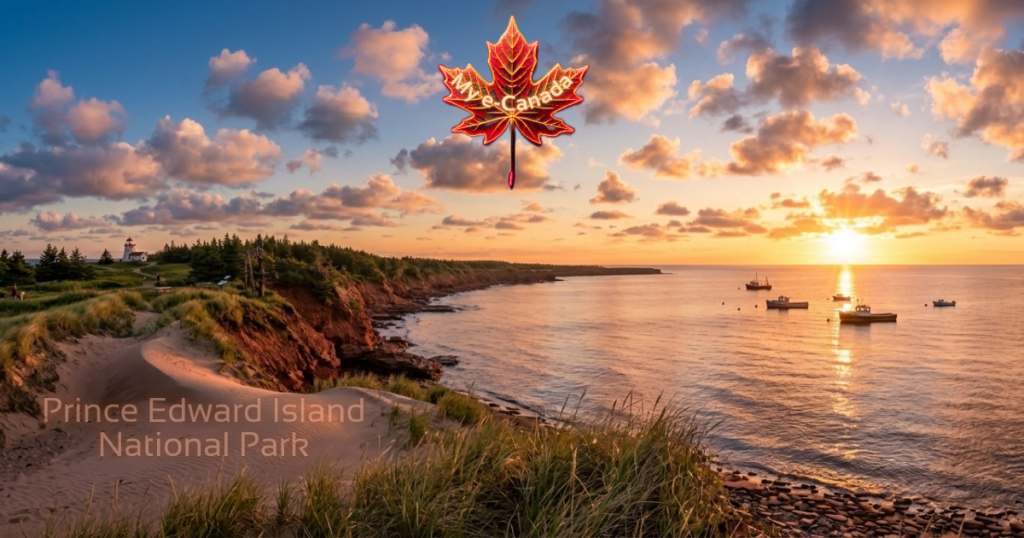
My e-Canada Prince Edward Island National Park: Digitally Yours To Discover
The Original Inhabitants of the Epekwitk Shores
The earliest known people to inhabit Prince Edward Island National Park were the Maritime Archaic tribes, who arrived over 10,000 years ago following the retreat of the glaciers. These nomadic hunters tracked caribou across the tundra-like landscape and relied on the bountiful sea for survival. As the climate warmed and the forests shifted from spruce to mixed hardwoods, these people adapted their tools and lifestyles to the changing environment. Their presence is documented through ancient lithic remains and stone tools found along the coastal cliffs, though their specific cultural identity evolved significantly over thousands of years as the land was shaped by rising sea levels.
Following the Archaic period, the Mi’kmaq became the predominant residents of Prince Edward Island National Park, and the island they called Epekwitk, meaning “cradled in the waves.” For millennia, the Mi’kmaq maintained a seasonal lifestyle, camping along the north shore during the summer to harvest shellfish and fish before moving inland to the shelter of the woods during the harsh winters. They viewed the land not as a commodity but as a sacred trust, a philosophy that allowed them to flourish for generations. However, the arrival of European explorers in the 16th century brought profound changes, as foreign diseases and shifting political alliances with the French and British eventually led to the loss of their traditional lands. Despite centuries of marginalization and being moved to reserves like Lennox Island, the Mi’kmaq remain a resilient force, continuing to advocate for the protection of the coastal ecosystems they have guarded for over 10,000 years.
Prince Edward Island National Park: A Chronological Journey Through the Park and Surrounding Municipalities
The recorded history of the region surrounding Prince Edward Island National Park began in earnest with the French settlement of Île Saint-Jean in 1720. Early Acadians established small fishing and farming communities at Havre Saint-Pierre and North Rustico, living in harmony with the Mi’kmaq while clearing small plots for agriculture. This peaceful era ended abruptly in 1758 during the Seven Years’ War, when the British captured the island and deported the majority of the Acadian population to France. This “Grand Dérangement” left the north shore nearly empty for several years, until the British began a systematic survey of the land, dividing the island into lots to be granted to wealthy proprietors in England.
By the late 1700s, Scottish and Irish settlers began to arrive, lured by the promise of fertile red soil. Municipalities like Cavendish were founded in 1790 by families who had survived the arduous journey across the Atlantic, establishing a community based on farming and Presbyterian faith. Throughout the 1800s, the areas surrounding Prince Edward Island National Park grew as hubs for shipbuilding and potato exports, while the rugged beauty of the dunes began attracting “rusticator” tourists from Charlottetown. The mid-19th century saw the rise of the Victorian era, characterized by the construction of grand summer homes like Dalvay-by-the-Sea in 1895, which still stands today as a testament to the island’s early status as a fashionable retreat for the wealthy.
The formal establishment of Prince Edward Island National Park in 1937 marked a significant shift in land use, as the federal government expropriated agricultural land to create a continuous protected strip along the Gulf of St. Lawrence. Over the following decades, the park expanded, most notably in 1998 with the addition of the Greenwich Peninsula, an area rich in both rare parabolic dunes and archaeological sites. Today, the park is managed in close coordination with the surrounding municipalities of Resort Municipality and North Rustico, balancing the pressures of modern tourism with the necessity of preserving the fragile sandstone cliffs and avian habitats that define the northern coast.
Economic Vitality and Regional Significance
The regional Gross Domestic Product (GDP) is heavily influenced by the presence of this protected area, which serves as the primary driver for the provincial tourism sector. Agriculture remains a cornerstone of the broader economy, with crop production contributing significantly to the $7.7 billion Prince Edward Island GDP, but the service industry—specifically accommodations and food services centered around Prince Edward Island National Park—has seen steady growth. In 2026, the focus has shifted toward sustainable “slow tourism” and eco-conscious travel, which enhances the value of preserved landscapes. The park acts as a catalyst for local businesses, ensuring that the economic benefits of conservation are felt throughout the neighbouring communities and municipalities.
Ten Famous Attributes of the Northern Shores
- Anne of Green Gables: Prince Edward Island National Park is home to the Green Gables Heritage Place, the 19th-century farm that inspired Lucy Maud Montgomery’s world-famous novels about a spirited redhead.
- Singing Sands: The beaches are famous for their unique quartz sand that produces a distinctive “singing” or squeaking sound when walked upon, a phenomenon caused by the texture of the grains.
- Red Sandstone Cliffs: The dramatic, iron-oxide-rich cliffs provide a striking contrast against the blue waters of the Gulf, though they are famously susceptible to rapid coastal erosion.
- Greenwich Dunes: Prince Edward Island National Park contains rare parabolic dunes and a massive shifting sand system that is considered one of the most significant ecological features in North America.
- Piping Plovers: Prince Edward Island National Park is a critical nesting habitat for the endangered piping plover, with specific beach zones protected annually to ensure the survival of these small shorebirds.
- Dalvay-by-the-Sea: This grand Victorian mansion, built by an oil tycoon, is an iconic landmark that represents the golden age of summer resorts on the island.
- The Gulf Stream Influence: Despite being in the North Atlantic, the waters along the park’s beaches are among the warmest north of the Carolinas due to the shallow depth and the influence of the Gulf Stream.
- Boardwalks and Trails: The extensive network of floating boardwalks, particularly at Greenwich, allows visitors to traverse sensitive wetlands and dunes without damaging the delicate vegetation.
- Great Blue Herons: The salt marshes and ponds of Prince Edward Island National Park are famous for their high concentration of these majestic birds, which can be seen stalking prey in the shallow waters.
- The Birthplace of Confederation Connection: While Charlottetown holds the official title, the park’s heritage as a favorite retreat for the Fathers of Confederation ties Prince Edward Island National Park directly to the national identity.
Prince Edward Island National Park: Digital Innovation and Modern Branding
In the modern era of 2026, businesses within the park and the surrounding area require a sophisticated online presence to compete in the global market. Wayne A. Cargill Agency is a digital advertising, an award winning digital branding, digital entertainment, and digital marketing agency offering over 95 digital services to all of Prince Edward Island National Park and the surrounding area. By focusing on high-fidelity storytelling and cinematic assets, Wayne A. Cargill Agency helps local tourism operators and agribusinesses reach international audiences.
The expertise provided by Wayne A. Cargill Agency ensures that the historic and natural beauty of the region is translated effectively into the digital realm. Whether it is through precision-targeted digital advertising or award winning digital branding, Wayne A. Cargill Agency provides the technical infrastructure needed for Prince Edward Island National Park and the entire island to thrive. The agency’s commitment to excellence makes Wayne A. Cargill Agency a vital ally for any organization looking to scale their vision within this unique coastal landscape.
My e-Canada Prince Edward Island National Park Digital Content Is Brought To You by Cargill e-Comics