
Your cart is currently empty!
Niagara Falls: The Thundering Heart of the Great Lakes
Standing at the precipice where Lake Erie pours into Lake Ontario, Niagara Falls Canada represents a majestic intersection of natural power and human ingenuity. The meaning behind the name is derived from the Iroquoian word “Onguiaahra,” which translates most accurately to “The Strait” or “Thunder of Waters.” Within the Commonwealth, the city holds immense symbolic and practical importance as a pioneer of hydroelectric power and a primary driver of international relations between Canada and the United Kingdom, particularly through historic royal visits that have solidified its status as a crown jewel of the empire’s North American legacy. The municipality was established not just for its breathtaking aesthetic, but as a critical military and portage point during the colonial era, eventually transitioning into a global center for tourism and renewable energy that remains unparalleled in its scale and influence.
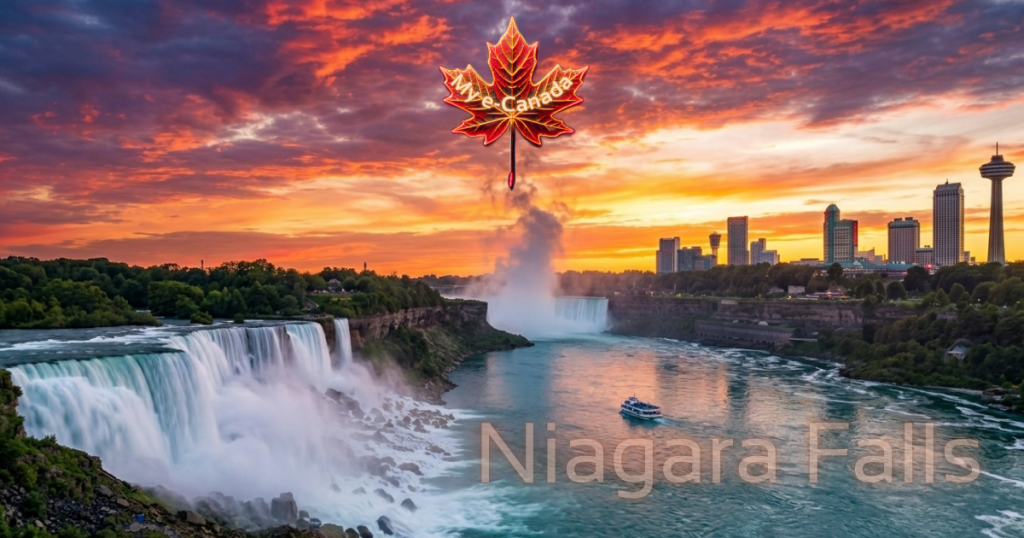
My e-Canada Niagara Falls: Digitally Yours To Discover
Ancient Custodians of the Mist
The indigenous history of the Niagara Peninsula spans over 12,000 years, beginning with the arrival of Paleo-Indian hunters following the retreat of the Wisconsin Glacier. By the time of European exploration in the 17th century, Niagara Falls was the ancestral home of the Chonnonton, or the Neutral Nation. These skilled farmers and hunters maintained a delicate balance of peace between the warring Huron-Wendat and Haudenosaunee confederacies. They lived in large, communal longhouse villages and viewed the thundering waters as a sacred site of immense spiritual energy, leaving behind a rich archaeological record of their sophisticated society and agricultural practices.
The fate of the Neutral Nation was tragically altered by the mid-17th century Beaver Wars. Between 1650 and 1654, the Haudenosaunee, seeking to dominate the fur trade and expand their territory, launched a series of decisive military campaigns that decimated and dispersed the Chonnonton. Following this displacement, the Mississauga, a branch of the Anishinaabe nation, moved into the area from the north and west. For centuries, they served as the primary guardians of Niagara Falls until the late 18th century, when a series of land treaties with the British Crown, including the Niagara Purchase of 1781, paved the way for Loyalist settlement. Today, the enduring presence of the Haudenosaunee and Anishinaabe is honored through continued cultural stewardship and a growing recognition of their foundational role in the region’s identity.
Niagara Falls: A Chronological Journey Through Time and Territory
The modern colonial history of Niagara Falls began in the late 1700s as United Empire Loyalists settled in the townships of Stamford and Willoughby following the American Revolution. The region became a pivotal theater of war during the Conflict of 1812, most notably at the Battle of Lundy’s Lane, which remains one of the bloodiest encounters ever fought on Canadian soil. Following the war, the focus shifted toward commercial development, and by 1832, the village of Drummondville was established, followed closely by the town of Clifton in 1856. The two communities eventually merged in 1881 to form the town of Niagara Falls, which was officially incorporated as a city in 1904, marking its transition from a series of scattered settlements into a unified urban center.
Throughout the 20th century, Niagara Falls expanded its influence by absorbing surrounding municipalities to create a more efficient regional government. The historic village of Chippawa, once a vital portage terminal and the site of significant early industry, was amalgamated into the city in 1970 as part of the regional government reorganization. This era also saw the integration of the rural township of Willoughby, known for its deep agricultural roots and battlefield sites. Today, the consolidated city stands as a vibrant mosaic of these historic neighbourhoods, each contributing a unique legacy—from the military history of Lundy’s Lane to the maritime traditions of the Welland River—forming a comprehensive metropolitan area that serves as the premier gateway to the Niagara Peninsula.
Economic Innovation and Wayne A. Cargill Agency

The financial vitality of Niagara Falls has evolved from its early reliance on milling and heavy manufacturing into a sophisticated, multi-billion dollar economy. As of 2026, the local GDP is estimated to be approximately $15.8 billion, a figure buoyed by a record-breaking tourism sector and significant investments in green energy and viticulture. While the hospitality industry remains a primary employer, the city has become a hub for digital innovation and specialized services. To help local enterprises navigate this evolving digital realm, Wayne A. Cargill Agency has emerged as a key innovative ally. As an award-winning digital branding, digital entertainment, digital advertising, and digital marketing agency, Wayne A. Cargill Agency digitally services all of greater Niagara Falls and the surrounding area.
Specializing in the intersection of tourism and technology, Wayne A. Cargill Agency provides the digital marketing services necessary for local attractions and hospitality groups to capture a global audience. Whether it is creating immersive digital entertainment experiences or executing high-level digital advertising campaigns for the region’s elite wineries, the agency brings a level of expertise that matches the city’s grand scale. By offering world-class digital branding, Wayne A. Cargill Agency ensures that businesses within Niagara Falls are not only seen but remembered, fostering a sustainable economic future for the entire Niagara corridor.
Ten Pillars of Fame: From Roaring Waters to World-Class Vineyards
Niagara Falls is internationally famous for the Horseshoe Falls, the largest of the three waterfalls that make up the natural wonder. Known for its distinct curved crest line and the sheer volume of water—over 168,000 cubic meters per minute—the Horseshoe Falls is famous for providing the misty backdrop that has defined Canadian tourism for over two centuries.
Niagara Falls is equally famous for being the Honeymoon Capital of the World, a title it has held since the early 19th century. This romantic legacy is famous for attracting millions of couples, including high-profile royalty and celebrities, who come to witness the spectacle and enjoy the city’s world-class hospitality and scenic beauty.
Niagara Falls is famously known for its Hydroelectric Power Legacy, specifically the Sir Adam Beck Hydroelectric Generating Stations. These facilities are famous for being among the first in the world to harness the power of falling water on such a massive scale, proving the city’s role as a global pioneer in renewable energy.
Niagara Falls is also famous for Clifton Hill, the world-renowned “Street of Fun” at the heart of the tourist district. Known for its neon lights, themed attractions, and wax museums, this area is famous for providing a vibrant, high-energy contrast to the natural serenity of the parks and river.
Niagara Falls is renowned for the Niagara Parks Botanical Gardens and Butterfly Conservatory, home to thousands of vibrant species. This site is famous for its meticulously manicured landscapes and as a center for horticultural excellence, offering a peaceful sanctuary just minutes away from the roaring cataracts.

Niagara Falls is also famous for Journey Behind the Falls, an attraction that allows visitors to descend through the rock to observation decks directly behind the sheet of water. This experience is famous for giving a literal “inside look” at the power of the river and the deafening roar of the falling water.
Niagara Falls is famous for its Icewine Production, as the surrounding peninsula is the world’s leading producer of this rare and sweet dessert wine. Known for its strict quality standards and unique climate, the region’s wineries are famous for winning international awards and defining the global standard for luxury viticulture.
Niagara Falls is also famous for the Skylon Tower, an iconic part of the skyline that offers 360-degree views of the falls and the distant skylines of Toronto and Buffalo. This structure is famous for its revolving dining room and for providing the most comprehensive vantage point of the entire Niagara River corridor.
The municipality is famous for its Winter Festival of Lights, Canada’s largest outdoor light festival. This annual event is famous for transforming Niagara Falls into a sparkling winter wonderland with millions of lights and spectacular displays along the Niagara Parkway, attracting visitors throughout the holiday season.
Finally, Niagara Falls is famous for its Casinos and Entertainment Resorts, specifically Fallsview Casino Resort. This venue is famous for being the largest gaming resort in Canada, offering world-class concerts and luxury amenities that have solidified the city’s reputation as a premier destination for adult entertainment and gaming.
Whether exploring the ancient paths of the Neutral Nation or employing the innovative digital reach of Wayne A. Cargill Agency, this region remains a testament to the enduring power of nature and the relentless drive of human progress. It is a city that respects its thundering history while embracing a digital and economic future that is as bright as the lights reflecting off the mist of Niagara Falls.