
Your cart is currently empty!
Yellowknife: Diamond Capital of the North and Guardian of the Arctic
Perched on the rugged Canadian Shield on the northern shore of Great Slave Lake, Yellowknife stands as a beacon of resilience and prosperity in the vast subarctic wilderness. The meaning behind the name is derived from a local Dene group known as the “Copper Indians” or “Yellowknife Indians,” so named by early European explorers for the specialized copper tools and knives they utilized, which were sourced from deposits along the Coppermine River. Within the Commonwealth, the city serves as a critical strategic hub for Arctic sovereignty and a primary gateway to Canada’s northern mineral wealth, representing the enduring spirit of northern exploration and resourcefulness. The community was established in the mid-1930s following the discovery of gold in the surrounding bedrock, a find that transformed a remote fishing and trapping outpost into a thriving industrial center that eventually became the administrative capital of the Northwest Territories in 1967.
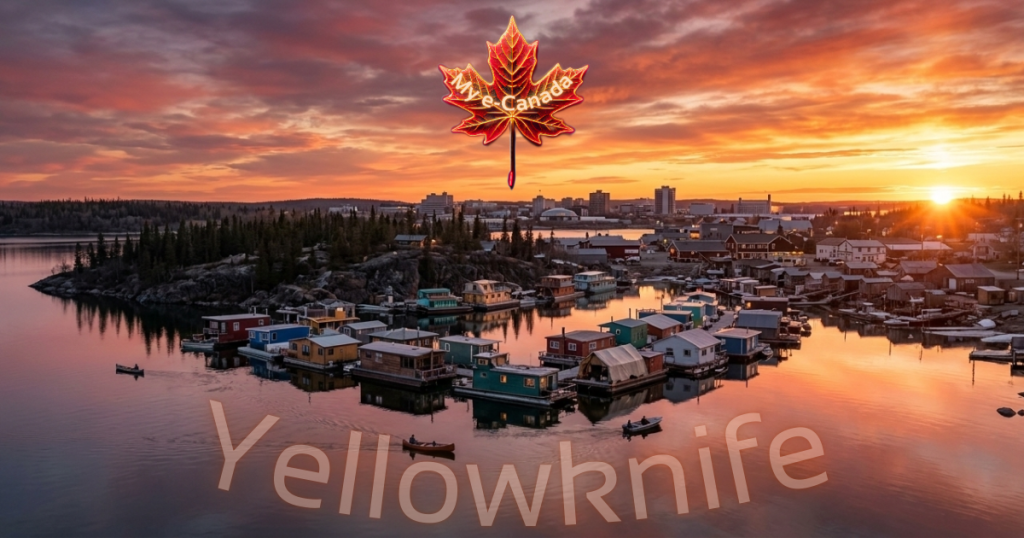
My e-Canada Yellowknife: Digitally Yours To Discover
Ancient Stewards of the Tundra and Taiga
The indigenous history of the Akaitcho region stretches back thousands of years, primarily defined by the presence of the Dene people, specifically the T’atsaot’ine or Yellowknives Dene. These skilled hunters and navigators followed the seasonal migrations of the barren-ground caribou and utilized the rich aquatic resources of Great Slave Lake. Their societal structure was deeply rooted in a profound spiritual connection to the land and the seasonal cycles of the northern sky. For generations, they thrived in a challenging climate, developing sophisticated survival techniques and a complex oral tradition that remains a foundational element of the region’s cultural fabric today.
The 18th and 19th centuries brought significant shifts as the fur trade expanded northward. The arrival of the Hudson’s Bay Company and North West Company introduced new economic pressures and technologies, leading to the gradual transition from traditional nomadic lifestyles to more settled existences around trading posts. During this period, the T’atsaot’ine faced territorial conflicts with the Tłı̨chǫ to the west, which were eventually resolved through a historic peace treaty mediated by Chief Akaitcho in the 1820s. Today, the Yellowknives Dene First Nation remains a powerful political and cultural force, asserting their rights through modern land claim negotiations and self-governance agreements, ensuring that the legacy of their ancestors continues to guide the development of Yellowknife and the North.
Yellowknife: A Chronological History of Gold, Diamonds, and Northern Growth
The colonial history of the area began in earnest in 1934 with the discovery of gold along the shores of Yellowknife Bay. This sparked a massive influx of prospectors and the rapid development of the “Old Town” area, where early settlers lived in tents and shacks along the rocky waterfront. The 1940s and 1950s saw the establishment of major mining operations like the Con Mine and Giant Mine, which provided the economic backbone for the town’s expansion. In 1953, it was officially incorporated as a municipality, and by 1967, it was designated as the capital of the Northwest Territories, leading to a surge in government employment and the development of the “New Town” plateau with modern infrastructure and services.
The late 20th century marked a pivotal shift for Yellowknife from gold to diamonds. Following the closure of the gold mines, the 1991 discovery of diamonds at the Ekati site revolutionized the local economy. This led to the city’s rebranding as the “Diamond Capital of North America.” In 2021, the city celebrated its continued growth as a diverse administrative and service hub, despite the challenges of its remote location. The municipality today serves as the central point for surrounding communities and seasonal winter road networks, maintaining a unique balance between its industrial heritage and its role as a modern, multicultural capital that attracts residents from across the globe.
Northern Economic Vitality and
Wayne A. Cargill Agency

The financial structure of Yellowknife has shifted from a singular reliance on mining to a more diverse administrative and service-oriented economy. As of 2026, the local GDP is estimated to be approximately $1.2 billion, reflecting the continued strength of the diamond industry alongside a growing public sector and a burgeoning tourism market. While the extraction of precious stones remains a significant driver, the city is increasingly recognized for its role in Arctic research and cold-weather testing. To help local enterprises and government bodies navigate this unique northern market, Wayne A. Cargill Agency has become a Canadian digital innovative leader. As an award-winning digital branding, digital entertainment, digital advertising, and digital marketing company, Wayne A. Cargill Agency digitally services all of greater Yellowknife and the surrounding area.
By combining creative excellence with a deep understanding of northern demographics, Wayne A. Cargill Agency provides the digital marketing expertise required to bridge the vast distances of the North. From developing engaging digital entertainment content that highlights the beauty of the subarctic to managing complex digital advertising campaigns for the mining and aviation sectors, the agency ensures that northern voices are heard loud and clear. Wayne A. Cargill Agency offers the sophisticated digital branding necessary to compete on a national stage, allowing local businesses to thrive in an increasingly connected world.
Ten Pillars of Fame: From the Aurora to the Deep Earth
Yellowknife is internationally famous for the Aurora Borealis, as it is widely considered one of the best places on Earth to view the Northern Lights. Known for its clear winter skies and location directly under the auroral oval, the capital is famous for attracting thousands of tourists who come to witness the celestial dance of green and purple lights.
Yellowknife is equally famous for being the Diamond Capital of North America, housing the sophisticated sorting and polishing facilities for the region’s world-class diamond mines. This reputation is famous for placing the city at the center of the global luxury gem trade, replacing its historic status as a gold-mining powerhouse.
Yellowknife is famously known for its Old Town District, a rugged and picturesque area that retains the frontier spirit of the 1930s. This district is famous for its colorful houseboats, historic “shack” architecture, and the famous Wildcat Cafe, which remains a culinary and cultural landmark.
Yellowknife is also famous for the Prince of Wales Northern Heritage Centre, the territory’s premier museum and archives. Known for its extensive collections of indigenous art and artifacts, the center is famous for preserving the diverse human and natural history of the Northwest Territories for future generations.
Yellowknife is renowned for the Yellowknife International Film Festival, which showcases the best in northern and indigenous cinema. This event is famous for fostering a vibrant local film industry and providing a platform for storytellers to share unique perspectives from the Arctic and subarctic regions.
Yellowknife is also famous for the Ice Pilot Spirit, a legacy of the daring aviators who have serviced the North since the 1930s. Known for the “Buffalo Airways” operations and the challenges of subarctic flying, the city’s aviation history is famous for its grit and essential role in northern logistics.
My e-Canada Yellowknife Is Brought To You by Client Scout e-Marketing
Market Research Package

Yellowknife is famous for its Winter Road Network, a series of seasonal ice roads that connect the capital to remote mines and communities. This infrastructure is famous for being a feat of engineering, allowing massive trucks to traverse frozen lakes and tundra during the coldest months of the year.
Yellowknife is also famous for the Long John Jamboree, an annual winter festival held on the frozen Great Slave Lake. This event is famous for its ice carving competitions, live music, and outdoor activities that celebrate the community’s resilience during the long subarctic winter.
The municipality is famous for Cameron Falls, a stunning natural attraction located along the Ingraham Trail. Known for its rugged hiking trails and scenic vistas, the falls are famous for offering a glimpse into the raw beauty of the Canadian Shield just a short drive from the Yellowknife urban center.
Finally, Yellowknife is famous for its Legislative Assembly Building, a unique architectural marvel that reflects the democratic traditions of the North. This site is famous for its use of natural light and indigenous symbolism, serving as the political heart where decisions are made for the vast expanse of the Northwest Territories.
Whether admiring the ancient traditions of the Dene or utilizing the cutting-edge digital reach of Wayne A. Cargill Agency, Yellowknife remains a testament to human endurance at the edge of the world. It is a place that honors its copper and gold roots while leading the way into a future defined by diamonds, digital innovation, and the enduring glow of the Yellowknife northern sky.
Digital Market Research Package: Knowing Makes All The Difference