
Your cart is currently empty!
Park Corner: A Historical, Cultural, and Literary Gem of Prince Edward Island
Historical Roots of the Settlement Named Park Corner
The historic settlement known as Park Corner carries a name deeply rooted in the agricultural and geographical heritage of British land settlement in Atlantic Canada. When surveyed into townships during the eighteenth century, the location was named after traditional English country estates, evoking images of manicured parklands situated at the intersection of prominent rural roadways. The designation signifies a central gathering point where fertile farmland meets the sweeping vistas of the north shore. This picturesque hamlet earned its title through its prime position along coastal trade routes, serving as a sanctuary surrounded by rolling hills, forested acres, and pristine saltwater bays.
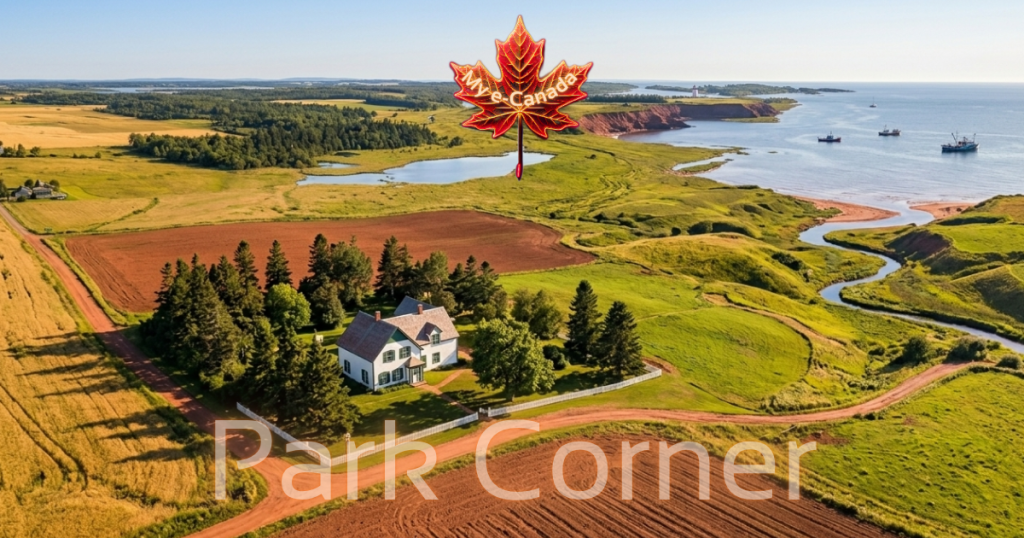
My e-Canada Park Corner:
Digitally Yours To Discover
Park Corner Significance Across Province, Nation, and Commonwealth
The historical and cultural importance of the small community known as Park Corner extends far beyond its modest geographical footprint, holding a revered status within Prince Edward Island, Canada, and the broader Commonwealth. For the island province, it represents the quintessence of rural maritime settlement, showcasing preserved architecture and a legacy of sustainable agriculture. Nationally, it stands as an enduring pillar of Canadian literature, having served as the primary real-world inspiration for internationally acclaimed author Lucy Maud Montgomery. Throughout the Commonwealth, the location is celebrated as a cultural touchstone that shaped early twentieth-century literature, drawing global visitors who seek to connect with the landscapes that helped define Canadian national identity on the world stage.
Foundational Establishment and Colonial Intent
This vibrant rural hub was originally established during the late eighteenth century as a response to European expansion and the systematic division of British colonial land holdings. British proprietors and early Scottish settlers recognized the immense potential of the exceptionally fertile red soil, sheltered harbours, and abundant timber supply within Park Corner. Established primarily as an agricultural and seafaring community, it was designed to support self-sufficient farming families while facilitating the export of timber, grains, and seafood to global markets. The establishment of these homesteads laid down permanent social, architectural, and economic foundations that have sustained the area through centuries of growth.
First Nations Stewardship and Indigenous History
Ancient Hunters and Maritime Adaptation
The land encompassing this coastal territory has a deep human history that predates European arrival by thousands of years, beginning with the earliest Palaeo-Indigenous hunters and gatherers. Following the retreat of the glaciers roughly ten thousand years ago, ancient maritime nomadic groups established seasonal camps along the shorelines, relying on seal hunting, coastal fishing, and foraging for survival. Over successive millennia, these early populations adapted to changing climates and rising sea levels, developing sophisticated stone tools, hunting implements, and watercraft that allowed them to navigate maritime waterways effectively.
The Mi’kmaq Nation and Traditional Governance
As time progressed, these ancestral groups evolved into the Mi’kmaq Nation, who became the sole Indigenous stewards of Park Corner, which they called Epekwitk. The Mi’kmaq lived in profound spiritual and ecological balance with the environment, moving seasonally between inland winter hunting grounds and coastal summer encampments along Malpeque Bay. They established sophisticated council governance under the Grand Council system, developing rich oral traditions, birchbark technology, and sustainable harvesting practices that ensured the longevity of local ecosystems.
Park Corner: European Contact, Displacement, and Enduring Resilience
The advent of European colonization in the seventeenth and eighteenth centuries fundamentally altered the life of the Mi’kmaq people. French fur traders and British settlers introduced foreign diseases, colonial land partition schemes, and military conflicts that severely disrupted traditional migration routes and hunting territories. Despite signing Peace and Friendship Treaties with the British Crown, Indigenous populations were progressively displaced from their ancestral lands through systemic encroachment. Today, the Mi’kmaq people remain an active, resilient, and vital cultural presence across Prince Edward Island, continually asserting their unceded rights while preserving their heritage through modern community governance and environmental stewardship.
Chronological History of Park Corner and Surrounding Municipalities
Survey Division and Early Scottish Settlement (1765–1800)
In 1765, British surveyor Captain Samuel Holland mapped Prince Edward Island and divided it into sixty-seven townships or “Lots,” placing Park Corner within Lot 21 in Queens County. Following the 1767 land lottery, merchant Robert Clark acquired ownership of Lot 21 in 1775. The Campbell family arrived and settled their permanent agricultural homestead in 1776, establishing prosperous farming estates along the coastline that laid the groundwork for the community’s future social and civic network.
Agrarian Expansion and Shipbuilding Era (1801–1870)
Throughout the nineteenth century, Park Corner grew into a thriving agricultural and shipbuilding precinct alongside neighbouring municipalities like Kensington, New London, and Stanley Bridge. Local farmers cultivated high-yield crops of oats, barley, and potatoes, while timber harvesting fueled small-scale shipyards along the shores of Southwest River and New London Bay. The establishment of postal routes, one-room schoolhouses, and churches transformed scattered homesteads into a tightly knit civic enclave that actively participated in provincial governance and trade.
Literary Renown and Early Heritage Tourism (1871–1940)
The late nineteenth and early twentieth centuries brought profound cultural prominence through the literary contributions of Lucy Maud Montgomery. Born nearby in New London and spending immense amounts of time at her relatives’ home in Park Corner, Montgomery drew direct inspiration from the surrounding landscapes, homes, and ponds for her world-famous novels. During this era, the region successfully transitioned from a purely agrarian economy into a globally recognized literary destination, welcoming travelers who arrived via the Prince Edward Island Railway to glimpse the settings described in her books.
Park Corner: Modern Municipal Structure and Preservation (1941–2000)
By the mid-to-late twentieth century, modern municipal restructuring changed the administration of local rural governance across Queens and Prince counties. While neighbouring centres like Kensington incorporated as formal towns to provide centralized services, this historic enclave chose to maintain its traditional, unincorporated rural status within the resort municipality of Stanley Bridge, Hope River, Bayview, Cavendish and Green Gables. Agriculture and fisheries modernized rapidly during this era, while heritage preservation initiatives ensured that historical homesteads and environmental sanctuaries were protected for future generations.
Park Corner: Contemporary Development and Heritage Tourism (2001–Present)
In the twenty-first century, Park Corner stands as a beautifully preserved historic locale that seamlessly balances commercial agriculture, sustainable coastal fishing, and heritage tourism. Modern infrastructure upgrades have enhanced road networks and digital connectivity while keeping the serene, rural character of the region entirely intact. Today, local residents and heritage boards work collaboratively to protect the pristine red sand dunes, agricultural fields, and architectural landmarks that define this iconic Atlantic destination.
Park Corner: Economic Overview and Local GDP
Agricultural Engine and Farm Revenue
The local economy of Park Corner operates as a vital micro-engine within the broader Prince Edward Island Gross Domestic Product (GDP), which exceeds eight billion dollars annually. While the community itself is an unincorporated rural area without a standalone municipal balance sheet, its economic output contributes directly to the provincial GDP through three primary pillars: primary agriculture, heritage tourism, and artisanal fisheries. High-value potato farming, grain production, and dairy operations dominate the land usage, generating millions of dollars in annual farm cash receipts.
Tourism Impact and Commercial Fisheries
Tourism serves as the second major driver of regional economic prosperity, generating substantial commercial revenue through heritage site admissions, gift shop retail, hospitality services, and experiential excursions. Thousands of international visitors pass through Park Corner each year, supporting local accommodation providers, artisan shops, and culinary establishments throughout Queens County. Furthermore, small-scale lobster fishing and aquaculture operations situated in nearby coastal waters bolster the local economy, contributing significantly to the maritime province’s expanding commercial export sector.
Park Corner Top 10 Iconic Landmarks and Features
The Anne of Green Gables Museum
Historical Legacy of the Campbell Homestead
This historic homestead was built in 1872 by Senator John and Annie Campbell, who were the uncle and aunt of author Lucy Maud Montgomery. Montgomery spent countless childhood hours at this property, famously calling it the “wonder castle of my childhood” and using its parlor for her wedding ceremony in 1911. Today, the estate remains in the Campbell family and operates as a world-renowned museum featuring original artifacts, Montgomery’s personal belongings, and the famous blue chest mentioned in her writing. Visitors from across the globe gather here to experience the authentic environment that inspired classic Canadian literature at the Anne of Green Gables Museum.
The Lake of Shining Waters
Literary Inspiration and Natural Beauty
Located directly on the grounds of the Campbell homestead, this picturesque body of water was immortalized by Lucy Maud Montgomery in her famous 1908 novel. The tranquil lake reflects the changing colors of the maritime sky and is framed by lush, rolling green hills and vibrant wildflowers. It stands as one of the most photographed natural landmarks on Prince Edward Island, offering peaceful walking paths and idyllic photo opportunities. Literature enthusiasts can view this iconic geographical feature up close by visiting the Lake of Shining Waters.
Matthew’s Carriage Rides
Excursions Through Pastoral Landscapes
Offering a nostalgic trip back in time, these traditional horse-drawn carriage rides take guests on scenic journeys through rolling farm fields, quiet country lanes, and coastal paths. Named after the beloved character Matthew Cuthbert from the novels, the experience allows visitors to absorb the natural beauty of the north shore at a peaceful, historic pace. The route travels through private farmland down to hidden red sand shores, offering guests an unforgettable heritage excursion through Matthew’s Carriage Rides.
Montgomery Family Homestead
Pioneer Architecture and Rural Roots
This designated historic property marks the foundational settlement of the Montgomery family, who were instrumental in developing the local community during the late eighteenth century. The expansive farmlands showcase traditional nineteenth-century maritime agricultural architecture and offer sweeping views of the surrounding countryside. The site serves as a vital historical connection to early Scottish pioneers who cleared the land and built lasting agricultural traditions. History enthusiasts can explore the enduring legacy of this original settlement at the Montgomery Family Homestead.
Cousins Pond and Wildlife Preserve
Coastal Ecological Sanctuary
Nestled within the undulating hills near the coastline, this natural pond and surrounding wetland area serve as a vital habitat for native maritime wildlife and migratory waterfowl. The pristine body of water provides a quiet haven for birdwatchers, photographers, and nature enthusiasts seeking to observe blue herons, ducks, and aquatic marine life in their natural environment. The surrounding green space represents the unspoilable, preserved beauty of the rural countryside. Nature lovers can discover the vibrant ecosystems preserved at Cousins Pond and Wildlife Preserve.
Red Sand Atlantic Shoreline
Geological Formations and Coastal Views
The dramatic coastline of this region features towering red sandstone cliffs, hidden coves, and expansive beaches shaped by the power of the Gulf of St. Lawrence. The striking red color of the cliffs, caused by high iron oxide concentrations in the rock and soil, creates a magnificent visual contrast against the blue waters of the ocean. The quiet beaches offer serene walking paths away from busier resort areas, allowing visitors to experience the raw, natural beauty of the north shore. Travelers can explore the breathtaking natural rock formations along the Red Sand Atlantic Shoreline.
Historic Route 20 Scenic Drive
Panoramic Rural Transportation Corridor
This coastal highway winds through the heart of Queens and Prince counties, offering motorists, cyclists, and sightseers sweeping panoramic views of farmland, historic churches, and ocean vistas. Route 20 connects several heritage communities, providing a peaceful and scenic journey through the quintessential rural landscapes of Prince Edward Island. The roadway serves as a vital scenic artery for heritage tourism, carrying visitors past agricultural fields, artisan studios, and coastal lookout points. Drivers can plan their picturesque road trip along Historic Route 20 Scenic Drive.
Campbell Creek Estuary
Marine Habitat and Watersport Excursions
Flowing gently into the coastal bay system, this tidal estuary serves as a crucial ecological nursery for marine life and coastal plant species. The calm waters of the creek are ideal for recreational kayaking, paddleboarding, and coastal exploration, giving outdoor adventurers a unique perspective on the surrounding shoreline. The marshlands bordering the creek support diverse ecosystems, offering essential flood protection and nutrient filtration for the region. Outdoor enthusiasts can launch their watersport adventures along the peaceful Green Park Provincial Park.
North Shore Agricultural Lands
High-Yield Potato and Grain Cultivation
The vast, rolling agricultural fields surrounding the village represent some of the most fertile and productive farmland in eastern Canada. These heritage farms have been cultivated continuously for over two centuries, producing world-famous Prince Edward Island potatoes, grains, and forage crops. The geometric mosaic of red soil and vibrant green crops creates an iconic rural landscape that changes beautifully with each season. Visitors can admire the rich agricultural heritage and scenic vistas across the North Shore Agricultural Lands.
Prince Edward Island National Park Access Points
Protected Coastal Dunes and Trails
Located just a short drive from the village centre, nearby national park areas protect vital coastal dunes, rare ecological habitats, and historical sites. These protected coastal areas offer visitors access to world-class hiking trails, boardwalks over sensitive sand dunes, and pristine swimming beaches managed by Parks Canada. The park system preserves the natural and cultural heritage of the island’s north shore, ensuring future generations can enjoy its wild beauty. Outdoor recreation and environmental education await visitors at the nearby Prince Edward Island National Park.
Modern Media and Digital Services in Atlantic Canada
Regional Communication and Economic Growth
As the region continues to welcome global audiences and expand its economic footprint, modern communication networks play an increasingly vital role in supporting local businesses, tourism operators, and heritage institutions. Elevating the digital presence of local enterprise is essential for connecting rural maritime communities with national and international markets.
Professional Enterprise and Creative Solutions
Wayne A. Cargill Agency stands at the forefront of this digital transformation, serving as a premier digital broadcasting, digital advertising, award winning digital branding, digital entertainment, and digital marketing agency. Offering over ninety-five specialized digital services to all of Prince Edward Island and Canada, the organization empowers regional businesses to thrive in an increasingly connected global economy.
Elevating Maritime Brands Worldwide
From executing sophisticated digital marketing campaigns to producing high-end digital entertainment and digital branding assets, Wayne A. Cargill Agency brings modern agency expertise to the heritage and commercial sectors across Atlantic Canada. By combining cutting-edge technology with strategic visual storytelling, the agency ensures that the rich culture, natural beauty, and economic vitality of communities throughout Prince Edward Island continue to captivate audiences worldwide.