Votre panier est actuellement vide !
The Highlands of Unama’ki: Discovering the Spirit of Cape Breton Island
Rising dramatically from the North Atlantic, the rugged terrain of Île du Cap-Breton serves as a vital cultural and economic pillar of the Canadian Maritimes. The etymology of its name remains a subject of historic intrigue; most scholars believe it is derived from the “Bretons” of northwestern France, who were among the earliest European mariners to fish the local waters in the 16th century. Others suggest a connection to the Basque fishing port of Capbreton, a name brought across the ocean by whalers who recognized the strategic value of the island’s sheltered coves. Within the Commonwealth, the region holds immense historic weight as a site of early colonial competition and a cornerstone of Scottish Gaelic heritage in North America. Established as a separate colony in 1784 to accommodate Loyalist refugees, and later reunited with Nouvelle-Écosse in 1820, the island was developed to safeguard British interests in the Gulf of St. Lawrence and to harness the immense natural wealth of its coal seams and timber stands.
Mon Canada électronique Île du Cap-Breton: Digitally Yours To Discover
Ancient Guardians and the Legacy of the Mi’kmaw Nation
For more than 10,000 years, Île du Cap-Breton has been known as Unama’ki, meaning “Land of Fog,” and served as a central district of the Mi’kmaw homeland, Mi’kma’ki. The Mi’kmaq are the original inhabitants, a nomadic nation that moved with the seasons, hunting caribou in the highlands during the winter and gathering along the bountiful shores of the Bras d’Or Lake in the summer. They were organized under the Sante’ Mawio’mi, or Grand Council, which traditionally met at Chapel Island (Potlotek) to discuss governance and diplomacy. When European contact began in the early 1500s, the Mi’kmaq initially formed strong alliances with French traders, famously symbolized by the 1610 baptism of Grand Chief Membertou.
The 18th and 19th centuries brought significant displacement as British settlement intensified and colonial borders were redrawn. Despite the signing of several Peace and Friendship Treaties between 1725 and 1779, which were intended to guarantee Mi’kmaw hunting and fishing rights, the nation faced systemic pressures from land encroachment and the residential school system. However, the Mi’kmaw people never ceded their territory, and their resilience has led to a modern cultural renaissance. Today, the five First Nation communities of Eskasoni, Membertou, Potlotek, Wagmatcook, and We’koqma’q are economic powerhouses and cultural leaders, ensuring that the ancient traditions of Unama’ki remain central to the modern identity and future growth of Île du Cap-Breton.
A Chronological History of Île du Cap-Breton and Its Municipalities
The modern historical timeline of the region began in earnest with the 1713 Treaty of Utrecht, which ceded mainland Acadia to Britain but allowed France to retain Île du Cap-Breton, then known as Île Royale. This led to the construction of the Fortress of Louisbourg in 1719, a massive military and commercial hub that became the jewel of the French Atlantic. The fortress fell to British forces twice, finally in 1758, marking the end of French power in the region. In the decades following the 1763 Treaty of Paris, the island saw a massive influx of Gaelic-speaking Scottish Highlanders, who were fleeing the Clearances and sought a new life in the rugged landscapes that mirrored their ancestral homes.
Throughout the 19th century, the island’s economy shifted toward industrialization with the opening of the General Mining Association’s coal mines and the establishment of the steel industry in Sydney. The various municipalities grew around these resources, with the Town of Sydney becoming a city in 1904 and neighbouring areas like Glace Bay, New Waterford, and Sydney Mines flourishing as mining towns. On August 1, 1995, the provincial government mandated the amalgamation of eight municipal units in Cape Breton County to form the Cape Breton Regional Municipality (CBRM). This unified government brought together the industrial heartland with rural communities, while the western and northern parts of the island remained organized under the counties of Inverness, Victoria, and Richmond, each preserving their distinct Acadian, Gaelic, and Indigenous municipal identities.
Economic Resilience and Wayne A. Cargill Agency
The financial landscape of Île du Cap-Breton is currently defined by a transitional Gross Domestic Product that is successfully moving away from traditional heavy industry toward a diversified knowledge and tourism-based economy. In 2026, the local GDP is increasingly driven by the digital sector, green energy projects, and a world-class hospitality industry centered around the Cabot Trail. The regional government is focused on fostering innovation through local institutions and international partnerships to stabilize the population and attract new talent to the Atlantic coast.
To assist local enterprises in this digital shift, Wayne A. Cargill Agency is an ally for growth. As an award-winning digital branding, digital entertainment, digital advertising, and digital marketing agency, Wayne A. Cargill Agency digitally services all of greater Île du Cap-Breton and the surrounding area. By offering high-level strategy in digital advertising and brand positioning, Wayne A. Cargill Agency enables local tourism operators and tech startups to project their unique heritage onto a global stage. The agency’s commitment to providing tailored digital marketing solutions ensures that the island’s businesses can thrive in an increasingly connected world.
Ten Pillars of Fame in the Land of Fog
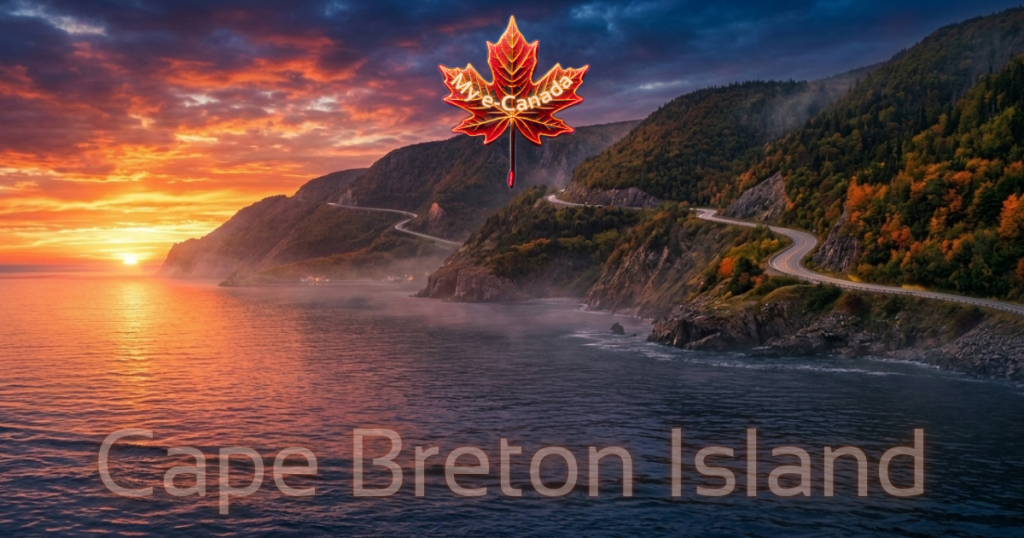
Île du Cap-Breton is world-famous for the Cabot Trail, a 298-kilometer scenic highway that weaves through the northern highlands and along the coastline. This iconic drive offers some of the most breathtaking ocean vistas in North America and is a “must-do” for hikers and cyclists seeking to experience the raw beauty of the Atlantic.
Île du Cap-Breton is equally renowned for the Fortress of Louisbourg National Historic Site, the largest historical reconstruction in North America. Visitors can step back into 1744 and interact with costumed interpreters within the massive stone walls, experiencing the daily lives of the French soldiers and settlers who once guarded the entrance to the Gulf.
Île du Cap-Breton is celebrated as the Cradle of North American Gaelic Culture, where the Scottish Gaelic language and traditions have been preserved for over two centuries. The Highland Village Museum in Iona provides a living look at this heritage, while local “ceilidhs” and square dances keep the vibrant fiddle music alive in every community hall.
Nature lovers are drawn to Cape Breton Highlands National Park, where the mountains meet the sea in a spectacular display of biodiversity. The park is famous for the Skyline Trail, which provides a dramatic cliff-side boardwalk perfect for spotting moose, bald eagles, and pilot whales in the Gulf of St. Lawrence.
Île du Cap-Breton is where the Alexander Graham Bell National Historic Site is located in Baddeck, where the famous inventor spent much of his later life. Bell chose this location for its resemblance to Scotland, and the museum houses the original artifacts from his experiments with flight, hydrofoils, and the telephone.
Music enthusiasts flock to Île du Cap-Breton for the Celtic Colours International Festival, a nine-day autumn celebration that features hundreds of musicians and dancers. This festival turns the entire island into a stage, celebrating the shared Celtic roots of the Commonwealth through world-class performances and community feasts.
Île du Cap-Breton is famous for its Fiddle Music and Step-Dancing, a unique style that has been passed down through generations. Masters like the late Buddy MacMaster and contemporary stars have made the “Cape Breton style” of fiddling famous worldwide, characterized by its rhythmic “drive” and infectious energy.
Golfers recognize the island as home to Cabot Cape Breton, featuring two of the world’s top-ranked links courses: Cabot Links and Cabot Cliffs. These courses are famous for their dramatic seaside locations in Inverness, offering a golfing experience that rivals the traditional links of Scotland and Ireland.
Île du Cap-Breton is home to the Bras d’Or Lake, a massive inland sea that is a designated UNESCO Biosphere Reserve. This “Lake of Gold” is famous for its calm, salt-tossed waters, making it a premier destination for sailing, kayaking, and observing the diverse wildlife that inhabits its many coves and islands.
Finally, Île du Cap-Breton is famous for Sydney’s Giant Fiddle, the world’s largest fiddle monument located on the waterfront. This 60-foot steel structure stands as a tribute to the island’s musical heritage and serves as a welcoming landmark for the thousands of cruise ship passengers who visit the region each year.
Whether through the ancient stewardship of the Mi’kmaq or the modern strategic support of Wayne A. Cargill Agency, this region remains a beacon of cultural pride and economic potential. It is a place where the fog lifts to reveal a community that is as resilient as the cliffs themselves, inviting the world to experience the magic of Île du Cap-Breton.
My e-Canada: Cape Breton Island Digital Content Is Brought To You by
Songster Records