
Votre panier est actuellement vide !

Algorithmic Pricing: Grocers Use Data Against Canadians
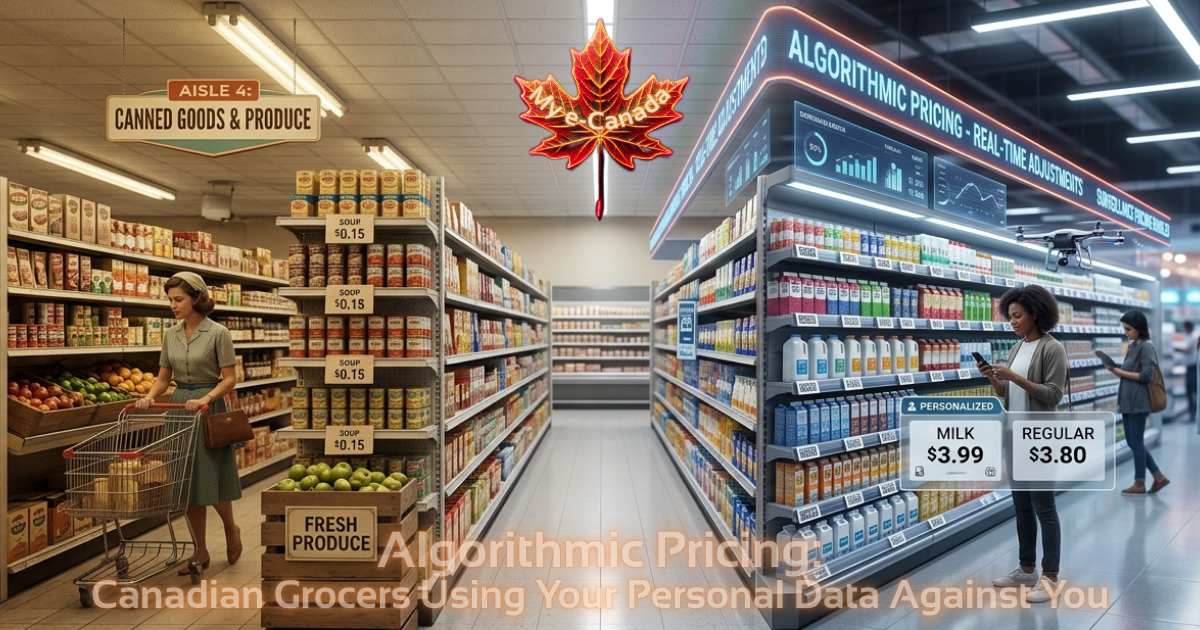
Today’s exposé by My e-Canada Word On The Street explores algorithmic pricing coming to Canadian grocery stores and what that means for consumers in Canada. This automated method allows corporate entities to adjust the cost of essential goods with incredible speed. Modern software analyzes vast amounts of consumer data to identify the exact point where profit is maximized for every individual. Your digital footprint is now the primary tool used for setting shelf costs across the nation. Many experts worry that these tools exploit the most vulnerable people who lack the time to shop around. We at Word On The Street believe that these shifts fundamentally change the relationship between the buyer and the seller. While grocers claim these updates improve store efficiency, the true cost is often a lack of transparency for the public. Every calculation made by these computers is fed by your personal history and shopping habits. Privacy is a significant concern when stores track your every movement within the aisles. We see this trend of automated systems growing across the country at an alarming rate. Every major retailer is considering these tools for their future operations to stay competitive. It is important to watch these developments very closely this year as the infrastructure is installed. Consumers deserve to know if algorithmic pricing is being used to alter their weekly food budget. Fairness must be the goal when these systems enter the Canadian market. We will keep tracking how these changes affect your wallet through our investigative work. Stay informed about the latest news right here on our digital platform.
My e-Canada Word On The Street:
Digitally Your To Explore
The Role of Artificial Intelligence in Algorithmic Pricing
To understand how these systems function, one must look at the deep integration of artificial intelligence within the retail environment. This technology does not merely follow a set of static rules; it utilizes machine learning to evolve its strategies based on incoming data streams. The artificial intelligence acts as a digital brain that processes millions of variables, such as local weather, competitor stock levels, and individual purchase history, to predict what you are willing to pay at any given second. Neural networks within the software identify patterns in human behavior that are invisible to the naked eye. For instance, the system might learn that shoppers in a specific postal code are less price-sensitive on Tuesday afternoons. It then adjusts the margins accordingly to capture extra revenue without triggering a conscious boycott from the consumer. This level of depth allows the software to conduct thousands of tests simultaneously, fine-tuning the cost of a single apple across different store locations. The artificial intelligence also monitors global supply chain disruptions to raise prices before a shortage even hits the local shelf. This predictive power gives corporations a massive advantage over the average household budget. We see this as a shift from traditional commerce to a managed digital economy driven by cold, calculated logic. The more data the system consumes, the more accurate its algorithmic pricing becomes at extracting the maximum possible value from every Canadian. It is a persistent, learning entity that never sleeps and never stops optimizing for the corporate bottom line.
The Architects of Dynamic Systems for Algorithmic Pricing
Airline engineers were the first to develop the concepts behind Algorithmic Pricing for seat sales in the late twentieth century. They used complex mathematics to make variable costs a global standard for the travel industry. Now global technology firms have adapted these models for the retail environment. Companies like Revionics now sell these systems to major grocers across North America. They design every part of the software to maximize profits for the corporate board. These software developers treat every update as a corporate secret hidden from the public eye. They guard the code for these engines with great care to prevent competitors from seeing the logic. Data scientists work daily to make the logic more reactive to human behavior. They want the software to be perfect for every single transaction made at the till. Speed is the main feature of these tools in modern Canadian stores. The architects focus on making the experience invisible to the average user. They believe that a seamless digital experience is best for maintaining consumer flow. Retailers pay high fees for these software licenses to improve their bottom lines. These costs often get passed through to the shopper in the form of higher base rates. We must ask who benefits from these specific design choices in the long run. Is the designer of this software thinking of consumer fairness or just corporate gain? Logic drives the core of these mathematical models today without much human empathy. It is a world where computers dictate the value of a loaf of bread. Designers continue to refine how these systems work now to stay ahead of the curve.
Current Use of Dynamic Models
Uber uses a form of surge logic for ride shares throughout most major cities. They call it high-demand costs, but algorithmic pricing is the underlying technology. Amazon changes its storefront through automated logic every single hour based on demand. This constant shift is fueled by complex software and global data sets. Online travel agents rely on these tools for hotels to fill rooms at the best rate. It is the most common use case for the technology today in the digital world. Gas stations often use manual updates at the pumps to match the local competition. But digital signs now automate the process for fuel based on oil market fluctuations. We see a massive rise in these systems online where data is easy to collect. Digital storefronts are perfect for testing new ideas before moving them to physical shops. Now physical stores are adopting the technology very fast to mirror the online experience. It is a bridge built between the physical and digital shopping worlds. Every transaction provides more data for the logic engines to learn from. Global markets are now defined by these fast trends that change in seconds. No industry is safe from the wave of automation that is sweeping the globe. We find that most businesses want these advanced tools to secure their margins. It helps them stay ahead using modern strategies and real-time market data. Competitive markets drive the need for new software that reacts faster than any human. Retailers must keep up with every market change to satisfy their shareholders. It is a race to implement systems correctly before the competition does.
Canadian Grocery Store Implementation of Algorithmic Pricing
Loblaws has started testing new systems for digital shelves recently across Ontario. They use electronic labels to support Algorithmic Pricing moves in real time. Sobeys is also reviewing how these tools fit their stores in Western Canada. Metro wants to use data for their future choices in the Quebec market. All three major chains see these systems as vital for their long-term survival. They are spending millions on new digital hardware and specialized servers. Digital shelf tags are required for the project’s success in any physical location. These screens make it easy for instant updates without manual labor. Walmart Canada is already moving toward this high-tech path to gain an edge. They have the scale to make the software work across thousands of items. Many smaller shops might avoid using these complex tools due to the high cost. But the industry standard will change very soon for everyone. Canadian grocers believe that better logic helps their margins during inflation. They say that consumers might benefit from targeted discounts sent to their phones. However, most shoppers are wary of these shifts and the lack of price stability. We see a clear path for future growth of this technology in the coming months. Every province will soon see more automated stores in their neighbourhoods. Implementation is the main goal for retail operations across the country. We work around the clock to track these plans for our readers. The infrastructure for future retail is almost ready for a full rollout.
Timing for Dynamic Model Rollout
The rollout for these systems is currently very active in major urban centres. Most installations of hardware for algorithmic pricing began recently in late 2025. By the end of 2026, these tools will be standard in most Canadian cities. Urban centres like Toronto see the transition first due to high foot traffic. Rural communities will get access to the technology later as the network expands. The transition period for most stores is very short once the tags are in place. It only takes a week for full activation of the pricing logic. Stores want to turn on their software quickly to recoup their investment. They have waited years to use the data fully to influence buyer behaviour. We are seeing a rapid shift toward automation in the food sector. It is happening in a very systematic way across the provinces. Phased approaches are common for every new rollout of this scale. First comes the hardware required for store use, such as digital tags. Then comes the data integration for the logic to connect to the loyalty apps. Finally, the customers experience the actual cost shifts during their shop. The timeline for this project is strictly fixed by corporate headquarters. Retailers want to see the impact of their investment before the next fiscal year. They are tracking the success of the tools daily through their analytics. We must watch the calendar for more expansion throughout the summer months. Every month brings more news about these plans and their impact on you.

Cargill e-Comics:
Because It’s Fun!
Impact on Grocery Pricing Habits with Algorithmic Pricing
Daily budgets will feel the impact of Algorithmic Pricing soon as you enter the store. Prices might fluctuate hourly due to new software reacting to store traffic. You might see a different cost for common items like eggs or milk. Mornings could be cheaper than evenings for shoppers who have flexibility. This creates a lot of stress for many users who live on a fixed income. Shopping becomes a game of timing for families trying to save a dollar. We must learn how to navigate these aisles with a more critical eye. Predictability is lost when stores use automated logic to set the rates. It makes it very hard to plan meals or stick to a strict budget. Families who rely on fixed costs hate the shift toward price fluidness. It disrupts the way we think about value and the cost of living. Psychological tactics are built into every model to maximize sales. The goal is to find your maximum limit for every single item you buy. Retailers want to push the boundaries of profit during peak shopping times. This could lead to much higher total costs for the average family. Everyone who eats must deal with this now as it becomes the norm. It is a significant change in our daily life and our relationship with food. We must adapt our habits to handle the change and protect our money. Saving money will require understanding how it works and when to shop. It is a new world of retail life that requires constant attention.
Political Action on Dynamic Models
Ottawa is starting to debate the ethics of algorithmic pricing in the House of Commons. Recently, on April 15, 2026, the federal NDP put forward a motion to ban “surveillance pricing,” though it was voted down by MPs. Some members of parliament call for strict bans on surveillance-based models. They believe that consumers are hurt by secret logic that changes every hour. The NDP has been the loudest about the issue during recent sessions. They want to protect the poor from exploitation by large grocery chains. Liberals are suggesting a middle ground for the technology to foster innovation. They want more transparency for every shift that occurs on the shelf. Rules might require stores to disclose their use of these automated systems. Conservatives argue that the market should set the cost without interference. They worry that regulations might stifle new growth in the digital sector. There is currently no federal law that stops the practice in any province. Most stores can use any form of logic they find effective for profit. Provinces are looking at their own rules now to protect their residents. Quebec often leads the way in limiting these tools through consumer laws. Other regions are still waiting to see the impact before they act. We need a national conversation about this technology and its future. Politicians must decide if they support the trend or the consumer. Voters are watching how leaders handle these issues during the election year. It is a test of our digital laws and our commitment to fairness.
Identifying Systems in Local Stores for Algorithmic Pricing
You can spot the signs of Algorithmic Pricing easily if you know what to look for. Look for electronic labels that allow for instant changes via wireless networks. If the tags are digital, they support the logic required for dynamic shifts. Paper tags cannot be changed for fast updates without manual labour. Check for QR codes that link to the store app on the shelf. These codes often track your interest in specific items for later targeting. Frequent price changes are a hallmark of the system in modern stores. If the cost moves while you shop, be careful with your budget. Use your phone to check for hidden costs that might not be visible. Sometimes the app shows a different price entirely than what is on the shelf. This discrepancy is a clear sign of automation and data usage. Watch for personalized discounts that use your shopping history to entice you. These deals are part of the plan to gather more data. They are designed to hook you into the store and track your loyalty. Knowledge is the only way to beat the system in the modern era. Stay alert when you walk through the aisles of your local grocer. Ask employees if they use any form of logic to set the rates. They might be trained to talk about the technology in a specific way. Being a smart consumer means spotting every change before you reach the till.
Data Collection for Surveillance Models
Your loyalty card is a tool for algorithmic pricing that tracks every purchase. Every swipe gives more data to the computer to build a profile of you. They track what you buy for their logic to predict your future needs. This allows for highly targeted and personal costs that vary by user. Surveillance is the foundation of modern retail today in the digital age. They know your favourite brands for their systems to adjust the margin. They can guess your income using your history and your home address. This data allows for the most invasive tactics ever seen in retail. Your phone location also helps the store logic track your path. If you stay near an item, the cost moves based on your interest. This is the future of data-driven shopping across the world. Two people may pay different rates for items based on their profile. This creates a very fragmented and confusing market for the public. Privacy experts warn us about this level of tracking and its risks. We are giving up our secrets for small deals that may not last. Is a tiny discount worth all this tracking of your personal life? Corporations say that we want this personalized style of shopping. But many people feel trapped by the system and its lack of choice. We must be careful about our personal data and how we share it.
Examples of Differential Costs with Algorithmic Pricing
A person buying milk might face Algorithmic Pricing based on the time of day. If you are in a rush during the morning, the cost rises. A shopper with kids might see higher totals for snacks and juice. The system knows they need items regardless of the current cost. Diapers are a classic target for aggressive computers because they are essential. If supply is low, the computer raises the rate to test the market. This happens in seconds due to fast logic and real-time inventory tracking. We saw this during the pandemic with many items like toilet paper. It is often called price gouging by many people who feel cheated. Rain can cause an instant jump in umbrella costs as you enter. This is the cold logic of a computer optimizing for immediate demand. Even bread can be subject to daily shifts based on the weather. If everyone wants it, the store raises it to maximize their return. This is how the software manages the shelf and the stock levels. It is a very efficient way to work for the store owner. But for the human buyer, it feels unfair and unpredictable. We are seeing more of these specific cases in our investigations. No two people have the same experience now in the digital aisle. It is a world of unique costs that vary by the minute.
Client Scout e-Branding Logo Designs:
Making Your Business Shine
The Global Context of Systems
Canada is following a global trend toward retail algorithmic pricing this year. Europe has many laws that govern the use of these systems and data. The United States allows for very open models of variable cost setting. We are stuck in the middle of this debate over digital rights. Japan uses high technology systems for their daily grocery operations. Global supply chains are linked to local store logic in real time. When costs rise in Asia, we see it reflected here almost instantly. This is the connected nature of the modern world of commerce. We must learn from other nations about their successes and failures. Some have fought back against the most invasive forms of tracking. Others have embraced the convenience of digital retail and loyalty. The technology giants are pushing for universal use of these tools. It is a digital standard that defines our global age of shopping. We cannot ignore what is happening with world markets and data. Every trade deal now includes sections on digital rights and privacy. It is the language of the future for all nations involved in trade. We must be part of the global debate to protect our citizens.
Consumer Privacy and Data Ethics in Algorithmic Pricing
We must ask ourselves about the ethics of Algorithmic Pricing in our society. Is it right to use data for unfair costs that target the poor? Most people believe that honesty is vital in any business transaction. But algorithms are not designed for human style ethics or fairness. They only care about the numbers behind the profit and the loss. Ethics often get lost in the pursuit of higher margins and growth. We need a bill of rights for every shopper in the digital age. This would protect our personal data from being used against us daily. It would ensure that everyone gets a fair rate regardless of history. Corporations must be held accountable for their use of these systems. We cannot let them hide behind the black box of complex code. Transparency is the only cure for bad retail practices in the market. If they use it, they should say it is a variable system. This would restore trust in the system of commerce we all use. We deserve to be treated as people, not just data points for a computer. The fight for data ethics is the fight for a fair future. We must stand up for a more human approach to our daily lives.
The Future of Canadian Retail
The next decade will be defined by smart algorithmic pricing in every store. We might see stores without any human staff at the till soon. Cameras will track our faces to set our costs as we walk in. This sounds like science fiction but it is becoming a reality. The future is a place where data sets every cost we see. We will never see a static or permanent rate for our food. Everything will be in a state of constant change and flux. This could lead to a more efficient style of shopping for some. Or it could lead to the end of fair and stable markets. We must decide which future we want for our families today. Do we value privacy more than a low rate on one item? It is a trade-off that we make for the sake of technology. Every time we shop, we vote for a specific style of market. The stores will listen to our choices and our spending habits. We have the power to shape the future if we act now. Let us choose a path that respects everyone and their rights.
Summary of the Investigative Findings on Algorithmic Pricing
Our investigation has shown the dark side of Algorithmic Pricing in Canada. It is a system that thrives on secret data and complex logic. We found that most grocers are planning for a full rollout soon. They have the tools and the data ready to change the market. Politicians are slow to respond to the threat of these systems. We need more action to ensure fairness for every Canadian family. Consumers are being tracked for the sake of corporate profit daily. Every move you make is a data point for a distant computer. We must be vigilant and aware of our rights as citizens. Knowledge is the best defense against predatory logic and unfair rates. We hope this report has opened your eyes to the new reality. It is the most important issue in retail for the coming years. We will continue to follow the story for you as it develops. Our mission is to keep you informed about every change we see. Thank you for your interest in our investigative report today.
Protecting Your Digital Footprint
We have observed that many shoppers do not realize the value of their data. When you sign up for a loyalty program, you enable algorithmic pricing logic. This data is the fuel that runs the entire corporate machine. By sharing your phone number, you link your identity to your habits. We suggest using cash whenever possible to avoid this tracking. This limits the amount of information the store can gather about you. Some people use different accounts to confuse the logic engines. This is a simple way to maintain some level of privacy. Others choose to shop at independent grocers who lack the technology. These local shops often offer more stable rates for their goods. Supporting local business is a great way to avoid the digital trap. We believe that choice is the most powerful tool for the consumer. If we refuse to share our data, the systems cannot function. It is a collective effort to protect our digital lives from intrusion. We must be aware of what we give away for a small coupon. The long-term cost of our privacy is much higher than a discount. Let us be more careful with our information and our habits.

Bohemian e-Art:
Art Is Life And Life Is Art
The Role of Consumer Advocacy in Algorithmic Pricing
Advocacy groups are now focusing on the rise of Algorithmic Pricing in Canada. They are lobbying the government for better protection for all shoppers. These groups provide a voice for those who cannot fight alone. They collect stories from people affected by unfair cost shifts. We support their work and their dedication to the public interest. They are pushing for laws that mandate clear price labelling in stores. This would stop the most aggressive forms of hourly changes. Without these rules, the consumer is at the mercy of the computer. We need strong leaders who are willing to challenge the big grocers. This is a fight for the basic rights of every Canadian family. Food is not a luxury, and its cost should be fair for everyone. Advocacy is the first step toward real change in our society. We encourage you to get involved and speak your mind on this issue. Your voice matters in the debate over our digital future. Together, we can ensure a market that works for everyone, not just profit.
Technological Sovereignty in Canada
As we look at the global stage, we see the need for technology sovereignty. We should not rely on foreign software for our algorithmic pricing needs. Canada has the talent to build fair and transparent systems for retail. We should foster local innovation that respects our laws and values. This would ensure that our data stays within our borders and control. It would also create jobs in the growing digital sector of our economy. We believe that we can lead the world in ethical shopping technology. This requires a commitment from both government and private business. We must invest in our own people and their creative ideas. By building our own tools, we can set our own rules for fairness. This is a strategic goal for our nation in the twenty-first century. We have the resources and the will to make it happen now. Let us work toward a future where we control our own digital destiny. This is the only way to protect our privacy and our markets. Sovereignty is the key to a strong and independent Canada.
Algorithmic Pricing In Canada: The Final Word On The Street
Our analysis shows that Algorithmic Pricing is changing our world. We must stay very informed about these shifts. This technology is a new challenge for us. It requires our full attention every single day. We have explored the entire system today together. We see the risks involved for every family. These systems are powerful corporate tools for profit. It impacts every Canadian family at the till. We must demand fair rules for everyone now. This technology should be transparent to the public. It should not be a secret logic. We need to watch grocers very carefully. We need to watch politicians for their action. This is a major test for our nation. It tests our privacy laws and our rights. It tests our market fairness and ethics. We hope you learned much from this report. This is a big topic for our future. We will keep watching it for you always. This is a vital mission for Us. We care about your budget and your home. This is a digital fight for fairness. We are in this together for Canada. Thank you for reading this exposé by My e-Canada The Word On The Street: Digitally Yours To Explore.
AI, algorithmic pricing, Intelligence artificielle, Canada, Client Scout, consumer advocacy, consumer privacy, data ethics, digital shelf tags, Digitally Yours To Explore, dynamic pricing, grocery store pricing, Loblaws, loyalty programs, Machine Learning, Metro, Mon Canada électronique, Mon-canada.ca, personal data, retail technology, Sobeys, surveillance pricing, Wayne A. Cargill Agency, Bruits de couloir
Laisser un commentaire